
Automatic Egg Collection, Counting, Grading and AI Inspection: What Is Included?
An automatic egg collection system does not, by its name alone, tell you whether a quotation includes counting, weight grading, defect inspection or tray packing. These functions may be combined in one installation, supplied as separate modules or left outside the proposal.
For a commercial layer farm, the useful question is what happens to the eggs at each stage—and which equipment, controls and connections are actually included. A line that delivers eggs to a collection point has a different scope from one that sorts eggs and places them into specified trays.
Prepare the enquiry using the following differences and compare proposals on the same basis.
1. Separate the Functions Along the Egg Route
Start with the route from the cage rows to the intended receiving or packing point. Mark the equipment you already have, the functions you want to add and the point where the new supplier’s responsibility ends.
| Function | Main task | What the function alone does not establish |
|---|---|---|
| Egg collection and transfer | Move eggs from cage-row belts through an elevator or other transfer arrangement to the next receiving point | Weight classification, defect detection or packing |
| Egg counting | Record the number of eggs passing a defined point | Individual egg weight, quality or correctly filled trays |
| Weight grading | Classify eggs into specified weight groups and direct them to the appropriate output | Detection of every shell or internal defect |
| Egg inspection | Assess the defects or characteristics specified for the installed detection system | Other inspection functions absent from that configuration |
| Tray packing | Place eggs into the agreed tray format and discharge the filled trays | Upstream collection, grading or a complete inspection system |
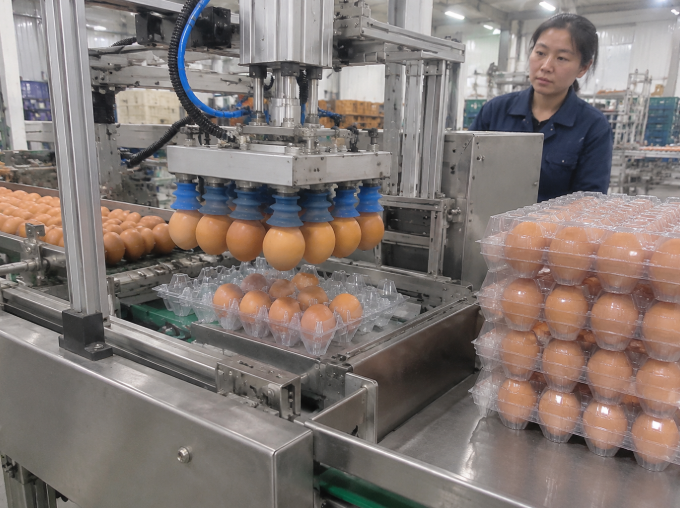
An integrated machine can perform several of these tasks. The quotation still needs to identify each function, its model or module and its output. Do not treat a photograph of a complete line as the equipment list for your order.
2. Confirm Where Automatic Egg Collection Ends
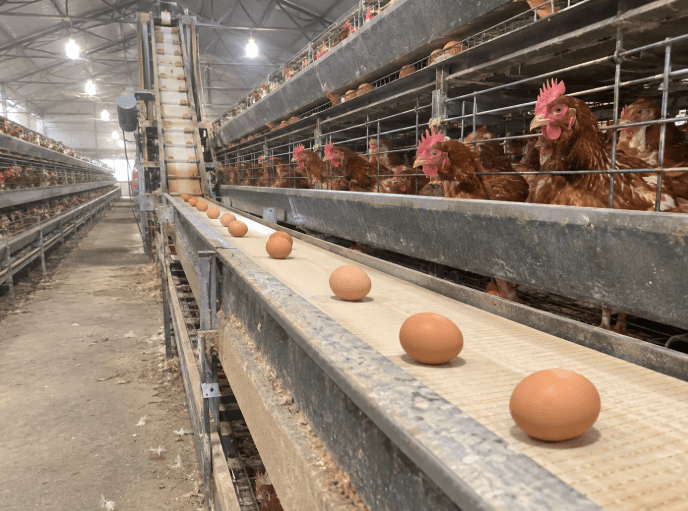
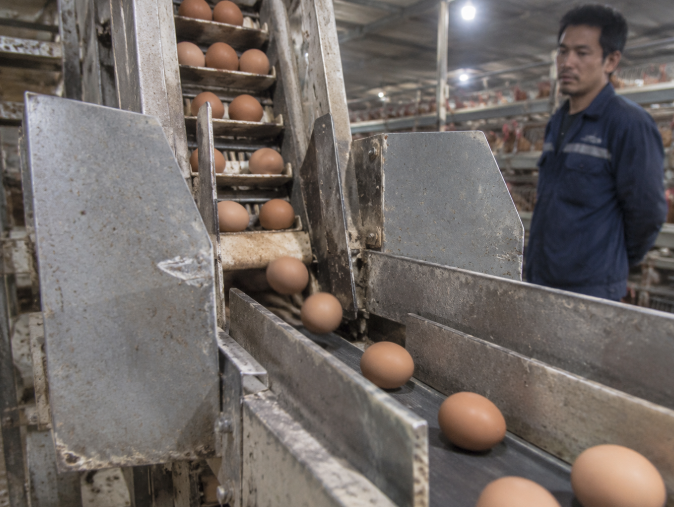
In a cage-based layer house, eggs can travel on longitudinal belts to an elevator or another transfer arrangement, then continue to a collection table or conveyor. The proposed route depends on the house and equipment configuration.
The stacked egg collection system listed on the Auto ChickenCage website describes a vertical elevator connecting cage-row egg belts with a central receiving point. That collection role should be distinguished from downstream sorting and packing.
Ask the supplier to mark the delivery endpoint on the layout. Does the offer end at the elevator discharge, include a transverse conveyor, or extend to the packing-room infeed? Identify the conveyors, supports, transfers and controls between those points.
For an existing farm, provide belt positions, discharge heights, transfer directions and photographs of the equipment being retained. The vertical egg elevator retrofit guide explains the interface information to prepare. Similar-looking equipment is not sufficient evidence of compatibility.
3. Distinguish Egg Counting From Weight Grading
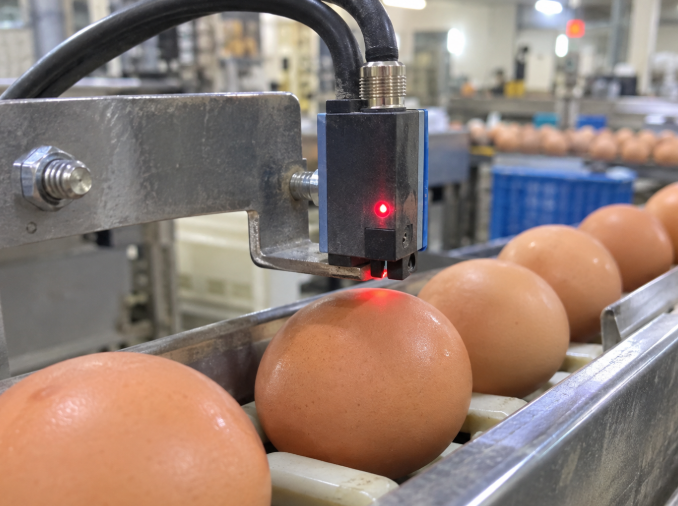
An egg counter answers a quantity question at its installation point. A counter on a shared conveyor records a different part of the process from one installed before eggs from individual houses merge.
Define what you want the figures to represent: collection from a particular house, total incoming eggs, rejected eggs or packed output. If house-level reporting is required, ask how the system identifies the source when several houses use one conveyor.
Auto ChickenCage’s egg tray packing machine page describes counting and grouping during tray loading. This is a reason to ask how the quoted packer counts eggs; it does not establish that its statistics provide a complete farm production record.
For the proposed counter, request the counting location, recorded events and reset rules, and ask how stops, diverted eggs or eggs passing the sensor again are handled. If reports or data export are required, ask the supplier to identify the available fields and connection method rather than assuming they are included.
Weight grading has a different purpose: assigning eggs to specified weight groups. Request the measurement method, class boundaries, available outlets and the checks used to verify classification. Do not assume that a counter also weighs eggs, or that tray loading separates them by weight.
Some equipment suppliers describe vision-based weighing as well as conventional weighing systems. Ask how the particular system establishes weight and how its results are checked against an agreed reference. Avoid selecting a grading system from an egg-size image or an unexplained accuracy percentage.
4. Define What AI Egg Inspection Is Expected to Detect
“AI inspection” describes an approach to analysing information. It is not a complete list of inspection functions.
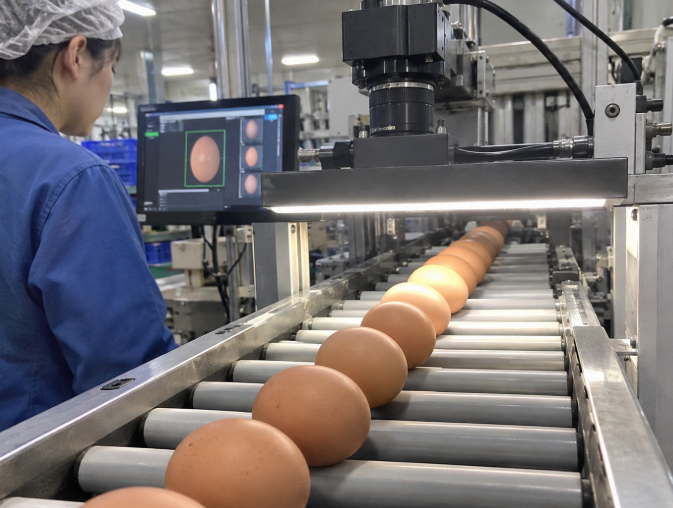
A useful specification names the target: dirt, leaking eggs, shell cracks or a particular internal defect. It also states the equipment and conditions under which that target will be assessed.
Manufacturer documentation illustrates the distinction. Moba describes AI-supported shell-crack detection and vision-based weighing on its Vision Shell Inspector page. Its separate Blood Detection page describes spectral analysis of egg contents for bloodspots. These are descriptions of particular products and methods, not evidence that every camera or AI-labelled system performs both tasks.
Ask the proposed supplier to document:
- Defects evaluated and defects outside the scope of the quotation system.
- The applicable egg range, including shell colour and incoming condition.
- The inspection arrangement, operation speed, and settings used for evaluation.
- How each detected category is diverted, recorded and made available for review.
- Applicable cleaning, calibration, or validation procedures for the device.
Evaluate detection by defect category. For an agreed sample, record defective eggs that pass undetected and acceptable eggs that are rejected. An overall “accuracy” figure is difficult to interpret without the sample composition, defect definitions and counting method.
Before relying on it, ask whether a representative sample evaluation is available and agree on its scope, cost and acceptance criteria. Keep results tied to the tested configuration. An inspection claim about the shell should not be extended to internal quality or food safety without evidence for that separate claim.
5. Check the Connections Between Sorting, Inspection and Packing
After determining the required functions, display their order and connections on a layout. The actual sequence must follow the proposed equipment and process; There is no reason to assume that every farm requires every module.
Mark the accepted egg routes, each rejected or diverted egg stream, and the receiving points for filled trays. Confirm who provides the connections between individual machines, including conveyors, supports, sensors, and control signals.
If grading is included, specify where each weight group goes and whether it has its own packing outlet. If inspection is included, distinguish an inspection result from the equipment that physically diverts the egg. Ask what happens when a receiving lane is unavailable, trays run out or a downstream machine stops.The responsible technical team should determine the allowed sequence of stops and restarts.
Capacity also needs a common basis. A collection rating, an inspection rate and a packing rate may refer to different conditions or counting points. Use the egg collection and packing line capacity guide to compare the connected stages without treating separate machine ratings as verified whole-line output.
For tray dimensions, egg samples and format changes, refer to the automatic egg tray packing machine selection guide. Packing compatibility remains a separate check even when grading and inspection are included.
6. Ask Each Supplier to Complete the Same Scope Table
Give every supplier the same function list. Mark each item as included, optional, buyer-supplied, excluded or awaiting confirmation, and request the supporting document.
| Item | Written clarification to request |
|---|---|
| Collection and transfer | Starting point, delivery endpoint, equipment models and connecting conveyors |
| Counting and records | Sensor positions, quantities recorded, source identification and reporting functions |
| Weight grading | Measurement method, weight classes, outlets and verification procedure |
| Inspection and rejection | Named defects, detection modules, diversion equipment and evaluation conditions |
| Tray packing | Tray references, egg range, tray supply and filled-tray discharge arrangement |
| Controls and interfaces | Equipment connections, stop and restart responsibilities, and required site services |
| Testing and handover | Configuration covered, agreed criteria, records and checks remaining at the farm |
Also request an equipment list separating new, retained and third-party units. A statement such as “ready for a grader” should identify what is supplied now and what a later connection would require.
Installation, commissioning, training, spare parts and commercial terms need their own written scope. Use the layer farm equipment quotation checklist when these functions form part of a wider farm equipment purchase.
Before requesting a proposal, prepare the farm location, house and cage-row layout, current equipment, collection schedule, available egg-flow records, egg characteristics and required tray formats. List the functions you need and write “to be confirmed” against missing information.
Send these details through the Auto ChickenCage contact page. Ask which collection and packing equipment is available for your project and whether the requested counting, grading or inspection functions can be supplied or connected. Request a written scope and interface review before treating any additional function as part of the order.
Want to know more?
Get in touch with us for more information about our services and products.