
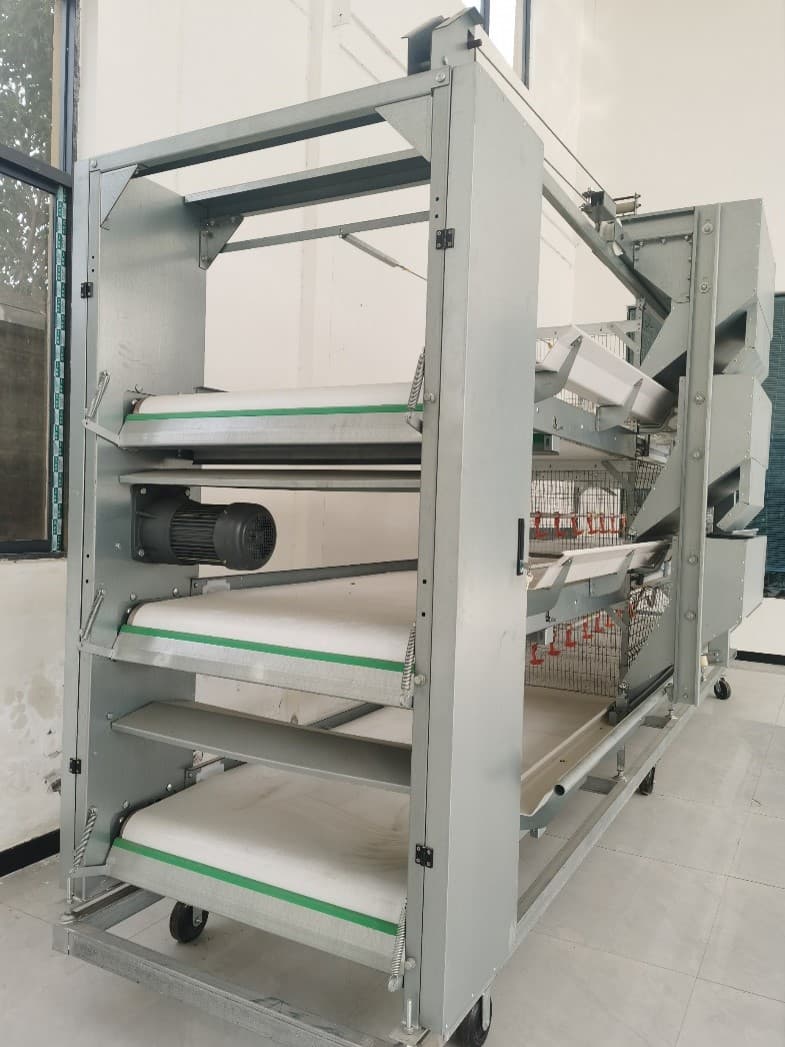
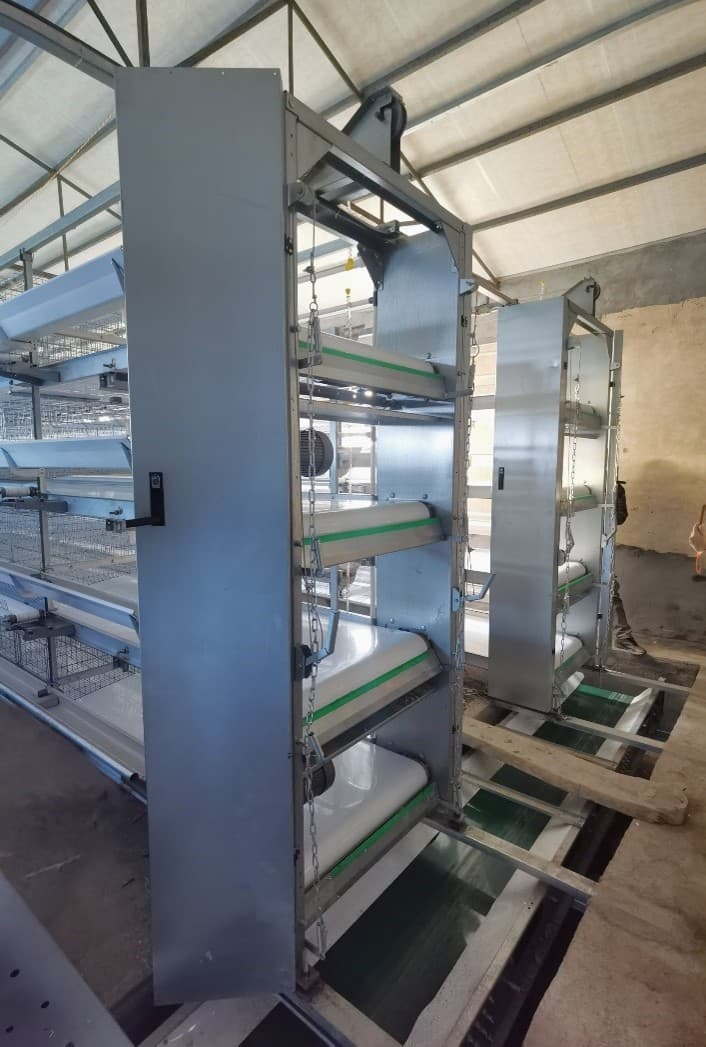
Belt Manure Removal System for Poultry Cages – Automatic Manure Cleaning Machine
Belt Manure Removal System for Poultry Cage Houses
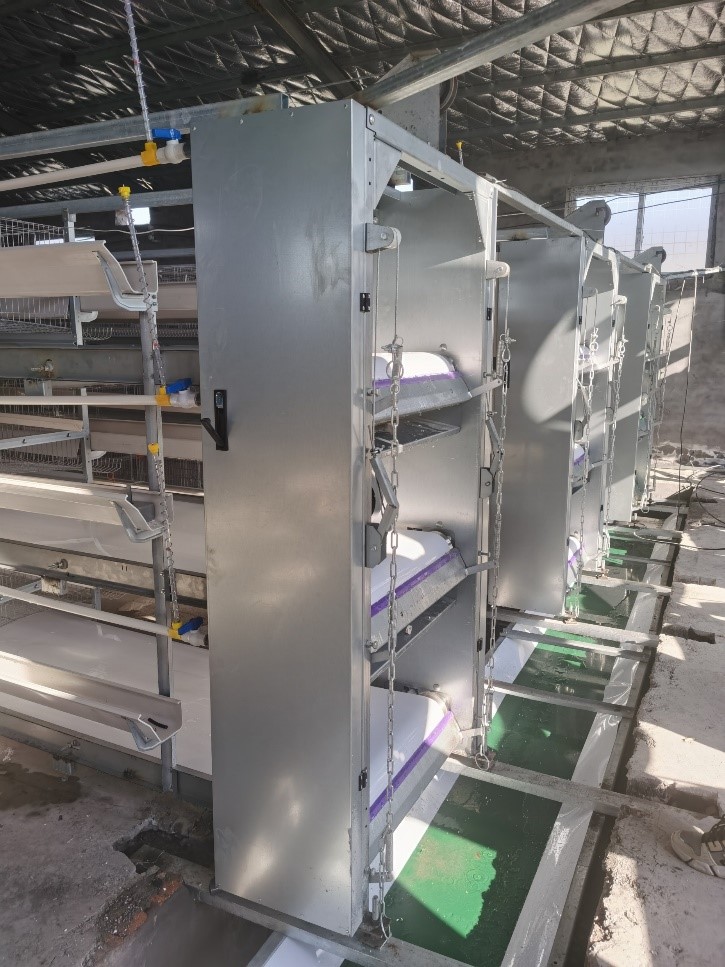
Product Overview
The belt manure removal system is a core component of fully automated poultry equipment for layer and breeder cage farms, engineered to efficiently and frequently remove manure to maintain a hygienic, low-ammonia environment for birds.
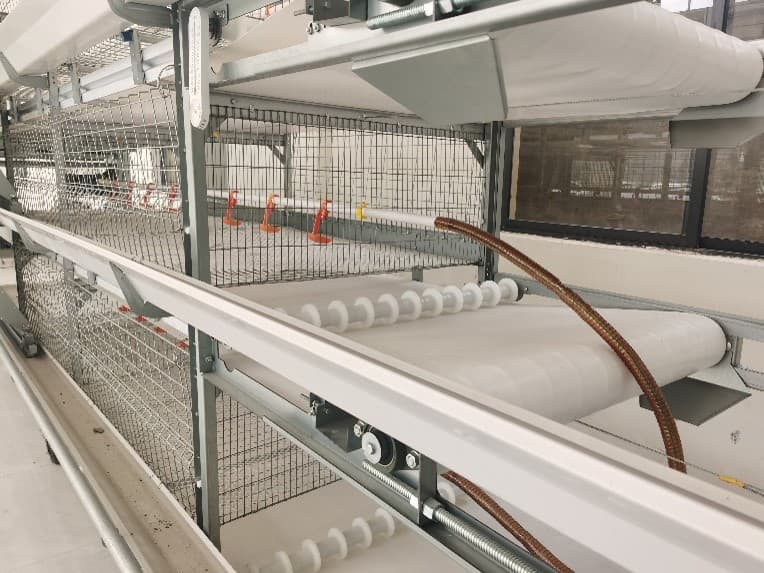
A dedicated manure belt is installed beneath each tier of cages; during operation, the belt moves at a controlled speed to transport droppings to the end of the cage row. At the head unit, a drive roller and scraper discharge manure onto a transverse/inclined conveyor, which delivers it outside the poultry house to a manure pit, collection trailer, or storage area. By separating birds from fresh manure and removing waste in real time, the system reduces ammonia levels by 40–50%, lowers humidity by 20–30%, and eliminates odor buildup – directly improving bird health and egg production rates by 3–5%.
System Components
- Tier manure belts: High-strength PVC/PP belts (500–800mm width) installed under each cage tier, supported by anti-deviation rollers and guiding wheels for stable operation.
- Drive and tension units: 0.37–1.5kW electric motors, precision gearboxes, and automatic tensioning devices that drive belts and maintain optimal alignment (deviation <2mm/m).
- Head unit with scraper: Stainless steel scraper removes 99% of manure from belts, guiding waste to cross/inclined conveyors with no residue.
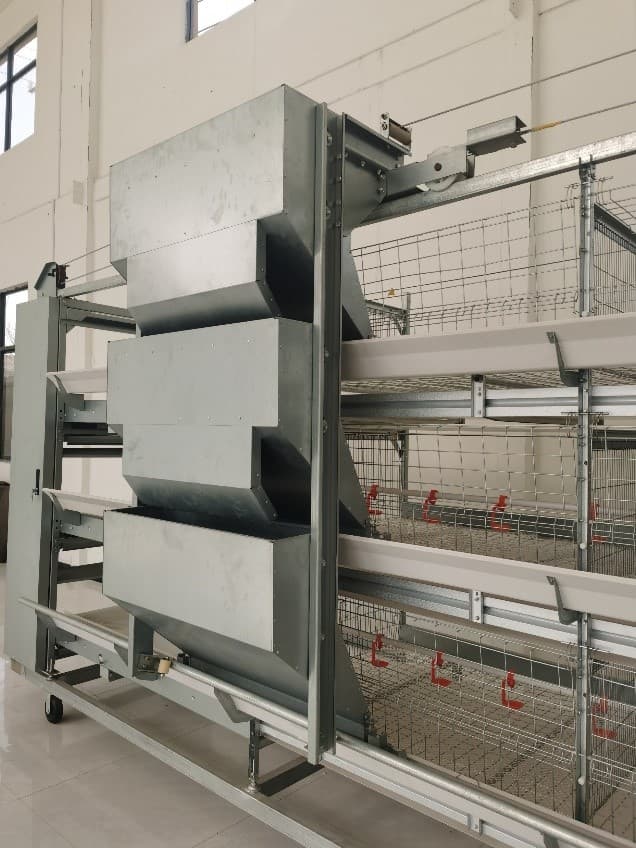
- Inclined / transverse conveyor: Galvanized steel conveyors (width 600–1000mm) transport manure out of the house to pits/trucks, with lift height up to 4m (inclined type).
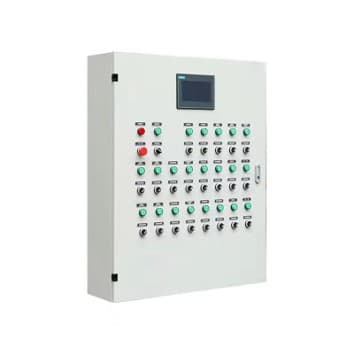
- Control cabinet: PLC-based control system with timer settings (run frequency/duration), motor start/stop, and direction control – compatible with farm-wide automation systems (ventilation/feeding).
Key Features
- High-efficiency manure removal: Continuous/periodic operation (programmable 2–4 times/day) eliminates manure accumulation, reducing manual cleaning workload by 80%.
- Optimized house environment: Real-time waste removal cuts ammonia levels to <15ppm, humidity to 50–60%, and fly populations by 70% – lowering respiratory/footpad diseases by 35%.
- Durable corrosion-resistant construction: Galvanized steel/stainless steel frames withstand manure/cleaning water corrosion; PVC/PP belts (thickness 2–3mm) have a service life of 3–5 years.
- Fully automated operation: Timer-controlled automatic cycles (or manual override) reduce labor demand – 1 worker can manage 100,000+ birds vs. 2–3 workers for manual cleaning.
- Easy installation & maintenance: Modular design fits new builds or retrofits; routine maintenance (belt tension adjustment, roller lubrication) takes <30 mins/week per house.
- Versatile configuration: Compatible with H-type/A-type layer cages (3–8 tiers), customizable for house lengths (10–100m) and manure discharge directions (single/double end).
Technical Specifications (Typical)
The following data are typical ranges. Exact specifications can be fully customized according to your poultry house design, cage tier count, and daily manure output (50–200g/bird/day).
| Item | Specification (Typical Range) |
|---|---|
| Product Name | Belt Manure Removal System |
| Application | Layer / breeder cage houses (5,000–500,000 birds) |
| Belt Material | High-strength PVC/PP (2–3mm thickness) |
| Belt Width | 500 – 800 mm (customizable up to 1000mm) |
| Frame Material | Hot-dip galvanized steel (2.0–2.5mm) / 304 stainless steel |
| Drive Mode | 0.37–1.5kW electric motor + worm gear reducer + drive roller |
| Power Supply | 380V/220V, 50/60Hz, 3-phase (110V/440V on request) |
| Belt Running Speed | 0.5–2m/min (adjustable) |
| Operation Mode | Manual / automatic (timer control: 0–24h cycle setting) |
| Manure Discharge Direction | End of row → cross belt → manure pit / trailer / storage |
| Suitable Cage Types | H type/A type layer cages (3–8 tiers), breeder cages |
| House Length Compatibility | 10–100m (customizable for longer houses with multi-drive units) |
Optional Configurations
| Option | Description |
|---|---|
| Inclined Conveyor | Lifts manure from house floor (0m) to outside truck/storage (up to 4m height), width 600–1000mm |
| Cross Conveyor | Collects manure from 4–8 cage rows into one central discharge line, length 8–20m |
| Stainless Steel Version | Full 304 stainless steel construction for high-corrosion/high-hygiene farms (e.g., export-oriented egg production) |
| Variable Speed Control | Frequency converter adjusts belt speed (0.5–2m/min) to match manure volume (peak lay vs. pullet stages) |
| Manure Collection Hopper | Integrated hopper at discharge end for direct loading into manure spreaders/trailers |
Application & Layout
In standard installations, each cage tier is fitted with an independent manure belt; belts for 4–8 rows share a single drive unit (for houses <80m) or multiple drive units (for houses >80m). At one/both ends of the house, a cross/inclined conveyor collects manure from all rows and transports it outside to a designated storage/processing area.
The system is ideal for:
- New fully automated H-type battery cage layer houses (100,000+ birds).
- A-type layer cage houses upgrading to regular, labor-free manure removal.
- Breeder cages requiring litter-free, low-ammonia environments (critical for fertility).
When integrated with automatic feeding, egg collection, and ventilation systems, it creates a fully automated, low-labor, high-hygiene production environment – standard for modern commercial poultry farms in Africa, the Middle East, Southeast Asia, and Latin America.
Advantages for Poultry Farms
- Enhanced animal welfare & production performanceBirds are kept above clean belts (no direct manure contact), reducing footpad lesions by 60% and respiratory diseases by 35%. This boosts layer survival rate to 95%+ and egg production by 3–5% (additional 10–15 eggs/bird/year).
- 80% labor cost reductionAutomatic periodic removal eliminates manual scraping/cleaning – 1 worker manages 100,000+ birds (vs. 2–3 workers for manual cleaning), cutting annual labor costs by $10,000–$15,000 for medium-scale farms.
- Valuable manure resource utilizationCentralized, dry manure collection (moisture <40%) simplifies transport to composting, organic fertilizer production, or biogas projects – turning waste into additional revenue ($500–$1,000/10,000 birds/year).
- Compliance with environmental regulationsLow ammonia/odor emissions and contained manure handling meet strict environmental standards, avoiding fines and community complaints – critical for sustainable farm operation.
- Low long-term maintenance costsModular design and durable materials reduce replacement frequency; belts last 3–5 years, and steel components have a 10–12 year service life – minimal capital expenditure for replacements.
Packaging, Installation & Service
Packaging
The system is shipped in modular parts (belts, rollers, drive units, conveyors, control cabinets) to maximize container space (30% shipping cost savings). Belts are rolled and wrapped in waterproof film; metal components are coated with anti-rust oil and packed in labeled wooden crates.
Installation & Commissioning
- Detailed 3D installation drawings, belt tension guidelines, and wiring diagrams (multilingual) are provided.
- Our engineers offer 24/7 remote technical support (video call/phone) during commissioning, calibrating belt speed, tension, and timer settings to match your manure output – installation completed in 2–3 days per house.
- On-site training (optional, cost-based) is available for your maintenance team, covering belt replacement, tension adjustment, and fault troubleshooting.
After-Sales Service
- Warranty: 1-year warranty for drive motors/control cabinets; 6-month warranty for PVC/PP belts; 2-year warranty for galvanized/stainless steel frames.
- Spare parts: Common replacements (belts, rollers, scrapers) are in stock, with 7–15 day delivery to major poultry farming regions.
- Lifecycle support: Free technical consultation for the system’s 10–12 year service life, including maintenance schedules and efficiency optimization (e.g., adjusting run frequency for seasonal manure output).
This belt manure removal system is an essential upgrade for modern automated poultry farms, delivering improved hygiene, lower labor costs, and higher bird performance – with a return on investment (ROI) of 8–12 months for medium-to-large farms (50,000+ birds).
If you need region-specific adjustments (e.g., corrosion-resistant upgrades for coastal/high-humidity areas, or voltage adaptation for local grids), we can refine the specifications and content to align with your target market’s needs.
Interested in this product?
Get in touch for more information, pricing, or custom requirements.
Frequently Asked Questions
Get answers to common questions about our poultry farming equipment and services