
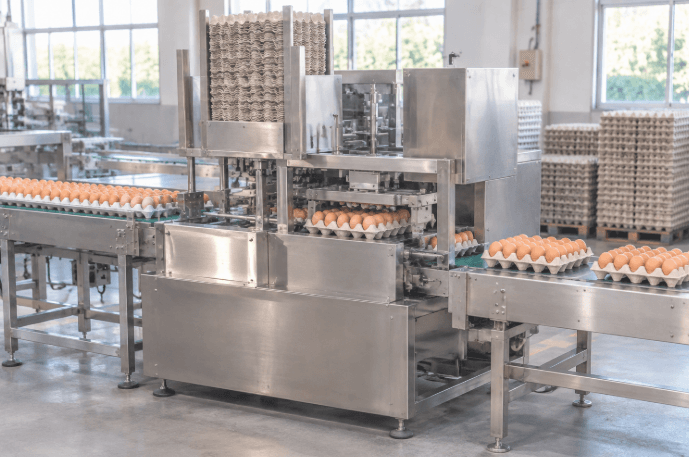
Automatic Egg Tray Packing Machine: Buyer's Guide
An automatic egg tray packing machine should be selected from the tray outward, not from a catalogue capacity figure inward. The proposed machine must accept the farm's actual tray, egg-size range and incoming egg flow, then release filled trays into the next handling step. If any of those inputs is missing, the quotation is still preliminary.
Before comparing models, answer six questions:
- Which tray variants and egg-size ranges must the machine handle?
- How will eggs arrive from the collection line?
- What are the normal and peak egg flows, and how many hours are available for packing?
- Where will filled trays go, and who handles them next?
- Which conveyors, supports, controls and site services are included?
- How will tray and line compatibility be tested and accepted?
The answers determine the machine configuration, layout, interface responsibilities and acceptance checks.
What Does an Automatic Egg Tray Packing Machine Do?
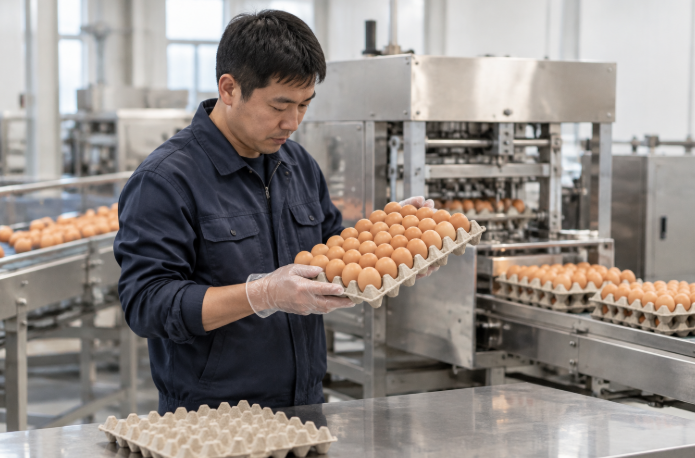
The automatic egg tray packaging machine receives eggs after collection and places them into trays or cardboard boxes. It can operate as an independent unit or as part of a production line that includes egg belts, vertical elevators, washing or grading equipment, pallet stackers, and finished product areas.
The packing machine is only one part of the egg flow. Its connection to the vertical egg elevator and other upstream equipment should be shown on a layout, not inferred from the word "automatic."
See the automatic egg tray packing machine product page for the equipment type and request model-specific specifications for the proposed project.
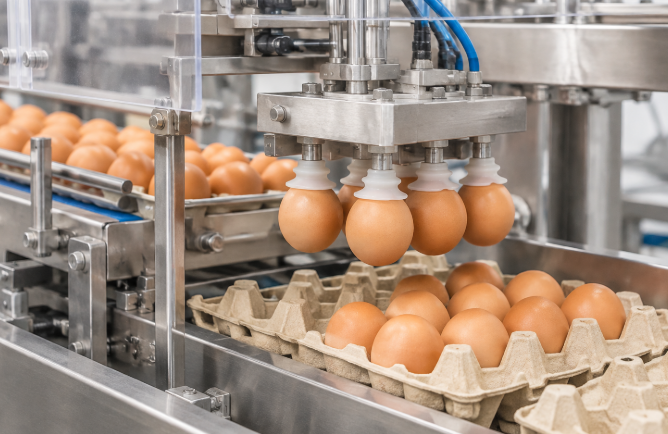
Does the Farm Need Automatic Packing?
Not every poultry farm requires the same level of packaging automation. Manual collection and tray loading may continue on smaller operations. Larger farms may require more consistent handling and a controlled connection between collection and packing.
| Buyer question | What to compare |
|---|---|
| What daily and peak egg volume must be handled? | Average output, peak-hour flow and available packing hours |
| How do eggs reach the packing area? | Manual transfer, egg belt, elevator or central collection line |
| What tray is used? | Material, dimensions, egg-cell layout and stacking method |
| How much handling is acceptable? | Transfer points, manual carrying and inspection steps |
| Will the farm expand? | Space for higher flow, more tray formats or another line |
| What happens during a stoppage? | Buffer space, accumulation and a safe restart procedure |
A low machine price alone does not make a proposal suitable. Different farms may need different conveyors, tray parts, site work and commissioning checks.
1. Define the Tray and Egg Sample
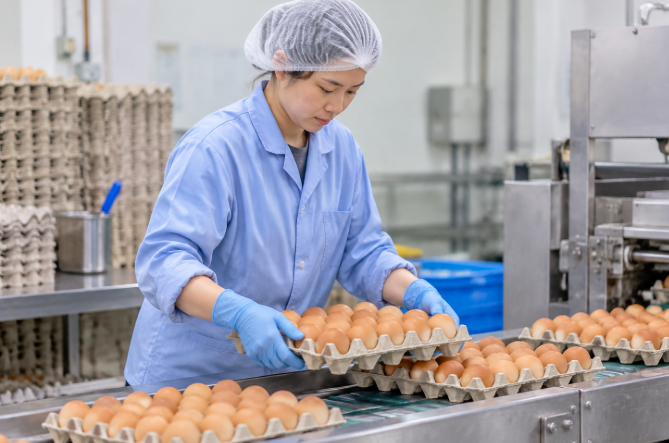
A tray described only by its egg count is not a complete specification. Different trays can have different outside dimensions, cell diameters, cell depths, weights and stacking features.
Record the following tray details:
- Material: paper pulp, plastic or another format.
- Exact outside length, width and height.
- Number and arrangement of egg cells.
- Cell diameter and depth.
- Tray weight and dimensional tolerance.
- Whether trays nest, stack or require a separator.
- Empty-tray feed method and filled-tray stacking method.
- Tray sample reference, supplier, product reference and production batch.
Also describe the eggs that will be packed:
- Typical and maximum egg-size range.
- Size distribution during a normal working day.
- Egg condition at the packing area, including cracks, dirt or shell defects.
- Whether eggs have been washed, graded, candled or printed.
- The direction in which eggs arrive.
Use a tray sample from the actual production batch for review. If the farm will use more than one format, list each tray separately. Photographs are useful, but they do not replace dimensions or a physical sample.
Selection condition: ask whether the proposed model can be adjusted for the submitted tray and egg range. Do not accept "compatible" without identifying what will be tested and how.
2. Map the Upstream and Downstream Interfaces
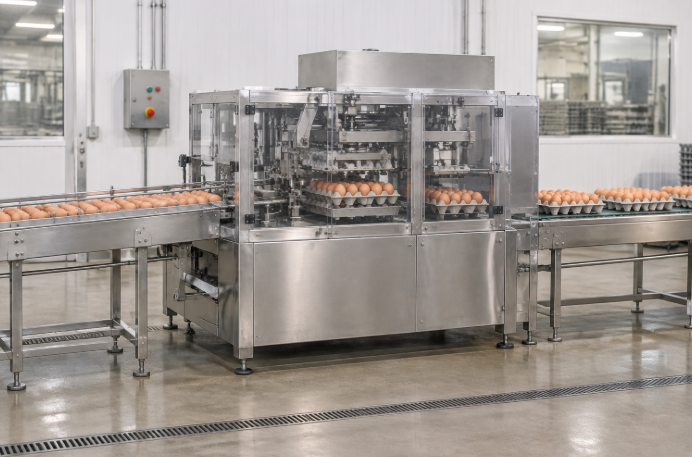
Measure the existing transfer point instead of relying on old drawings. Record the width of the belt or conveyor, discharge height, egg direction, available adjustments, and nearby obstacles.
Plan the entire packaging area:
- Egg infeed and machine footprint.
- Empty-tray storage and loading.
- Filled-tray discharge and stacking.
- Rejected or diverted eggs.
- Operator inspection and maintenance access.
- Finished-goods storage and dispatch.
Confirm the electrical supply, compressed-air requirement, controls, drainage and cleaning arrangements. Ask which supplier provides each connecting conveyor, support, cable and control signal.
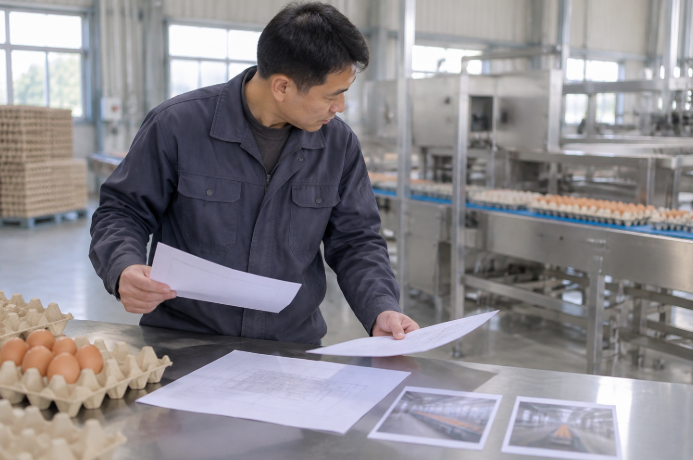
Selection condition: request a layout showing the upstream transfer, machine, downstream discharge and operator space. A machine outline alone does not prove that the line will work.
3. Match the Machine to Egg Flow
Prepare the average daily volume, peak-hour volume, number of packing hours and planned flock growth. State the upstream line rate and explain how eggs will accumulate when packing stops.
Ask each supplier to explain the capacity basis for the proposed model. A capacity figure may depend on a specific tray, egg size, infeed pattern, operator level or continuous-running condition. Without that context, two "eggs per hour" figures may not be comparable.
The packing area should also allow for tray changes, cleaning, maintenance and future expansion. A machine that fits the current line but blocks a walkway or leaves no room for empty trays is not a practical layout.
4. Run a Tray and Line Compatibility Test Before Ordering
A demonstration with selected eggs is not enough. Ask whether a tray sample test is available. If it is, request a written test plan before the visit or shipment. If it is not, ask for the written basis on which compatibility is being offered and keep the purchase decision conditional.
A practical test plan should cover:
- The tray reference and sample batch.
- The egg-size range and egg condition.
- The upstream infeed arrangement and estimated flow.
- The downstream discharge and stacking arrangement.
- The test duration and operating sequence.
- The acceptance checks, witness and sign-off.
Use a test matrix to keep the result specific:
| Test area | What to record |
|---|---|
| Empty-tray handling | Tray feed, separation, alignment, jams and recovery |
| Egg loading | Egg-size mix, orientation, empty cells, misloads and damage |
| Line flow | Start, stop, restart, accumulation and peak infeed |
| Filled-tray discharge | Transfer, stacking and handoff to the next stage |
| Tray change | Parts, settings, tools, time and operator steps |
| Cleaning and access | Maintenance access, cleaning method and safety checks |
Record the machine settings, tray reference, egg range, test conditions and results. Include misloads, jams, empty cells, damaged eggs and manual interventions. Identify what failed, what will change and who will confirm the change. Any result applies only to the tray, egg range and machine configuration actually tested.
If breakage is part of the agreement, define the incoming egg condition, observation point, sample and counting method before the trial. See how to reduce broken eggs during collection and packing for related handling checks.
5. Compare the Quotation Scope
Ask for the machine model, tray formats covered, egg-size range, infeed and discharge arrangement, main components, change parts, conveyors, supports, controls and required site services.
The quotation should also identify:
- Installation and commissioning.
- Training and operating documents.
- Sample testing and acceptance records.
- Spare parts and recommended wear parts.
- Packing, delivery and unloading responsibilities.
- Warranty terms and exclusions.
If an item is not stated, treat it as unresolved. Use the layer farm equipment quotation checklist when the packing machine is part of a larger feeding or egg-collection project.
Quotation warnings
Do not compare two packing machine prices until the scope matches. A lower total may exclude empty-tray handling, a discharge conveyor, a stacker, change parts, commissioning or the controls needed to connect with the existing line.
What to Send Before Requesting a Layout or Quotation
Prepare one project pack:
| Information | What to provide |
|---|---|
| Project and site | Country, site location, bird type and intended egg market |
| Production plan | Current and planned flock, packing hours and peak flow |
| Tray | Sample reference, material, dimensions, cell layout and stacking method |
| Eggs | Size range, distribution, condition and prior processing |
| Upstream | Collection method, transfer dimensions, direction and buffer space |
| Downstream | Filled-tray discharge, stacking, storage and dispatch |
| Site services | Footprint, access, power, compressed air, drainage and cleaning |
| Acceptance | Technical contact, test witness and required records |
Write "to be measured" or "to be confirmed" where a value is unknown. Do not replace it with a catalogue value.
Next Step
Start with the tray and egg flow. Measure the tray, photograph the upstream and downstream transfer points, and record the egg-size mix and packing hours. Then ask the supplier to confirm the machine configuration, physical tray sample test, interface responsibilities and documents used for acceptance.
Send the project details through the contact page when requesting a layout or quotation.
Want to know more?
Get in touch with us for more information about our services and products.