
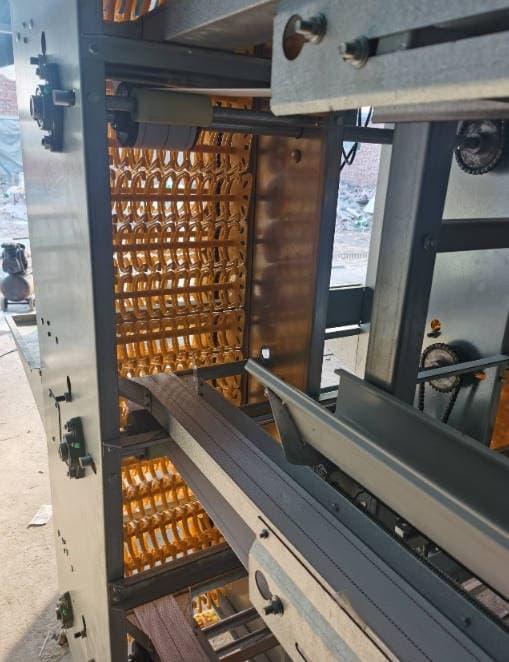
Stacked Egg Collection System for Layer Cages – Vertical Elevator Egg Collector
Stacked Egg Collection System for Layer Cage Houses
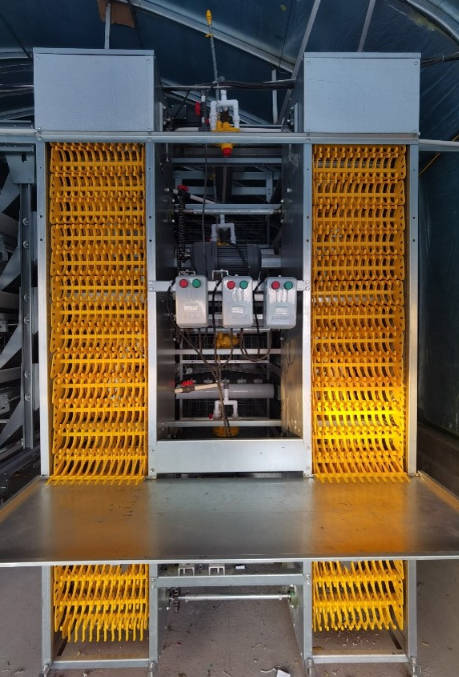
Product Overview
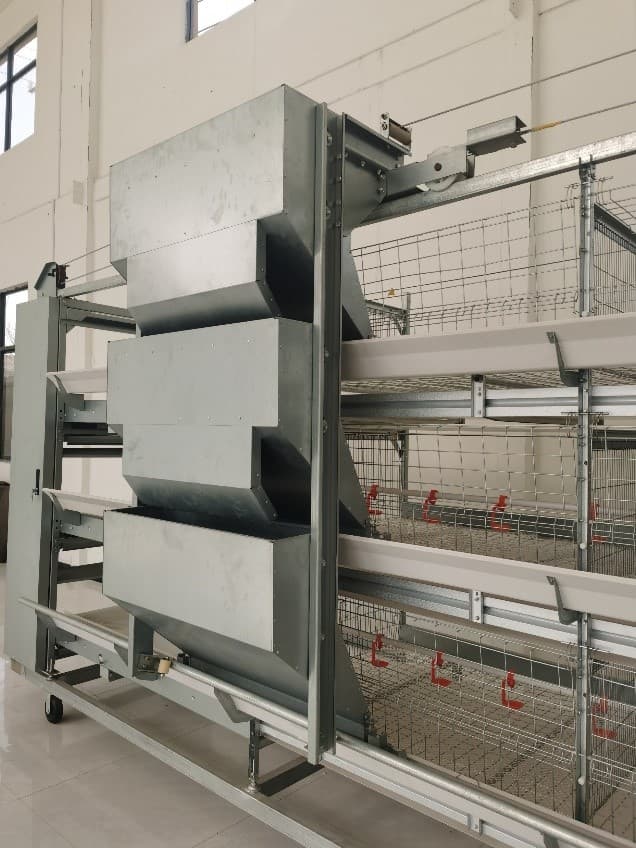
The stacked egg collection system is a high-efficiency vertical egg elevator and conveyor unit engineered exclusively for modern intensive layer houses. Installed at the terminal of H-type or A-type layer cage rows, it seamlessly receives eggs from multi-tier longitudinal egg belts and gently transports them to a centralized collection table or main transverse conveyor – eliminating manual egg collection from high/low tiers entirely.
Constructed with a heavy-duty hot-dip galvanized steel frame, food-grade stacked plastic egg carriers, a variable-speed drive motor, precision transmission components, a ergonomic collection table, and an intuitive control panel, the system operates via a continuous loop of vertical egg carrier columns. These columns lift eggs from lower tiers to the top level in an orderly manner, then release them onto the collection belt with minimal impact. This design cuts egg breakage during transfer by 60% compared to manual or simple belt-only collection methods, and is compatible with 3–8 tier cage systems for large-scale egg production.
Working Principle
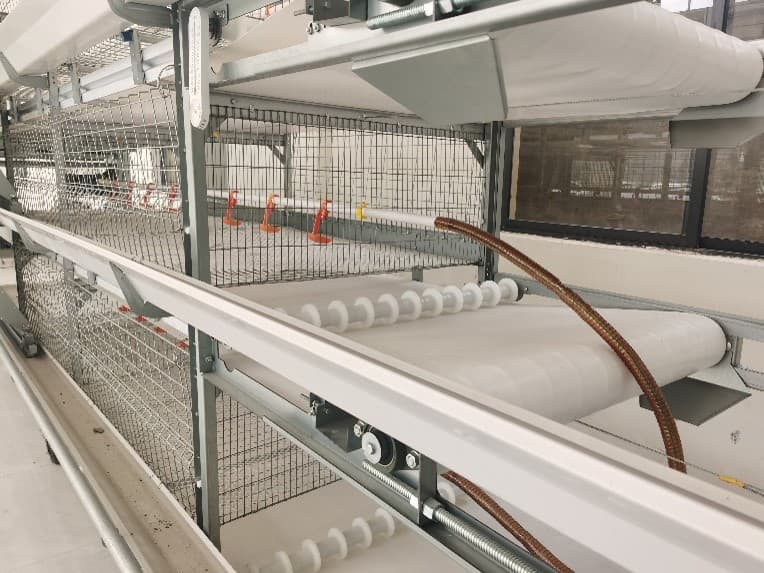
- Egg delivery to cage egg beltsEggs laid in cages roll onto smooth longitudinal egg belts (10–15m/min speed) and are transported to the terminal of each cage row, with guide rails preventing off-track movement.
- Egg loading into stacked carriersAt the belt terminal, eggs slide into custom-molded plastic carriers (with anti-collision grooves) arranged in vertical columns on both sides of the elevator. The carriers securely cradle eggs (1 egg per carrier slot) to avoid rolling, collision, or tipping.
- Controlled vertical liftingDriven by a frequency-controlled motor (0.37–1.5kW) via corrosion-resistant chains and sprockets, carriers move upward at a adjustable speed (0.5–2m/min). Eggs from 3–8 tiers are lifted to the top level synchronously, with speed matched to egg output volume.
- Gentle transfer to collection pointAt the top of the elevator, carriers tilt slightly (15–20°) to release eggs onto the central collection table or transverse conveyor belt (width 30–40cm), with soft rubber buffers reducing impact force to <0.5N.
- Carrier return cycleEmpty carriers return downward along the inner side of the frame, passing through a cleaning brush (optional) to remove dust/debris, ready for the next batch of eggs.
Key Features
- High-efficiency multi-tier collection: Simultaneously handles eggs from 3–8 tiers (customizable), processing up to 10,000 eggs/hour – ideal for large-scale H/A type cage systems (50,000+ birds).
- Ultra-low breakage rate: Food-grade high-strength plastic carriers (smooth surface + optimized slot spacing) reduce egg breakage to <0.5% (vs. 2–3% for manual collection).
- Corrosion-resistant frame: Full hot-dip galvanized steel frame (80–100μm zinc coating) withstands high humidity/ammonia in poultry houses, service life 10–12 years.
- Variable speed control: Frequency converter (inverter) enables speed adjustment (0.5–2m/min) to match egg belt speed and real-time egg production volume.
- Ergonomic central collection table: 1.2–1.5m height working platform with non-slip surface, designed for manual sorting, visual inspection, and direct packing – reduces worker fatigue by 40%.
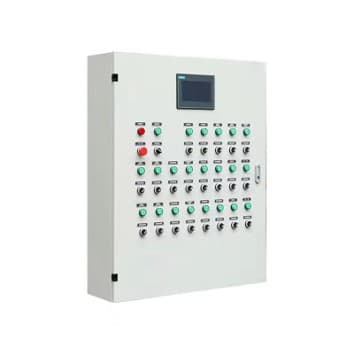
- Easy operation & maintenance: Simple control panel with start/stop, emergency stop, and overload protection; transmission components are exposed for easy inspection/lubrication (monthly maintenance only).
- Flexible system integration: Compatible with existing longitudinal egg belts and transverse conveyors in new or retrofitted poultry houses, no major structural modifications required.
Technical Specifications (Typical)
The data below are typical configuration ranges. Exact specifications can be fully customized according to house length, cage tier count, and daily egg production scale (10,000–500,000 eggs/day).
| Item | Specification (Typical Range) |
|---|---|
| Product Name | Stacked Egg Collection System / Vertical Egg Elevator |
| Applicable Cage Types | H type layer cages, A type layer cages with egg belts |
| Number of Tiers per Side | 3 – 8 tiers (customizable for cage height 1.8–4.5m) |
| Egg Carrier Material | High-strength food-grade PP/PE plastic (yellow/red/green optional) |
| Frame Material | Hot-dip galvanized steel pipe/angle steel (2.0–2.5mm thickness) |
| Power Supply | 220V/380V, 50/60Hz (110V/440V available on request) |
| Drive System | 0.37–1.5kW electric motor + stainless steel chain / sprocket transmission |
| Speed Control | Fixed speed (1m/min) or frequency converter (0.5–2m/min adjustable) |
| Collection Method | Central stainless steel collection table (1.2×0.8m) and/or PVC transverse conveyor belt (width 30–40cm) |
| Installation Position | End of cage rows, connected with longitudinal egg belts (width 15–20cm) |
| Control Panel | Start/Stop buttons, emergency stop, overload alarm, run indicator light |
| Typical Application | Commercial layer farms, automated egg production lines (50,000–1,000,000 birds) |
Exact dimensions, motor power, carrier quantity, and conveyor length can be customized to match your farm’s specific layout and production capacity.
Application & Layout
The stacked egg collection system is typically installed at one or both ends of layer houses (depending on house length: <100m = single end; >100m = dual ends). Longitudinal egg belts from each cage row feed eggs into the elevator’s input ports, with spacing between ports adjusted to match cage tier height (30–45cm per tier).
Layout Design Considerations:
- New houses: Integrate the system with cage, feeding, and manure removal systems during design to create a fully automated egg production line – optimize aisle width (1.0–1.2m) and service room space (≥4m²) for equipment installation/maintenance.
- Existing houses: Retrofit the system to match existing cage egg belts (adapter plates available for non-standard belt widths), upgrading from manual to semi/fully automatic collection with minimal downtime (installation completed in 1–2 days per unit).
The system is widely used in Africa, the Middle East, Southeast Asia, and Latin America, adapting to both closed environmental control houses and open-sided naturally ventilated houses.
Advantages for Poultry Farms
- Drastic labor cost reductionManual collection from 8-tier cages requires 1 worker per 5,000 birds; with this system, 1 worker can manage 50,000+ birds (labor cost cut by 80%). Only a small team is needed to monitor operation and pack eggs at the central table.
- Minimized egg breakage & higher saleable yieldGentle carrier-based transfer reduces breakage rate from 2–3% (manual) to <0.5%, increasing saleable egg volume by 1.5–2.5% – directly boosting revenue by $0.02–$0.03 per bird annually.
- Improved egg hygiene & qualityEggs are collected and packed within 30 minutes of laying (vs. 2–4 hours for manual collection), reducing contamination from dust, manure, and bacteria (E. coli reduction by 70%). Cleaner eggs command 5–10% higher market prices and reduce grading/rejection rates.
- Enhanced production managementCentralized collection enables real-time egg production tracking (per house/flock/tier), allowing managers to quickly identify underperforming flocks, adjust feeding strategies, and optimize overall farm efficiency (production data accuracy improved by 95%).
- Scalable & future-proof designModular construction allows adding extra elevators or extending transverse conveyors as farm scale expands (from 50,000 to 1,000,000 birds). The system is compatible with egg grading/packaging machines for full end-to-end automation.
Packaging, Installation & Service
Packaging
The system is delivered in fully disassembled form to maximize container space (30% shipping cost savings vs. pre-assembled units). All components (frame, egg carriers, motor, collection table, control panel, fasteners) are packed in waterproof wooden crates/pallets with clear labeling (part number + installation position) for easy identification.
Installation
We provide detailed 3D installation drawings, step-by-step video tutorials, and a pre-installation checklist. Our engineers offer 24/7 remote technical support (via video call/phone) during installation and commissioning, ensuring the system is calibrated to match existing egg belts (alignment error <2mm) and runs smoothly within 2–3 days. On-site installation training is optional (cost-based, available in English/Spanish/Arabic/French).
After-Sales Service
- Warranty: 1-year warranty for core components (motor, control panel, transmission); 2-year warranty for galvanized frame.
- Spare parts: We supply a full range of replacement parts (egg carriers, chains, bearings) with 7–15 day delivery to major poultry farming regions.
- Lifecycle support: Free technical consultation for the entire service life (10–12 years), including maintenance schedules and efficiency optimization advice.
This stacked egg collection system is the ideal automation upgrade for commercial layer farms aiming to reduce labor costs, improve egg quality, and scale production efficiently – delivering a return on investment (ROI) within 6–12 months for medium-to-large farms (50,000+ birds).
If you need region-specific adjustments (e.g., voltage adaptation for African/Middle Eastern grids, or material upgrades for coastal high-salt environments), we can refine the specifications and content to align with your target market’s requirements.
Interested in this product?
Get in touch for more information, pricing, or custom requirements.
Frequently Asked Questions
Get answers to common questions about our poultry farming equipment and services