
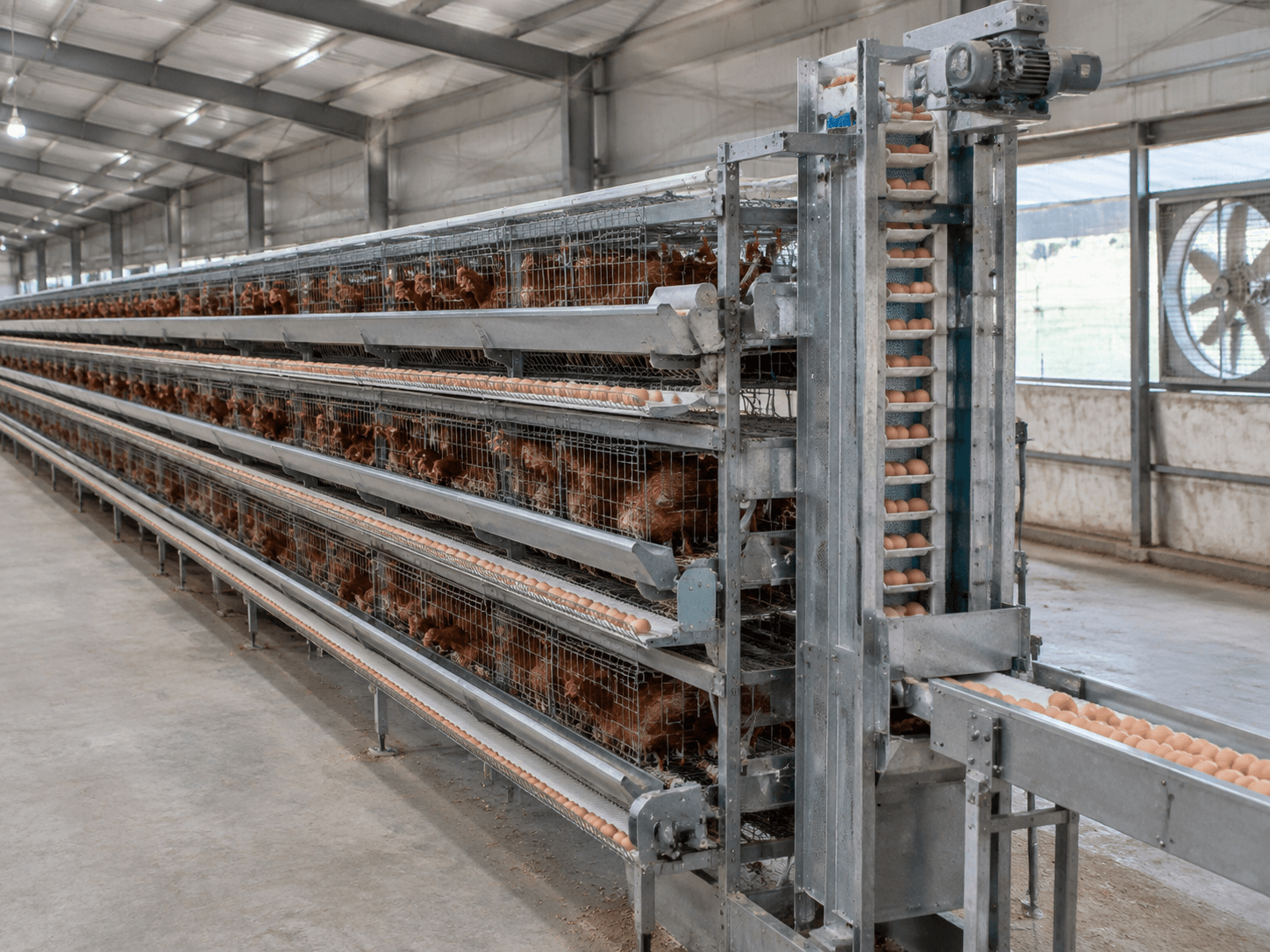
Can a Vertical Egg Elevator Connect to an Existing Layer Cage System?
A layer farm does not always need to replace its entire cage system to improve egg handling. In some projects, the farm may want to add a vertical egg elevator to move eggs from several cage levels to a central collection point.
But a retrofit is not simply a matter of placing a new machine at the end of the cage rows. The elevator must work with the existing egg belts, cage tiers, transfer direction, available space and daily collection process.
Before requesting a quotation, check the following points. They will help determine whether the elevator can be integrated into your current setup and what modifications may be required.
What Does a Vertical Egg Elevator Do?
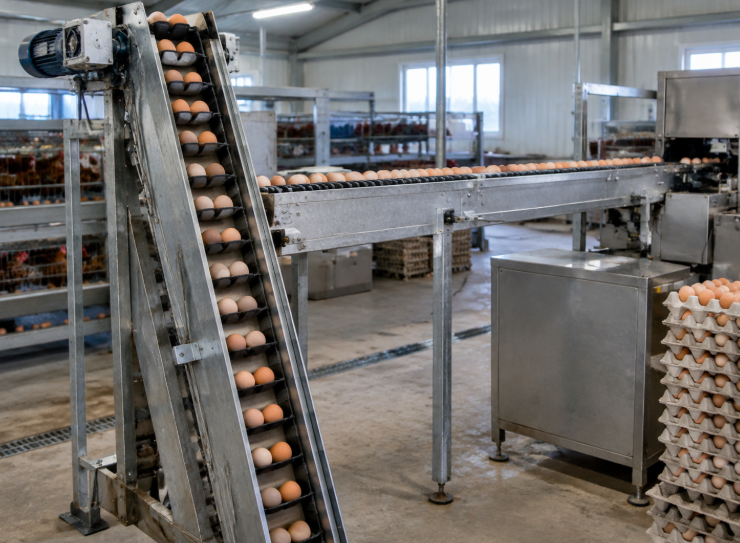
In a multi-tier layer cage system, eggs may travel along separate belts at different heights. A vertical egg elevator collects eggs from those levels and transfers them toward a common discharge point.
Depending on the farm layout, the discharge point may connect to a cross conveyor, a central collection line or another egg-handling section.
The exact configuration depends on the existing system. The number of cage tiers alone is not enough to determine compatibility.
1. Identify the Existing Cage and Egg Collection System
Start by recording what is already installed. Note:
- Cage type and number of tiers
- Number and position of cage rows
- Existing egg-belt arrangement
- Which end of each row the eggs travel toward
- Where eggs currently leave the house
- Any existing cross conveyor or collection table
- Whether all rows use the same setup
If different rows have been modified over time, document each configuration separately. A system that appears uniform from the aisle may have different belt positions or discharge directions at the row ends.
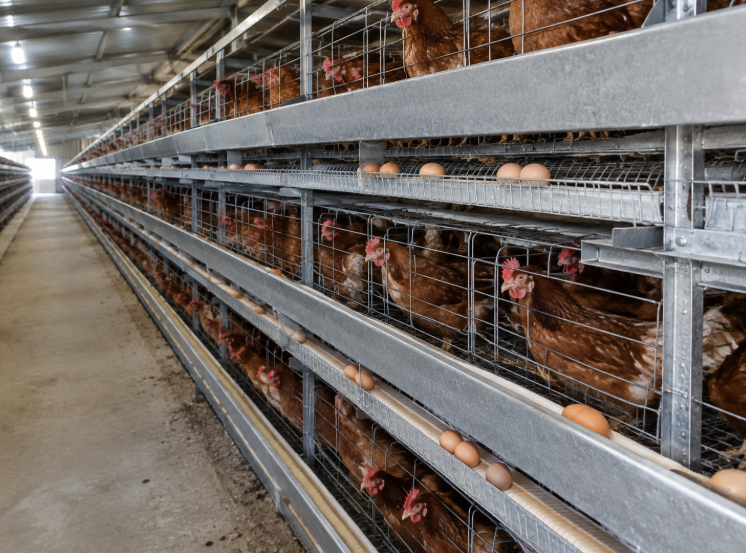
2. Check the Egg-Belt Transfer Points
Check the belt’s position and direction at the discharge end. Look for obstacles, gaps, sharp transitions or other equipment that may affect the transfer. Photos should show both the overall row end and a close-up of the belt connection area.
Do not assume that an adapter or direct connection will fit without reviewing the actual equipment. The belt dimensions and transfer design should be confirmed with the supplier before the configuration is finalized.
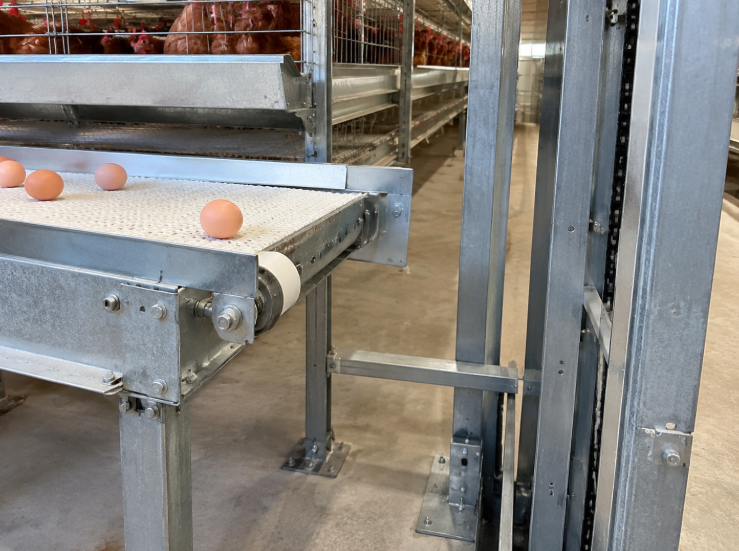
3. Measure the Available Installation Space
An elevator needs more than a footprint for its frame. The installation area should also allow for:
- Egg-belt connections from each tier
- The planned egg discharge direction
- Access for inspection and maintenance
- Safe movement for workers
- Any downstream conveyor or collection equipment
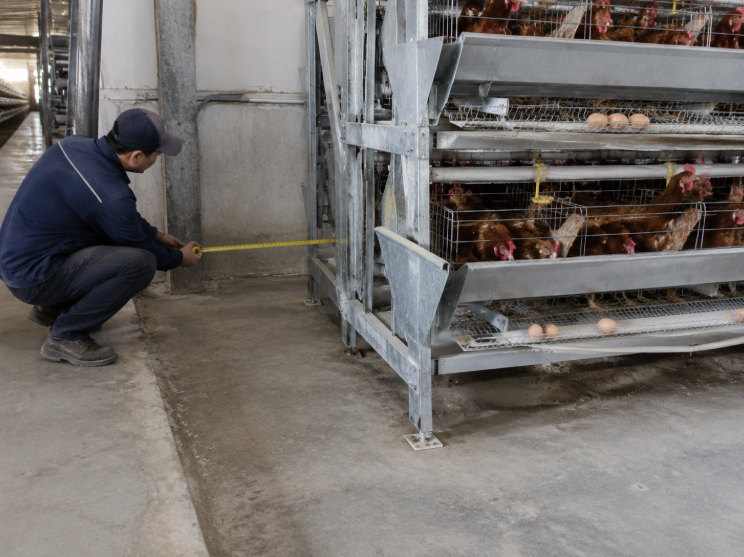
Measure the clear space around the proposed installation point, including nearby walls, columns, doors and existing machinery. A simple sketch with measurements is more useful than an estimated description such as “there is enough room at the end.”
4. Confirm the Egg Flow After the Elevator
Plan where eggs will go after they leave the elevator. Will they move to a central collection table, a cross conveyor, a grading line or a manual collection area?
The receiving equipment should match the elevator’s discharge position and the farm’s normal workflow. If workers need to carry eggs around a machine or cross a busy aisle, the installation may solve one handling step while creating another.
For a broader view of how egg collection connects with other farm equipment, see our complete layer farm equipment list.
5. Consider Installation and Farm Operation
A retrofit may require work around an operating farm. Discuss the proposed installation sequence, access to the work area and any expected interruption to egg collection with the supplier before placing an order.
The farm should also clarify who will prepare the installation area, connect supporting conveyors and provide electrical supply. Confirm these responsibilities in the project documents rather than assuming they are included.
What Information Should You Send for a Retrofit Review?
To receive a more useful initial assessment, send:
| Information | What to provide |
|---|---|
| Cage system | Type, number of tiers and number of rows |
| Existing egg belts | Photos, belt position and direction of travel |
| Row-end area | Wide and close-up photos of the proposed installation point |
| Available space | Measurements of the floor area and surrounding clearances |
| Current egg flow | Where eggs go after leaving the cage rows |
| Downstream equipment | Existing cross conveyor, collection table, grader or packing line |
| Electrical supply | Available voltage and frequency |
| Project plan | Whether the farm will keep operating during installation |
A short video showing eggs moving along the belt and reaching the row end can also help explain the current transfer process. Avoid relying on photos alone if the direction or sequence is unclear.
Questions to Confirm Before Ordering
Before approving a retrofit configuration, ask:
- Which existing cage rows can connect to the proposed elevator?
- Are any belt or transfer-point modifications needed?
- What downstream equipment is required?
- What electrical supply does the selected configuration need?
- What measurements or drawings must be confirmed before production?
- Which parts of installation are included in the quotation?
- What information should be checked during commissioning?
Get the answers reflected in the equipment list, layout or quotation so the expected connection scope is clear.
Final Recommendation
A vertical egg elevator may be considered for an existing layer cage system, but suitability depends on the cage layout, egg-belt positions, transfer points, installation space and downstream egg-handling process.
Ask for the proposed connection arrangement to be reviewed before ordering.
Want to know more?
Get in touch with us for more information about our services and products.