
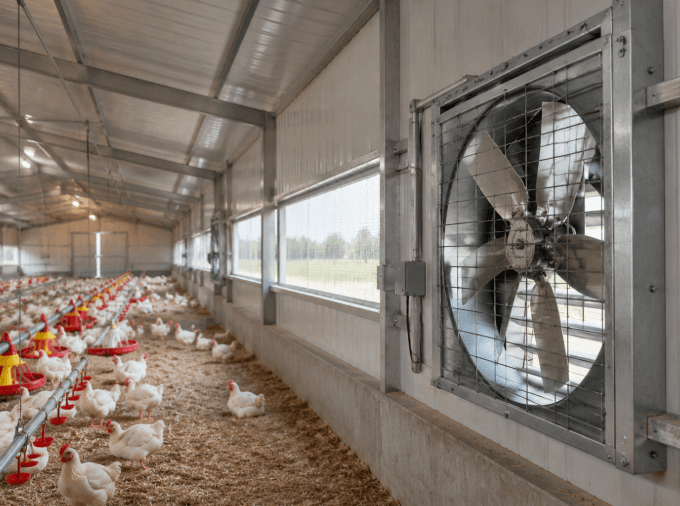
Poultry Ventilation Fan Selection: Airflow, Pressure & Power
Two poultry ventilation fans can have the same diameter and motor power, but can provide different airflow under the conditions of a poultry house. Before comparing prices, please check if each quote describes the same operating conditions and includes evidence of the exact fan configuration provided.
For new multi story buildings or ventilation upgrades, start with three questions:
- How much air must the proposed fan deliver under the required static pressure for the project?
- What power input is required at this operating point?
- Which test data supports these numbers and do they match the referenced configuration?
This guide explains how to compare supplier information. It does not specify the number of fans, ventilation settings, or complete poultry house design.
1. Do not select fans solely based on diameter or motor power
The diameter of a fan describes its size, not the airflow that resists resistance. Blade design, rotational speed, casing, transmission system, and accessories all affect performance. The rated value of the motor alone cannot determine the airflow or power consumption of the fan during operation.
Before comparing quotes, inquire about the exact fan model and configuration. The general catalog scope cannot replace the data related to fans in the quotation.
Auto ChickenCage lists fans, cooling pads, air inlets and controls within its poultry house environmental control system. Treat these as connected parts of the project, rather than choosing a fan independently from the air path it must serve.
2. Compare the airflow under the same static pressure
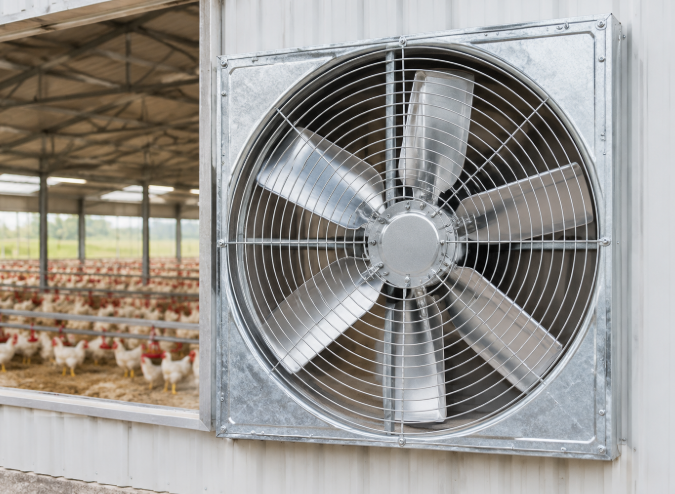
In a negative pressure chicken coop, the exhaust fan generates a pressure difference and draws in air through the expected inlet or cooling pad. These air paths will generate resistance. Therefore, static pressure is a part of the fan selection criteria, rather than an optional detail outside of the airflow diagram.
Free air flow describes the performance under zero static pressure. It should not be directly compared with the airflow of another fan, which is measured based on the specified static pressure. At a fixed speed, the airflow usually decreases as the resistance of the fan increases.
The Mississippi State University Extension fan-selection guide explains why air delivery and efficiency should be assessed as functions of static pressure, using data for the tested fan configuration.
Please ask the responsible ventilation designer to determine the required airflow and pressure conditions for the project. Then request the airflow of each fan at the same comparison point, with consistent units. A single catalog number cannot display the performance of the fan under different conditions; Fan performance curves or corresponding test tables are more useful.
Do not use generic stress values from other farms or online examples. The layout, entrance, cooling pad, and ventilation mode of the house need to be reviewed for specific projects.
3. Match power supply and test configuration
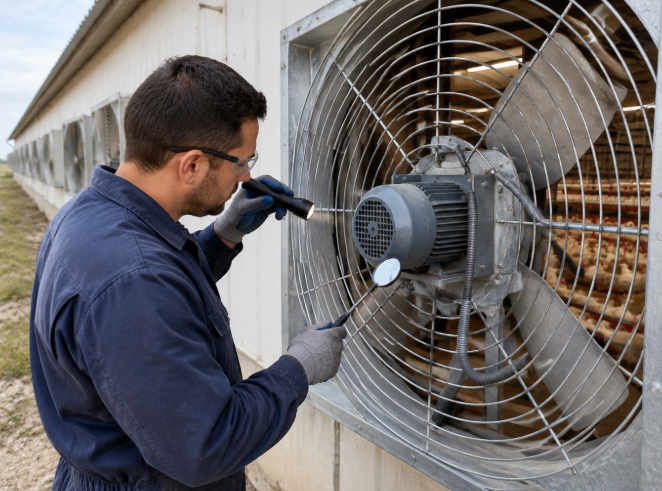
Before accepting performance comparisons, please check if the data is applicable to the configuration you intend to purchase.
Confirm voltage, phase, frequency, motor, drive device, and fan speed. If testing uses a frequency or speed different from the proposed installation, please request applicable data or documented explanations from the supplier; Do not assume that the announced airflow remains unchanged.
Also determine the accessories installed during the testing period:
- Louvers or blinds, including their location.
- Protective devices.
- Exhaust cone and fan cover.
- Any other components that affect the measured air path.
The quotation and testing records should be arranged in the same way. The performance numbers of one component do not automatically describe another component. Do not remove protective devices or other protective components to copy the catalog diagram.
4. Individual motor ratings, input power, and energy consumption
The rated value of the referenced motor and the measured electrical input power are not interchangeable. Ask what each power number represents and where it is measured. For controlled or variable speed equipment, clarify whether the input of the report includes drivers or controllers.
Compare the airflow and input power at the same operating point. Expressing the airflow per unit of electrical input in consistent units can help compare fan efficiency. If the fan cannot provide the required airflow for the project, then a fan that consumes less power may not necessarily be a better choice.
The electricity consumption also depends on the running time and the stage or speed of use. Any estimation of operating costs should include these assumptions and electricity prices. Do not consider motor nameplates, a testing point, or general energy-saving percentages as verified annual electricity bills.
5. Use a Fan Quotation Evidence Checklist
Request the following information for each proposed model. Mark missing items as unresolved rather than filling them with assumptions.
| Comparison item | Evidence to request |
|---|---|
| Fan identity | Exact model, motor, drive arrangement and configuration reference |
| Project comparison point | Required airflow and static pressure identified by the project reviewer |
| Air delivery | Airflow at that pressure, with units and the relevant curve or table |
| Electrical input | Measured input power at the stated point and its measurement boundary |
| Supply and speed | Voltage, phase, frequency and fan speed used for the data |
| Accessories | Shutters, guards, cone and housing included in the tested assembly |
| Test traceability | Report reference, date, test method, testing organization and applicable model |
| Quoted supply | Included accessories, controls, installation items and exclusions |
If a supplier provides only free-air capacity, request data for the project's comparison conditions before making a performance-based decision. If documentation applies to a different model or assembly, ask for clarification. Keep any claimed independent testing separate from certification, and request evidence for either claim.

6. Prepare project information before ordering
Send the farm location, house type, dimensions and drawings, planned flock, local supply voltage and frequency, and details of the existing ventilation equipment. Include the proposed inlet and cooling-pad arrangement, available installation positions and any constraints on modifications.
The poultry-house layout guide can help organize the building information. For equipment already in service, the hot-weather equipment checklist addresses maintenance preparation; it does not replace a new fan selection review.
Use the evidence checklist to shortlist comparable offers, then have the responsible technical team review the fan choice within the complete ventilation system. Replacing fans, changing controls or carrying out tests on an operating poultry house requires an approved plan from the responsible personnel.
To discuss a ventilation equipment enquiry with Auto ChickenCage, send your project information through the contact page. Include the fan models or quotations you are comparing and ask which model-specific curves, test records and configuration documents are available. Resolve missing performance evidence and supply responsibilities before confirming the order.
Want to know more?
Get in touch with us for more information about our services and products.