
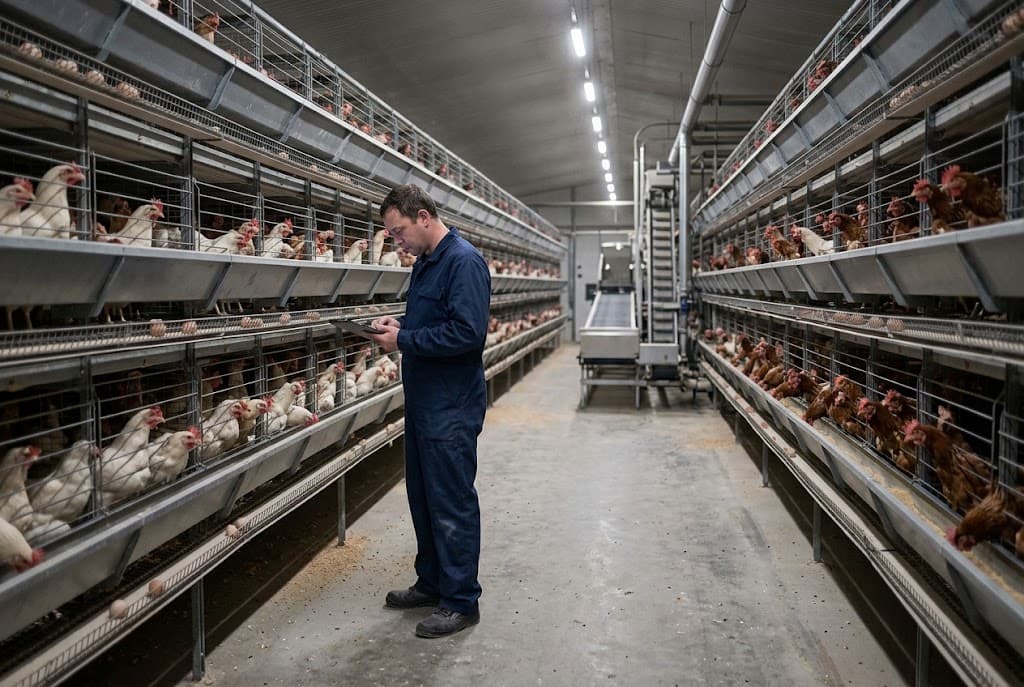
Automated Poultry Cage System: Plan for Farm Growth
Commercial poultry buyers face a difficult investment decision: how to expand or upgrade production while managing labor, operating costs, and changing market requirements. The equipment needs to fit the farm’s production model today, but the layout and investment plan should also account for future changes.
In the European Union, the European Commission intends to propose a targeted revision of animal-welfare rules for laying hens and broilers by the end of 2026, with a focus on phasing out cages. This is a planned proposal, not a blanket cage ban already in force. In Southeast Asia, Cargill has announced more than US$130 million in planned poultry investments across Thailand and the Philippines over two years, reflecting one company’s expansion plans rather than a measure of total regional equipment demand.
For farm owners, engineering contractors, and investors, the key question is how to specify a system that fits the target market, site conditions, and operating plan, with a return that can be evaluated against project-specific costs.
EU Welfare Policy: Assess the Market Before Choosing a Housing System
The EU’s planned animal-welfare revision makes market planning important for projects that supply European customers. The proposal is expected to address laying-hen and broiler rules, including a transition away from cages. Its final requirements and timetable remain subject to the legislative process.
Buyers should distinguish between requirements already in force and policy changes still under development. Before specifying a commercial layer cage system, identify the destination markets, applicable regulations and buyer requirements, expected equipment life, and potential costs of future adaptation. A project selling into multiple markets may need a different investment assessment from a farm serving only one domestic market.
Automation can coordinate feeding, manure removal, egg collection, and environmental management. However, automation alone does not establish animal-welfare compliance. The housing model and equipment must be evaluated against the requirements that apply to the farm and its sales markets.
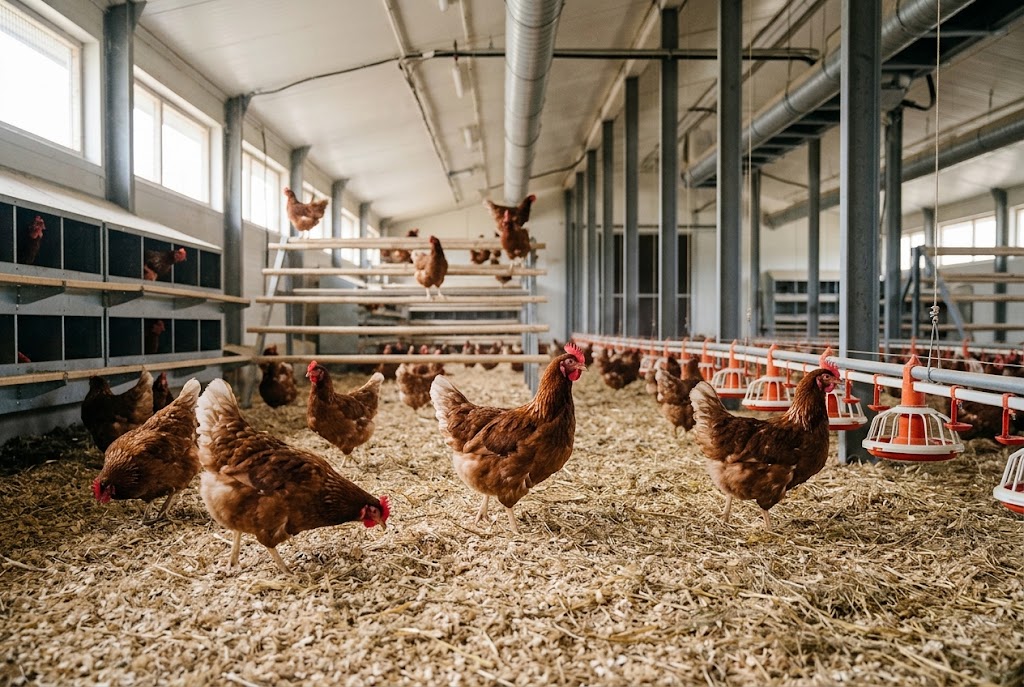
Farm Expansion: Capacity Must Match Daily Operations
Expansion involves more than the number of birds a house can accommodate. Equipment layout, staffing, utilities, workflow, maintenance, and spare-parts access all affect whether the system can support reliable operation.
A turnkey poultry project should be specified around the production stage:
- Layer farms: feeding, drinking, manure handling, egg collection, and transfer points.
- Broiler farms: the selected housing model, feed and water distribution, climate control, and between-cycle cleaning.
- Pullet farms: age-specific equipment requirements and the planned transfer to the next production stage.
Layer, broiler, and pullet systems are not interchangeable. Buyers should compare complete project scope and operating assumptions rather than relying on a generic capacity claim or a single equipment price.
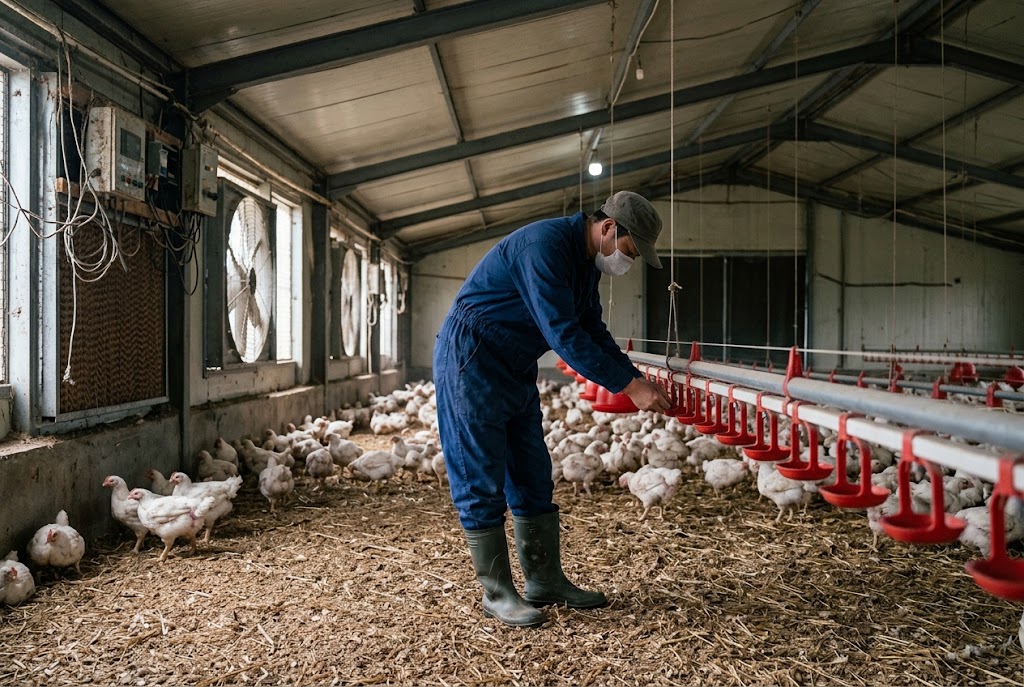
Automation and ROI: Define the Measures Before Requesting a Quote
Automation and digital monitoring are prominent industry themes, but technology alone does not guarantee a commercial return. Buyers should first identify the recurring tasks and operating costs they want to address. These may include manual feed distribution, manure removal, egg handling, environmental checks, equipment downtime, or maintenance workload.
Build an ROI assessment around the farm’s own baseline:
- Labor hours and task frequency per house
- Equipment purchase, installation, and commissioning costs
- Energy, maintenance, and spare-parts costs
- Production or quality measures relevant to the project
- Expected operating life and upgrade requirements
Use consistent assumptions when comparing supplier proposals. Any claimed labor or cost reduction should specify the farm conditions, equipment scope, and calculation method behind it. This makes it easier to estimate payback without assuming that results from another farm will transfer directly to yours.
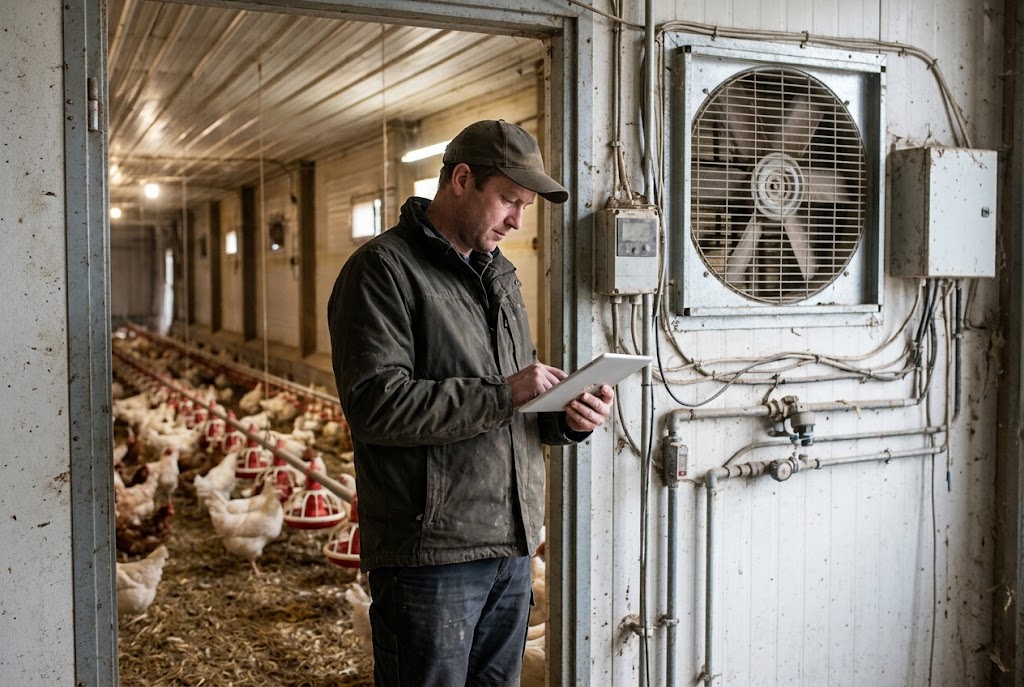
A System Approach: Match Equipment to House Conditions
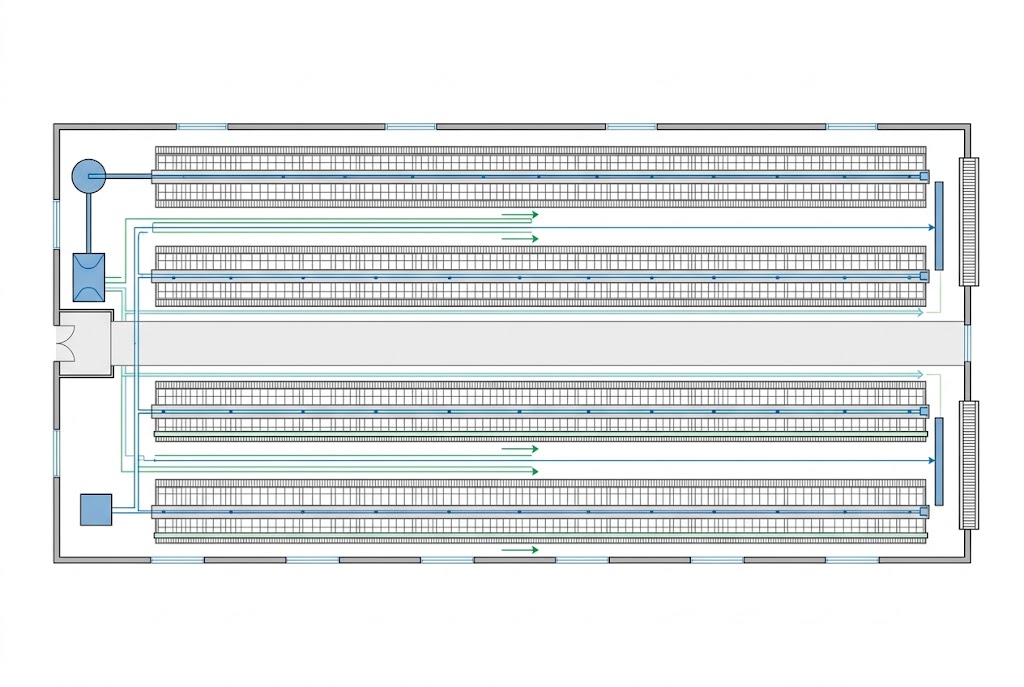
An automated poultry cage system for commercial farms should be evaluated as a coordinated project, not simply as a cage purchase. Depending on the production model, the scope may include cage rows, feeding, drinking, manure removal, egg collection, and environmental equipment.
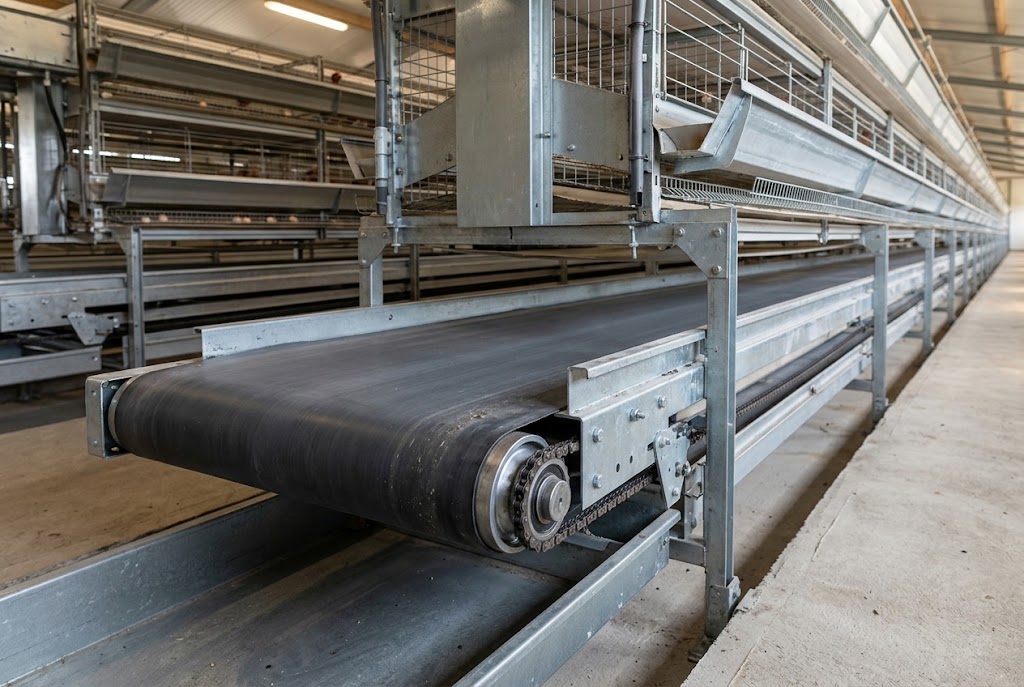
For manure management, a poultry cage manure belt system can be assessed for compatible A-type or H-type cage layouts. Buyers should confirm belt arrangement, discharge direction, house length, cleaning and maintenance requirements, and how manure handling connects to the farm’s storage or processing plan.
For feeding, an overhead travelling feeder for poultry cages may be considered where its configuration matches the cage rows and house layout. Project review should include row length, feed supply, power, installation scope, and integration with other planned systems.
These are equipment options, not universal recommendations. Their suitability depends on the farm’s production model, house dimensions, utilities, operating practices, and applicable requirements. Where cage-free transition is relevant, buyers should first compare the housing systems allowed and expected in their destination markets.
Selection Guide: What to Confirm Before Ordering
Give each supplier the same project information so quotations can be compared on a like-for-like basis.
| Evaluation area | What to confirm |
|---|---|
| Production model | Layer, broiler, pullet, or breeder; flock capacity and production stage |
| Destination market | Installation country, sales markets, and applicable requirements |
| House conditions | New build or retrofit, dimensions, structure, ventilation, water, and power |
| Equipment scope | Feeding, drinking, manure removal, egg collection, and environmental systems |
| Design assumptions | Cage configuration, tiers, rows, capacity calculation, and workflow |
| Project delivery | Design, equipment supply, installation, commissioning, and training responsibilities |
| After-sales support | Warranty terms, spare parts, troubleshooting, and service arrangements |
| Total cost | Equipment, freight, installation, energy, labor, maintenance, and upgrade scenarios |
Check that each supplier’s quotation states what is included and what is excluded. A low initial price may not include the same installation, controls, accessories, training, or support as another proposal.
For supplier due diligence, review the company profile and manufacturing information.. Handan Chicken Guard Machinery states that it was founded in 2003 and has ISO 9001 certified quality management. Buyers evaluating certification should request the current certificate and confirm its issuing body, validity period, and scope.
Mid-article CTA: Share your house dimensions, planned flock capacity, destination market, and automation requirements to request a project-specific layout and quotation through the poultry farm consultation and quote form.
Frequently Asked Questions
What information is needed for an automated poultry cage system quote?
Provide the production type, target capacity, house dimensions or drawings, project country, new-build or retrofit status, utilities, and the equipment functions required. These details help suppliers prepare a project-based configuration.
Can an existing poultry house be upgraded with an automatic system?
It depends on the building structure, available space, cage layout, ventilation, power supply, and existing equipment. A layout and site assessment are needed before confirming compatibility.
Does an automated cage system guarantee compliance with EU welfare rules?
No. Compliance depends on the applicable requirements, housing design, farm management, and destination market. The planned EU revision should be monitored, but it should not be treated as a substitute for checking current rules.
How should buyers compare poultry cage suppliers?
Compare the specified equipment, design assumptions, installation and commissioning scope, warranty, spare-parts plan, and after-sales arrangements. Ask suppliers to document the assumptions behind any performance or ROI estimates.
What is the difference between layer, broiler, and pullet systems?
They serve different production stages and operating requirements. Specify the bird type, stage, housing model, capacity, and workflow so that the proposed configuration matches the farm.
---
The right system depends on your production plan, house conditions, destination market, and operating priorities. Send your flock capacity, house layout, project country, and required automation scope to request a custom system configuration and poultry equipment quotation. A project-specific proposal can define the equipment scope, design assumptions, delivery responsibilities, and information needed to assess investment costs and ROI.
Want to know more?
Get in touch with us for more information about our services and products.