

Canton Fair 2026 Poultry Farm Automation Guide: What Buyers Should Prepare
Canton Fair 2026 is an opportunity for poultry farm owners, project developers, distributors and equipment buyers to meet suppliers and compare solutions. To make each conversation more productive, prepare the basic details of your farm project before discussing equipment or requesting a quotation.
Whether you are planning a new layer farm, expanding an existing operation or upgrading selected equipment, this guide explains what information to prepare and what to discuss with poultry equipment suppliers.
1. Define Your Farm Project
Start by identifying the type of project you are planning:
- A new layer farm
- An expansion of an existing farm
- An upgrade or replacement of existing equipment
- A poultry equipment distribution or supply project
Your project type affects the equipment scope, layout and installation requirements. A new farm gives you the opportunity to plan the house and equipment as an integrated system. For an existing farm, the current house structure and equipment will influence which upgrades are practical.
Also consider your target market and preferred production model. Customer expectations and market requirements can vary, so share these details with suppliers before selecting a housing system.
2. Prepare Your Farm Capacity and Poultry House Details
Farm capacity is an important starting point, but suppliers also need information about the poultry house. Before attending the fair, prepare:
- Planned or current flock capacity
- Poultry house length, width and usable height
- Number of houses and production stages
- Existing cage type, number of rows and tiers, if applicable
- Available aisle and service space
- Site photos, layout drawings or construction plans
- Electricity and water supply information
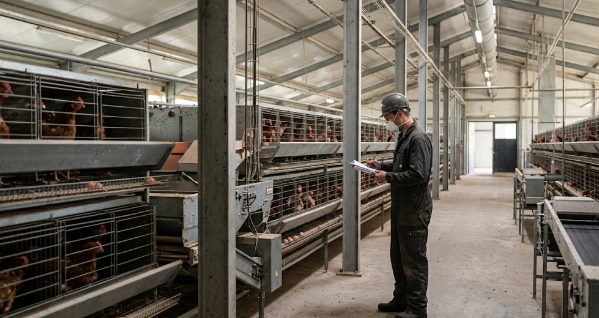
For an existing farm, record the positions of columns, doors, feed storage, manure discharge points and egg collection areas. These details help suppliers understand the site and discuss a suitable equipment layout. The H-type galvanized layer chicken cage system is one equipment option for commercial layer houses.
3. Plan the Complete Automation Workflow
A layer farm automation system includes several processes that need to work together. When comparing suppliers, discuss how the equipment will connect across the poultry house:
- Feeding: How will feed move from storage to the cage rows and reach the birds? Consider how an overhead travelling feeding machine may fit the house layout.
- Drinking: What water supply and drinking system does the farm require?
- Manure removal: How will manure be collected, transported and discharged? Review the belt manure removal system in relation to the house layout and manure discharge point.
- Egg collection: How will eggs move from the cage rows to the collection or packing area? Consider how a stacked egg collection system with a vertical elevator can connect with the egg handling workflow.
- Ventilation and cooling: What environmental conditions must the poultry house manage?
- Egg handling and packing: How will collected eggs be transferred for packing or further processing? Review the automatic egg tray packing machine as part of the egg handling plan.
Discussing the entire workflow can help you compare complete project scopes, equipment compatibility and future expansion options—not just individual machine prices.
4. Consider Local Climate and Site Conditions
Local operating conditions should be part of the equipment discussion. Prepare information about seasonal temperatures, humidity, ventilation requirements, power supply and water availability. If the farm is located in a hot or humid region, ask how ventilation and cooling equipment can be planned for the poultry house and its operating conditions. The poultry house environmental control system is relevant to discussions about ventilation and cooling.
For a new project, discuss environmental control alongside the house layout and equipment arrangement. For an existing farm, share details about current ventilation equipment and any known site constraints.
5. Compare the Full Equipment Scope
When reviewing supplier proposals, make sure you understand what is included. Ask about the equipment configuration, connection points, installation requirements, spare parts and technical support. For a fair comparison, provide the same project information to each supplier and compare quotations based on a similar equipment scope.
A proposal should clearly identify the equipment and configuration being offered. If the farm layout or project details are not final, ask what additional measurements, drawings or site information are needed before the configuration and quotation can be confirmed.
6. Bring a Project Brief to the Fair
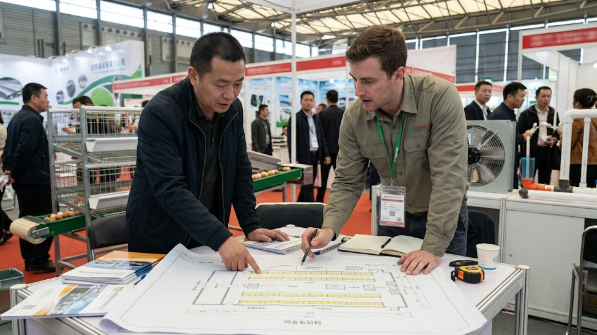
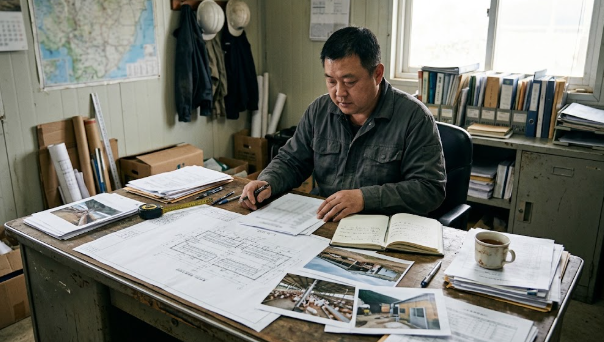
A concise project brief can help suppliers understand your requirements quickly. Include your project location, farm type, flock capacity, poultry house dimensions, existing equipment, preferred automation level, climate conditions and project timeline.
You can also prepare questions about installation, maintenance, spare parts, delivery and after-sales support. If some information is not yet available, note what still needs to be confirmed and ask suppliers which details they need next.
Make Your Canton Fair Visit More Productive
A successful equipment discussion begins with a clear understanding of your farm. By preparing your capacity, house dimensions, site conditions and automation priorities, you can compare suppliers more effectively and focus on solutions that fit your project.
Want to know more?
Get in touch with us for more information about our services and products.