
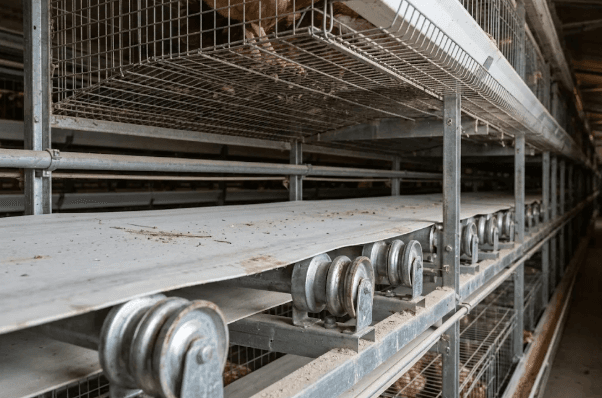
Poultry Manure Belt Tracking: Checks Before Replacement
If the issues with the belt path, drum, scraper, or driver are not resolved, the new poultry manure belt may deviate from the track again. Repeated lateral movement before ordering another belt is the reason for investigating the installed system.
For egg laying farms, the first issue is whether the belt itself is damaged, whether attention should be paid to other components, or whether adjustments are needed. This guide explains what to record and what to ask qualified technicians before deciding to repair, replace, or track upgrades.
1. Identify the Symptom Before Deciding What to Replace
Belt tracking describes lateral alignment during driving. Slip is related to the transmission of the drive belt. The belt moving to one side and the belt stopping while the drive is running should be recorded as different symptoms, even if they occur simultaneously.
Starting from the position of the house, row, floor, and belt. The belts below the cage layer, cross conveyor, and inclined discharge conveyor can use different routes and driving devices.
| What you observe | What to record | What needs assessment |
|---|---|---|
| Belt moves toward one side | Direction, affected section and location at the drive end, return end or along the row | Belt route, roller arrangement and nearby contact points |
| Edge wear, folding or tearing | Damage location and contact marks, photographed after isolation | What is contacting the belt and whether continued use is permitted |
| Drive operates but belt travel is irregular or stops | Existing observations, load conditions, alarms and unusual noise | Drive condition, belt contact and other possible restrictions |
| Problem begins after joining or maintenance | Work completed, joint photographs and when the symptom appears | Whether the joint or recent work is involved |
These observations help define the inspection; they do not establish the cause. Use existing records where possible. Do not restart damaged equipment solely to reproduce the problem or obtain a video.
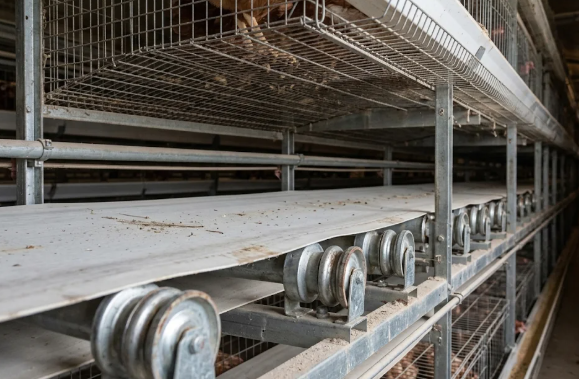
2. Check the Belt Route, Rollers, Scraper and Joint
Before cleaning, measuring or accessing components, follow the installed equipment’s isolation procedure to prevent automatic or unintended restart. Inspection and adjustment require personnel authorised and competent for the task. Guards must be in place before operation.
Ask technicians to review the following areas against the equipment manual and drawings:
- Belt path and bracket: Friction marks, obstacles, displaced brackets, and known frame changes, including at the drive and return ends.
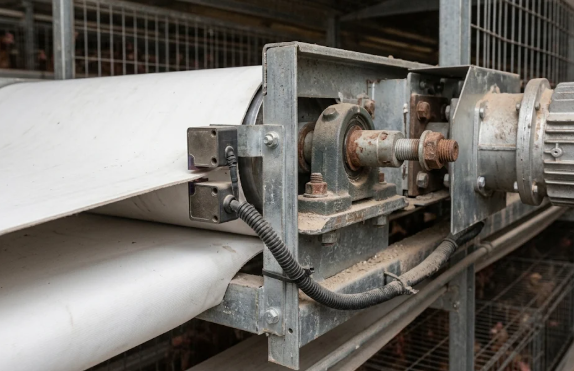
- Drum: Visible damage or accumulation of feces, and identify the affected drum.
- Scraper: blade status, contact or gap arrangement, joint passage.
- Connectors and previous repairs: Are the connector records, patches, and symptoms consistent with the connectors that passed through the component.
- Tensioning and driving contacts: Instructions for previous adjustments and installation arrangements.
Chore-Time’s ME2457A Manure Drive manual describes snub-roller scrapers that keep rollers clean and improve tracking. It also specifies a particular overlap orientation and warns that an incorrect joint can catch and damage the belt.
Those details support inspecting deposits, scraper condition and the joint. The settings and joining instructions apply to the equipment covered by that manual. They should not be copied to a different poultry manure removal system.
3. Do Not Treat Every Tracking Problem as a Tension Problem
Relying solely on lateral movement or sliding cannot determine the need for greater tension. Before changing the settings, it is necessary to evaluate the reasons.
The Chore Time manual deals with tensioning, fine-tuning, driving, and snub roller contact and tracking separately, with specific adjustment conditions attached. The general instructions for tightening one side cannot replace the instructions for the installed equipment.
The maintenance records should explain the discovered content, suggested work, and how the results were verified. The adjustment of direction, restrictions, and sequence must come from the applicable equipment instructions.
4. Confirm Compatibility Before Considering Automatic Tracking
Automatic manure removal and automatic belt tracking are separate functions. Establish what tracking equipment is already installed before comparing upgrade options.
Big Dutchman’s AMBA provides one example. According to its official product page, light sensors on both sides of the belt at the drive detect deviation and signal a motor to adjust the belt’s running position. Big Dutchman describes retrofit availability for its own manure belt drives.
That manufacturer-specific statement does not establish compatibility with another brand. Before purchasing an automatic tracking system, request written confirmation of:
- Supported drive models and mechanical interfaces.
- Power supply and control requirements.
- Installation scope and commissioning checks.
- Any belt or component repairs needed before the upgrade can be assessed.
Repeated manual adjustment, by itself, is not enough to determine that an automatic tracking upgrade is the appropriate purchase.
5. Decide Between Corrective Work, Repair and Replacement
Use the inspection findings to define the next step rather than treating the symptom as a parts specification.
| Inspection finding | Decision to confirm |
|---|---|
| Belt is assessed as usable and a cleaning or adjustment issue is identified | Correct the issue under the equipment instructions and record the verification result. |
| A roller, scraper, support or drive component is defective | Define the corrective work and assess whether the belt has also been damaged. |
| Belt or joint damage is identified | Establish whether an approved repair or rejoining method is available, or whether replacement is required. |
| Cause, equipment identity or acceptable condition remains unclear | Obtain the missing evidence before ordering a replacement or tracking upgrade as the solution. |
A joint problem does not automatically establish that the entire belt must be replaced. Equally, repair should not be assumed possible. The permitted method, damage limits and return-to-service conditions require an equipment-specific assessment.
The responsible technical personnel should determine the verification conditions, required protective measures, belt travel, joint passage, scraper interaction, and inspection of fecal transfer. Record the findings and results in the maintenance records.
6. Prepare a Fault Record for Your Supplier Enquiry
Before requesting parts, assemble one record with:
- Equipment manufacturer, model, and drive reference (if known), as well as the location of the house, row, tier, and belt.
- Symptom location, time, operating conditions, and the time when the problem first appeared.
- Check the results and recent cleaning, adjustment, component replacement, or connection work.
- Safety obtained photographs of the affected area, drive end, return end, and connector; Existing videos (if available).
- Decision required: Further inspection, corrective work, maintenance evaluation, or replacement specification.
For an Auto ChickenCage enquiry, include this record with your message using the contact details on the website. Ask whether the equipment and requested work fall within the available support scope. Diagnosis, site service, parts supply and retrofit availability need confirmation for the specific enquiry.
If replacement is recommended, use our replacement poultry manure belt measurement and compatibility guide to prepare the dimensions, material, joint requirements and quotation scope.
The purchasing decision should follow the inspection findings. A new belt is only a suitable next step when its specification and any necessary corrective work have been established.
Want to know more?
Get in touch with us for more information about our services and products.