
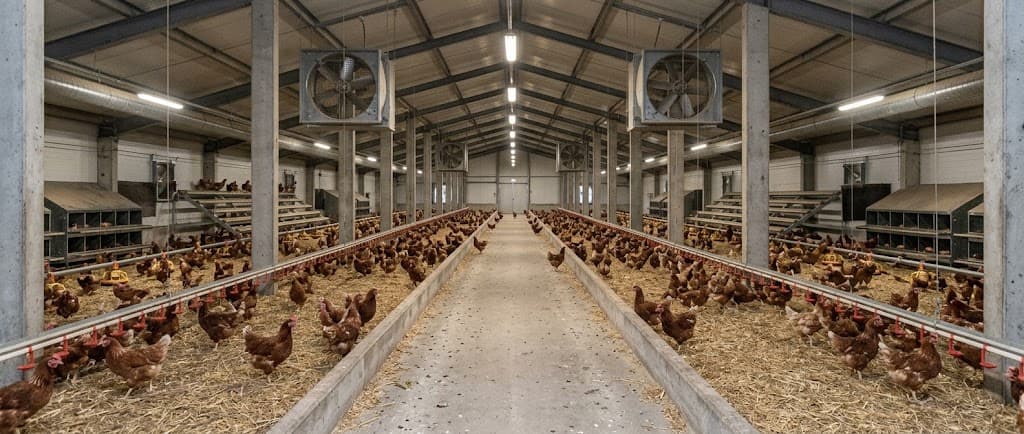
Cage-Free Egg Production Is Growing: What Layer Farm Buyers Should Check
Egg production systems are changing in some markets, and cage-free production is receiving more attention from retailers, food companies and farm investors.
For example, USDA data estimated that cage-free hens represented 47.7% of the U.S. table-egg layer flock in April 2026, compared with 45.8% in 2025. This is a U.S.-specific figure, not a global rule or a prediction for every country. Buyers should check the regulations and customer requirements that apply to their own market before choosing a production system.
The key question for a new project is not simply whether cage-free production is growing. It is whether the planned system fits the farm’s destination market, customer commitments, building, operating model and investment plan.
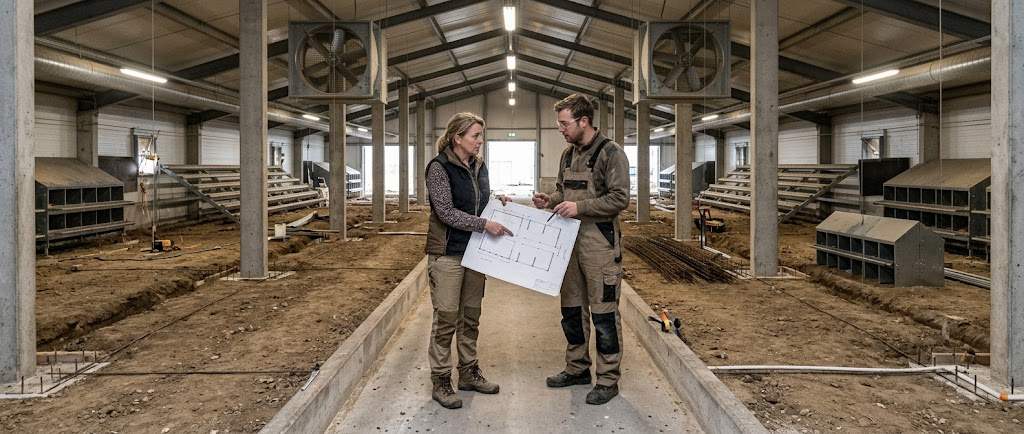
1. Confirm the Requirements in Your Target Market
Before requesting equipment quotations, identify where the eggs will be sold. Requirements may differ between countries, regions, retailers and food-service buyers.
Confirm:
- Whether local rules specify an approved production system
- Whether retailers or food companies have their own sourcing standards
- Whether the requirements apply to shell eggs, processed eggs or both
- Whether certification, audits or records are needed
- Whether the requirements affect new farms, existing farms or both
- When any confirmed requirement takes effect
Do not make an investment decision based only on a headline about another country’s market. Check the current local rules and written customer specifications with the relevant authorities, buyers and qualified advisers.
2. Choose the Production System Before Finalizing the House
Cage-based and cage-free systems can require different building layouts, bird-management routines and equipment. Deciding on a production system late in construction may result in changes to the house design or equipment plan.
Before construction or renovation, consider:
- Target flock size
- Available land and house dimensions
- Local climate and ventilation needs
- Labor availability and daily management
- Egg collection and handling requirements
- Manure or litter management
- Expected market and customer requirements
If cage systems are allowed and match your customer requirements, compare options such as an H-type layer cage system with the project’s space, labor and automation needs. The right choice should be based on the complete project—not on bird capacity alone.
3. Think Beyond the Housing Equipment
A production-system decision affects more than the birds’ housing. It may also change how the farm handles feeding, manure, ventilation and eggs.
For a cage-based project where this equipment is permitted and appropriate, review the following systems as part of the layout:
- Overhead travelling feeding machine — review its route, feed supply point and compatibility with the planned cage rows.
- Belt manure removal system — confirm the discharge direction and how manure will be handled outside the house.
- Vertical egg collection system — check whether its collection method fits the cage layout and the downstream egg-handling process.
- Poultry house environmental control system — coordinate ventilation and cooling with the building and planned flock-management system.
These links are for reviewing equipment options, not a recommendation that cage-based equipment is suitable for every project. If your project requires cage-free housing, confirm that each proposed product is designed for and compatible with that system before considering it.
4. Plan Egg Handling for the Intended Market
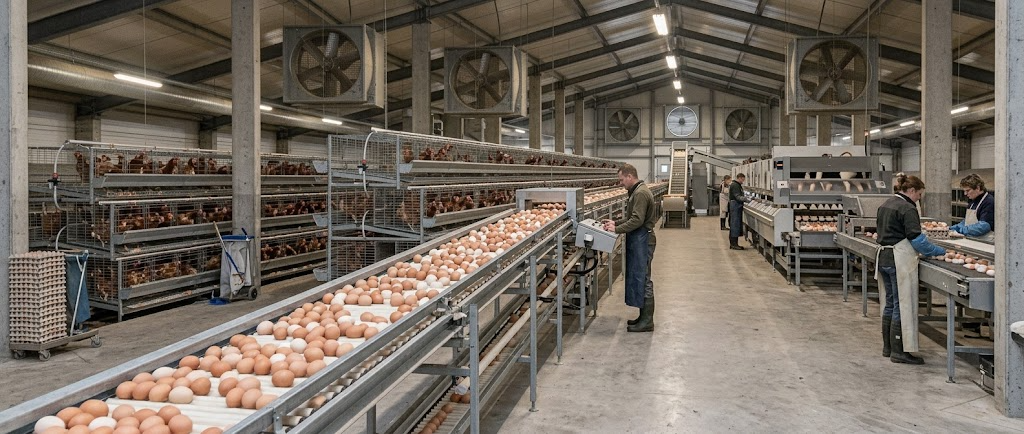
The route from the hen house to the packing or dispatch area should match the farm’s egg-handling plan. Consider where eggs will be collected, checked, graded, packed and stored.
For projects using a compatible collection setup, a vertical egg elevator may be one option to review. The product configuration needs to be checked against the actual cage or collection layout; do not assume it can connect to every existing system.
For the downstream packing stage, review the automatic egg tray packing machine against the egg volume, tray type, working space and other processing equipment.
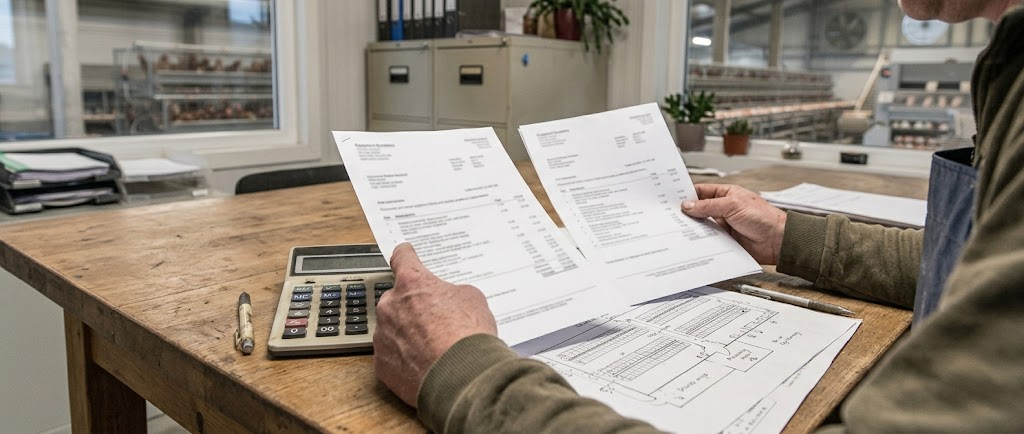
5. Compare the Full Cost of Each Option
A lower initial equipment price does not necessarily mean lower total project cost. Compare each option using the same scope and planning assumptions.
Include:
- Building preparation or renovation
- Housing and production equipment
- Installation and commissioning
- Electrical and water requirements
- Labor and daily operating procedures
- Maintenance and replacement parts
- Certification, audits or customer requirements, where applicable
- Potential future changes to the market or production plan
Ask suppliers to clearly identify what is included in the quotation and which site preparation or supporting equipment is excluded. Have qualified local advisers review any regulatory, certification or financial assumptions.
6. Keep Future Changes in Mind
Market requirements can change, but a farm should not invest based on an unconfirmed prediction. Instead, ask what changes could realistically affect the project and whether the building or workflow can accommodate them.
For example, buyers can discuss:
- Whether the project may expand in phases
- Whether additional egg-handling capacity may be needed
- Whether equipment can be serviced or replaced without major disruption
- Whether the house layout leaves practical access for maintenance
- Which parts of the project would need redesign if customer requirements change
Separate confirmed requirements from possible future scenarios. This makes it easier to compare suppliers’ proposals without treating speculation as a guaranteed market trend.
Questions to Ask Before Ordering
Before approving an equipment plan, ask:
- Which production system does the target market or customer require?
- Has the requirement been confirmed with a current official or customer source?
- Is the quoted equipment designed for the selected production system?
- What building dimensions and utilities are required?
- How do feeding, manure handling, ventilation and egg collection fit together?
- What equipment is included—and excluded—from the quotation?
- Which assumptions should be confirmed by a local adviser or regulator?
Final Recommendation
Cage-free production is an important development in some markets, but it is not a universal instruction for every farm. Confirm the rules and customer requirements for your destination market first. Then choose the production system, building layout and equipment as one coordinated project.
Want to know more?
Get in touch with us for more information about our services and products.