
What Should a Chicken Cage Warranty Cover? A Buyer’s Guide to After-Sales Support
When buying a chicken cage system for a commercial poultry farm, buyers usually compare cage price, bird capacity, cage type, and automation level.
However, a complete poultry farm project involves more than the equipment price.
A layer cage system may include cage frames, wire mesh, drinking lines, feeding equipment, manure removal equipment, egg collection equipment, motors, electrical components, spare parts, layout drawings, packing lists, and installation guidance.
Before placing an order, buyers should understand what the warranty and after-sales support plan covers.
A clear support plan helps the buyer prepare for installation, daily operation, maintenance, spare parts management, and possible technical questions after the equipment arrives.
Why Should Buyers Check Warranty and After-Sales Support?
A chicken cage system is a project-based purchase. The equipment needs to fit the poultry house, match the planned bird capacity, and work with the farm's water supply, power supply, climate, and daily management plan.
After-sales support can be important for:
- Cage assembly and cage row installation
- Drinking system connection
- Feeding system setup
- Manure belt adjustment
- Egg collection system installation
- Motor and electrical component identification
- Layout drawing explanation
- Spare parts identification
- Basic operation and maintenance questions
- Equipment troubleshooting during installation
Before confirming an order, buyers should not only ask, “What is the cage price?”
They should also ask, “What equipment documents, installation guidance, spare parts, and technical support are included in this project?”
Warranty and After-Sales Support Are Not the Same
Warranty and after-sales support are related, but they cover different parts of a poultry equipment project.
| Support area | What buyers should understand |
|---|---|
| Warranty | The agreed coverage for specified equipment components and manufacturing-related issues |
| Technical support | Guidance for equipment questions, layout drawings, installation and operation |
| Installation support | Help with the cage assembly sequence and equipment connection process |
| Spare parts support | Identifying replacement parts and preparing a spare-parts plan |
| Operation guidance | Basic information for using feeding, manure removal, egg collection and drinking systems |
| Maintenance guidance | Routine checking, cleaning, adjustment and parts inspection information |
The final warranty scope and support arrangement should be clearly listed in the quotation, equipment list, or purchase agreement.
1. Check Whether the Cage System Is Clearly Listed
The cage system should be described clearly before the order is confirmed.
The buyer should check:
- Cage type
- Cage tiers
- Cage row quantity
- Total bird capacity
- Cage wire and support frame scope
- Cage legs and brackets
- Feed troughs
- Cage doors
- Clips, bolts and connectors
- Drinking system components
For example, A-type and H-type layer cages have different structures, capacity arrangements, and automation options.
A-Type Layer Chicken Cage System
H-Type Galvanized Layer Chicken Cage System
A clear equipment list helps buyers understand which parts belong to the cage structure and which parts belong to separate automation systems.
2. Check the Scope of Automatic Equipment Support
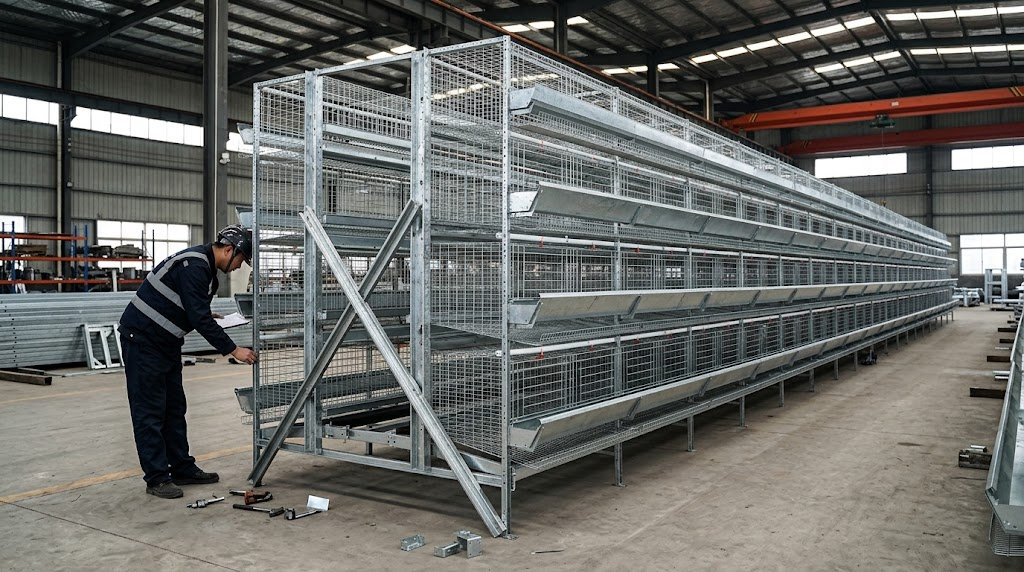
Automatic poultry equipment may include moving parts, motors, belts, drive systems, control components, and electrical accessories.
These systems should be listed separately from the main cage structure.
| Equipment system | Items buyers should identify |
|---|---|
| Automatic feeding | Feeding machine, feed troughs, tracks, motor, supports and control components |
| Manure removal | Manure belts, rollers, scrapers, drive parts, motors and discharge components |
| Egg collection | Egg belts, elevators, transfer parts, motors and control components |
| Environmental control | Fans, cooling pads, air inlets, controllers, sensors and accessories |
| Drinking system | Nipple drinkers, water pipes, regulators, filters and connectors |
Automatic Poultry Cage Feeding Machine
Automatic Manure Belt Removal System
Vertical Egg Collection System for Layer Cages
The buyer should ask which equipment sections are included and what technical documents are provided for each section.
3. Ask for Installation Drawings and Equipment Documents
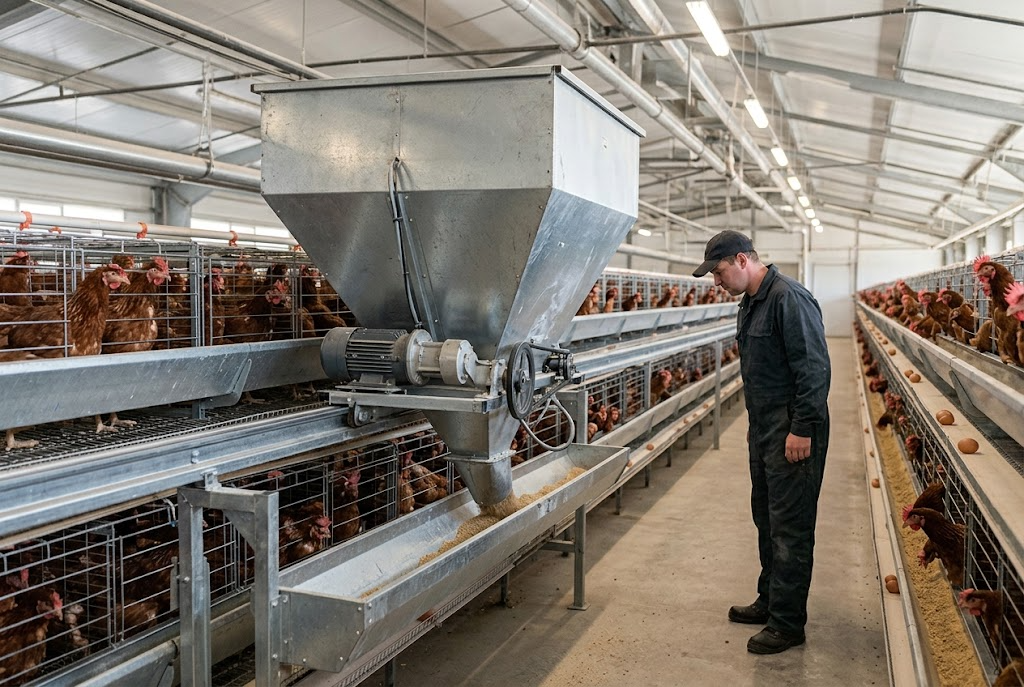
A poultry cage system should be installed according to a layout that matches the actual poultry house.
Before shipment, buyers should request:
- Poultry house layout drawing
- Cage layout drawing
- Equipment list
- Packing list
- Cage row arrangement
- Drinking system diagram
- Feeding system position
- Manure discharge direction
- Egg collection direction
- Electrical connection information
- Installation sequence
- Spare-parts list
The layout drawing should show how the cage system fits inside the poultry house.
This is especially important for projects with automatic feeding, manure removal, egg collection, or ventilation equipment.
4. Check Whether Installation Guidance Is Available
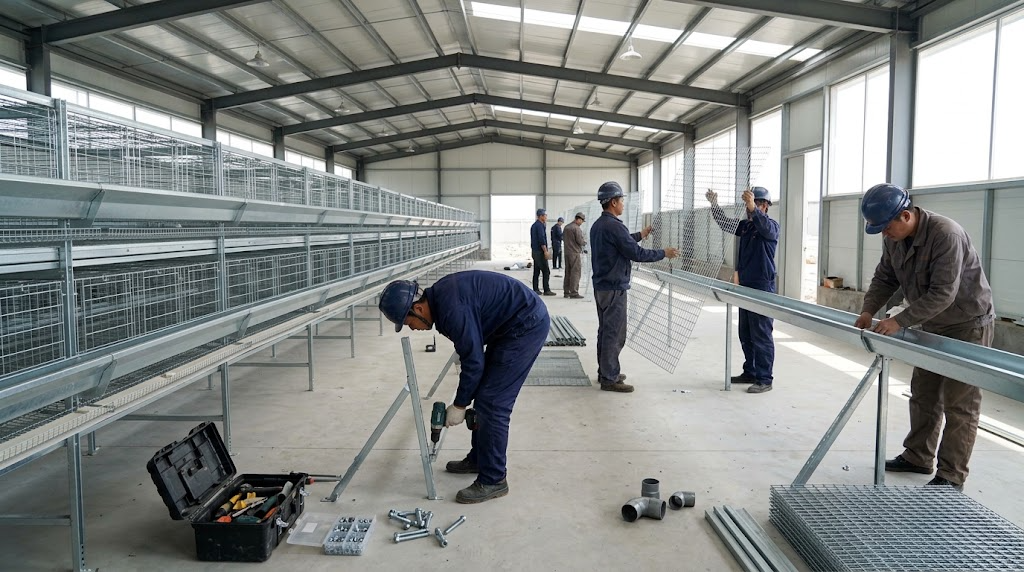
Many overseas buyers install chicken cage systems with local workers or local construction teams.
Before the equipment arrives, buyers should understand what guidance is available during installation.
Useful project guidance may include:
- Cage assembly sequence
- Cage row installation steps
- Drinking line connection guidance
- Feeding system setup
- Manure belt installation
- Egg collection equipment setup
- Basic electrical connection information
- Equipment layout explanation
- Equipment testing sequence
- Spare-parts identification
The buyer should prepare the poultry house, installation team, water source, power supply, storage area, and basic tools before installation begins.
5. Ask About Spare Parts Before Ordering
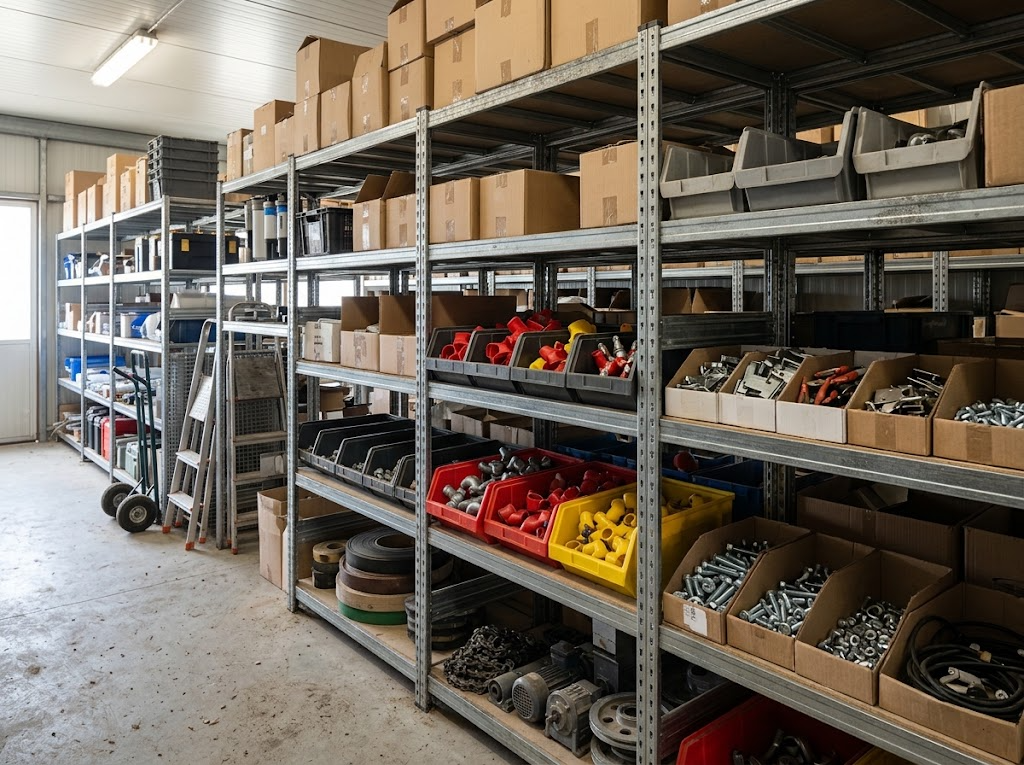
Spare parts are important for overseas poultry farm projects because some small parts may not be readily available locally after installation.
A spare-parts package may include:
- Nipple drinkers
- Pipe connectors
- Cage clips
- Bolts and fasteners
- Feeding system wear parts
- Manure belt components
- Egg belt components
- Motor-related accessories
- Electrical components
- Other high-wear parts
Buyers should request a separate spare-parts list.
Spare parts should be packed and labeled separately from the main installation components. This helps the farm store them properly and identify them quickly when required.
6. What Information Is Needed for Technical Support?
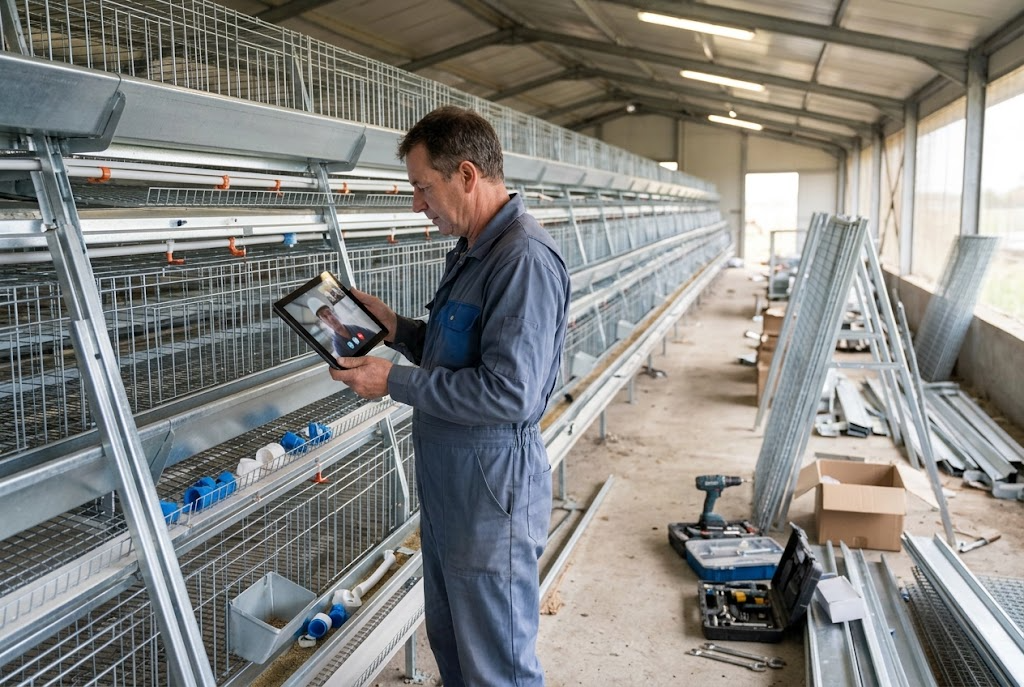
Technical support becomes more effective when the buyer provides clear project information.
| Information to provide | Why it is useful |
|---|---|
| Target bird capacity | Helps confirm the cage configuration |
| Poultry house dimensions | Helps verify whether the layout fits the building |
| Country and climate | Helps consider ventilation and environmental control requirements |
| Cage type | Confirms whether the project uses A-type or H-type cages |
| Equipment configuration | Identifies feeding, manure removal, egg collection and drinking systems |
| Photos or videos | Helps explain the equipment status during installation or operation |
| Packing list | Helps identify an unclear or missing component |
| Layout drawing | Helps locate equipment in the poultry house |
Clear project information makes communication faster and helps the supplier understand the farm's actual requirements.
7. Check Maintenance and Daily Operation Requirements
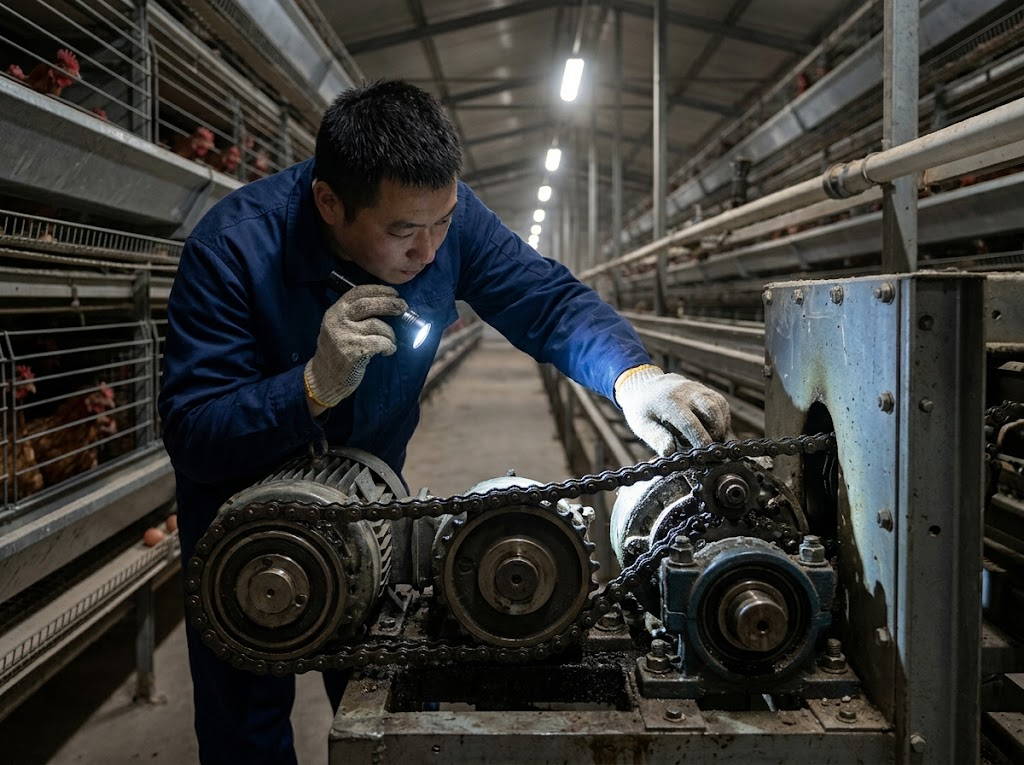
A commercial poultry farm needs regular equipment checks after installation.
Basic maintenance tasks may include:
- Checking water flow and nipple drinkers
- Checking feed distribution
- Checking motors and moving components
- Checking manure belt alignment
- Checking egg belt condition
- Checking cage clips, bolts and connectors
- Cleaning accessible equipment areas
- Keeping spare parts in a dry and organized place
- Recording equipment issues during operation
Routine checks help the farm identify small issues early and keep the equipment organized.
8. Questions to Ask Before Paying the Final Balance
Before final payment and shipment, buyers can ask:
- What cage type and total bird capacity are included?
- What equipment is included in the final quotation?
- Which automatic systems are included?
- Which motors and electrical components are included?
- What spare parts are included?
- Is there a separate spare-parts list?
- What installation drawings will be provided?
- Is the packing list available before shipment?
- Can loading photos or videos be provided?
- What technical guidance is available during installation?
- What information should the buyer provide if technical support is needed?
These questions help the buyer understand the complete project scope instead of comparing only the total cage price.
Final Recommendation
A chicken cage system should be evaluated as a complete poultry farm project.
Before placing an order, buyers should understand the cage configuration, equipment list, automation scope, spare-parts plan, installation documents, warranty terms, and available technical support.
A clear after-sales support plan helps buyers prepare the poultry house, organize installation, manage spare parts, and operate the farm more efficiently after the equipment arrives.
Want to know more?
Get in touch with us for more information about our services and products.