
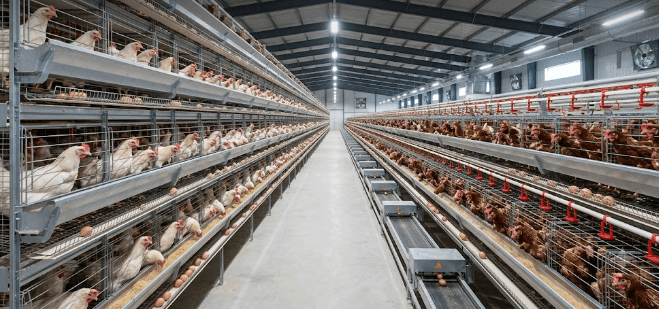
How Many Layer Cages Do You Need for 10,000 Chickens?
If you are planning a 10,000 layer poultry farm, one of the first questions is: How many layer chicken cages do I need?
The answer depends on the cage type, cage size, birds per cage, poultry house layout, aisle width, feeding system, manure cleaning method, and whether you choose A Type or H Type layer cages.
For a 10,000-bird project, many farms choose A Type layer cages because the investment is easier to control. Some farms also choose H Type layer cages if they want higher stocking density, better automation, and lower long-term labor cost.
This guide explains how to calculate the cage quantity and what equipment you should consider before requesting a quotation.
A Type Layer Chicken Cage System
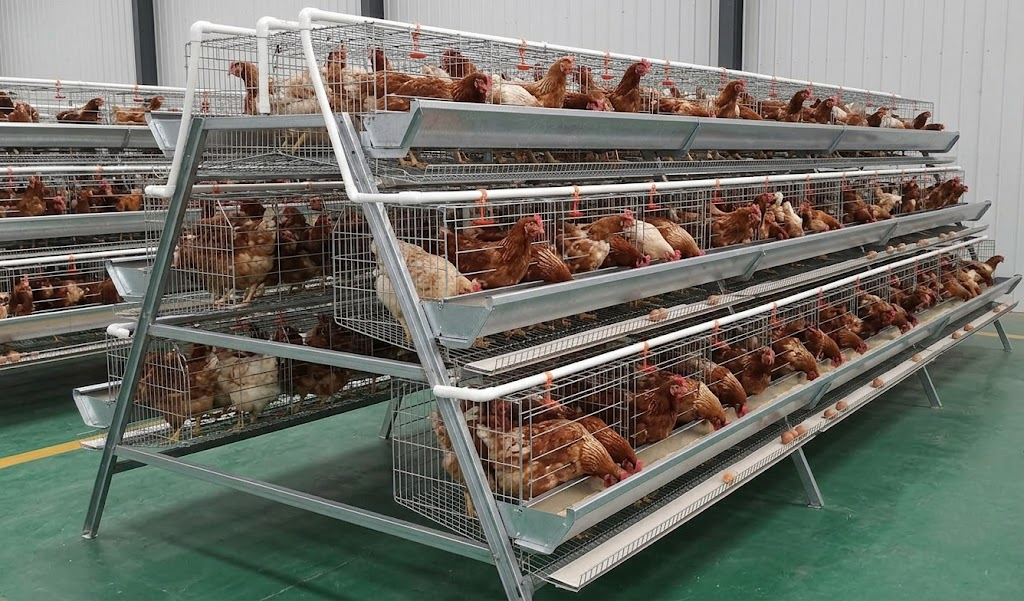
For many 10,000 layer farms, the A Type layer chicken cage system is a practical choice. It is suitable for small and medium farms, especially when the farm uses an open or semi-open poultry house.
A Type cages are commonly selected because:
- The initial investment is lower than a full H Type automatic system
- The structure is simple and easy to install
- The system can work with manual or semi-automatic feeding
- Natural ventilation is easier in many open-house farms
- It is suitable for farmers upgrading from floor rearing to cage farming
If your farm has enough land and labor cost is acceptable, A Type cages are usually a cost-effective option for 10,000 layers.
H Type Galvanized Layer Chicken Cage System
The H Type galvanized layer chicken cage system is another option for 10,000 chickens, especially when the poultry house area is limited or the farm wants a more automatic system.
H Type cages are usually selected when the farm needs:
- Higher bird capacity in the same house area
- Automatic feeding
- Manure belt cleaning
- Automatic egg collection
- Better space utilization
- A more scalable system for future expansion
For a 10,000-bird farm, H Type cages may require a higher investment at the beginning, but they can reduce labor work and make the farm easier to manage if the project is planned for long-term commercial egg production.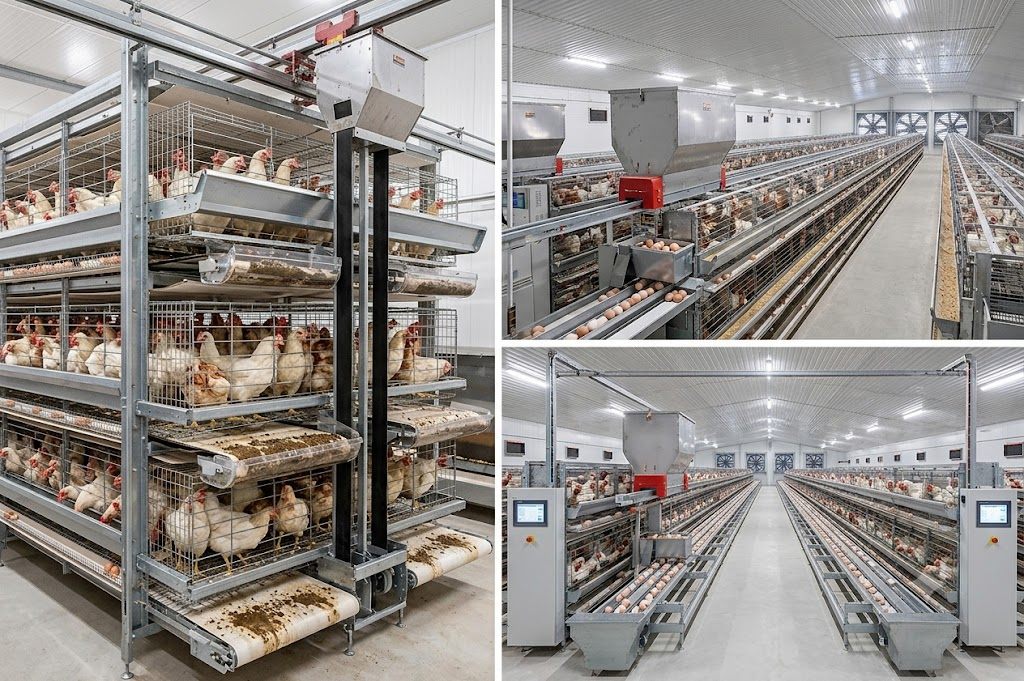
The Basic Formula for Calculating Layer Cage Quantity
To calculate the number of cages, you need to know how many birds each cage can hold.
The basic formula is:
Number of cages = Total number of chickens / Birds per cage
For example:
10,000 chickens / 120 birds per cage group ≈ about 84 cage groups
But this is only a rough calculation.
In real poultry farm design, the final quantity may change because of:
- Cage model
- Number of tiers
- Number of doors
- Birds per cell
- Row arrangement
- House length and width
- Aisle width
- Feed trough position
- Manure cleaning system
- Egg collection system
- Reserved space for operation and maintenance
So when you ask for a quotation, the supplier should not only give you a cage price. A professional supplier should help you check whether the cage layout fits your poultry house.
Example Cage Calculation for 10,000 Layers
Different cage models have different capacities. Below is a simple example to help you understand the calculation method.
| Example Cage Capacity | Approximate Cage Quantity for 10,000 Birds |
|---|---|
| 96 birds per cage group | About 105 cage groups |
| 120 birds per cage group | About 84 cage groups |
| 128 birds per cage group | About 79 cage groups |
| 160 birds per cage group | About 63 cage groups |
| 192 birds per cage group | About 53 cage groups |
These numbers are examples only. The actual quantity should be calculated according to the cage model and poultry house layout.
A Type Layer Cage Layout for 10,000 Chickens
A Type Layer Chicken Cage System
A Type cages are often used for 10,000 layer projects because they are easier to operate and more affordable for many small and medium farms.
A typical A Type cage layout may include:
- 3-tier or 4-tier A Type layer cages
- Manual or semi-automatic feeding
- Nipple drinking system
- Manual egg collection or simple egg collection system
- Manual manure cleaning, scraper cleaning, or belt cleaning depending on the design
A Type cages are suitable if: - You are starting a 10,000-bird farm for the first time
- You want to control the initial investment
- You have enough poultry house area
- Local labor cost is not too high
- You prefer a simple system that is easier to maintain
However, you need to reserve enough space for workers to feed, collect eggs, clean manure, and inspect birds.
H Type Layer Cage Layout for 10,000 Chickens
H Type Galvanized Layer Chicken Cage System
For a 10,000 layer farm, H Type cages are usually selected when the customer wants a more compact and automatic solution.
A typical H Type cage layout may include:
- 3-tier or 4-tier H Type layer cages
- Automatic feeding machine
- Nipple drinking system
- Manure belt cleaning system
- Optional automatic egg collection system
- Ventilation and cooling equipment if the poultry house is closed or semi-closed
H Type cages are suitable if: - Your land or poultry house area is limited
- You want to reduce daily labor
- You plan to expand the farm later
- You want a cleaner manure removal method
- You prefer a more standardized commercial egg production system
Compared with A Type cages, H Type cages need better planning for ventilation, manure removal, installation, and maintenance access.
How Large Should the Poultry House Be for 10,000 Layers?
There is no single standard poultry house size for all 10,000 layer farms. The required house size depends on the cage type and layout.
The house size will be affected by:
- Number of cage rows
- Cage length
- Number of tiers
- Aisle width
- Distance from cages to walls
- Space for feeding equipment
- Space for manure removal
- Space for egg collection
- Ventilation design
- Local building conditions
For A Type cages, the poultry house may need more floor area because the stepped structure uses more width.
For H Type cages, the house can usually hold more birds in a smaller floor area, but it requires better ventilation and more careful equipment arrangement.
Before building the poultry house, it is better to confirm the cage layout first. If the house is built without considering cage size and equipment space, the farm may face problems during installation.
Small Layer Chicken Cage System for 5,000-6,000 Birds
- New poultry farmers
- Family farms
- Farms testing a new egg production project
- Customers with limited budget
- Customers who want to expand step by step
Some customers start with 5,000-6,000 birds first, then add more cage rows or build another poultry house when the farm operation becomes stable.
This approach can reduce the first investment pressure, but the expansion plan should be considered from the beginning. The land, house direction, water supply, manure discharge, and power system should leave space for future growth.
Equipment Needed for a 10,000 Layer Cage Farm
A 10,000-bird layer farm needs more than cages. The cage system should be planned together with feeding, drinking, manure cleaning, egg collection, and ventilation.
Below is a practical equipment checklist.
| Equipment | Function | Recommended for 10,000 Layers |
|---|---|---|
| Layer chicken cages | Keep layers in organized cage rows | Required |
| Nipple drinking system | Provide clean water to birds | Required |
| Feed troughs | Hold feed along cage rows | Required |
| Automatic feeding machine | Reduce manual feeding work | Optional but recommended |
| Manure cleaning system | Remove manure and improve house environment | Recommended |
| Egg collection system | Reduce manual egg picking | Optional, depending on budget |
| Ventilation fans | Improve air exchange | Recommended |
| Cooling pads | Reduce heat stress in hot areas | Recommended for hot climates |
| Lighting system | Support production management | Recommended |
| Spare parts | Reduce downtime during operation | Recommended |
Automatic Feeding Machine / Overhead Feeding System
- The farm has several cage rows
- Labor is expensive or unstable
- The farm wants to reduce daily manual work
- The owner wants more standardized feeding management
For farms with limited budget, manual feeding or semi-automatic feeding can also be considered. The choice depends on labor cost and long-term operation plans.
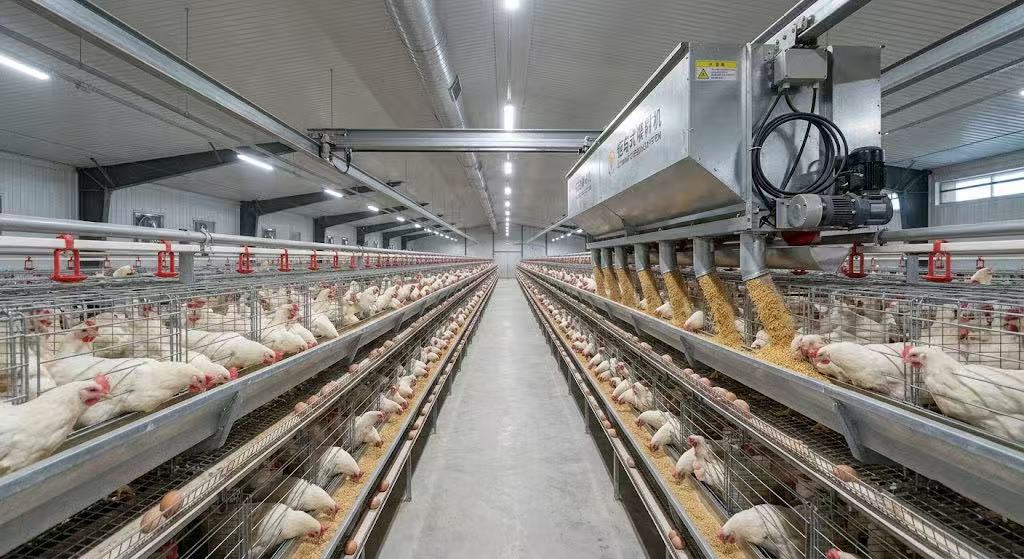
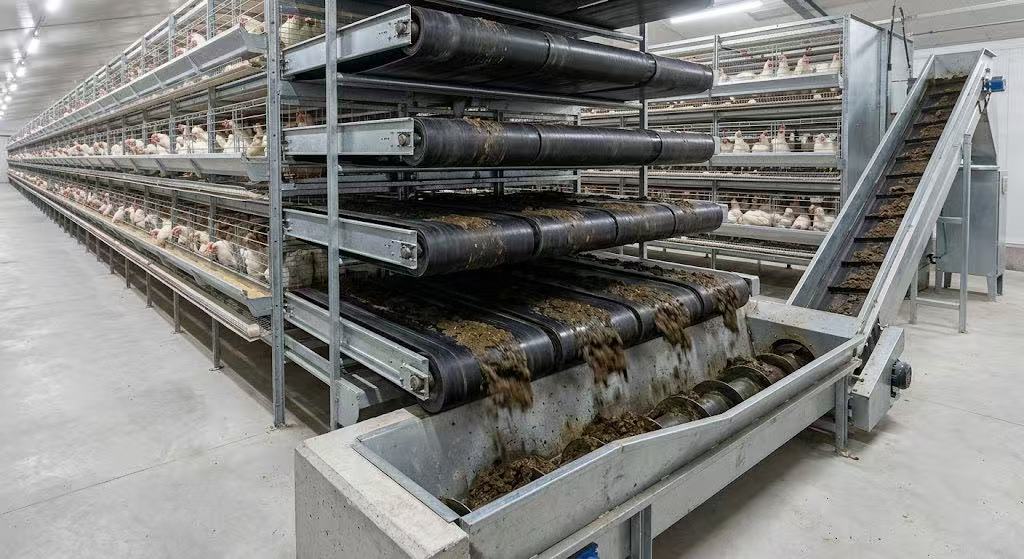
Manure Belt Cleaning System
- Reducing manure accumulation
- Improving air quality inside the poultry house
- Lowering manual cleaning work
- Keeping the house cleaner
- Making manure collection easier
For 10,000 layers, manure cleaning should be planned before installation. If the house does not reserve enough space for manure discharge, it may be difficult to improve later.
Automatic Egg Collection System
- The farm wants to reduce labor
- The egg quantity is high every day
- The farm wants more organized egg collection
The system is planned with H Type cages or a higher automation layout
If the budget is limited, manual egg collection can still be used at the beginning. But if the farm plans to expand beyond 10,000 birds, automatic egg collection should be considered early.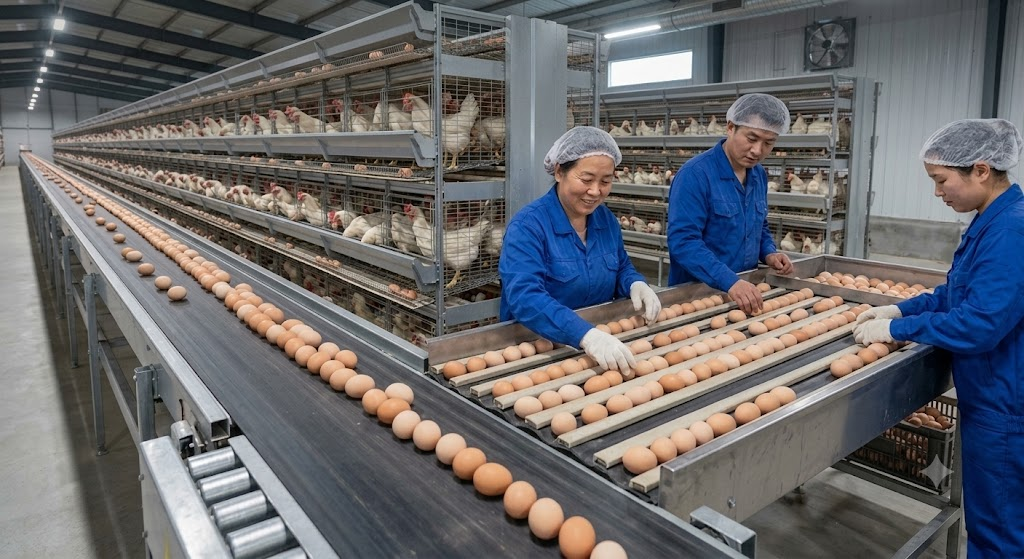
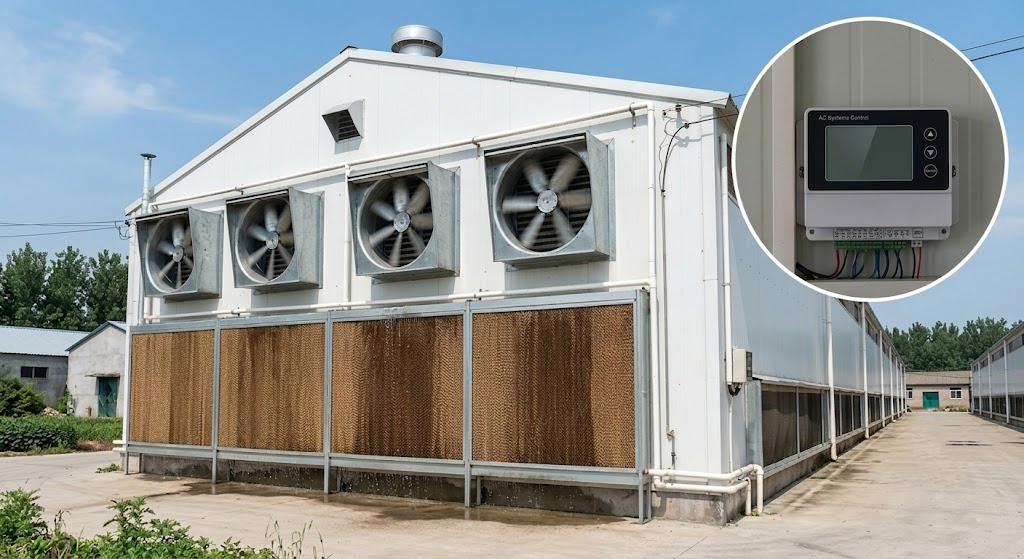
Poultry House Environmental Control System
For 10,000 layers, poultry house environment has a direct effect on bird health and egg production.
A poultry house environmental control system may include:
- Exhaust fans
- Cooling pads
- Air inlets
- Temperature controller
- Humidity management
- Ventilation design
This is especially important in hot climate areas, closed houses, or H Type cage houses with higher bird density.
If the poultry house is too hot, too humid, or poorly ventilated, the farm may face heat stress, lower feed intake, lower egg production, and higher disease risk.
So when planning 10,000 layer cages, the cage layout and ventilation design should be considered together.
A Type or H Type: Which Is Better for 10,000 Chickens?
For most 10,000 layer farms, both A Type and H Type cages can work. The better choice depends on your real farm conditions.
Choose A Type layer cages if:
- You want lower initial investment
- You have enough land or house area
- You use an open or semi-open poultry house
- You can accept more manual work
- You are starting a small or medium egg farm
- You want a simple and practical system
Choose H Type layer cages if: - Your poultry house space is limited
- You want higher bird capacity in the same area
- You need automatic feeding or manure belt cleaning
- You want to reduce labor
- You plan to expand in the future
- You are building a more commercial and standardized layer farm
A Type is usually easier for beginners.
H Type is usually better for farms that want higher automation and long-term expansion.
Common Mistakes When Planning 10,000 Layer Cages
Many farms make mistakes before ordering cages. These mistakes can increase installation cost or reduce daily operation efficiency.
Common mistakes include:
- Building the poultry house before confirming the cage layout
The house may be too narrow, too short, or difficult for manure removal. - Only comparing cage price
A lower cage price may not include feeding, drinking, manure cleaning, installation support, or spare parts. - Ignoring ventilation
More birds in one house means more heat, moisture, dust, and ammonia. - Leaving too little aisle space
Workers need enough space for feeding, inspection, egg collection, and maintenance. - Not planning manure discharge
Manure should be easy to move out of the house and handle outside. - Choosing too much automation without enough budget
Full automation is useful, but the system should match the farm’s real investment plan. - Not preparing accurate project information
Without house size, bird quantity, and automation requirements, the supplier can only give a rough quotation.
Information You Should Send Before Requesting a Quotation
To get an accurate cage quantity and layout, you should prepare the following information:
- Target number of layers: 10,000 birds
- Poultry house length
- Poultry house width
- Poultry house height
- Open house or closed house
- Country and local climate
- Preferred cage type: A Type or H Type
- Manual, semi-automatic, or automatic feeding
- Manual or automatic manure cleaning
- Manual or automatic egg collection
- Whether you need ventilation and cooling equipment
- Whether you plan to expand later
With this information, the supplier can recommend the cage model, cage quantity, row arrangement, equipment list, and approximate layout.
Final Recommendation
For a 10,000 layer chicken farm, the number of cages depends on the cage model and how many birds each cage group can hold.
As a simple estimate, if one cage group holds 120 birds, you may need about 84 cage groups for 10,000 chickens. If the cage group holds more or fewer birds, the quantity will change.
But the final answer should not be based only on bird number. A good cage layout should also consider poultry house size, ventilation, manure cleaning, feeding method, egg collection, labor cost, and future expansion.
If you are planning a 10,000 layer farm, you can send us your poultry house size, target bird quantity, country, and preferred automation level. Our team can help calculate the cage quantity and recommend a suitable A Type or H Type layer cage layout for your project.
Want to know more?
Get in touch with us for more information about our services and products.