
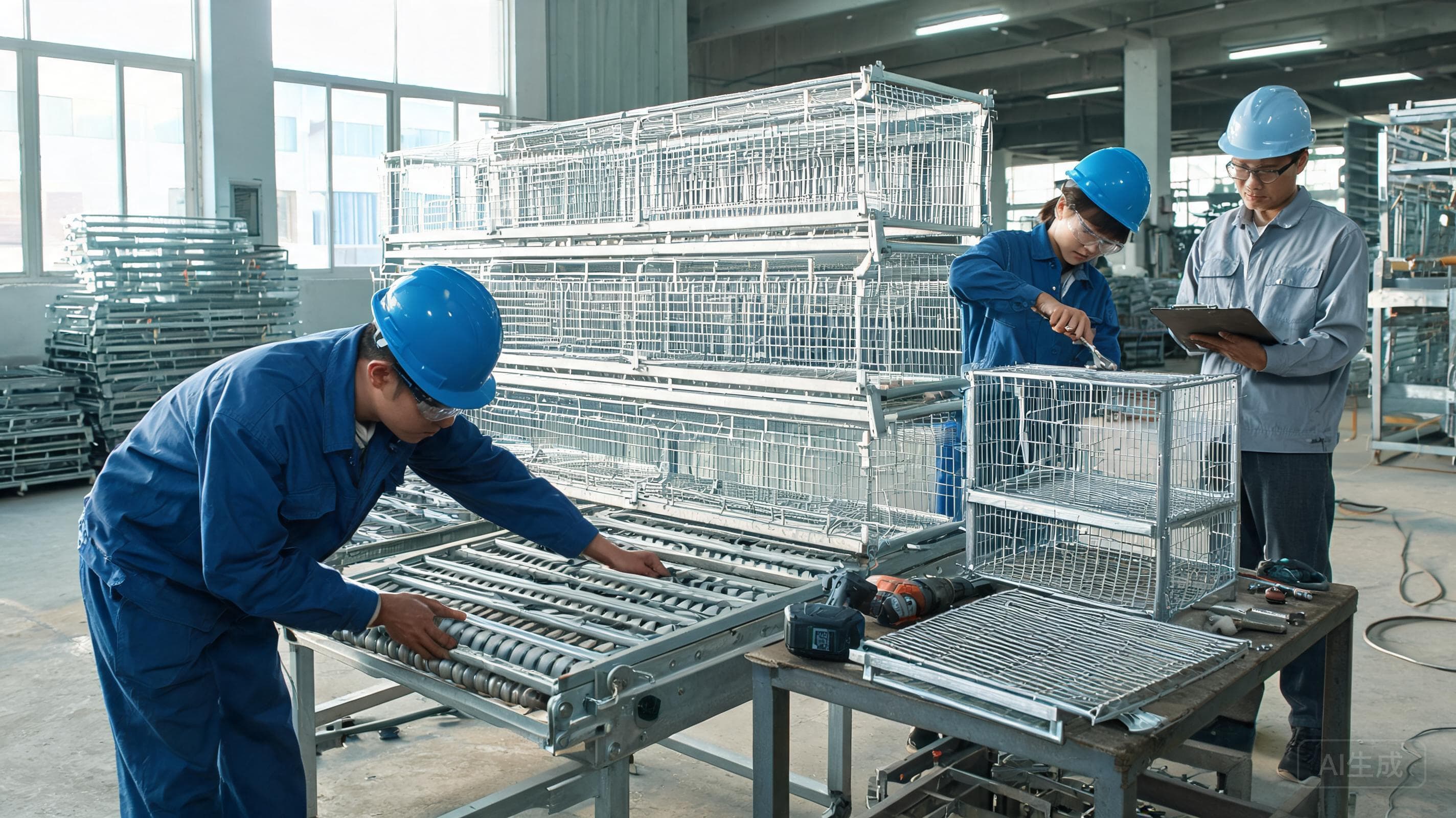
Build a More Efficient Poultry Operation with the Right Automatic Chicken Cage System
Modernize around your operation’s priorities
For poultry producers, labor demands are only one part of the modernization challenge. Daily operations coordinate feeding, drinking, egg handling, manure removal, ventilation, and flock management, while welfare expectations and housing requirements continue to evolve.
Producers face practical and economic trade-offs when considering a transition from battery cage systems to cage-free production. Research into producer perspectives and poultry robotics highlights both potential opportunities and implementation challenges. Farm decisions should reflect local requirements, facilities, and business priorities. Automation works best when it suits the farm’s conditions and the team’s ability to operate and maintain it.
Automatic poultry equipment can standardize routine work, but it should support a defined operating plan—not add complexity for its own sake. See how automation can shape poultry labor planning.
Match your poultry cage system to your operating model
Start with your site’s requirements: flock size, building dimensions, housing layout, ventilation, labor availability, egg-handling needs, and investment priorities. These factors help determine whether an A-frame arrangement or stacked installation is a better fit, and how much automation is practical at each stage.
An A Type Layer Chicken Cage System for Poultry Farm offers an economical, accessible layout with stepped tiers. A stacked, fully automated chicken cage installation uses floor space efficiently and can integrate feeding, drinking, and manure cleaning. Compare building fit, inspection and maintenance access, workflow, and expansion plans before specifying equipment.
A Layer Cage System is designed specifically for egg-laying hens. Broiler cages serve different production requirements, so match equipment to bird type and production cycle. Before selecting commercial chicken cages or a battery cage system, assess applicable local regulations and welfare expectations.
Evaluate automation as a connected workflow

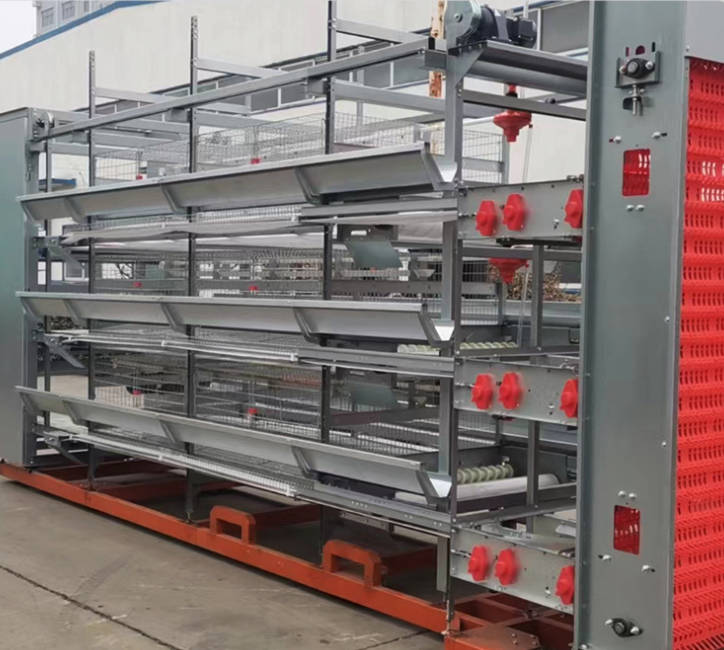
An Automatic Chicken Cage is a fully automated cage system with feeding, drinking, egg collection, and manure removal. As part of an integrated Poultry Cage System, these components can coordinate routine work across the production cycle.
An automatic feeding system can support consistent feed delivery. An Egg Collection System uses conveyors to collect eggs automatically and move them toward handling or packing. Automatic manure removal equipment transfers droppings out of the house on a planned schedule. Together, these systems can reduce manual workload and support consistent operations. Learn how precision automation may improve egg-handling consistency.
Automation can be introduced in stages: identify the most costly or time-consuming bottleneck, prioritize suitable equipment, and plan compatible additions. A poultry farm automation system should account for the complete workflow, not just the first machine installed. A Turnkey Poultry Farm is a complete poultry farm delivered as a full package, bringing housing, equipment, and supporting systems together. Include an Environmental Control System where temperature and ventilation regulation are required.
Address operational bottlenecks with the right equipment
- Egg movement across multiple tiers: The Stacked Egg Collection System for Layer Cages – Vertical Elevator Egg Collector gathers eggs from multiple tiers and transfers them to a central table and cross conveyor. Its smooth carriers are designed to limit collisions and breakage during transfer. Consider it for layer operations that need centralized egg handling.
- Tray packing: The Automatic Egg Tray Packing Machine for Poultry Farms and Egg Processing Plants receives, arranges, counts, and loads eggs into paper or plastic trays. Adjustable speed and tray settings help match packing requirements.
- Centralized manure handling: The Belt Manure Removal System for Poultry Cages – Automatic Manure Cleaning Machine moves droppings from tier belts to a discharge point, helping limit manure accumulation and simplify collection.
- High-capacity layer housing: The Large Stacked Egg Chicken Equipment, Breeding Cage, Fully Automated Chicken Cage Installation combines stacked housing with automatic feeding, drinking, and manure cleaning. Assess whether building dimensions and management plans support this configuration.
- An accessible layout: The A Type Layer Chicken Cage System for Poultry Farm – Galvanized Step Type Layer Battery Cage provides stepped tiers, feed troughs, and nipple drinking lines. Evaluate it if straightforward access and a lower-complexity layout are priorities.
- Integrated egg production: The Chicken Farm Automatic Egg Picking Machine with Multi-Tier Egg Chicken Cage combines multi-tier housing and automatic egg picking. Supplied product information cites a breakage rate below 0.5%; confirm measurement conditions and expected performance for your project.
Compare equipment as part of the wider chicken cage production line, including transfer points, packing, cleaning, and maintenance access. For financial planning, see this guide to calculating poultry automation ROI and accounting for hidden costs.
Use market signals to inform your investment case
Industry figures can frame a decision when their definitions and context are clear. UGA Research News coverage of Lilong Chai’s cage-free research reports a 70% figure. Verify the precise measure, population, and study context before publication or using it to guide a farm investment; it does not guarantee results for an individual operation.
The supplied Poultry Farming Equipment Market report cites 48.0%, while the Poultry Cages Market report cites 4.2%. Confirm each figure’s original definition, timeframe, and market scope before drawing conclusions. Market figures provide context but do not predict an individual buyer’s return.
Build a farm-specific business case around measurable factors: labor hours, throughput, egg breakage, maintenance, energy, flock performance, installation costs, and equipment life. Base projected returns on your housing, operating schedule, and production targets—not a headline statistic.
Choose a manufacturer that can support implementation
Equipment selection is only part of a successful project. Assess a chicken cage supplier or poultry equipment manufacturer on system compatibility, material quality, customization, installation planning, spare parts, and after-sales support. Ask how the proposed poultry housing system will fit your building and support daily operations.
Ask whether the chicken cage factory can configure a system for your building dimensions, flock capacity, and operating practices. For export orders, confirm shipping specifications, documentation, local compliance needs, and installation support before placing an order.
Request a project layout and equipment specification for your farm. The proposal should identify housing configuration, feeding and drinking equipment, egg handling, manure management, and required environmental controls. For egg production, confirm that the layer cage system and automatic egg-handling equipment match your workflow. Clarify maintenance access and expansion compatibility. For meat production, request a separate assessment of suitable broiler cages.
Request a project-specific equipment recommendation
Share your target capacity, housing type, site dimensions, and current labor or handling bottlenecks to receive an equipment recommendation matched to your priorities. A project quotation can cover a chicken cage production line, a layer cage system, or a turnkey poultry farm, with options for staged upgrades or an integrated installation.
Compare the cost and operational impact of staged upgrades with a complete poultry farm automation system before choosing an equipment package. The right automatic poultry cage should meet today’s requirements while providing a practical path for expansion.
Want to know more?
Get in touch with us for more information about our services and products.