
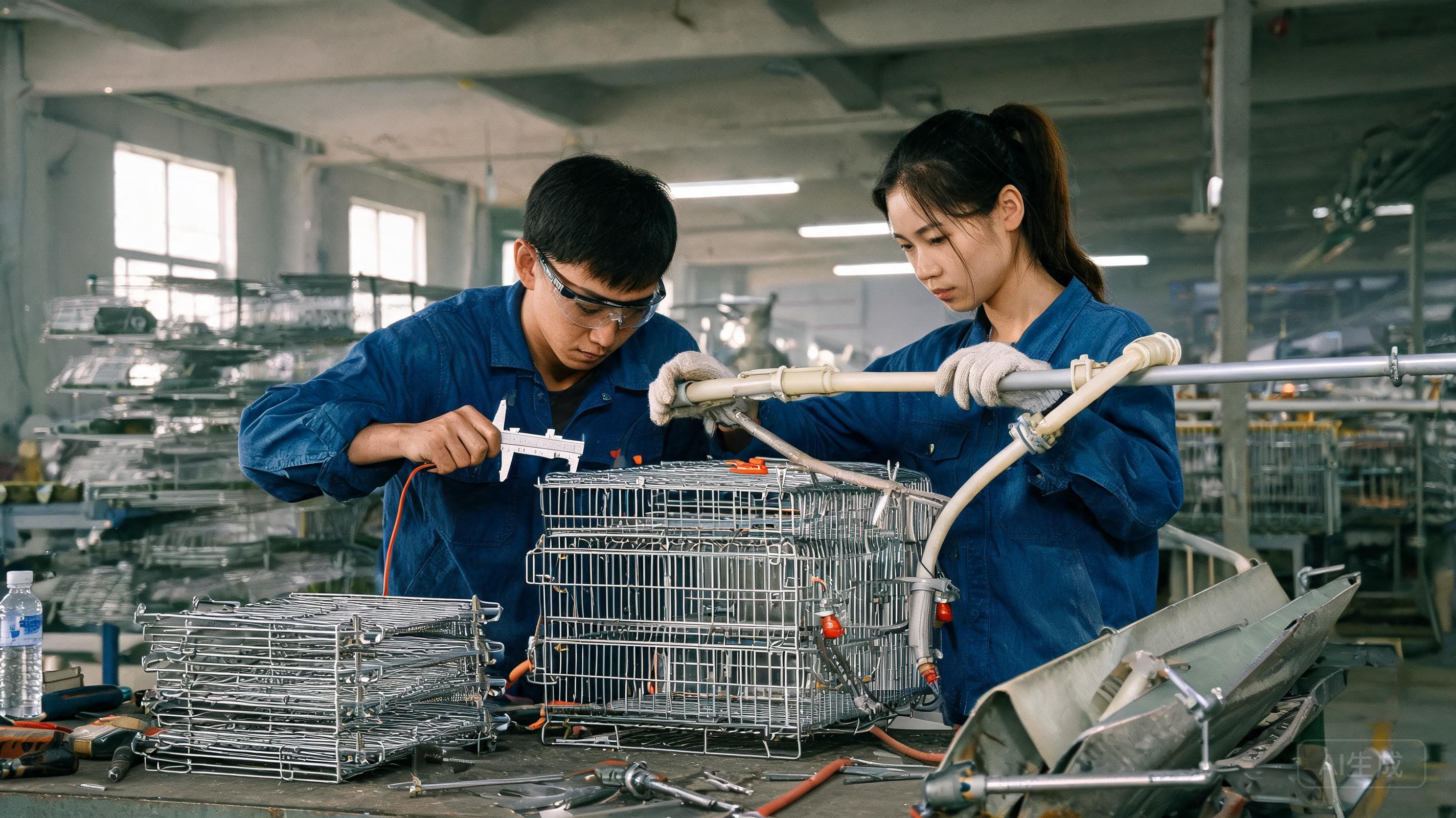
How to Choose an Automatic Chicken Cage System for a More Efficient Poultry Farm
Start with the realities of scaling a poultry operation
Expanding a poultry farm brings practical questions: Can you recruit and retain enough labor? How will operating costs affect margins? Can your housing and daily routines support strong biosecurity? Will the system remain suitable as welfare expectations and buyer requirements change?
Research published by Frontiers on Indian poultry producers’ perspectives on the transition to cage-free systems highlights why housing decisions should account for operational challenges and market requirements. Before investing, assess the rules that apply to your location, customer expectations, and intended production model.
Automation can reduce repetitive work, but it does not replace a considered housing strategy. The right Automatic Chicken Cage—a fully automated cage system with feeding, drinking, egg collection, and manure removal—should fit your bird type, farm capacity, labor plan, welfare goals, and route to market.
Define the system that fits your farm and production goals
Start with the facts on the ground: flock size, house dimensions, ventilation, labor capacity, egg-handling needs, and available capital. These factors determine which poultry housing system can fit your buildings and how much automation makes operational sense.
An A Type Layer Chicken Cage System may suit open or naturally ventilated houses and farms seeking a cost-conscious upgrade. An H Type Galvanized Layer Chicken Cage System is designed for intensive commercial production, where vertical space can help make the most of the building footprint. Compare both with your climate, house layout, and daily management requirements.
For a flock of around 5,000–6,000 birds, a three- or four-tier stepped egg cage configuration may support space utilization while keeping installation practical. Large-scale egg production may call for stacked equipment with automated feeding, drinking, and manure removal. Confirm the configuration against your building dimensions and operating targets.
Bird type matters. Broiler cages have different design and management requirements from a Layer Cage System, which is designed specifically for egg-laying hens. Confirm whether your operation is for broilers or layers before comparing commercial cage options or requesting a layout.
Evaluate automation as an integrated production system
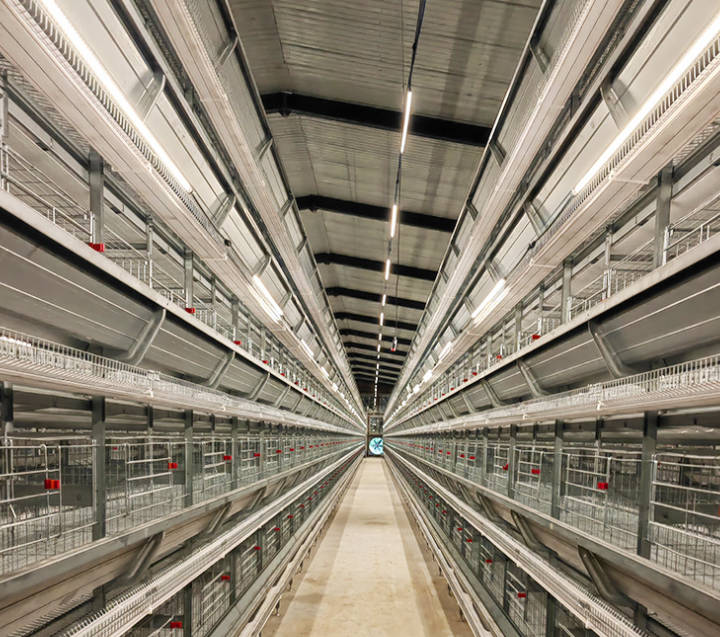
A Poultry Cage System is an integrated cage, feeding, and management system for poultry farms—not just a cage purchase. It coordinates housing, feeding, drinking, egg handling, and manure management as a production line. An automated package can include feed distribution, nipple drinkers, manure removal, and an Egg Collection System, a conveyor system that collects eggs automatically.
An overhead travelling feeding machine can distribute feed across cage rows, reducing manual work and supporting consistent feed management. For egg handling, an automatic egg tray packing machine can receive, count, and load eggs into trays, helping farms and processing plants reduce manual handling and breakage risk.
A Turnkey Poultry Farm is a complete poultry farm delivered as a full package. When several systems must work together, ask how the proposed package will coordinate equipment selection, house planning, installation, and operational support. Confirm how the chicken cage production line will integrate with your buildings and workflows. This overview of automation ROI beyond labor offers a starting point for evaluating potential benefits beyond staffing.
Compare the business case, not just the purchase price
Purchase price is only one part of the investment. Compare total cost of ownership, including installation, energy, maintenance, labor, spare parts, expected service life, and downtime costs. A lower initial price may not be the best fit if a system is difficult to maintain or poorly matched to your house.
Estimate potential gains from reduced manual feeding and egg handling, improved space use, and more consistent routines. Base estimates on your flock, current labor costs, production data, and local operating conditions; validate expected returns with farm-level analysis. This guide to calculating poultry automation ROI can help identify relevant costs and variables.
Use research and market figures only when their definitions are clear. The UGA Research News feature on Lilong Chai’s cage-free poultry research may provide context on evolving production approaches. Include any cited percentage or market statistic only after confirming its original metric, geography, and time period.
Check manufacturing quality, customization, and after-sales support

Ask a chicken cage manufacturer or supplier for galvanized steel specifications, corrosion-resistance details, fabrication tolerances, quality-control procedures, and expected service life in your farm’s climate. These factors matter for industrial poultry cages exposed to moisture, manure, cleaning routines, and local environmental conditions.
A custom Poultry Cage System may be needed to fit existing buildings, house dimensions, flock capacity, or local practices. Ask the manufacturer about production capacity, export experience, installation planning, technical documentation, spare-parts availability, and staff training.
For export orders, confirm destination-market requirements, shipping configuration, delivery coordination, and commissioning support. A qualified poultry equipment manufacturer should clearly explain what the quote includes and what your team must prepare before installation.
Plan for welfare, labor, and future operating requirements
Automated poultry farming supports reliable routines; it does not replace trained staff. Workers still need to monitor flock behavior, identify problems early, and respond appropriately when equipment alarms or production conditions change.
The review Robotics for poultry farming: Challenges and opportunities recognizes the potential of robotics and automation while noting integration, cost, and adoption challenges. That balance matters whether you are considering a poultry farm automation system now or planning to add capabilities in stages.
Assess how an Environmental Control System—equipment that regulates temperature and ventilation—will work alongside the cage system, lighting, water management, and biosecurity practices. Before investing in a battery cage system or another housing format, review local regulations and customer and retailer requirements. Include housing compliance and market access in your equipment decision from the outset.
Turn your equipment shortlist into a farm-specific plan
A useful recommendation starts with your bird capacity, house dimensions, production type, target automation level, and destination market. Share these details with a supplier so the proposed layer cage system or broiler equipment can be assessed against your buildings and operating plan.
Compare equipment configuration, installation scope, and estimated operating requirements with a qualified supplier. Whether you need automated egg handling, a phased upgrade, or a large-scale poultry farm system, request a layout and specification based on your actual site conditions.
Ready to assess the right system for your farm? Send your flock capacity, house dimensions, production type, and automation goals through our contact page to request a farm layout review and a tailored equipment quote.
Want to know more?
Get in touch with us for more information about our services and products.