
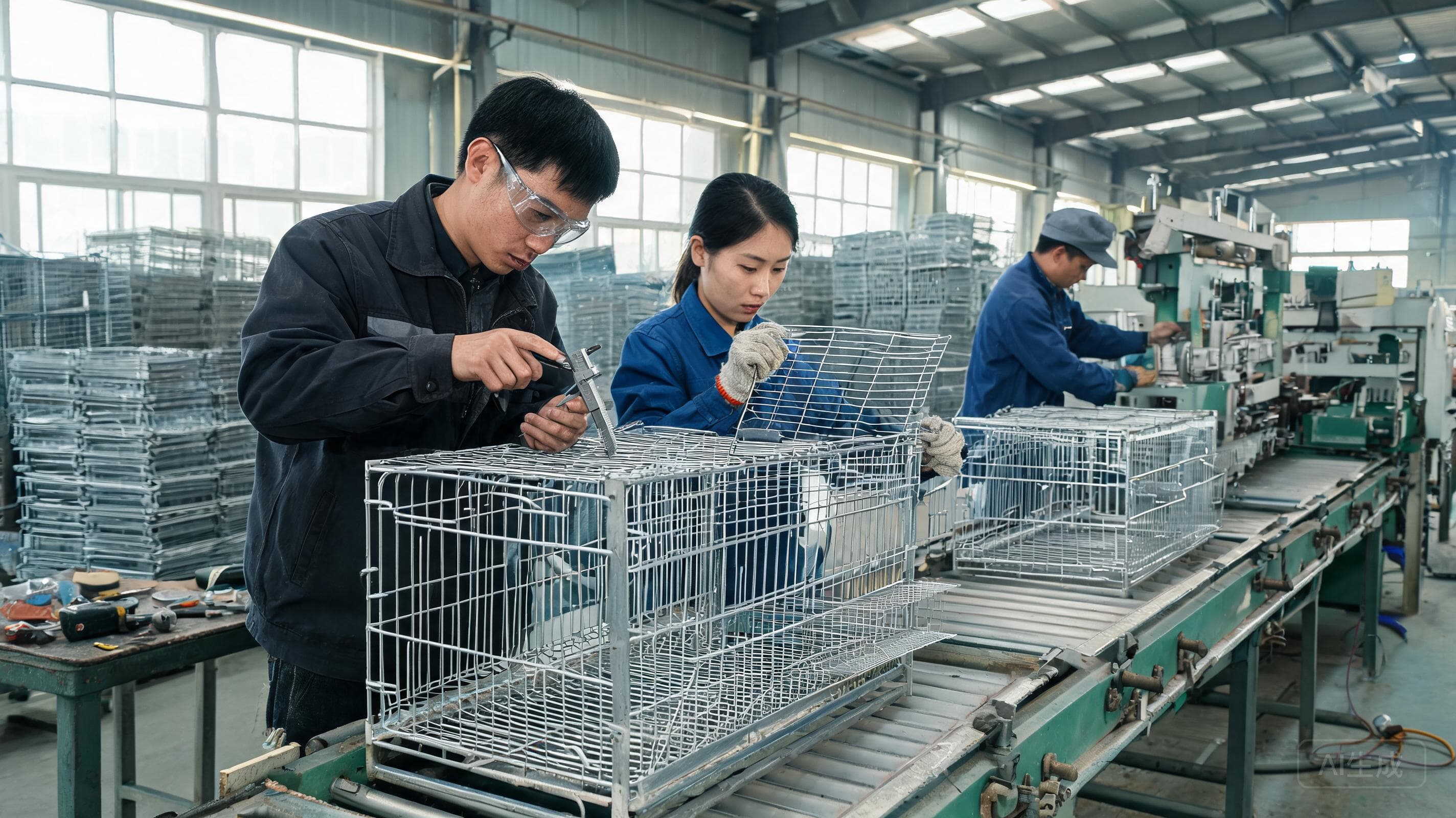
Planning a Profitable Automatic Chicken Cage Production Line for Commercial Poultry Farms
Why poultry producers are rethinking housing and automation
For commercial poultry farms, investing in housing and automation is a strategic decision—not simply a choice of cages. Labor availability, customer expectations, local regulations, bird welfare, and production costs all influence which poultry housing system fits the operation. A well-planned production line can improve consistency and reduce routine manual work, but profitability depends on matching equipment to the farm’s conditions.
Producers are balancing labor requirements with changing customer expectations around cage-free production. Any housing transition also needs to account for investment, productivity, bird welfare, and applicable regulations. Research into Indian poultry producers’ perceived challenges during the transition from battery cages to cage-free facilities highlights that this change involves practical operational considerations—not a universal solution.
Research from the University of Georgia also highlights the ongoing transition toward cage-free systems. Assess local markets, customer requirements, regulations, and day-to-day operating needs before selecting a housing model. Battery cage systems, cage-free facilities, and other configurations each involve different design and management considerations.
Automated poultry farming can address labor and consistency challenges through coordinated feeding, drinking, egg collection, and manure handling. Automation cannot replace a well-designed facility or sound flock management. It works best when the building, equipment, and operating procedures are planned together.
What to evaluate before investing in a production line
Start with a clear project brief. Define planned bird capacity, bird type, target output, building dimensions, labor availability, climate, ventilation approach, and expansion plans. These details help a manufacturer recommend equipment for the site rather than a standard package that may not fit the operation.
Choose equipment according to production purpose and applicable welfare and regulatory requirements. A Layer Cage System is designed specifically for egg-laying hens and supports egg production and collection. Broiler housing serves a different production purpose and requires a separate assessment against the farm’s operating requirements.
Configuration matters. A-type commercial cages can suit naturally ventilated houses and cost-conscious upgrades. Stacked industrial poultry cages can make effective use of vertical space when the building layout and operating plan support that approach. Compare usable capacity, inspection and service access, ventilation, and equipment routes—not just the number of tiers.
Plan the entire installation, including feed and water access, egg routes, manure handling, ventilation, controls, and maintenance access. A custom system or Turnkey Poultry Farm package may be appropriate when the project requires coordinated building layout, equipment selection, and installation. Define the scope of the complete Poultry Cage System before comparing quotations.
Match automation components to farm bottlenecks
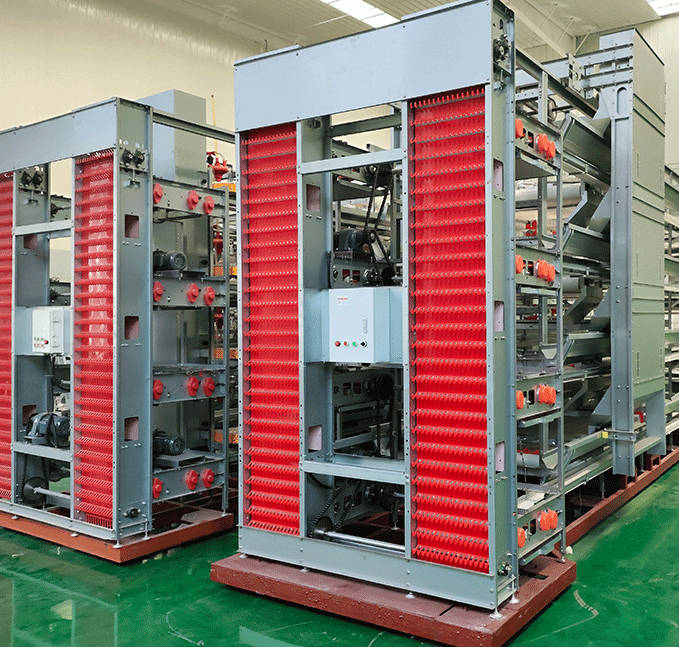
Begin with the task that creates the greatest operational constraint. If workers spend substantial time distributing feed, assess an overhead travelling feeder. Adjustable delivery and scheduled operation can reduce manual effort and help limit variation between cage rows. Confirm that its travel path, feed capacity, and controls match the house layout.
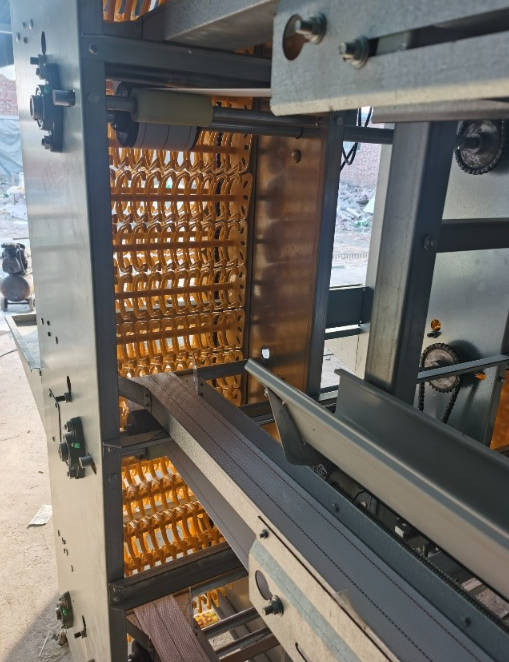
For stacked layer houses, an Egg Collection System uses conveyor belts to collect eggs automatically and transfer them from tier belts to a central table or cross conveyor. Size the equipment for expected egg flow and coordinate it with downstream handling to avoid creating a bottleneck at the collection point.
An automatic egg collection machine with three-layer cages may suit projects planned in phases, depending on its configuration and expansion options. The machine has a stated egg breakage rate below 0.5%; treat this as a specification to validate under your operating conditions, not a guaranteed result for every installation.
A stacked equipment package may combine hot-dip galvanized cages with automatic feeding, drinking, and manure cleaning functions. Before selecting a large-scale system, check its fit with building height, ventilation, equipment access, and service requirements.
For naturally ventilated houses, an A-type layer cage system offers a straightforward layout with front feed troughs and nipple drinkers. Match its manure-handling approach to the farm’s cleaning plan and labor capacity.
An Automatic Chicken Cage is a fully automated cage system that integrates feeding, drinking, egg collection, and manure removal. Evaluate the complete configuration, including controls and installation, rather than considering the cage alone. For planning ideas on vertical layouts, see this overview of vertical poultry automation and space utilization.
Plan egg handling from collection through packing
Map the full egg-handling process from cage belts through elevators and cross conveyors to grading, washing, and packing. Make sure equipment capacities and operating speeds align at every handoff. A fast collection conveyor cannot compensate for a grading or packing line that cannot receive eggs at the same rate.
An automatic egg tray packing machine is designed for operations seeking automated counting and loading into paper or plastic trays. When assessing a machine, consider stainless-steel construction, adjustable speed and tray settings, and careful egg handling. These features are relevant to hygiene, breakage control, and production flexibility.
Ask suppliers to confirm line compatibility, throughput assumptions, and changeover requirements. Establish how the packing machine connects to existing conveyors, washers, or graders, and who is responsible for testing the complete line as an integrated system.
Build a business case around measurable outcomes
Use the farm’s baseline data to estimate automation’s potential impact on labor hours, feed waste, egg breakage, collection speed, manure handling, and usable building capacity. Record current performance before purchasing equipment, then compare expected improvements with the costs and operating conditions of the proposed system.
Verify product specifications in context. For example, the automatic egg collection machine’s stated breakage rate below 0.5% should be assessed against the supplier’s test conditions, egg characteristics, conveyor layout, operating speed, and maintenance practices. Do not treat it as a guaranteed outcome across all installations.
Use published market and research figures carefully. A University of Georgia Research News figure of 70% should only be presented with clear attribution and confirmation of what it measures. Do not use it to imply a specific adoption rate or performance outcome without supporting context. Likewise, confirm the definitions, time periods, and methodologies behind reported figures of 48.0% for the poultry farming equipment market and 4.2% for the poultry cages market before citing them.
Compare total cost of ownership rather than purchase price alone. Include installation, power, maintenance, replacement parts, expected service life, and any required building changes. A practical poultry automation ROI assessment should account for operating assumptions and additional costs as well as projected savings.
Choose a manufacturer and installation partner
Assess a manufacturer or supplier on production quality, corrosion protection, component specifications, customization capability, and references from comparable farms. Request technical documentation and confirm that proposed equipment suits the site and production plan.
For export equipment, confirm shipping dimensions, packaging, documentation, destination standards, installation guidance, and spare-parts availability. These details can affect project timing and the cost of bringing equipment into operation.
Request a detailed layout and scope that identifies the poultry farm automation system, feeding equipment, manure removal system, egg conveyors, electrical controls, and Environmental Control System interfaces. Clarify responsibility for installation, commissioning, operator training, warranty coverage, and after-sales support.
A qualified poultry equipment manufacturer should provide a phased implementation plan that limits disruption and supports future capacity expansion. Before committing, confirm that the proposal explains how the system will be installed, tested, and handed over to the farm team.
Next steps: scope a system for your farm
Prepare your bird capacity, housing dimensions, production goals, ventilation type, preferred cage configuration, and current automation level. These inputs help suppliers compare A-type and stacked options, define a suitable layer system or broiler setup, and identify upgrades that address your farm’s bottlenecks.
Want to know more?
Get in touch with us for more information about our services and products.