
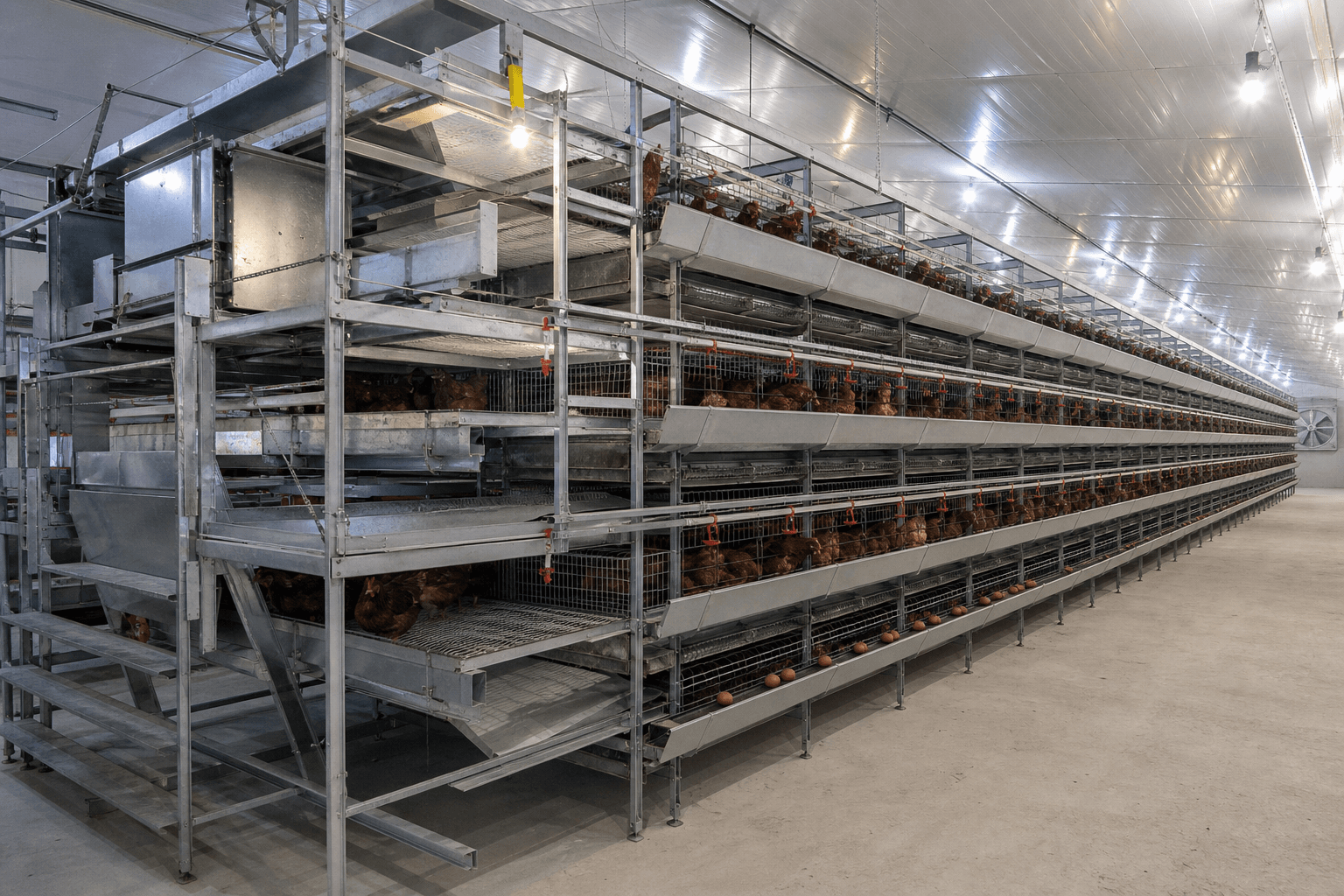
How to Compare Chicken Cage Quotations Without Choosing the Wrong System
When buying chicken cages, many poultry farm buyers compare several quotations from different suppliers. This is a smart step, but there is one common mistake: comparing only the total price. Two chicken cage quotations may look similar, but the actual equipment, material, automation level, cage capacity, installation support, and shipping terms can be very different. If you choose only the lowest price, you may receive a cage system that does not fit your poultry house, does not include the equipment you need, or costs more later during installation and operation. Before choosing a chicken cage supplier, it is better to compare the full system, not just the cage price.
1. First Check Whether the Cage Type Is the Same
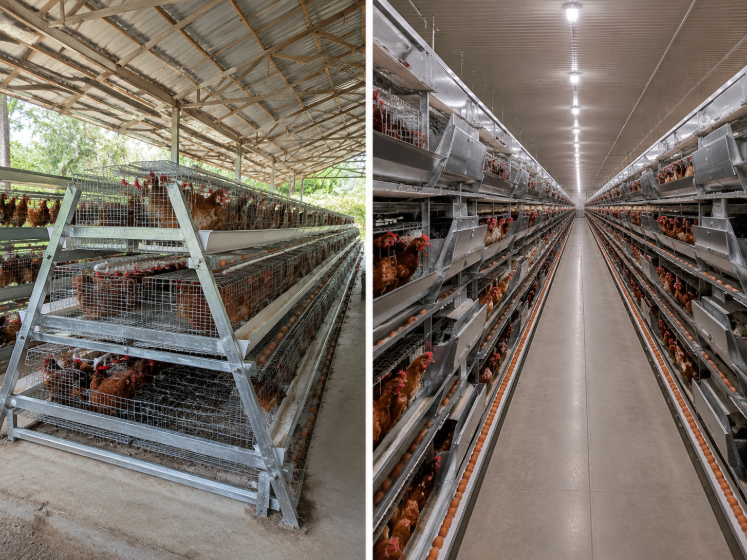
The first thing to compare is the cage type. Some suppliers may quote A Type layer cages, while others may quote H Type layer cages. These two systems are not the same, so the prices should not be compared directly. A Type cages are usually suitable for small and medium farms, open houses, lower first investment, and simpler operation. H Type cages are usually suitable for medium and large farms, higher bird density, automatic feeding, manure belt cleaning, and long-term commercial egg production. If one quotation is for A Type cages and another is for H Type cages, the lower price does not mean it is the better choice. It may simply be a different system. Before comparing price, confirm:
Number of tiers
Number of rows
Cage size
Birds per cage group
Total bird capacity
Suitable poultry house size If you are not sure which cage type fits your farm, send your house size and target bird quantity to the supplier before comparing quotations.
2. Compare the Real Bird Capacity
Some quotations show the number of cage sets, but not the real bird capacity. This can be confusing. For example, two suppliers may both quote “100 sets of cages,” but each cage set may hold a different number of birds. One system may be designed for 10,000 layers, while another may only fit 8,000 or 9,000 layers. Always ask the supplier to clearly show:
| Item | What to Confirm |
|---|---|
| Total bird capacity | How many layers the system can hold |
| Birds per cage group | Capacity of each cage group |
| Cage dimensions | Length, width, and height |
| Number of tiers | 3-tier, 4-tier, or more |
| Number of rows | Layout inside the poultry house |
| House size needed | Whether your house can fit the layout |
A correct quotation should match your poultry house layout, not only your target bird number.
3. Check the Material and Galvanizing Method
Cage material affects service life, rust resistance, and long-term maintenance cost. When comparing quotations, ask about:
Wire diameter
Frame thickness
Cage mesh quality
Galvanizing method
Feed trough material
Welding quality
Surface smoothness
Anti-rust performance A lower quotation may use thinner wire, lighter frame, or a different galvanizing process. The cage may look similar in photos, but the durability can be different. This is especially important in humid areas, hot climate areas, closed houses, or farms with poor manure and moisture control. If the quotation only says “galvanized chicken cage” without more details, ask the supplier to explain the material clearly.
4. Check Whether the Drinking System Is Included
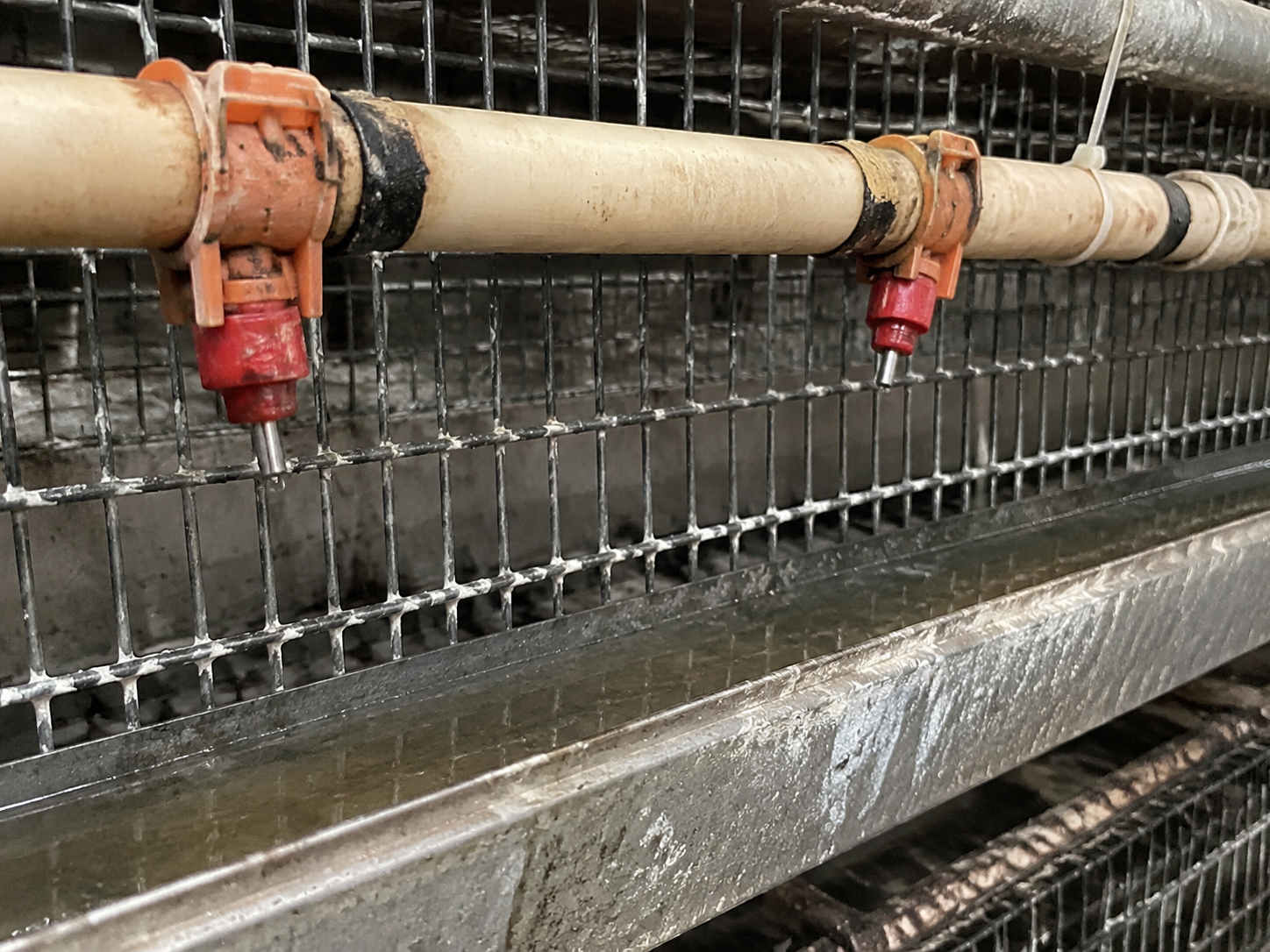
A layer cage system should include a suitable drinking system. But not all quotations explain this clearly. Before comparing price, check whether the quotation includes:
Nipple drinkers
Water pipes
Pipe connectors
Pressure regulators, if needed
Water line layout
End flushing system
Spare nipple drinkers If the drinking system is not well planned, the farm may face water leakage, wet manure, high humidity, and uneven water supply. The drinking system should match the cage type, bird quantity, and water pressure condition. If your farm already has wet manure or leakage problems, tell the supplier before confirming the order. The cage and drinking line arrangement should be checked together.
Product Match: Which System Should You Check?
Use this table to quickly match your farm condition with the product or system you should compare.
| Your Farm Condition | Product or System to Check |
|---|---|
| Small or medium farm with limited budget | A Type Layer Chicken Cage System |
| Limited house space or higher bird density | H Type Galvanized Layer Chicken Cage System |
| Long cage rows and high feeding labor | Automatic Feeding Machine |
| Strong manure smell, wet manure, or flies | Belt Manure Removal System |
| High daily egg quantity and limited workers | Automatic Egg Collection System |
| Hot climate or closed poultry house | Poultry House Environmental Control System |
| First-time poultry farm investor | Complete cage layout and equipment list |
5. Compare Feeding Equipment, Not Only Feed Troughs
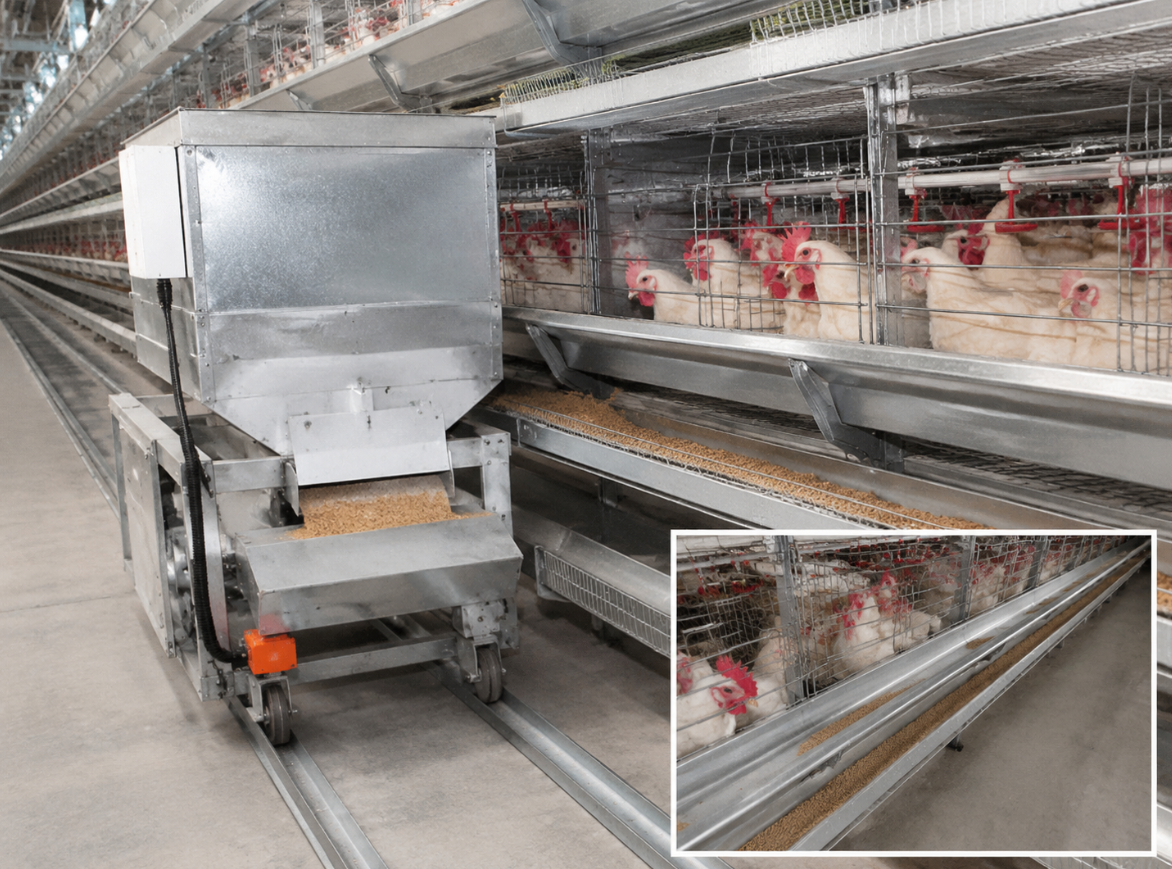
Some basic quotations include only feed troughs. Other quotations may include an automatic feeding machine. These are different configurations. Before comparing quotations, confirm:
Manual feeding or automatic feeding
Feed trough material
Feeding machine included or not
Motor and track included or not
Feed distribution method
Suitable cage row length
Power requirement
Spare parts included or not For small farms, manual feeding may be acceptable. For long cage rows or farms with many birds, automatic feeding can reduce labor and make feed distribution more even. If one quotation includes automatic feeding and another does not, the prices cannot be compared directly.
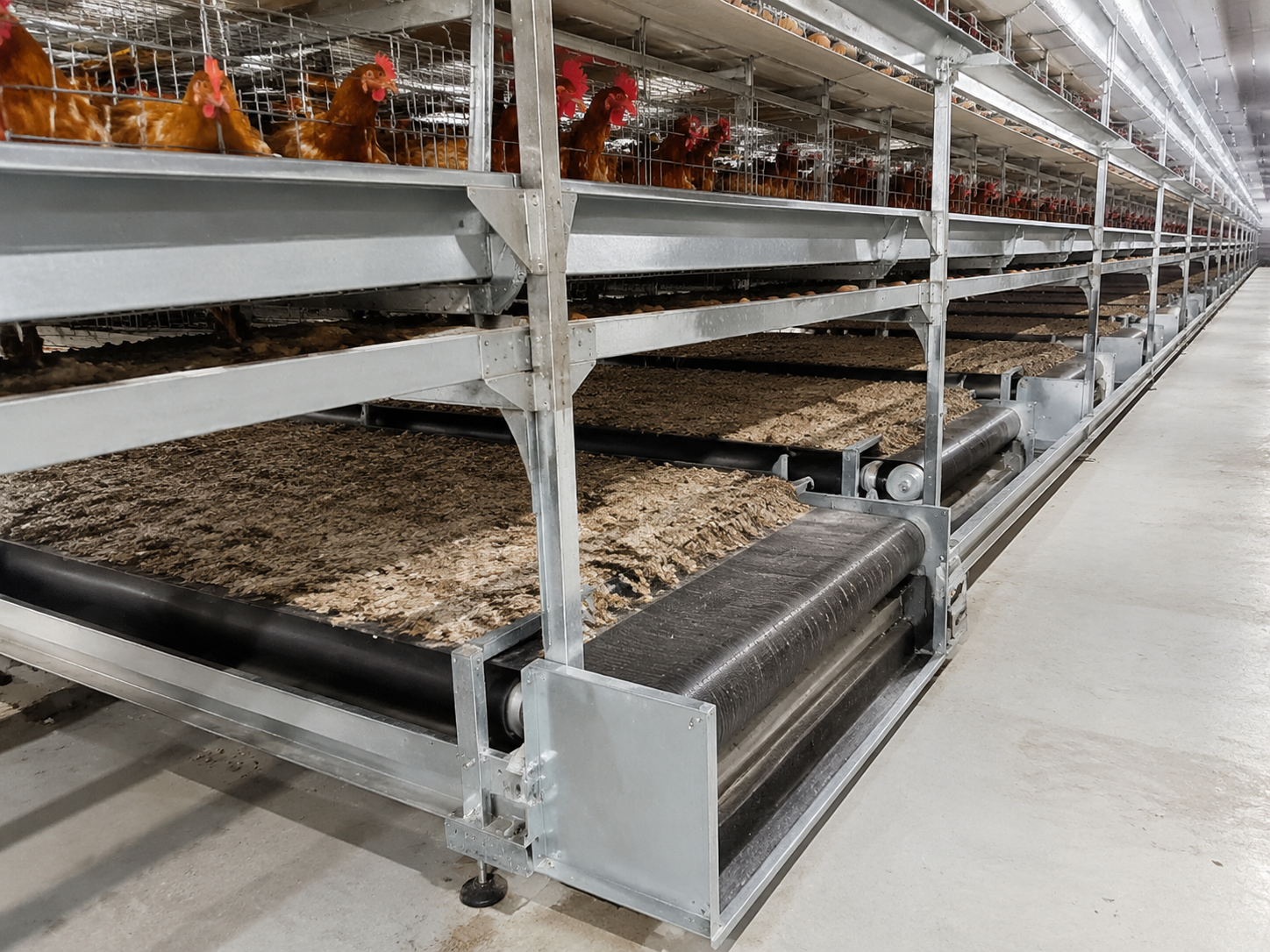
6. Compare Manure Cleaning Method
Manure cleaning is one of the biggest differences between cage system quotations. Some quotations may include only cages. Some may include manual cleaning space. Some may include scraper cleaning. Others may include a full manure belt system. Before choosing a quotation, ask:
Is manure cleaning manual or automatic?
Is a manure belt included?
Are motors, rollers, scrapers, and control parts included?
Is a cross conveyor included?
Where will manure discharge outside the house?
Does the layout leave enough maintenance space? For H Type cages, manure belt cleaning is usually very important because the cages are stacked and bird density is higher. If your farm has many birds, strong ammonia smell, wet manure, or limited workers, choosing a quotation without a proper manure cleaning system may create higher operation costs later.
7. Check Whether Egg Collection Is Manual or Automatic
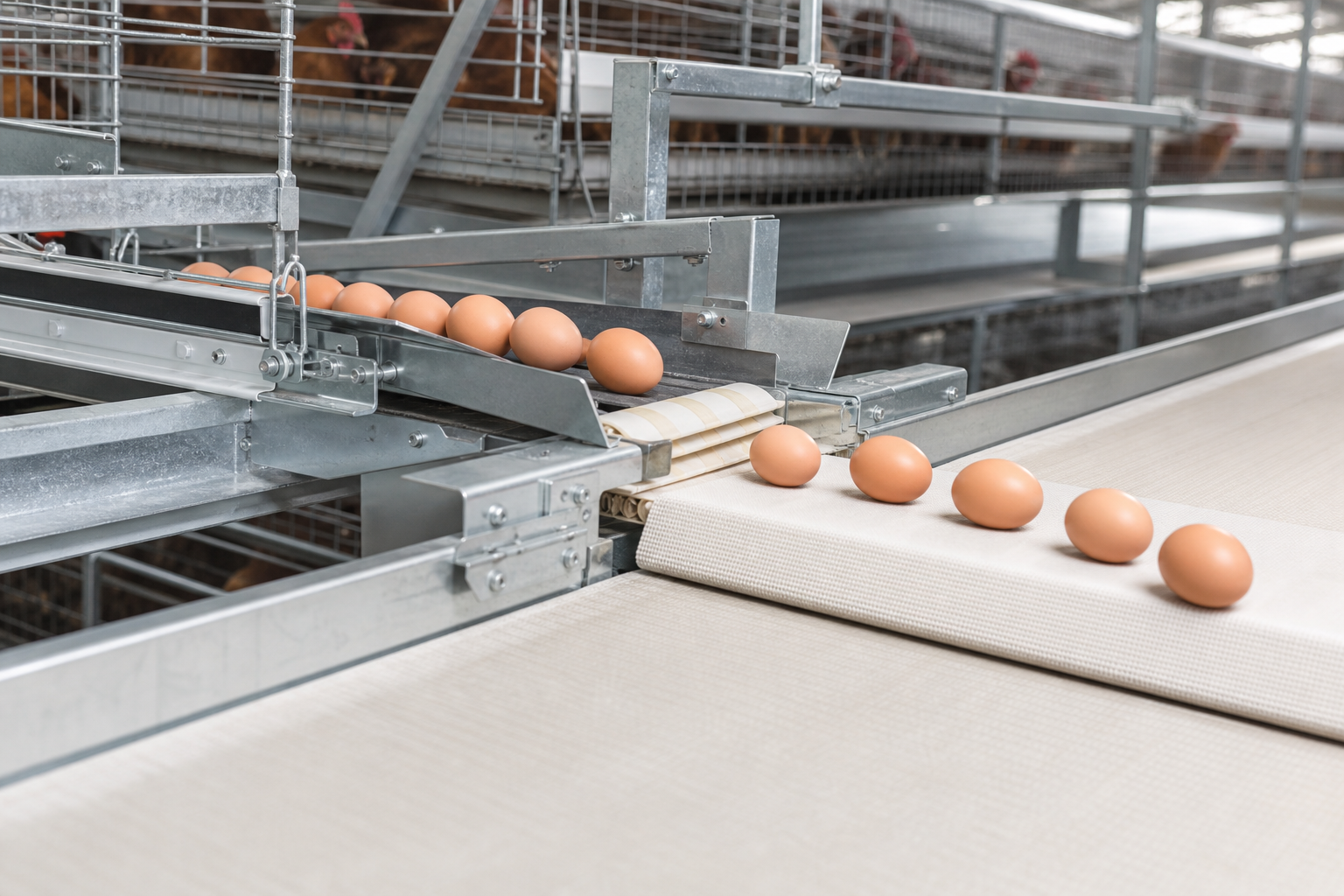
Egg collection also affects price. For small farms, manual egg collection may be enough. But for medium and large farms, automatic egg collection can reduce labor and make egg handling more organized. Before comparing quotations, confirm:
Manual or automatic egg collection
Egg belt included or not
Front egg collection system included or not
Motor and control parts included or not
Space reserved for egg collection
Whether it can connect to packing equipment later If one supplier quotes manual egg collection and another quotes automatic egg collection, the lower price may not be the better offer. It is a different system.
Not Sure Which Quotation Fits Your Farm?
Before choosing the cheapest offer, send us the key project information Please send:
Target bird quantity
Poultry house length, width, and height
Country and local climate
Manual or automatic feeding requirement
Budget level
Existing quotation files, if available Our team can help check whether the quotation matches your farm layout and whether any important equipment is missing.
8. Do Not Forget Ventilation and Environmental Control
Some buyers compare only cage prices and forget ventilation. This is risky, especially in hot climate areas or closed houses. Before confirming the cage system, check whether your farm needs:
Backup power consideration For H Type cage houses, bird density is higher, so ventilation design is more important. If the cage layout and ventilation system are not planned together, the house may face heat stress, high humidity, and stronger ammonia smell. If your farm is in a hot region, ask the supplier to check the ventilation requirement together with the cage layout.
9. Compare Spare Parts and Installation Support
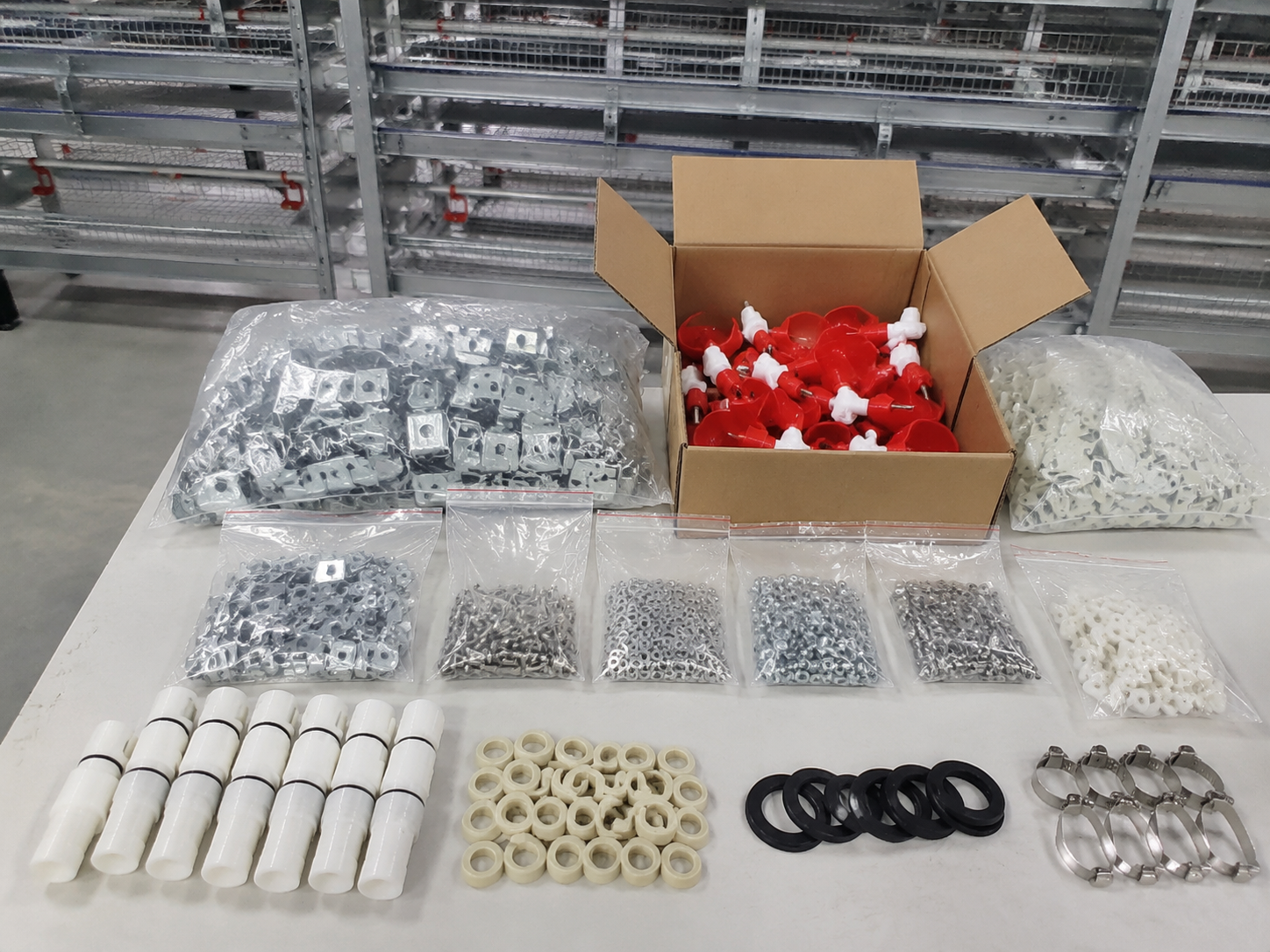
A good quotation should not only include equipment. It should also explain spare parts and installation support. Ask whether the quotation includes:
Spare nipple drinkers
Pipe connectors
Cage clips and screws
Manure belt spare parts
Egg belt spare parts
Motor-related spare parts
Installation drawings
Layout drawings
Remote installation guidance
On-site engineer service, if needed A lower quotation may not include enough spare parts or installation support. This can cause delays when equipment arrives. For overseas buyers, installation guidance is very important. Before ordering, ask what documents, drawings, videos, or engineer support the supplier can provide.
10. Compare Shipping Terms Carefully
For international orders, shipping terms can change the total cost. Before comparing quotations, confirm whether the price is:
EXW
FOB
CIF
CFR
Door-to-door Also ask:
Destination port
Container quantity
Packing method
Loading plan
Delivery time
Whether spare parts are packed separately
Whether documents for import are included A quotation with lower equipment price may become more expensive after adding shipping, port charges, or missing items. When comparing suppliers, make sure the trade terms are the same.
Common Mistakes When Comparing Chicken Cage Quotations
Many buyers choose the wrong system because of these mistakes:
| Mistake | Possible Problem |
|---|---|
| Only comparing total price | Missing equipment or weaker material |
| Comparing A Type with H Type directly | Different cage systems, unfair comparison |
| Ignoring bird capacity | Final capacity may be lower than expected |
| Not checking drinking system | Leakage, wet manure, poor water supply |
| Ignoring manure cleaning | More labor, ammonia, flies, wet manure |
| Not checking egg collection method | Higher daily labor |
| Forgetting ventilation | Heat stress and poor air quality |
| Not checking spare parts | Delays during maintenance |
| Ignoring shipping terms | Higher final landed cost |
| No layout drawing | Equipment may not fit the poultry house |
The cheapest quotation is not always the most economical choice. The right quotation should match your farm size, house layout, labor condition, climate, and budget.
What Information Should You Send Before Asking for a Final Quotation?
To get a more accurate quotation, prepare this information:
| Information | What to Provide |
|---|---|
| Bird quantity | 5,000, 10,000, 30,000, 50,000, or other |
| Poultry house size | Length, width, and height |
| House type | Open, semi-open, or closed |
| Country and climate | Temperature and humidity |
| Cage type | A Type, H Type, or need recommendation |
| Feeding method | Manual or automatic |
| Manure cleaning | Manual, scraper, or manure belt |
| Egg collection | Manual or automatic |
| Ventilation | Fans, cooling pads, or natural ventilation |
| Budget | Economy, standard, or fully automatic |
| Shipping term | FOB, CIF, CFR, or other |
| Installation support | Remote guidance or engineer service |
Sample Message to Send Us
You can copy and send this message when requesting a quotation or checking another supplier’s offer:
Hello, we are comparing chicken cage quotations for our layer farm.
Target bird quantity:
Poultry house size:
House type:
Country and local climate:
Preferred cage type:
Feeding method:
Manure cleaning requirement:
Egg collection requirement:
Ventilation requirement:
Budget level:
Shipping term:
Need installation support:
Existing quotation to compare: Yes / No
Please help recommend a suitable cage layout and equipment list.
This helps the supplier give a layout-based quotation instead of only a rough cage price.
Final Recommendation
When comparing chicken cage quotations, do not choose only by the lowest price. A proper quotation should clearly show cage type, bird capacity, material, drinking system, feeding method, manure cleaning, egg collection, ventilation, spare parts, installation support, and shipping terms. For small and medium farms, an A Type Layer Chicken Cage System may be a practical and economical choice. For farms with limited house space, higher bird density, or more automation needs, an H Type Galvanized Layer Chicken Cage System may be more suitable. If your quotation does not include feeding, manure cleaning, egg collection, ventilation, spare parts, or layout drawings, ask the supplier to explain clearly before ordering. Send us your poultry house size, target bird quantity, country, climate, budget, and quotation details.
Want to know more?
Get in touch with us for more information about our services and products.