
How to Choose an Automatic Chicken Cage Production Partner for a More Efficient Poultry Farm
The pressures reshaping commercial poultry production
Labor shortages, rising operating costs, and the need for consistent egg quality are changing how commercial farms plan their operations. Repetitive tasks such as feeding, egg collection, and manure handling can take significant staff time, while inconsistent handling may affect product quality. Farm operators need to improve productivity without adding unnecessary complexity to daily management.
Production models are evolving, too. Some operators are evaluating cage-free systems in response to market or regulatory expectations, while others are considering an automated poultry cage system to make better use of existing facilities and labor. Either approach requires careful planning: investment, building design, bird management, and local requirements all affect whether a system is practical.
Automated poultry farming is an investment decision, not simply an equipment purchase. The right poultry housing system should match your production goals, flock size, labor plan, building dimensions, and applicable standards. A capable supplier will help assess that fit before recommending equipment.
What to evaluate in an Automatic Chicken Cage
An Automatic Chicken Cage is a fully automated cage system that brings together feeding, drinking, egg collection, and manure removal. The goal is to create a workable production flow from bird care through egg handling and waste management.
Match the equipment to the birds and production objectives. A Layer Cage System is designed specifically for egg-laying hens, while broiler housing supports meat-bird management. Building dimensions, stocking plans, handling routines, and local requirements should inform the choice. Where relevant, discuss how the proposed cage configuration aligns with your market and compliance needs.
Compare more than the initial price. Ask about structural quality, corrosion resistance, installation requirements, expansion options, spare parts, and service support. Confirm compatibility with an automatic feeding system and manure removal equipment, as well as the ventilation and environmental controls planned for the building.
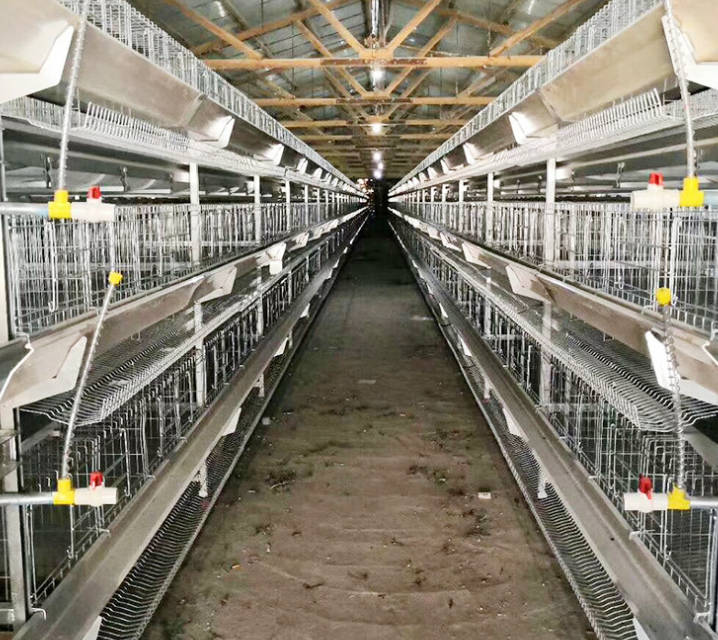
For layer farms, the H Type Galvanized Layer Chicken Cage System is one configuration to evaluate. Its stacked tiers, feed troughs, nipple drinking lines, and manure belts can be coordinated with automation. Ask the manufacturer for specifications, a layout based on your building, and a clear account of what the proposed Poultry Cage System includes.
Match equipment to farm scale and workflow
For a flock of approximately 5,000–6,000 birds, a stacked egg cage with a three-dimensional stepped layout may help use available floor space efficiently. Depending on the building and management plan, it can be configured as a standalone installation or a connected arrangement. Confirm usable capacity against aisle access, ventilation, and the space needed for daily work.
Larger operations may consider a three-layer vertical cage combined with automatic egg-picking equipment. Modular layouts can support staged expansion, and some configurations list a single-building capacity of up to 50,000 birds. Treat capacity as project-specific: request the layout assumptions and verify that the building, utilities, and staff workflow can support the proposed flock.
An overhead travelling feeding machine for poultry cages can distribute feed across multiple rows and tiers, with adjustable delivery designed to reduce reliance on manual feeding. Suitability depends on the house design, feed requirements, and integration with other poultry equipment.
Before choosing a custom Poultry Cage System or a large-scale poultry farm system, map the full workflow: feed delivery, egg movement, manure handling, ventilation, and staff access. For a broader look at vertical layouts and operating costs, see this overview of vertical poultry automation. Compare published claims with the specifications and conditions for your project.
Plan for egg handling, labor, and product quality
A complete Egg Collection System is a conveyor system that collects eggs automatically and can connect cage egg belts with grading and packing workflows. When evaluating an automatic egg-handling line, consider the entire route: collection from each tier, transfer to a central point, and movement to grading or packing.
The Stacked Egg Collection System for Layer Cages – Vertical Elevator Egg Collector is designed to transfer eggs from multiple tiers to a central table and cross conveyor using smooth plastic carriers. Ask how the equipment handles variations in egg flow, how it connects to existing or planned conveyors, and what access is needed for inspection and cleaning.
The Automatic Egg Tray Packing Machine for Poultry Farms and Egg Processing Plants can receive, arrange, count, and load eggs into trays. Confirm that its capacity and tray format match your grading and packing workflow before integrating it into a production line.
The supplier lists a breakage figure of less than 0.5% for its vertical egg-picking equipment. Treat this as a product-specific claim, not a guaranteed result for every farm. Request the test conditions, measurement method, and expected performance for your egg size, line speed, installation, and operating practices. You can also review this discussion of automation and egg-loss performance as a starting point for supplier questions.
Use evidence carefully when estimating return on investment
A credible ROI estimate starts with your farm’s baseline. Measure labor hours, feed waste, egg breakage, output consistency, maintenance, energy use, and installation costs. Then compare those figures with projected operating costs for the proposed poultry automation system. Include training, installation downtime, parts, and ongoing service—not just the equipment purchase price.
Some industry material cites a 90% figure in connection with automated cage systems, but the precise metric and study context are not specified. Verify the original source before relying on that figure, and do not treat it as a performance promise. Request evidence related to comparable flock sizes, building conditions, and management practices.
Likewise, findings about cage-free producer challenges or sustainability should not be treated as universal conclusions. Use them to guide discussion of market requirements, operational resilience, and system suitability. For a structured way to review potential costs and benefits, see this guide to calculating poultry automation ROI.
Ask each manufacturer for a capacity plan, equipment specifications, references, and a projected operating-cost comparison. A well-supported estimate should state its assumptions clearly and distinguish measured results from forecasts.
Choose a supplier that can deliver the complete project
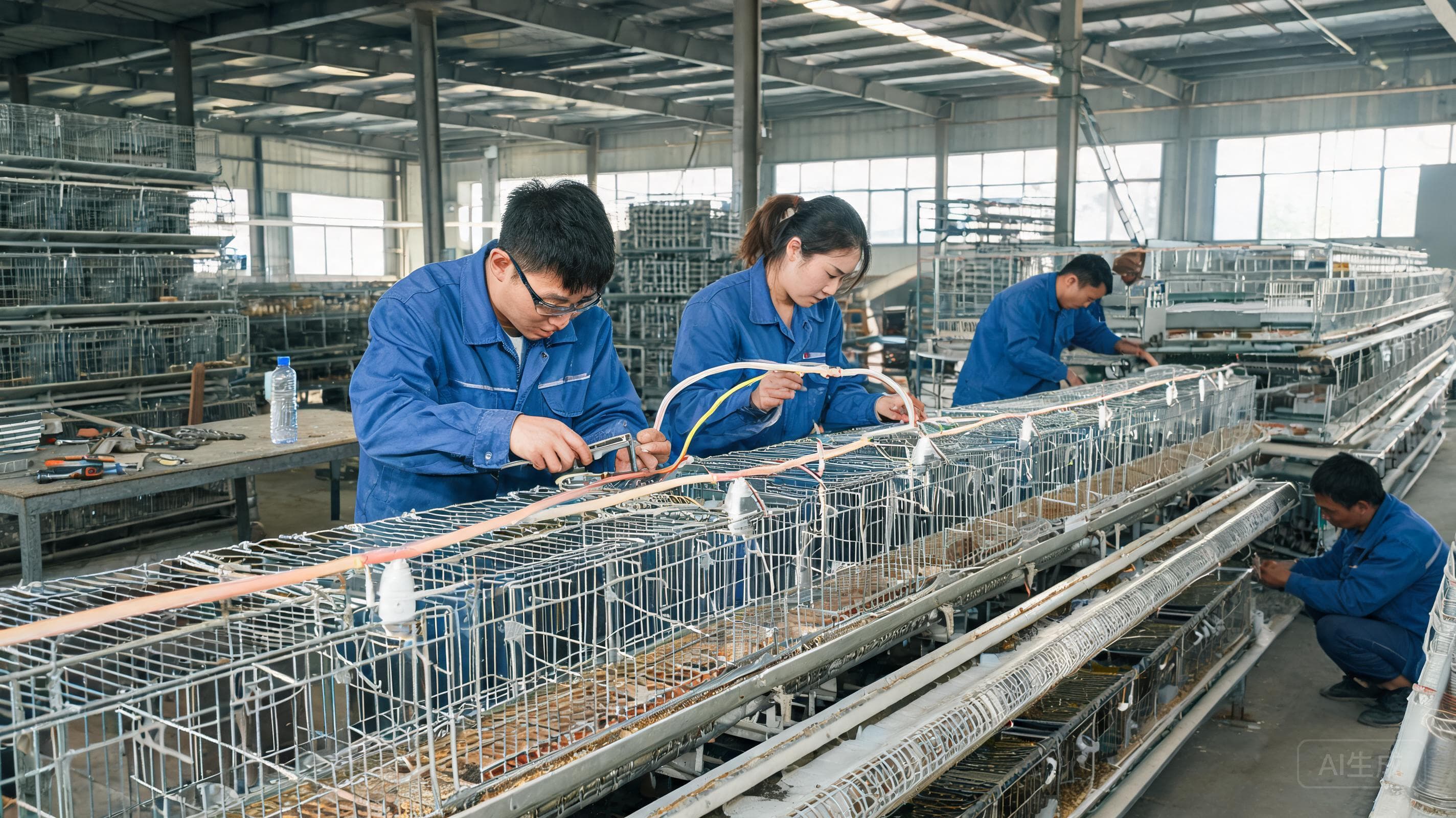
A reliable manufacturer should explain how it manages design coordination, production quality control, installation guidance, commissioning support, and after-sales service. These capabilities matter because industrial poultry cages must fit the facility and work as part of an integrated system.
If you are seeking a Turnkey Poultry Farm, clarify exactly what the proposal includes. This complete poultry farm package may cover equipment, cage layout, feeding and egg collection systems, manure handling, and coordination with an Environmental Control System. Confirm where the supplier’s responsibility ends and where local contractors or your farm team take over.
For export orders, discuss packaging, shipping, documentation, local installation support, spare parts, and warranty terms before ordering. Whether you are specifying a cage system for layers or broiler housing, compare the service plan as carefully as the equipment. A poultry equipment manufacturer should be prepared to answer detailed questions about compatibility, capacity, and support after delivery.
Before requesting a proposal, gather your flock size, house dimensions, bird type, target production capacity, and preferred automation level. These details help a supplier recommend a poultry housing system tailored to your operation.
Request a project-specific equipment proposal. Share your flock size, house dimensions, bird type, and target capacity through our contact page to receive a layout and equipment recommendation for your farm.
Want to know more?
Get in touch with us for more information about our services and products.