
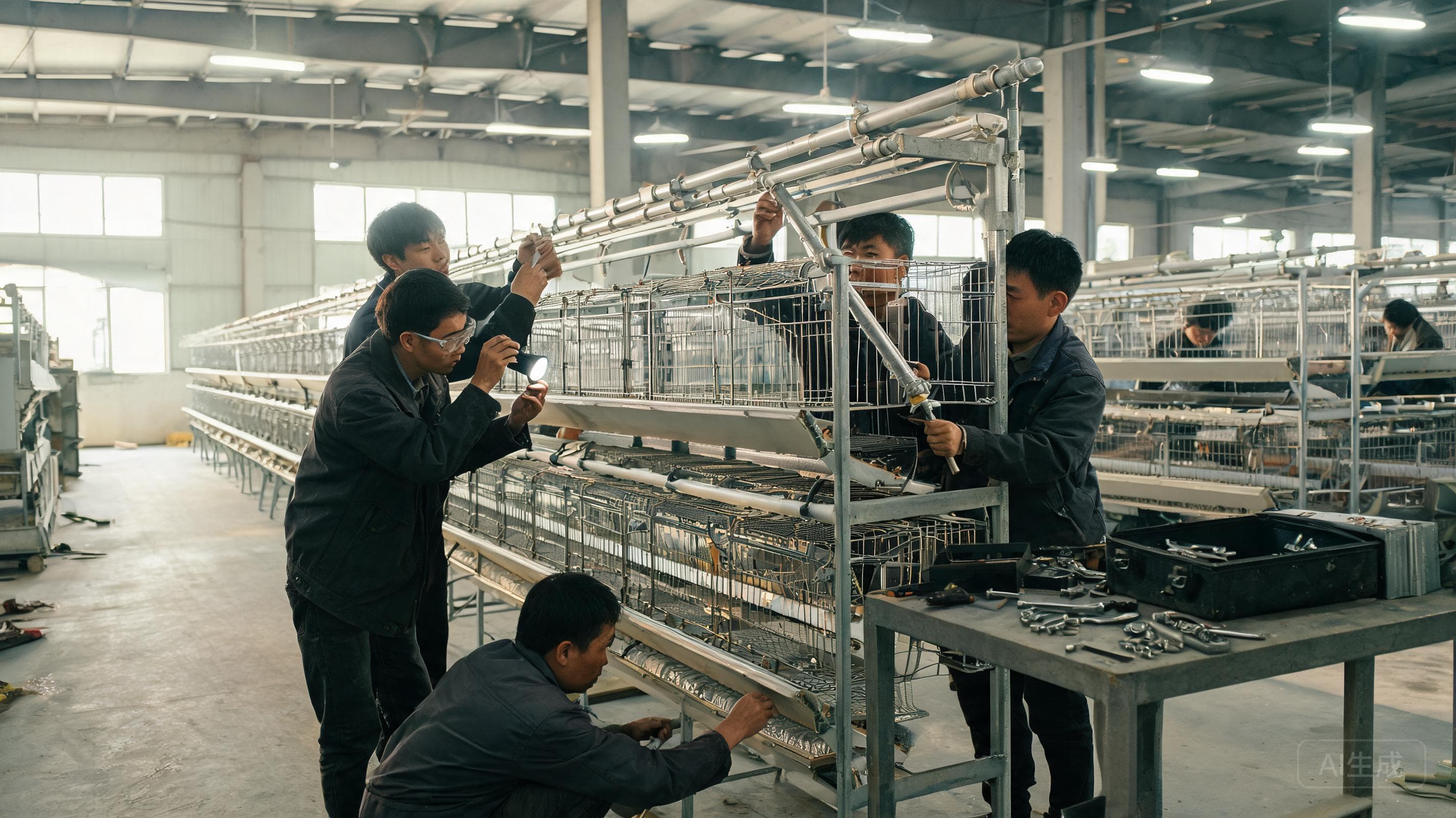
Automated Farming Equipment for Commercial Layer Farms: Cage Selection, House Planning, Automatic Feeding, Drinking, Egg Collection, Manure Removal, Ventilation and Cooling, and Procurement Guide
Start with the farm’s operating requirements—not a catalogue
Choosing automatic poultry equipment is a project decision, not simply a catalogue selection. Cage configuration, building layout, automation, climate control, and service support all affect how well a system fits your production plan. This guide helps commercial producers compare options, prepare a clear equipment scope, and request a proposal based on site requirements.
First define what you need to accomplish: select a Layer Cage System, plan a new poultry house, upgrade existing equipment, or source a Turnkey Poultry Farm package. These starting points call for different layouts, budgets, and levels of supplier coordination.
Before requesting a quotation, establish your target flock capacity and production model, available land, building dimensions, local climate, labor availability, and utility supply. Identify applicable animal-welfare rules and the requirements of your intended market. These factors shape whether a particular poultry housing system and automation level is practical for your operation.
Producers may need to balance capital investment, management demands, labor, and market expectations. Research on Indian poultry producers’ perspectives on cage-free systems, including a study published by Frontiers, can help frame these trade-offs, but findings from one region should not be treated as universal. Discuss your destination market and operating assumptions with a chicken cage manufacturer or poultry equipment manufacturer before requesting a detailed proposal.
Choose a cage configuration that fits the building and production plan
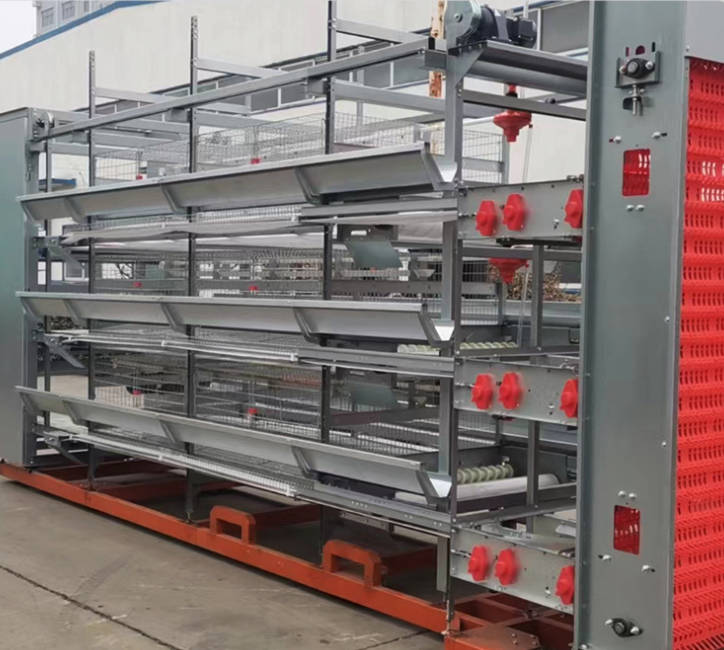
Compare A-type and H-type commercial poultry cages by building layout, number of tiers, inspection access, equipment integration, and potential for future expansion—not by headline capacity alone. A configuration that fits one house may not suit another, even when proposed bird numbers appear similar.
Review galvanized wire or hot-dip galvanized steel options against house conditions, cleaning routines, expected service environment, and the supplier’s material specifications. Ask for details relevant to your site, including construction, finish, and maintenance requirements.
For a project described as a three- or four-tier stepped egg cage system at a stated 5,000–6,000-bird scale, treat that figure as an initial reference, not a capacity guarantee. Final suitability depends on the design, house dimensions, production plan, and applicable requirements.
For larger operations, assess a stacked egg system with automatic feeding, drinking, and manure removal. Confirm the exact configuration, bird capacity, and installation requirements with the supplier. An Automatic Chicken Cage is a fully automated cage system with feeding, drinking, egg collection, and manure removal. Confirm which functions are included in the proposed system and itemize them in the quotation.
Clarify whether the proposal is for a chicken cage for layers, an egg layer cage system, or another production configuration. A battery cage system for poultry may be subject to market-specific rules, so confirm that it aligns with destination-market requirements. Do not assume that a broiler cage system or broiler chicken cages are interchangeable with layer equipment; specify the intended flock and production model.
Plan house dimensions, cage rows, and expansion before ordering
Give the supplier the building length, width, eaves height, structural drawings, entry and service areas, and known site constraints. These details allow the chicken cage production line to be laid out for the actual building rather than a standard assumption.
Review cage-row spacing, feed and egg conveyor routes, manure discharge points, worker access, ventilation inlets, fans, and cooling pads as a coordinated design. A Poultry Cage System is an integrated cage, feeding, and management system for poultry farms. It must work alongside the building and its utilities; treating each component as a separate purchase can leave costly interface questions unresolved.
If investment will be phased, identify which houses and equipment functions come first. Ask how later phases will connect to existing conveyors, controls, and utilities, and specify provisions for expansion. Before construction or manufacture begins, request a project-specific layout and an interface list from your chicken cage supplier.
Specify automation as a connected system, function by function
For feeding and drinking, define the required automatic feeding system, water-line arrangement, controls, and compatibility with the selected cage configuration. State which functions should be automated and which tasks will remain manual so the proposal reflects your intended operating model.
For egg handling, distinguish the Egg Collection System—a conveyor system that collects eggs automatically—from downstream grading and packing. An automatic egg collection machine paired with three-tier vertical cages may suit projects seeking integrated collection, but verify house capacity, conveyor layout, flock compatibility, and the manufacturer’s stated breakage specification for the offered model.
Assess an automatic egg tray packing machine for poultry farms and egg processing plants against egg flow, tray formats, line speed, hygiene requirements, and connection to any washer or grader. Confirm what equipment is included and where responsibility for integration begins and ends.
Map the complete process—from feeding and drinking through collection and packing—to identify equipment interfaces, control responsibilities, and remaining manual tasks. Articles on precision automation and egg handling can help frame questions about system design. Validate performance figures against the specific equipment and operating conditions under consideration.
Match manure removal and environmental control to house conditions
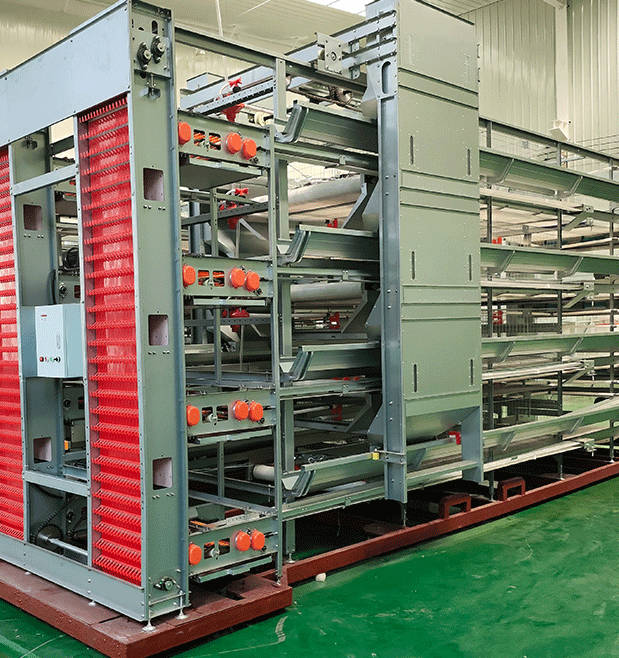
Evaluate the belt manure removal system by cage type, number of tiers, belt routing, discharge arrangement, cleaning schedule, and connection to a cross or inclined conveyor. Confirm belt, frame, and cover materials, motor arrangement, and manure destination with the manufacturer. Centralized collection may support composting or biogas handling where appropriate to the site and local process.
Specify an Environmental Control System for the local climate and house design. Depending on the project, this may include fans, cooling pads, air inlets, air deflectors, and an intelligent controller. Plan minimum ventilation and hot-weather operation together, and confirm control logic, power requirements, and equipment staging. A standard package should not be assumed to suit every location.
Check UEP’s 2025 cage-housing guidance alongside the rules that apply in the destination market. Requirements vary by country and production system; no single guideline should be treated as universally applicable.
Compare quotations, suppliers, and project risks on a like-for-like basis
Request an itemized scope covering cages, automatic feeding, drinking, egg collection, manure removal, environmental controls, packing equipment, electrical and control components, and exclusions. For each item, review the specifications and confirm whether it is supplied, installed, commissioned, or provided by another party.
Compare material specifications, building assumptions, layout drawings, shipping terms, installation scope, commissioning, training, warranty, spare parts, and after-sales support—not only the quoted total. For export chicken cages, confirm packing, shipping responsibilities, destination requirements, document needs, local installation resources, and how interface issues will be resolved.
Ask prospective suppliers for references or verifiable project information relevant to the same scale and system type. Avoid relying on unsupported savings, performance, or return-on-investment claims. Research on poultry-farming robotics and the NE1942 work on emerging technologies and husbandry practices can help you ask better questions about integration, reliability, and management readiness; neither proves the commercial return of a specific system.
When reviewing automation claims, ask what operating conditions and cost assumptions underpin them. Resources such as this guide to assessing poultry automation costs can help structure the discussion, but project economics should use your own labor, energy, maintenance, and production assumptions.
Prepare an inquiry that can lead to a project-specific proposal
Send the supplier your target bird capacity, production model, house dimensions or drawings, location and climate, preferred cage type, planned automation functions, and expected timeline. These details help a chicken cage factory assess whether a custom poultry cage system, a large-scale poultry farm system, or a complete Turnkey Poultry Farm package is the right scope.
For an existing house, include current equipment details, photos, building constraints, and the upgrade phases under consideration. Ask the supplier to assess connections between existing and new equipment, including conveyors, controls, and utilities. A well-planned poultry farm automation system depends on these interfaces as much as on individual machines.
Before finalizing the quotation, ask the supplier to identify its assumptions, unresolved site information, optional equipment, and items requiring local confirmation. Confirm the scope of poultry cage installation, commissioning, training, and ongoing support. A proposal that clearly states what is included is easier to evaluate and less likely to leave critical work unassigned.
Whether you are sourcing industrial poultry cages, an automatic manure removal system, or complete poultry farming equipment, compare the proposed scope against your actual budget and operating plan. This is a more reliable basis for choosing a chicken cage supplier than comparing equipment names or capacity claims alone.
Request a project-specific layout and itemized equipment proposal. Contact our team and send your target flock capacity, house drawings or dimensions, project location, preferred automation functions, and timeline so we can assess your requirements and prepare the next steps.
Want to know more?
Get in touch with us for more information about our services and products.