
How to Reduce Feed Waste in Layer Cage Poultry Farms
Feed is one of the largest daily costs in a layer poultry farm. Even a small amount of feed waste can become a large cost over time, especially in farms with thousands or tens of thousands of laying hens.
In layer cage farming, feed waste can happen for many reasons: unsuitable feed trough design, uneven feed distribution, overfeeding, poor feeding machine adjustment, bird behavior, feed quality, or weak daily management.
Reducing feed waste is not only about saving feed. It also helps keep the poultry house cleaner, reduces pests, and makes farm management more stable.
This article explains practical ways to reduce feed waste in layer cage poultry farms and what equipment buyers should consider before choosing a cage system.
1. Check the Feed Trough Design
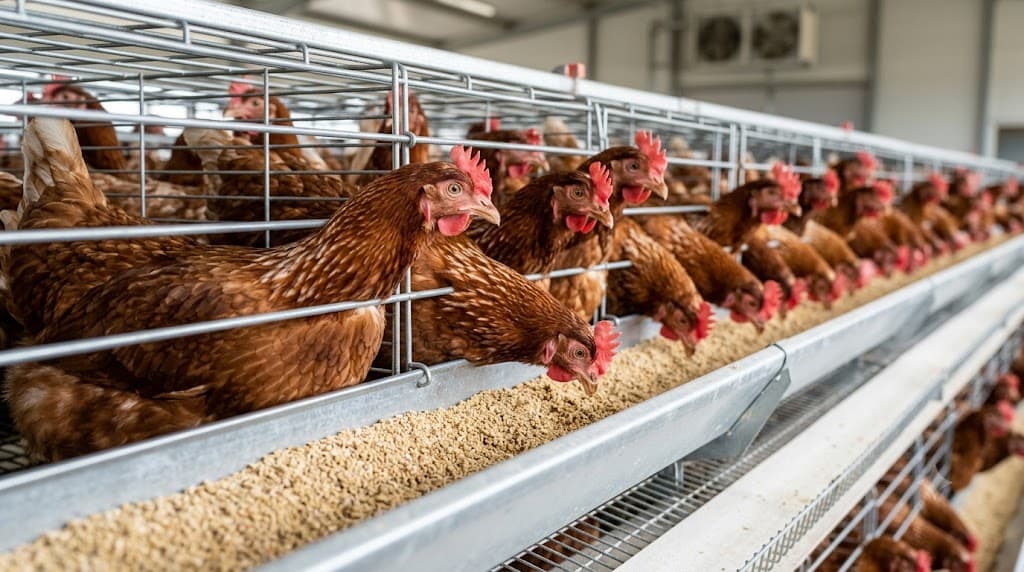
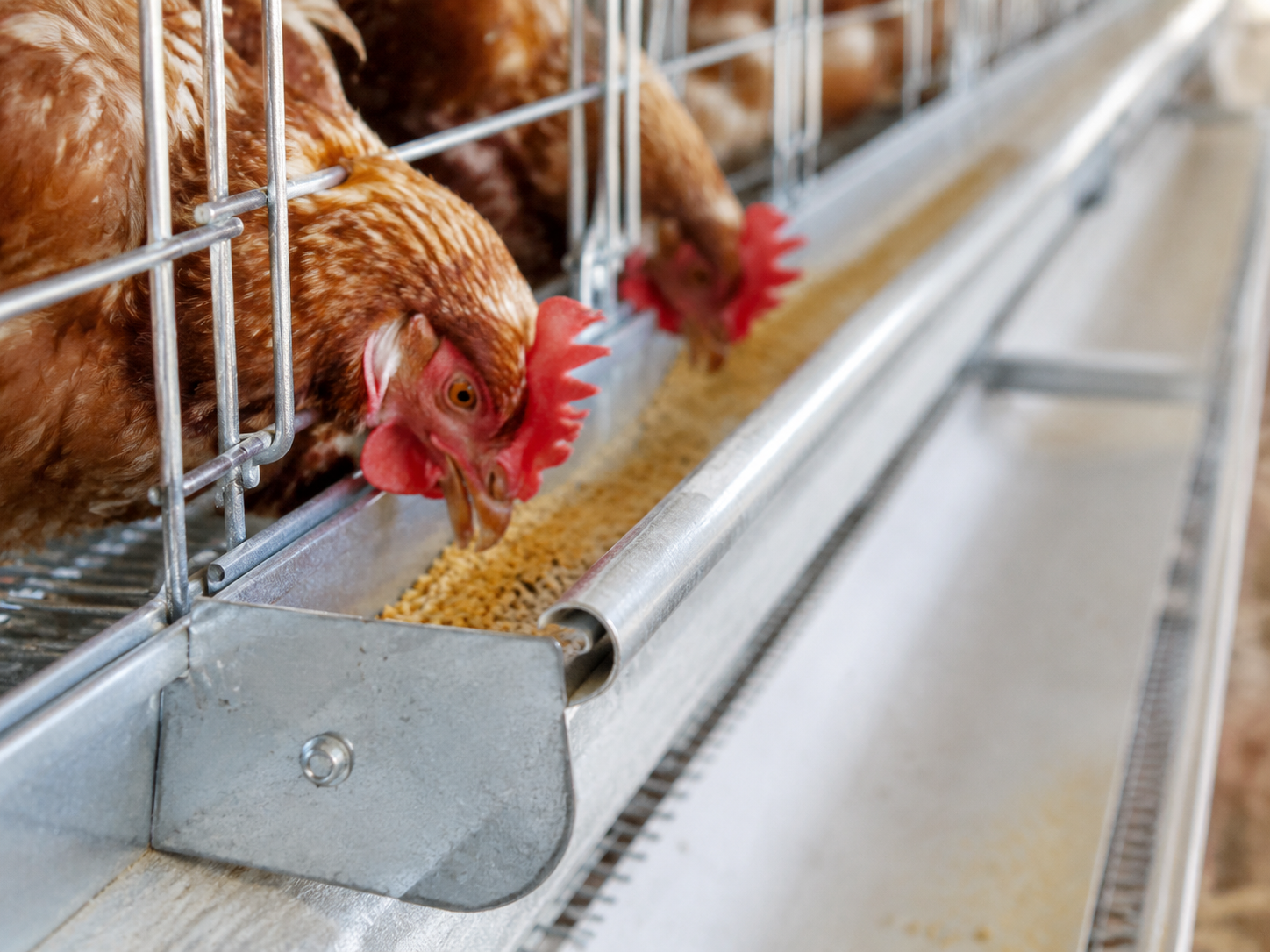
Feed waste often starts from the feed trough. If the trough is too shallow, too narrow, or not matched with the cage design, birds may push feed out while eating.
A good feed trough should:
- Hold enough feed for the cage row
- Allow birds to eat comfortably
- Reduce feed spilling outside the trough
- Be easy to clean
- Match the cage door and bird position
- Have a smooth surface without sharp edges
For A Type and H Type layer cages, the feed trough should be designed according to cage size, bird quantity, and feeding method. If the trough does not match the cage system, feed loss may happen every day.
When comparing chicken cage quotations, buyers should not only ask about cage capacity. They should also check the feed trough material, shape, thickness, and installation method.
2. Avoid Overfilling the Feed Trough
Overfilling is one of the most common reasons for feed waste.
If too much feed is placed in the trough at one time, birds may easily scratch, push, or drop feed outside the trough. This is especially common when workers feed manually and try to save time by adding more feed at once.
To reduce this problem:
- Do not fill the trough too high
- Feed in suitable amounts
- Keep feeding time consistent
- Check whether feed is left after each feeding
- Adjust feeding quantity according to bird age and production stage
For manual feeding farms, worker training is important. For larger farms, automatic feeding equipment can help control feed distribution more evenly.
3. Keep Feed Distribution Even
Uneven feed distribution can cause both waste and poor bird performance.
If some cages receive too much feed while others receive too little, birds in overfed areas may waste feed, while birds in underfed areas may compete more strongly. This can lead to uneven body condition and production problems.
For long cage rows or medium and large farms, even feed distribution becomes more difficult with manual feeding.
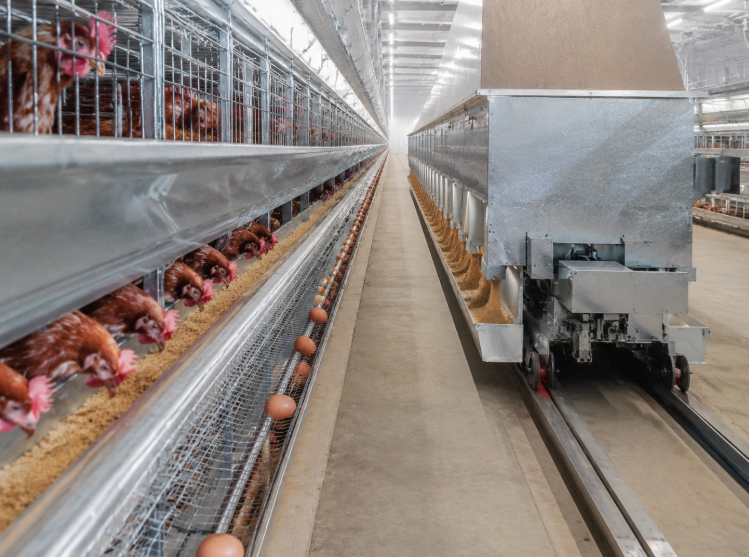
An automatic feeding machine can help distribute feed more evenly along the cage rows. It is especially useful when:
- The farm has many cage rows
- Cage rows are long
- Manual feeding takes too much time
- Workers cannot keep feed levels consistent
- The farm wants more stable daily feeding management
The goal is not only to feed faster, but also to feed more evenly.
4. Adjust the Feeding Machine Properly
Automatic feeding equipment can reduce labor and improve consistency, but only if it is adjusted correctly.
If the machine runs too fast, too slow, or releases too much feed, waste can still happen. If the feed outlet is not adjusted well, some parts of the row may receive more feed than others.
When using an automatic feeding machine, check:
- Feed outlet opening
- Machine running speed
- Feed level in each trough
- Whether feed is evenly distributed from beginning to end
- Whether the machine runs smoothly on the rail
- Whether feed is blocked at any point
- Whether the trough is overloaded
Regular adjustment is important because feed type, bird age, and production stage may change over time.
5. Match Feed Form with the Cage System
Feed form can also affect waste. Very fine feed may be easier to spill, while uneven particle size may cause birds to pick certain parts and leave others.
Common feed-related problems include:
- Feed is too powdery
- Feed separates during transport
- Birds pick larger particles first
- Feed becomes wet or sticky
- Feed is stored poorly before feeding
To reduce waste, farms should keep feed dry, fresh, and consistent. Feed storage should also be protected from rain, moisture, rodents, and contamination.
If the farm uses automatic feeding equipment, the feed should flow smoothly through the system without blocking.
6. Check Bird Density and Cage Comfort
Feed waste may increase if birds are crowded, stressed, or uncomfortable.
When too many birds are placed in one cage, feeding space becomes limited. Some birds may push others away, causing feed to spill. Weak birds may not eat enough, while stronger birds may waste more feed during competition.
Before buying layer cages, check:
- Birds per cage
- Feeding space per bird
- Cage depth and width
- Bird access to feed trough
- Whether all birds can eat comfortably
- Whether cage design matches the breed and body size
A suitable cage layout can help birds eat more calmly and reduce unnecessary feed loss.
7. Improve House Environment to Support Normal Feeding
Birds do not eat normally when the poultry house environment is poor.
High temperature, poor ventilation, strong ammonia smell, or high humidity can affect feed intake and bird behavior. In hot weather, hens may reduce feed intake during the day and eat more at cooler times. If feeding management does not adjust, more feed may remain or be wasted.
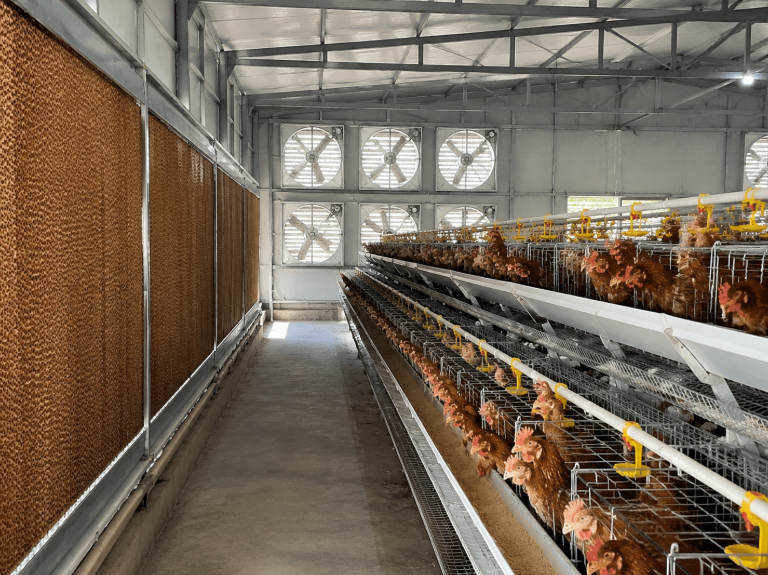
A good ventilation and cooling system can help keep the house more stable. This is especially important in hot climate areas and high-density H Type layer cage houses.
The farm should pay attention to:
- Temperature
- Airflow
- Humidity
- Ammonia smell
- Dust
- Drinking water availability
Good house environment supports better feeding behavior and helps reduce feed waste caused by stress.
8. Keep the Area Under Cages Clean
Feed spilled under cages can create more problems. It may attract rodents, insects, and flies. It can also mix with manure and make the house dirtier.
A manure belt cleaning system can help keep the area under cages cleaner by removing manure regularly. Although it does not directly feed the birds, it supports better house hygiene and reduces problems caused by spilled feed and manure buildup.
Farms should also check whether feed is falling under the cages regularly. If too much feed is found under the cages, it may mean there is a trough, feeding amount, or bird behavior problem.
9. Train Workers and Set Daily Checks
Equipment is important, but daily management is still necessary.
Workers should check:
- Whether feed is spilled under the trough
- Whether the trough is overfilled
- Whether all cage rows receive feed evenly
- Whether some birds are not eating normally
- Whether the feeding machine needs adjustment
- Whether feed is wet or blocked
- Whether rodents or pests are present
Small daily checks can prevent feed waste from becoming a long-term cost problem.
For farms using manual feeding, worker habits are especially important. For farms using automatic feeding, machine adjustment and maintenance are equally important.
10. What to Ask Before Choosing a Feeding Solution
Before choosing a cage system or automatic feeding equipment, prepare the following information:
| Information | What to Provide |
|---|---|
| Bird quantity | Number of layers |
| Cage type | A Type, H Type, or need recommendation |
| House size | Length, width, and height |
| Cage rows | Planned or existing number of rows |
| Feeding method | Manual or automatic |
| Feed type | Mash, pellet, or other |
| Labor condition | Enough workers or labor shortage |
| Current problem | Feed spilling, uneven feeding, slow feeding |
| Budget | Basic, standard, or automatic solution |
| Expansion plan | Whether the farm will increase bird quantity later |
This helps the supplier recommend a feeding method that fits your farm size and daily operation.
Sample Inquiry Message
You can send a message like this:
Hello, we want to reduce feed waste in our layer cage farm.
Bird quantity:
Poultry house size:
Cage type:
Number of cage rows:
Current feeding method:
Feed type:
Main problem: feed spilling / uneven feeding / high labor cost
Preferred automation level:
Budget range:
Please recommend a suitable cage and feeding solution.
This information helps the supplier check whether the solution should focus on feed trough design, feeding machine adjustment, cage layout, or automatic feeding equipment.
Final Recommendation
Feed waste in layer cage farms usually comes from several reasons, not just one problem. Feed trough design, feeding amount, feed distribution, cage density, bird behavior, feeding machine adjustment, and house environment can all affect feed loss.
For small farms, better manual feeding habits, suitable feed troughs, and regular checking may already reduce waste.
For medium and large farms, an automatic feeding machine can help improve feed distribution and reduce manual feeding problems, especially when cage rows are long or bird numbers are high.
Before choosing a feeding solution, do not only compare machine price. Send your bird quantity, cage type, poultry house size, feeding method, and current feed waste problem.
Our team can recommend a suitable layer cage and feeding system for your farm.
Want to know more?
Get in touch with us for more information about our services and products.