
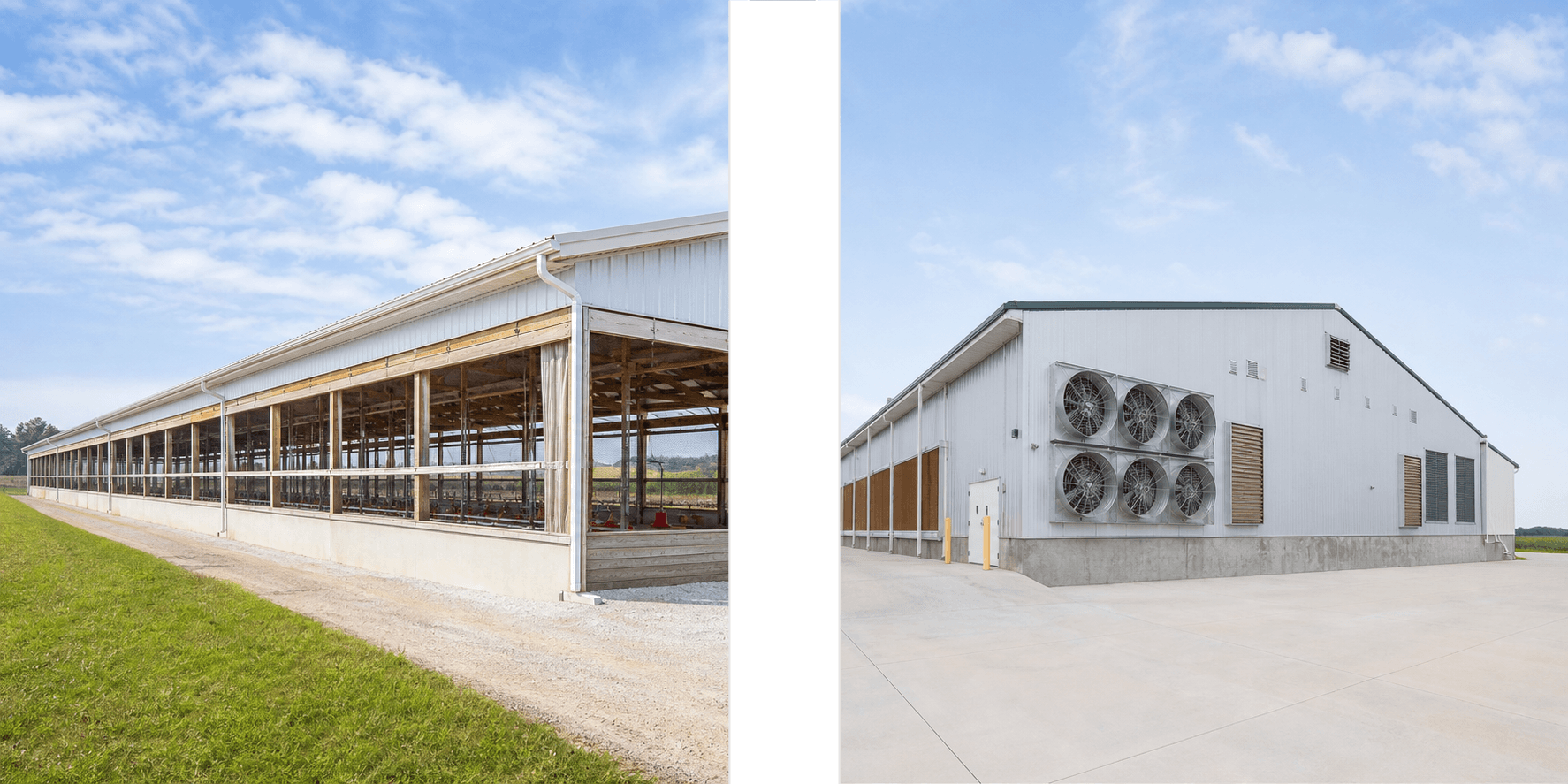
Open House or Closed House: Which Is Better for Layer Cage Farming?
When planning a layer chicken farm, one of the first decisions is the poultry house type. The two most common options are open house and closed house.
Both can be used for layer cage farming, but they are not suitable for the same conditions. The right choice depends on climate, budget, labor cost, bird density, automation level, and long-term farm planning.
If the house type is chosen wrongly at the beginning, the farm may face problems later such as poor ventilation, high heat stress, difficult manure management, or a cage system that does not match daily operation needs.
This article explains the practical differences between open house and closed house systems, and helps you decide which one is better for your layer farm project.
What Is an Open House?
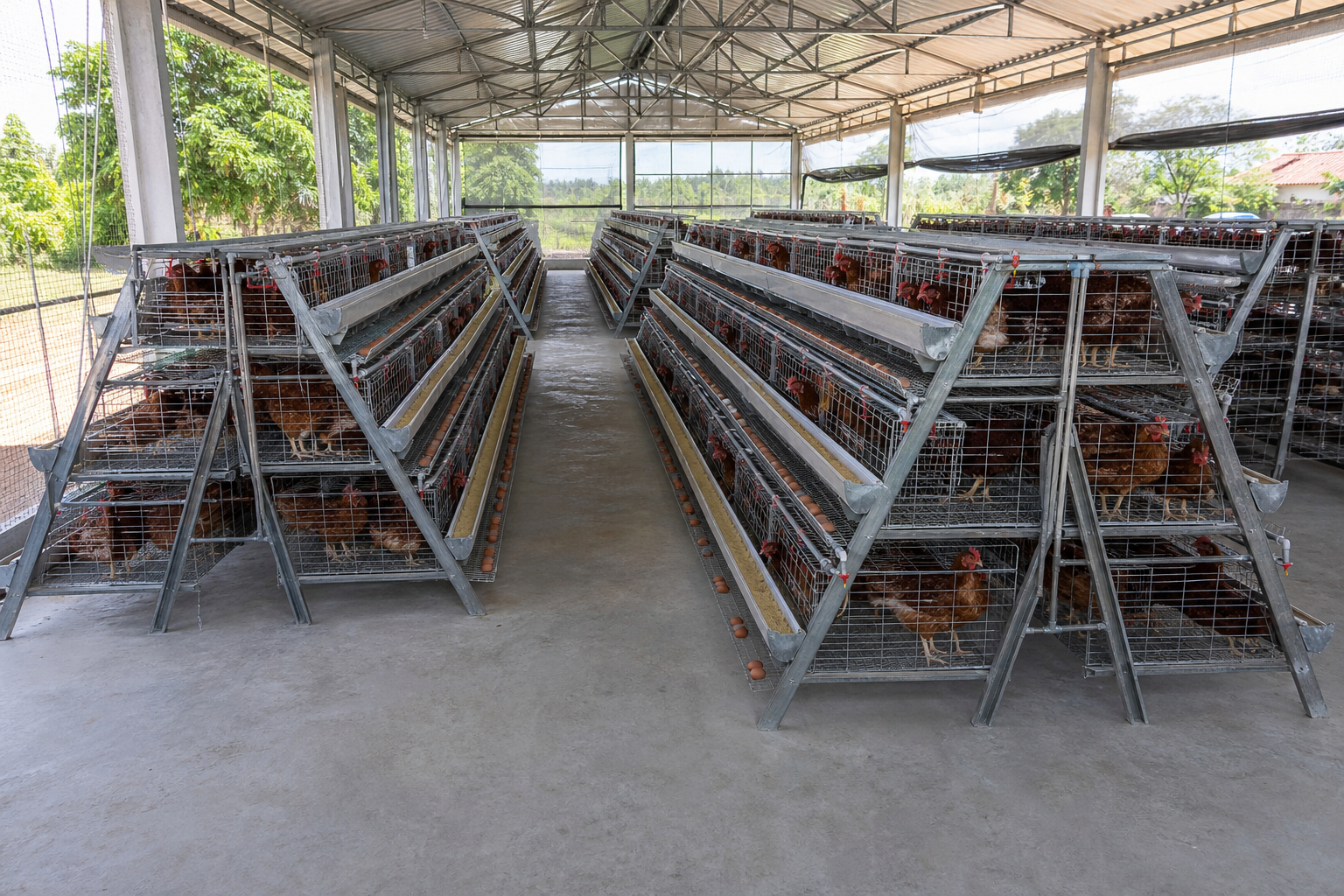
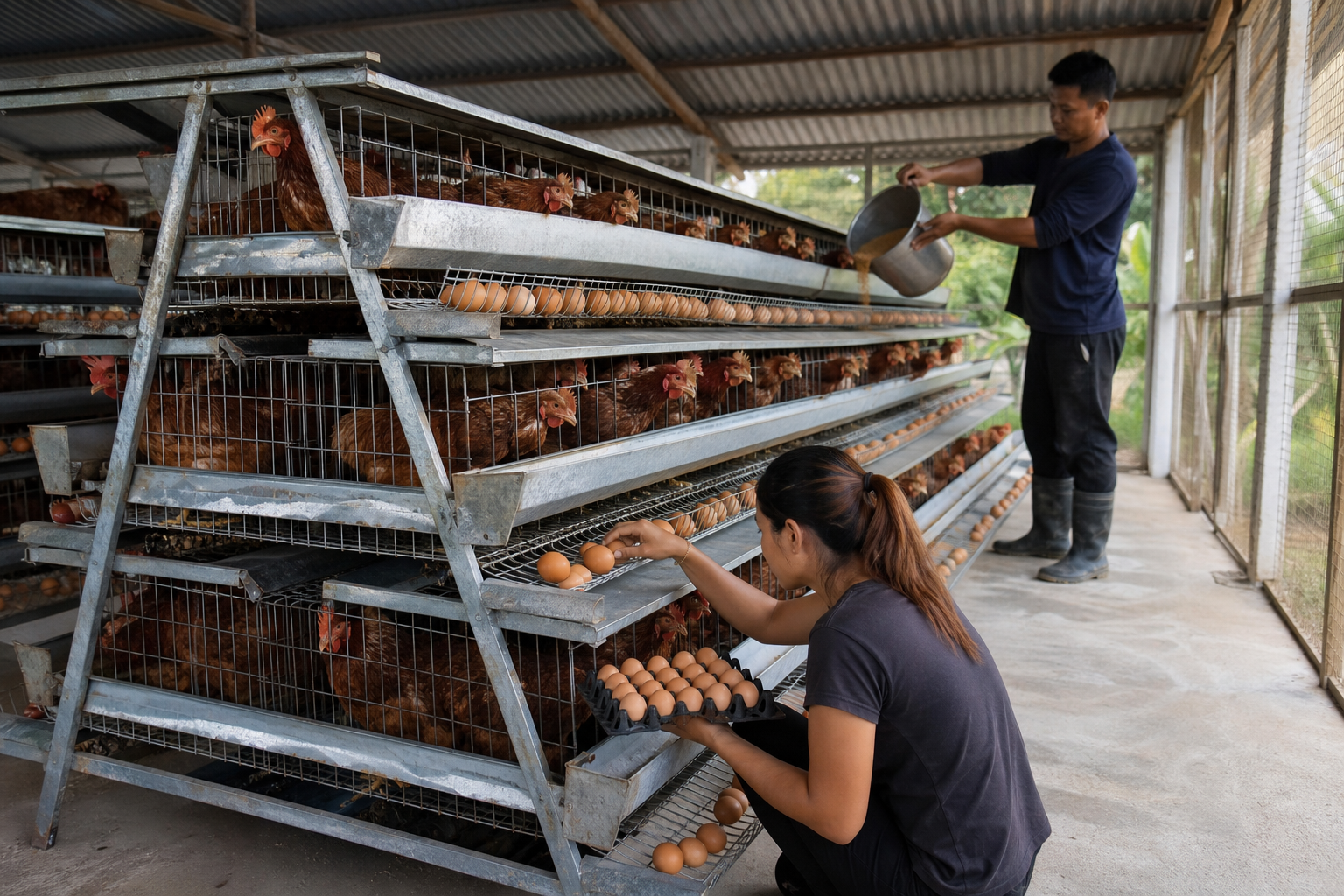
An open house is a poultry house that depends more on natural ventilation. It usually has side openings, curtains, or partly open walls to let air move through the house.
Open houses are often used in:
- Small and medium layer farms
- Areas with moderate weather
- Farms with limited investment budget
- Projects that use A Type layer cages
- Farms that want a simpler structure
Open houses are usually easier and cheaper to build than closed houses. They also work well in places where natural airflow is strong and temperatures are not extreme for long periods.
A Type cages are commonly matched with open houses because the stepped structure works well with natural ventilation and simpler farm management.
What Is a Closed House?
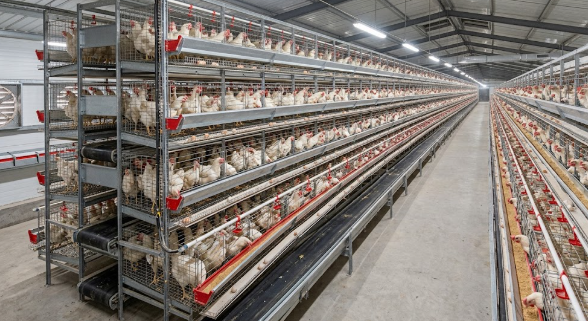
A closed house is a poultry house with a more controlled environment. It usually uses fans, cooling pads, air inlets, and other equipment to manage airflow and temperature.
Closed houses are often used in:
- Medium and large commercial layer farms
- Hot climate areas
- High-density bird production
- Farms with more automation
- Projects using H Type layer cages
Closed houses cost more to build, but they can provide better environmental control when the farm needs stable production conditions.
H Type cages are often used in closed houses because they can place more birds in the same house area and work better with automatic feeding, manure removal, and egg collection systems.
Open House vs Closed House: Main Differences
| Item | Open House | Closed House |
|---|---|---|
| Construction cost | Lower | Higher |
| Ventilation | Natural ventilation | Mechanical ventilation |
| Temperature control | Limited | Better control |
| Suitable climate | Moderate or mild climate | Hot or changing climate |
| Bird density | Usually lower | Usually higher |
| Automation level | Simple or semi-automatic | Semi-automatic or fully automatic |
| Labor need | Higher | Lower |
| Best cage type | A Type layer cages | H Type layer cages |
| Long-term expansion | Limited | Better for commercial expansion |
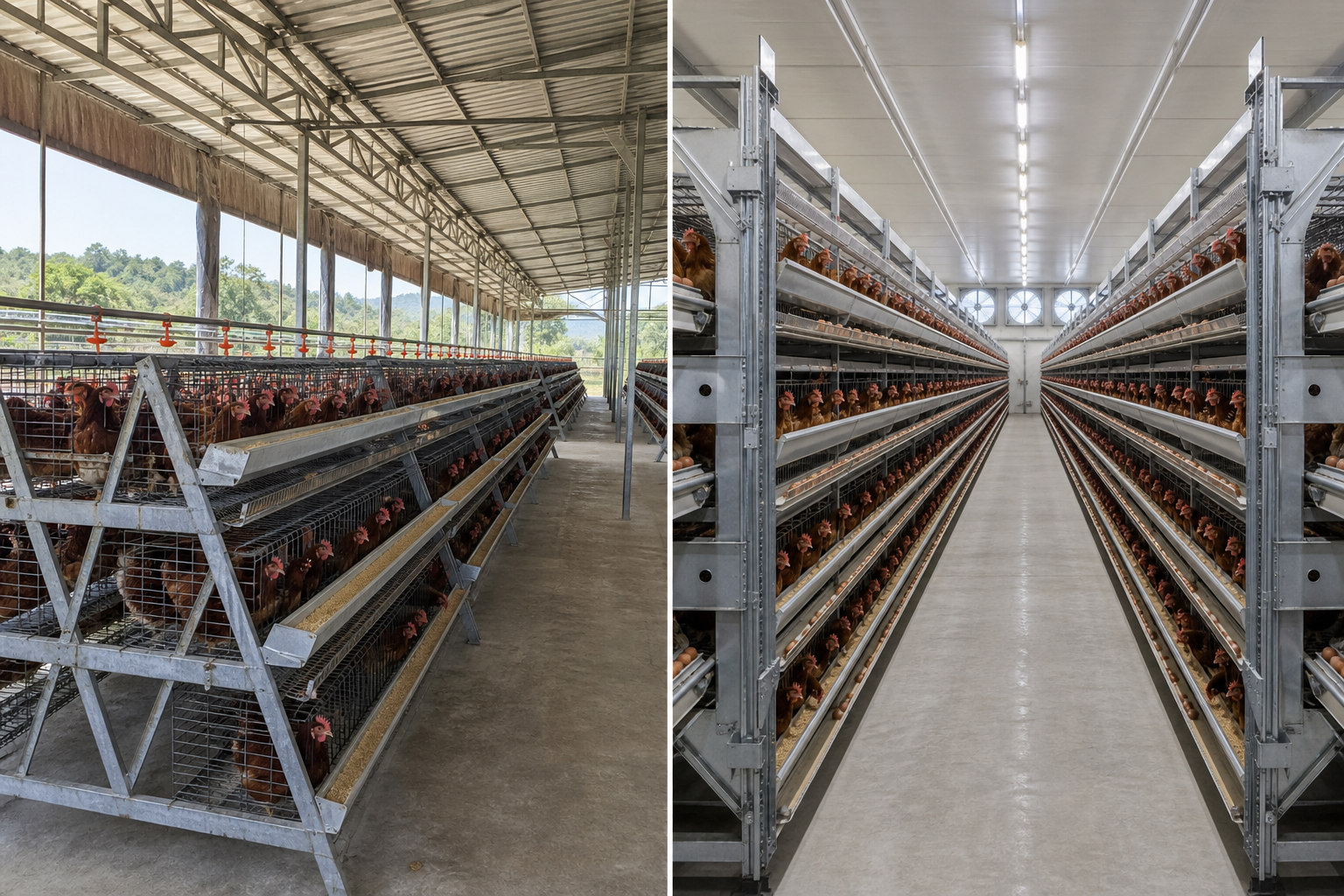
This does not mean one is always better than the other. The best choice depends on your farm goals and local conditions.
When an Open House Is a Better Choice
An open house may be a practical choice if:
- You have a limited budget
- Your local climate is not too hot or too cold
- Your land area is enough
- You prefer a simpler poultry house structure
- You are starting a small or medium farm
- You want to use A Type cages with basic equipment
Open houses can work well when the farm does not need strict environmental control. They are also easier to construct and easier to understand for first-time poultry farmers.
However, open houses are more affected by outside weather. In very hot, humid, or cold conditions, bird comfort and egg production may be more difficult to manage.
When a Closed House Is a Better Choice
A closed house may be the better option if:
- Your area has high temperatures or strong seasonal changes
- You want more stable production conditions
- You plan to raise more birds in one house
- Labor cost is a concern
- You want automatic feeding and manure cleaning
- You are building a commercial layer farm for long-term use
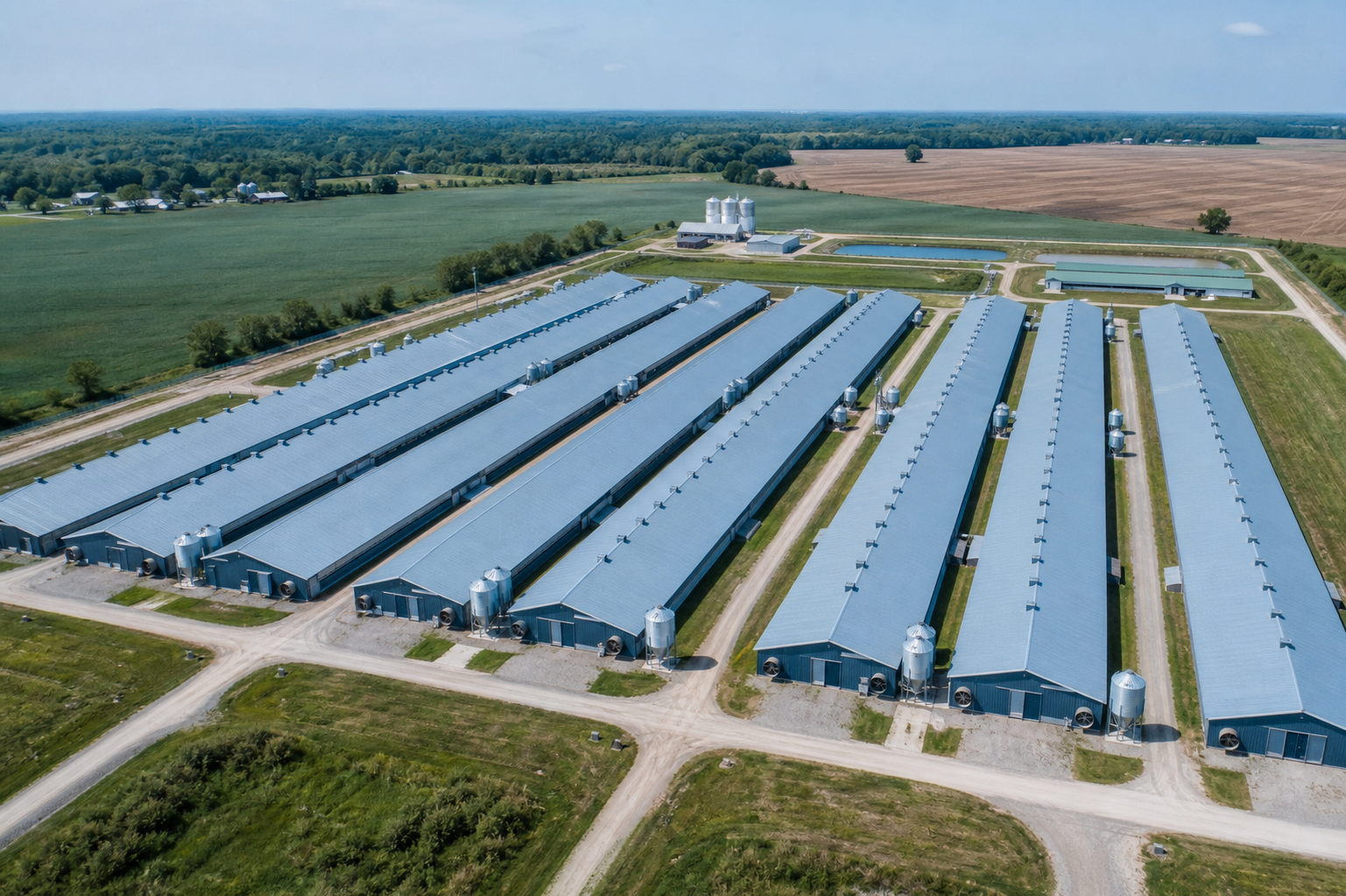
A closed house is usually matched with fans, cooling pads, controllers, and other environmental control equipment. This helps the farm better manage heat, humidity, and airflow.
For large commercial farms, a closed house is often more suitable because the environment can be controlled more consistently than in an open house.
How Climate Affects the Decision
Climate is one of the biggest factors in choosing between open and closed house systems.
In moderate climates, an open house may be enough for many layer farms.
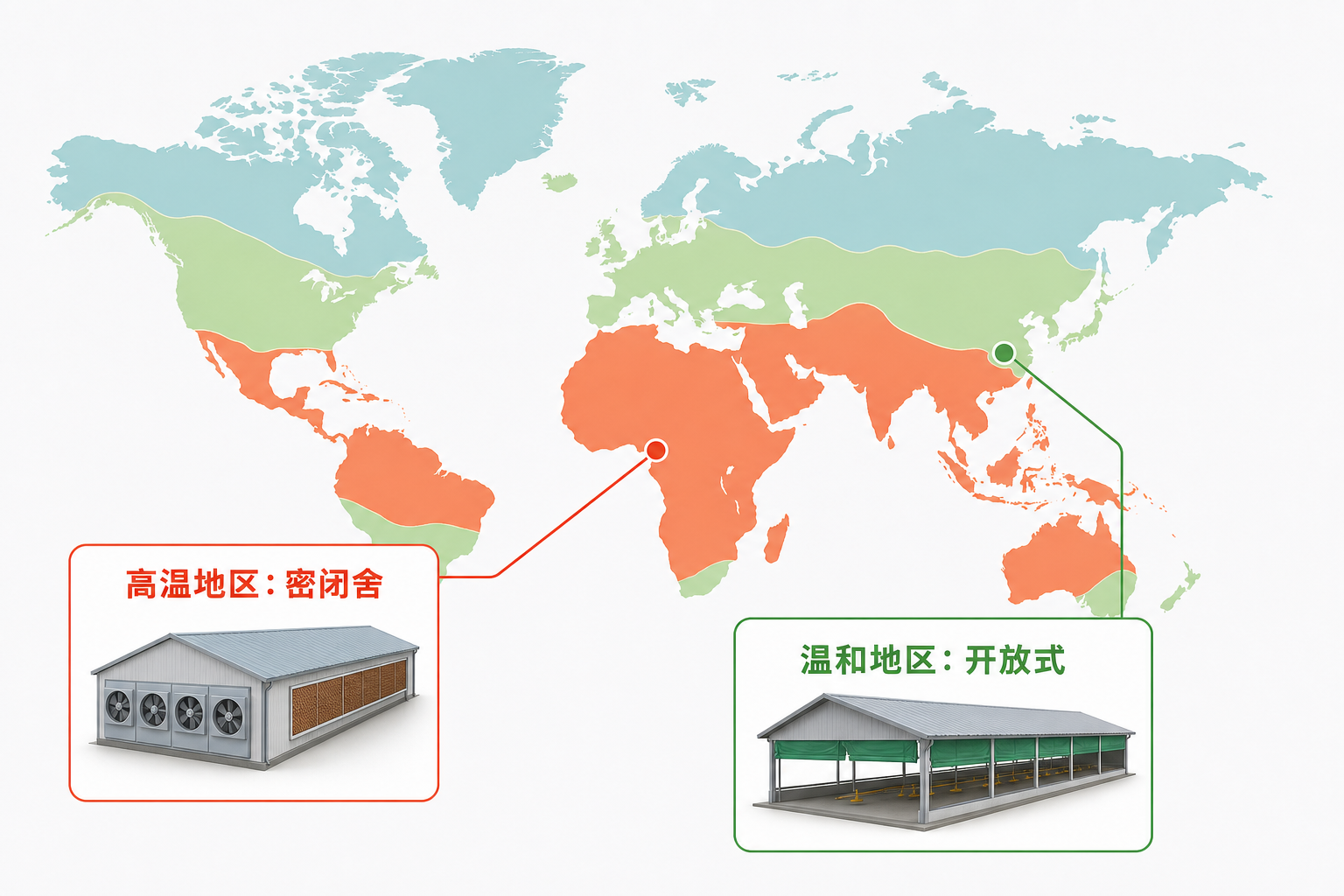
In hot climate areas, open houses can become difficult to manage during high-temperature seasons. Birds may eat less, drink more, and face heat stress if the house cannot stay cool enough.
In this case, a closed house with fans and cooling pads is often more practical.
If your farm is in Africa, the Middle East, Southeast Asia, or other hot regions, it is usually worth evaluating a closed house more carefully before making the final decision.
Labor and Automation Considerations
Open houses usually rely more on manual work or simple equipment. This may be acceptable for small farms, but as the flock size increases, daily labor can become a burden.
Closed houses are often used with more automation:
- Automatic feeding machine
- Manure belt cleaning system
- Automatic egg collection system
- Ventilation and cooling system
If your farm wants to reduce daily labor and improve management consistency, a closed house is usually the better match.
Which Cage System Fits Each House Type?
Open houses usually fit A Type layer chicken cages better.
Why?
- A Type cages work well with natural ventilation
- The structure is simple
- The system is easier to install in smaller or open poultry houses
- The first investment is lower
Closed houses usually fit H Type galvanized layer chicken cages better.
Why?
- H Type cages allow higher bird density
- They work well with automatic feeding and manure cleaning
- They are better for commercial-scale production
- They match controlled ventilation and cooling systems more naturally
This does not mean you cannot use H Type cages in an open house, or A Type cages in a closed house. But in most real farm projects, the cage type should match the house design and management style.
Common Mistakes When Choosing House Type
Many farmers make the wrong decision because they only compare construction cost.
Common mistakes include:
- Building an open house in a very hot area without enough ventilation support
- Choosing a closed house but not planning enough budget for fans and cooling pads
- Using high-density cages in a house that is too small or too weak for automation
- Not leaving enough space for feeding and manure cleaning equipment
- Deciding the cage type after the house has already been built
- Ignoring future expansion when designing the first house
The best way is to decide the farm scale first, then choose the house type, and then choose the cage system.
How to Decide for Your Own Farm
Choose an open house if:
- Budget is limited
- Climate is moderate
- Farm size is small or medium
- You want a simpler and cheaper structure
- You plan to use A Type cages
Choose a closed house if:
- Climate is hot or unstable
- You want higher bird density
- You need better environmental control
- You want more automation
- You plan to use H Type cages
- You want a commercial farm with better long-term scalability
Information to Prepare Before Asking for a Quotation
| Information | What to Provide |
|---|---|
| Bird quantity | Number of layers |
| House type | Open house or closed house |
| House size | Length, width, and height |
| Climate | Country, temperature, humidity |
| Cage type | A Type, H Type, or need recommendation |
| Feeding method | Manual or automatic |
| Manure cleaning | Manual or manure belt system |
| Egg collection | Manual or automatic |
| Budget | Economy, standard, or fully automatic |
| Expansion plan | Whether you will grow later |
With this information, the supplier can recommend a better cage layout and equipment list.
Final Recommendation
There is no single answer for every layer farm.
An open house is often better for farms with limited budget, moderate climate, and simpler management needs. It usually works well with A Type layer chicken cages.
A closed house is often better for commercial farms, hot climate areas, and projects that need better environmental control and automation. It usually works well with H Type galvanized layer chicken cages.
If you are not sure which one fits your project, send your bird quantity, house size, climate, and budget to the supplier before building the house.
Want to know more?
Get in touch with us for more information about our services and products.