

How to Choose an Overhead Travelling Feeding Machine for Layer Cages
For a layer farm, feeding is one of the most repeated daily jobs.
When the farm has more cage rows, longer poultry houses, or a larger bird capacity, manual feeding can require more workers and more daily time. An overhead travelling feeding machine can help distribute feed along the cage rows in a more organized way.
However, not every poultry farm needs the same feeding configuration.
Before choosing an overhead travelling feeding machine, buyers should understand the cage type, cage row length, poultry house layout, number of cage rows, feed management method, power supply, and planned automation level.
This guide explains what to check before selecting an automatic feeding machine for layer cages.
What Is an Overhead Travelling Feeding Machine?
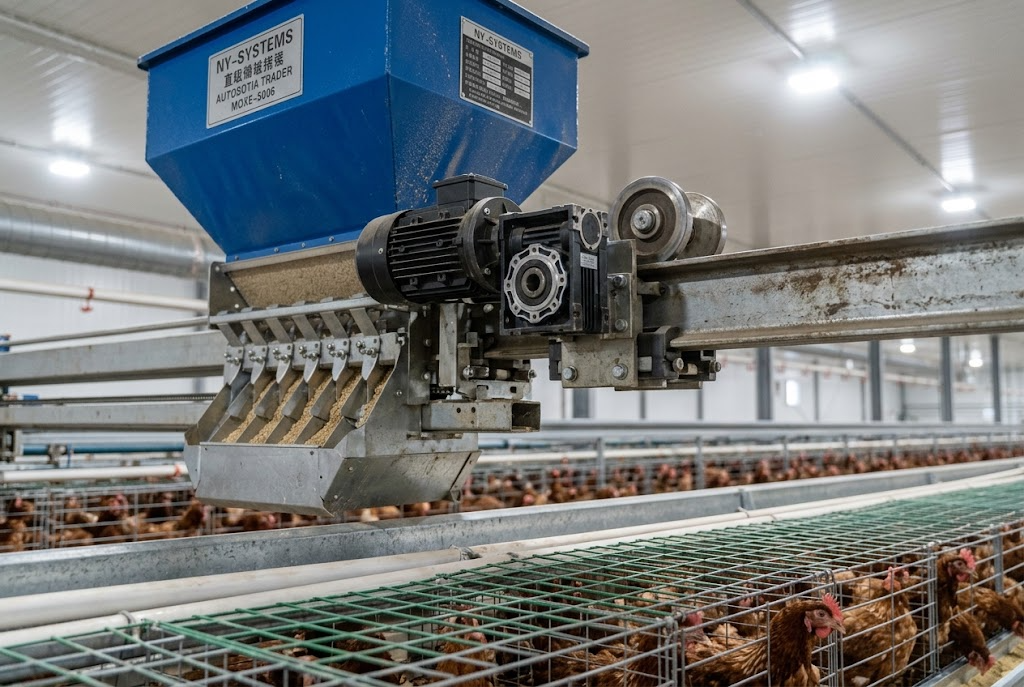
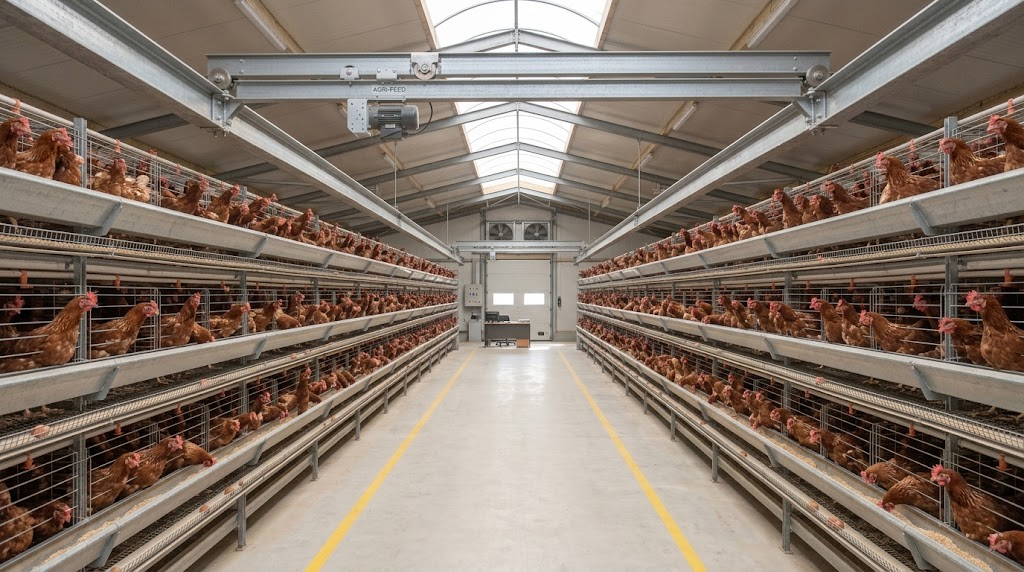
An overhead travelling feeding machine is a poultry feeding system designed to travel along layer cage rows and distribute feed into the feed troughs.
It may be used with A-type layer cages or H-type layer cage systems, depending on the farm layout and equipment configuration.
Overhead Travelling Feeding Machine for Poultry Cages
The feeding system may include:
- Feeding machine
- Feed hopper or feed loading arrangement
- Travel track or rail
- Motor
- Feed distribution components
- Supporting brackets
- Electrical control components
- Feed trough connection
- Parts for each cage row, depending on the project layout
The final configuration should match the poultry house and cage layout.
Does Every Layer Farm Need an Automatic Feeding Machine?
Not every layer farm needs the same feeding method.
A smaller project with short cage rows may use manual feeding or a simpler feeding arrangement. A commercial farm with longer cage rows, more birds, or limited labor may consider automatic feeding equipment.
The decision depends on:
| Farm condition | Why it matters |
|---|---|
| Target bird capacity | Larger farms usually have more daily feed distribution work |
| Cage row length | Long cage rows may be more suitable for organized mechanical feeding |
| Number of cage rows | More rows increase the amount of daily feeding work |
| Available farm workers | Helps the farm assess its labor requirement |
| Feeding schedule | Determines how often feed must be distributed each day |
| Poultry house layout | Affects rail position, machine travel path and feed loading area |
| Power supply | The machine requires suitable electrical planning |
| Budget and automation plan | Helps select manual, semi-automatic or automatic feeding |
The buyer should select the feeding system based on the full farm operation plan, not only the number of chickens.
First Check: What Type of Layer Cage System Do You Use?
The feeding machine should match the cage system.
For example, the cage row arrangement, feed trough position, and poultry house width may be different for A-type and H-type cages.
A-Type Layer Chicken Cage System
H-Type Galvanized Layer Chicken Cage System
Before requesting a feeding machine quotation, provide:
- Cage type
- Number of cage tiers
- Number of cage rows
- Cage row length
- Feed trough arrangement
- Total target bird capacity
- Poultry house length and width
- Existing cage system or new farm project
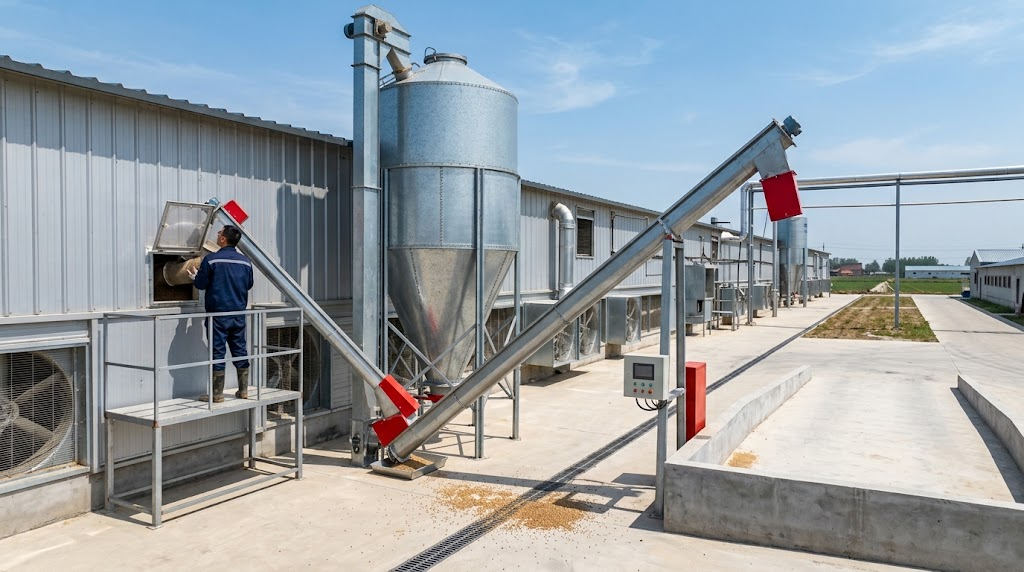
This information helps determine whether the machine can travel correctly along the cage rows and distribute feed into the intended troughs.
Second Check: Measure the Poultry House and Cage Row Length
The cage row length is one of the most important factors when planning an overhead travelling feeding machine.
The supplier needs to know:
| Layout information | Why it is needed |
|---|---|
| Poultry house length | Helps determine the machine travel distance |
| Poultry house width | Helps plan cage rows, aisles and support positions |
| Poultry house height | Helps confirm overhead space and support structure |
| Cage row length | Helps match the travel path to the equipment |
| Number of cage rows | Helps determine total feeding coverage |
| Main aisle position | Helps plan worker access and feed loading |
| Feed storage position | Helps plan feed movement into the house |
| Electrical connection point | Helps plan machine power and control position |
The feeding system should be planned together with the cage layout before production and installation.
Third Check: Understand the Feed Distribution Method
Different farms may use different feeding methods.
The buyer should clarify whether the project uses:
- Manual feeding
- Feed trough only
- Semi-automatic feeding
- Overhead travelling feeding machine
- Another integrated feed delivery arrangement
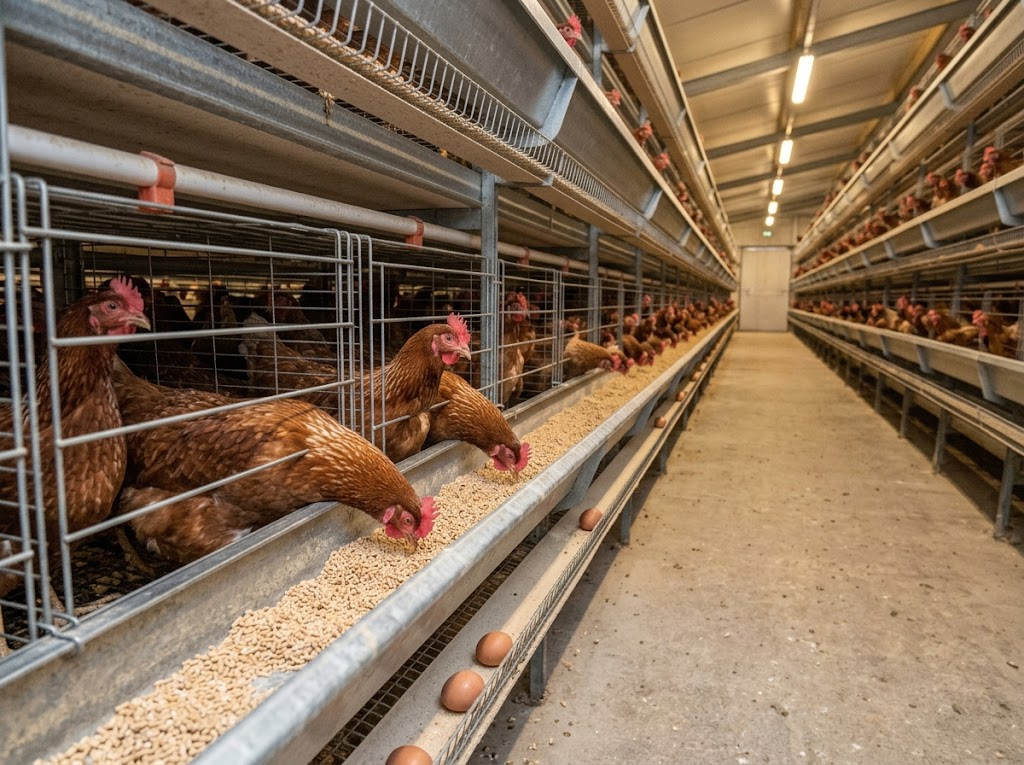
An automatic feeding machine does not replace every part of feed management. The farm still needs to plan feed storage, feed loading, feed quality control, daily observation, and equipment checking.
When comparing quotations, check whether the price includes only the feed troughs or a complete feeding system.
What Should Be Included in an Automatic Feeding Machine Quotation?
A clear quotation should list the equipment scope in detail.
| Equipment section | What buyers should check |
|---|---|
| Feeding machine | Quantity and suitable cage row coverage |
| Travel track or rail | Included length and supporting components |
| Motor | Included and matched to the equipment configuration |
| Feed trough connection | Whether the system matches the cage feed trough arrangement |
| Supporting brackets | Included for the planned cage layout |
| Electrical components | Control components and connection requirements |
| Feed loading arrangement | How feed reaches the feeding machine |
| Spare parts | Recommended high-wear or replacement parts |
| Documents | Layout drawing, equipment list and installation guidance |
Do not compare two prices until the feeding machine, rail, motor, supporting parts, electrical components, and installation scope are all clear.
Fourth Check: Plan the Feed Loading Area
The feeding machine needs an organized feed loading process.
Before selecting equipment, think about:
- Where will feed be stored?
- How will feed move into the poultry house?
- Where will the machine be loaded?
- Is there enough space for workers to handle feed?
- Is the feed loading point easy to access?
- Will the feed storage area stay dry and clean?
- Does the layout allow future expansion?
A good feeding system should reduce unnecessary movement inside the poultry house and make the daily feeding routine easier to manage.
Fifth Check: Consider Labor and Daily Farm Management
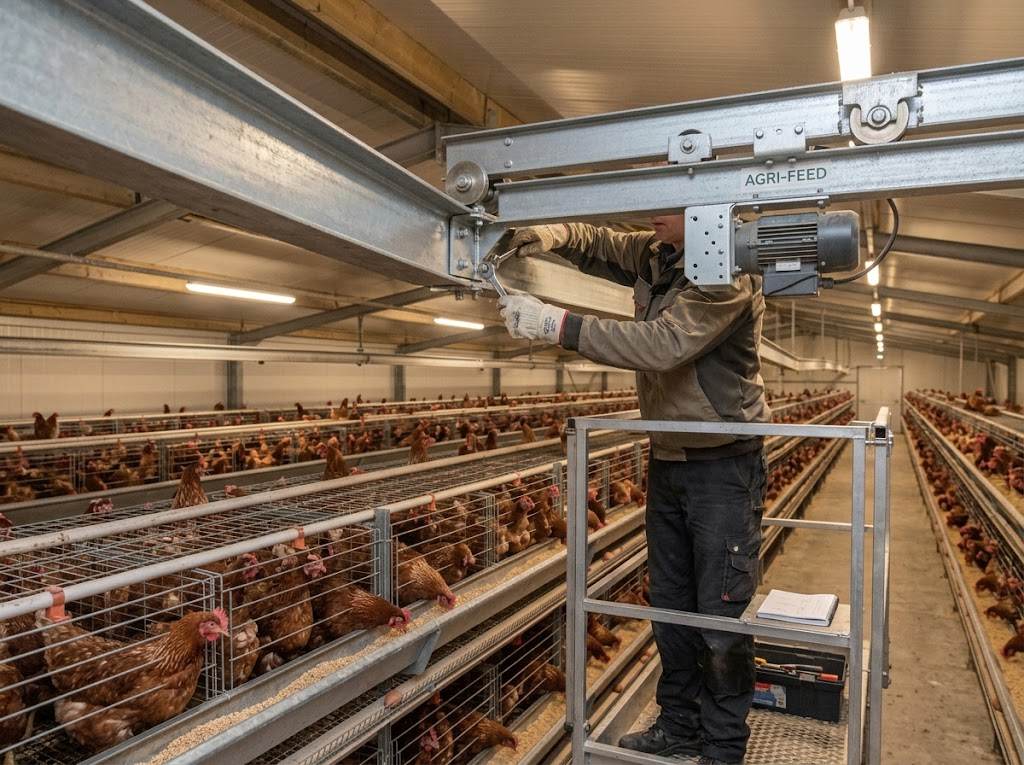
Automatic feeding may help the farm organize feed distribution, but the system still needs daily management.
Farm workers may need to check:
- Whether feed is distributed evenly
- Whether the machine travels smoothly
- Whether the feed troughs are clean
- Whether the motor and track are operating normally
- Whether there are loose connectors or visible obstructions
- Whether the feed loading area is organized
- Whether feed levels match the farm feeding schedule
A practical feeding plan should combine equipment selection with the farm's daily management process.
How Does Automatic Feeding Work With Other Equipment?
For commercial layer farms, the feeding system is often planned together with other equipment.
| Equipment system | Connection with the feeding plan |
|---|---|
| Layer cage system | Determines cage row length, feed trough position and feeding route |
| Drinking system | Requires coordinated access for routine inspection |
| Manure removal system | Requires enough working space and proper equipment arrangement |
| Egg collection system | Needs a clear workflow so feeding and egg handling areas do not conflict |
| Ventilation system | Requires suitable poultry house layout and electrical planning |
| Electrical control | Supports motor and equipment operation |
Automatic Manure Belt Removal System
Vertical Egg Collection System for Layer Cages
The farm layout should allow these systems to work together without blocking worker access or equipment maintenance.
Questions to Ask Before Ordering
Before placing an order, buyers can ask:
- Is this feeding machine suitable for my cage type?
- What cage row length can the system cover?
- How many feeding machines are needed for my project?
- Does the quotation include rail, motor and supporting brackets?
- Does the machine match my feed trough arrangement?
- Where should the feed loading area be located?
- What power supply is needed?
- What spare parts should be prepared?
- What installation documents will be provided?
- Can the feeding machine be included in the complete poultry house layout?
Information to Send for a Feeding Machine Recommendation
To receive a suitable recommendation, send:
| Information | Example |
|---|---|
| Target bird capacity | 5,000, 10,000, 30,000, 50,000 layers or another capacity |
| Cage type | A-type, H-type or an existing cage configuration |
| Poultry house size | Length × width × height |
| Cage row quantity | Number of cage rows |
| Cage row length | Actual planned row length |
| Farm type | New farm project or existing farm upgrade |
| Current feeding method | Manual, semi-automatic or automatic |
| Country | Helps confirm power and project conditions |
| Target purchase date | Helps plan the project schedule |
Final Recommendation
An overhead travelling feeding machine should be selected based on the actual poultry house layout, cage type, cage row length, bird capacity, feed loading process, and power supply.
The right feeding system should match the cage layout and make daily feed distribution more organized for the farm.
Want to know more?
Get in touch with us for more information about our services and products.