
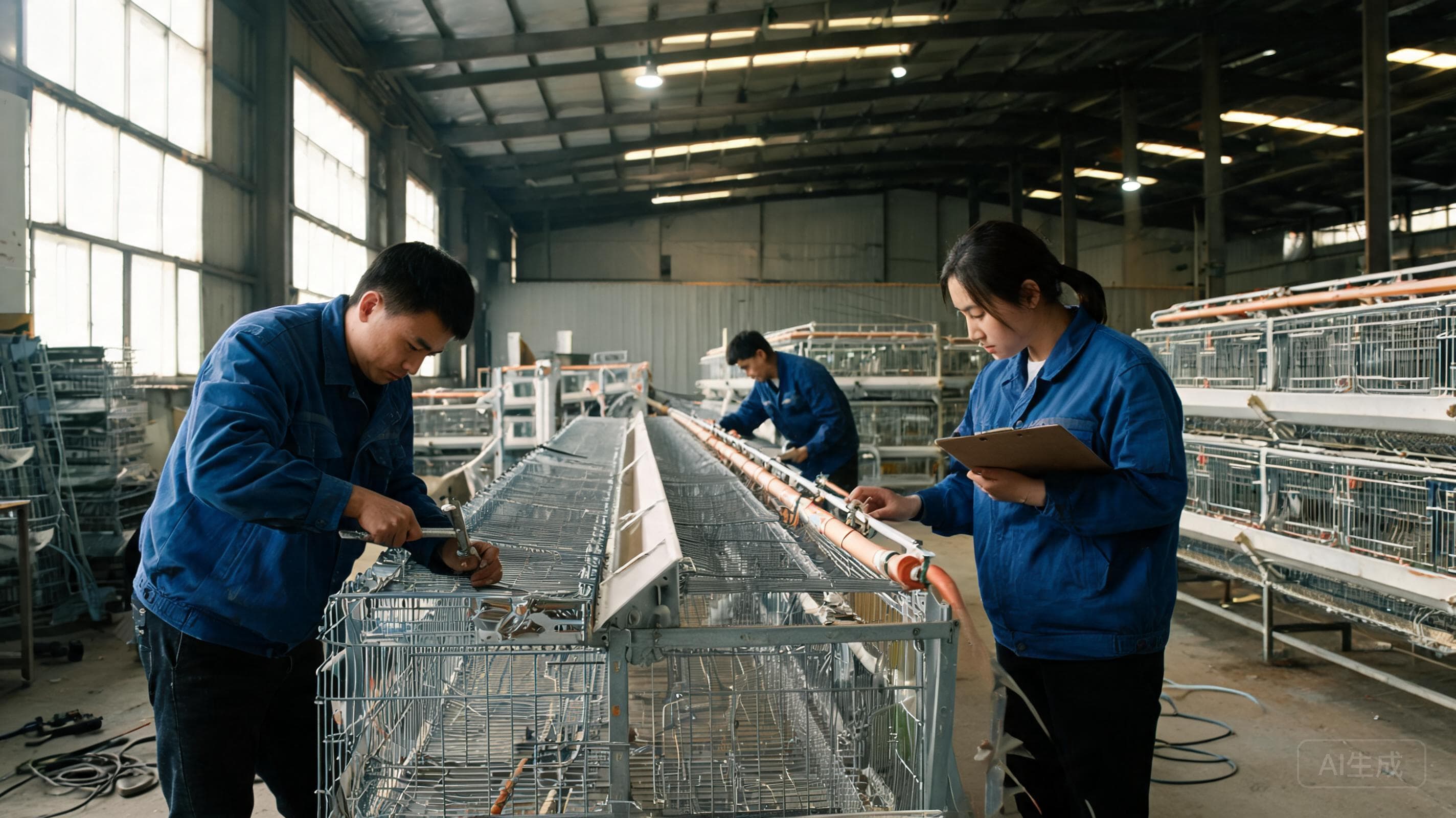
Build a More Productive Poultry Operation with an Integrated Automatic Chicken Cage System
Modernize poultry production with a plan built around your operation
Choosing poultry housing involves more than the initial purchase price. Producers must balance capital and operating costs, labor availability, bird-welfare expectations and the demands of changing production systems. Research on cage-free facilities and the transition to cage-free production shows that housing decisions depend on the market and the operation. Replacing equipment is not a one-size-fits-all solution.
At scale, labor-intensive feeding, egg collection and manure handling can constrain productivity. Inconsistent conditions between houses can also complicate flock management. Poultry automation can help address these challenges when equipment is selected to match measurable operational needs, target capacity and housing requirements.
Start by identifying the production challenges you need to solve. For a broader view of the factors that shape a project’s financial case, see this guide to calculating poultry automation ROI.
Assess the full production system before selecting equipment
Before comparing commercial chicken cages or a Layer Cage System, define flock size, building dimensions, production goals, labor capacity, climate and target markets. These factors determine which equipment fits the facility and supports the intended workflow.
A Poultry Cage System is an integrated cage, feeding and management system for poultry farms. Depending on its configuration, it can include drinking lines, an Egg Collection System, manure removal and other management equipment. An Automatic Chicken Cage is a fully automated cage system with feeding, drinking, egg collection and manure removal. The right configuration depends on the building layout, flock and operating plan.
Layer operations and broiler production have different requirements. Select a Layer Cage System for the flock and egg-collection workflow. A broiler cage system should match the intended production cycle and management model. If considering a battery cage system, confirm that it meets the regulations and buyer requirements in your target market.
Plan for maintenance and future expansion as well as day-to-day operation. Check service access, spare-parts availability, installation sequencing and compatibility with existing poultry equipment. These factors can influence reliability and total project cost as much as the equipment specifications.
Match automation to the farm’s most demanding tasks
Automation does not have to be an all-at-once investment. Prioritize the tasks that demand the most labor or disrupt production, then configure equipment around the farm’s workflow.
- Layer housing: The H Type Galvanized Layer Chicken Cage System is designed for medium and large layer operations. Hot-dip galvanized construction, feeding and drinking lines, manure belts and compatibility with automated equipment support an integrated setup.
- Large-scale installations: The Large Stacked Egg Chicken Equipment System combines feeding, drinking and manure cleaning in a stacked arrangement. Confirm the configuration against your building and production requirements.
- Egg collection: The Three-Layer Automatic Egg Collection Cage System is a modular option with automatic egg collection. Supplied specifications state a breakage rate below 0.5% and capacity of up to 50,000 birds per building. Verify these figures against breed, building layout, installation and operating conditions before planning your project.
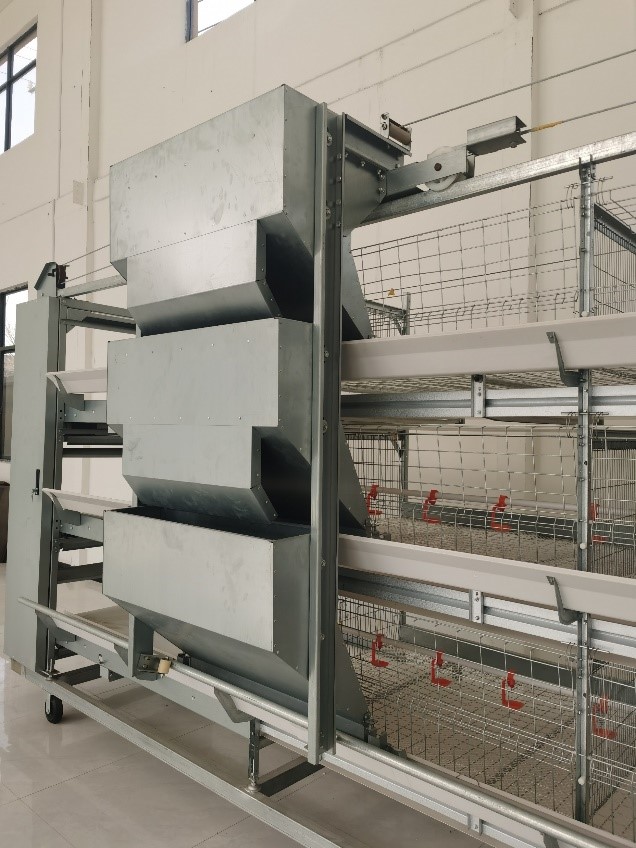
- Feed delivery: An automatic poultry feeding system can support consistent feed distribution. The Overhead Travelling Feeding Machine runs on rails above cage rows and features adjustable feed outlets and programmable operating cycles.
- House conditions: An Environmental Control System regulates temperature and ventilation. The Poultry House Environmental Control System can coordinate fans, cooling pads, air inlets and controls to manage conditions inside the house.
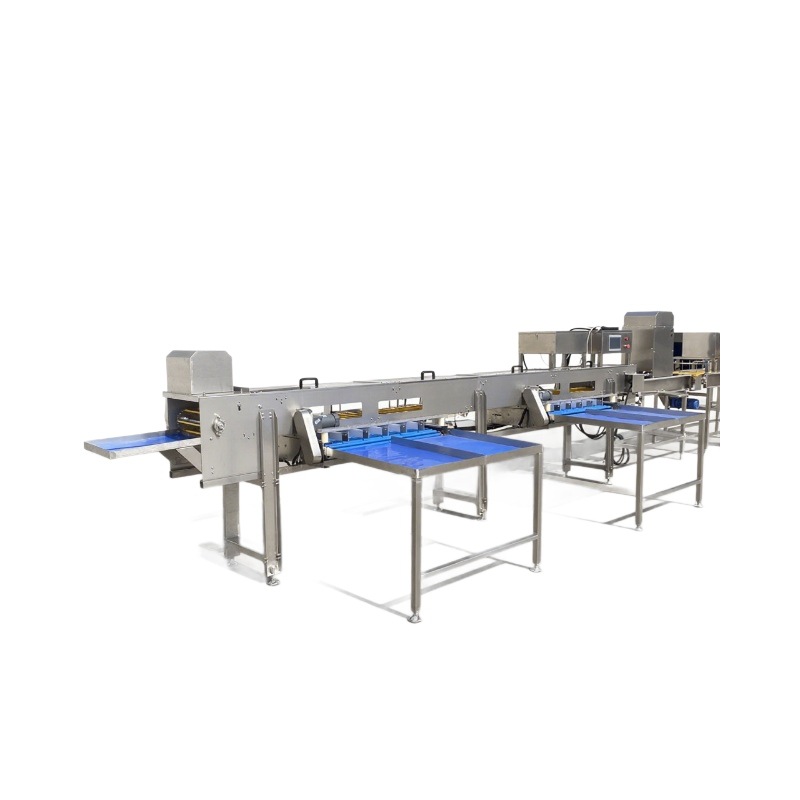
- Egg handling: The Automatic Egg Tray Packing Machine receives eggs from a conveyor, counts them and loads them into trays. It is designed to reduce manual handling and breakage during downstream processing.
Consider how each component connects to the next. A well-planned poultry production line can link housing, automatic manure removal, egg collection, environmental control and packing while limiting unnecessary handling. Explore how precision automation can support poultry efficiency and egg handling as you determine where integration matters most.
Evaluate the business case with operational measures
Compare performance before and after automation using measures that reflect your goals: labor hours, feed distribution, egg breakage, manure handling, flock uniformity, energy consumption, maintenance and total installed cost. Establish a baseline and measurement period so results are meaningful for your operation.
Industry research offers context, not a farm-level forecast. Market coverage cites a 48.0% figure for the poultry farming equipment market and a 4.2% figure in reporting on the poultry cages market. Before including either in a business case, verify what it measures, the period covered and the source methodology. Also verify what the 70% figure associated with UGA research measures and whether it applies to your production model. Research findings are not guaranteed returns.
Results depend on farm design, management, local conditions and equipment configuration. A site-specific assessment provides a more responsible basis for estimating capacity and costs than headline percentages. For more on evaluating financial assumptions, review this discussion of operational measures beyond labor savings.
Select a manufacturer that can support delivery and installation
Equipment performance depends on engineering, manufacturing and project support as well as the product itself. When evaluating a chicken cage manufacturer, factory or supplier, ask about:
- Manufacturing quality and corrosion protection
- Relevant project references and customization capabilities
- Export experience, spare-parts availability and warranty terms
- Technical support before, during and after installation
- Coordination with building dimensions, flock capacity and local regulations
For export orders, confirm packing methods, shipping documentation, delivery scope and whether installation support is available on-site or remotely. Clarify responsibility for each project stage, including building preparation, assembly, commissioning and staff orientation.
A custom Poultry Cage System should be engineered for the existing or planned housing—not treated as a standard package regardless of site conditions. Buyers seeking a complete, coordinated operation rather than separate equipment purchases may consider a Turnkey Poultry Farm: a complete poultry farm delivered as a full package. Ask the manufacturer to specify what the package includes and what remains the buyer’s responsibility.
Share your farm plans, capacity targets and preferred automation level with potential suppliers. Their responses can show how well they understand the requirements of a large-scale poultry operation, including the equipment and support needed beyond the initial sale.
Request a tailored poultry farm automation plan
A practical poultry automation plan starts with your production goals and site conditions. Specify your housing approach, target capacity, production cycle and market requirements, along with the tasks you want to automate.
A poultry equipment manufacturer can map the production line—from cage selection and feeding through egg collection, manure removal, environmental control and packing—and recommend configuration options for your building and labor plan.
Want to know more?
Get in touch with us for more information about our services and products.