
When Should a Layer Farm Use an Automatic Manure Belt System?
Manure cleaning is one of the most important daily jobs in a layer poultry farm. If manure is not removed properly, the house can quickly develop strong ammonia smell, high humidity, more flies, and heavier labor work.
For small farms, manual cleaning may still be acceptable. But as bird quantity increases, manure volume also increases. At that point, an automatic manure belt system can help make manure removal faster, cleaner, and more organized.
This article explains when a layer farm should consider using an automatic manure belt system and what information buyers should prepare before choosing one.
What Is an Automatic Manure Belt System?
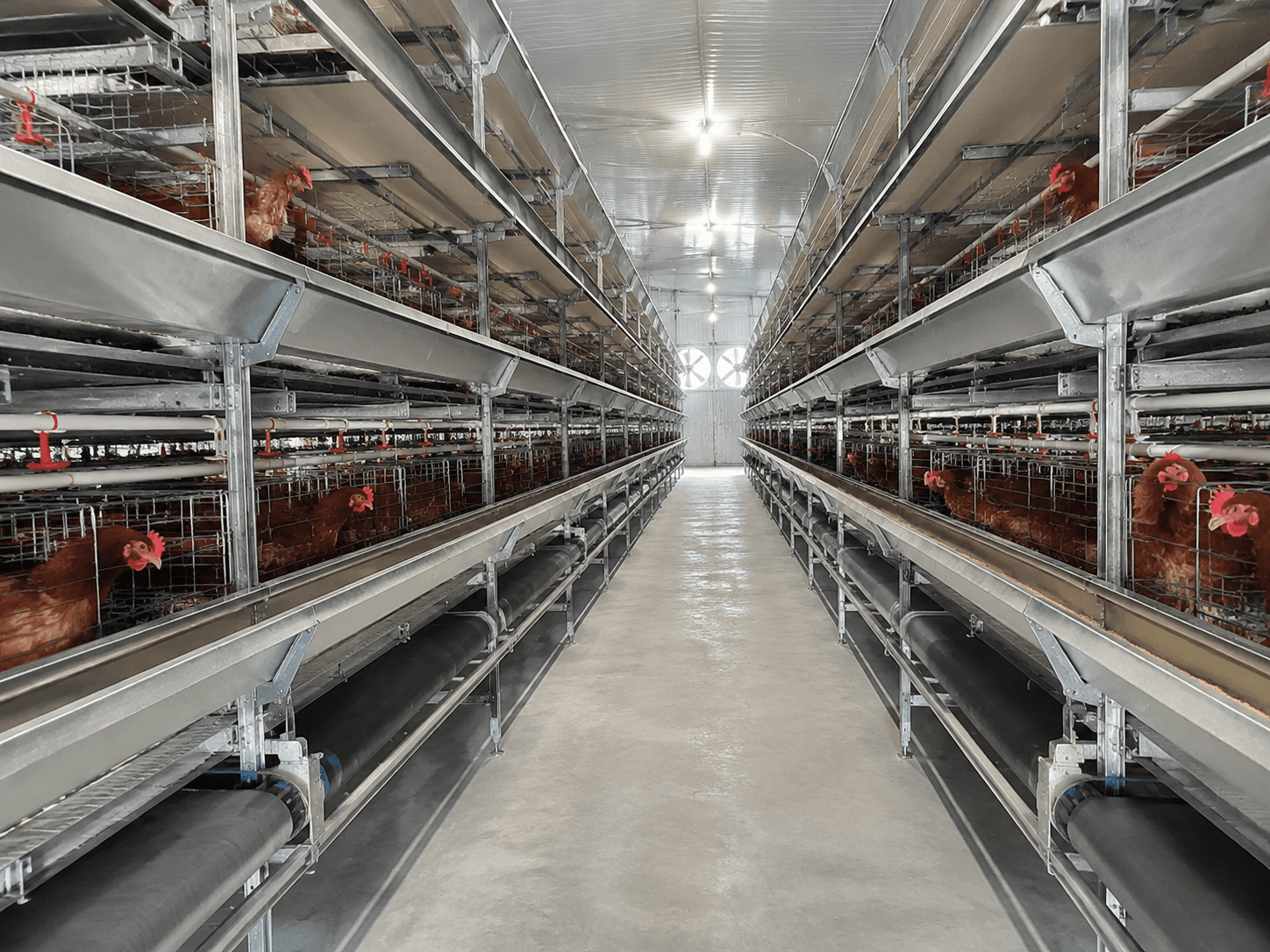
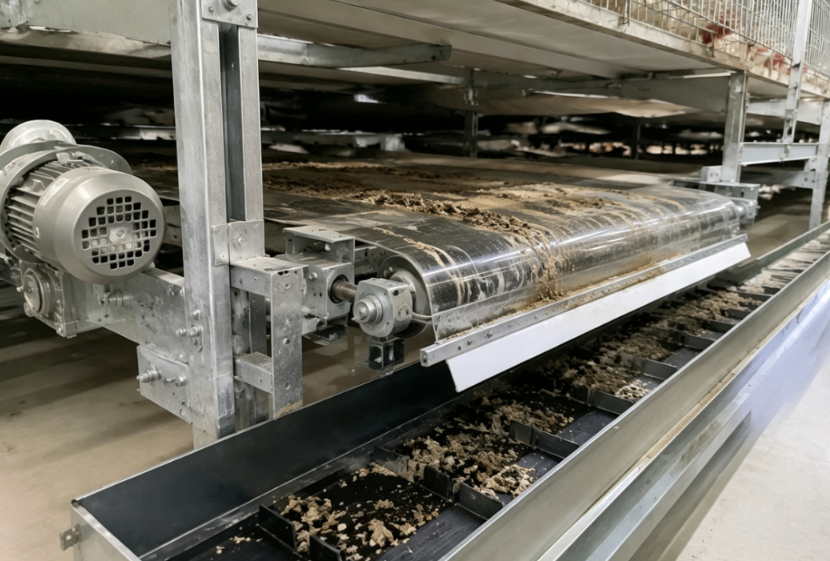
An automatic manure belt system is used to collect and remove manure from under the chicken cages. In layer cage farms, manure falls from the cages onto belts or collecting areas, then the system moves manure out of the cage rows.
Suggested product link: Belt Manure Removal System / Automatic Manure Belt System
A manure belt system usually includes:
- Manure belts under cage tiers or rows
- Drive motors
- Rollers
- Scrapers
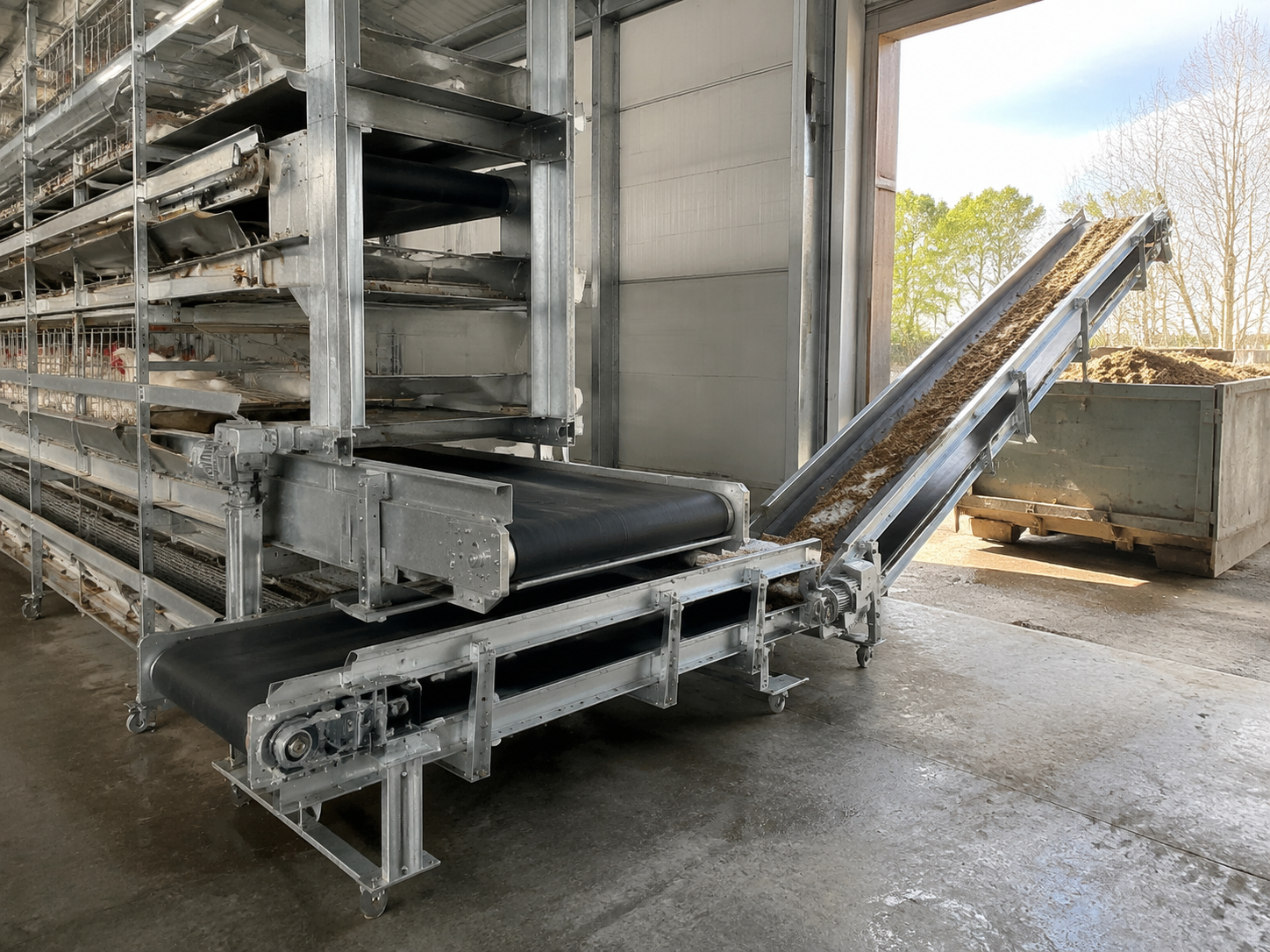
- Cross conveyor or discharge system
- Support frame and control parts
The goal is to remove manure regularly and reduce the amount of manure staying inside the poultry house.
Why Manure Cleaning Matters in Layer Cage Farms
Manure is not only a cleaning problem. It affects the whole poultry house environment.
If manure stays under the cages for too long, it may cause:
- Strong ammonia smell
- Higher humidity
- More flies
- Dirtier floor and equipment
- More manual cleaning work
- Poor air quality
- Higher corrosion risk for cage equipment
For layer farms, manure management should be planned together with cage layout, ventilation, drinking water lines, and daily operation.
Good ventilation can help remove moisture and harmful gases, but ventilation alone cannot solve manure buildup. Manure still needs to be removed in a practical way.
When Should You Use an Automatic Manure Belt System?
A layer farm should consider using an automatic manure belt system when the farm has one or more of the following conditions.
1. When Bird Quantity Is Increasing
The larger the farm, the more manure is produced every day.
For a small farm, workers may be able to clean manure manually. But when the farm grows to tens of thousands of birds, manual cleaning becomes more difficult and less efficient.
An automatic manure belt system is especially useful for:
- Medium layer farms
- Large commercial layer farms
- Farms planning future expansion
- Farms with limited workers
- Farms that want cleaner daily operation
If your farm is planning to expand from a small project to a larger commercial egg farm, it is better to consider manure cleaning before the cage layout is finalized.
2. When Using H Type Layer Cages
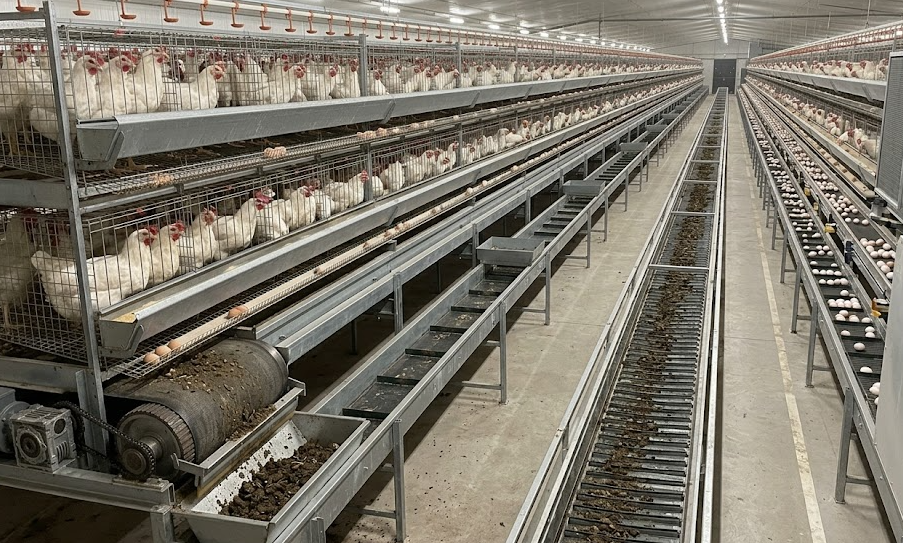
H Type layer cages are stacked vertically and have higher bird density. This means more manure is produced in a smaller house area.
For H Type cage systems, automatic manure belt cleaning is usually more practical than manual cleaning because manure from different tiers needs to be removed regularly and safely.
H Type cage farms often use manure belts because they need:
- Cleaner manure removal
- Less manual work under cage rows
- Better control of humidity and ammonia
- More organized house management
- Easier connection with automatic feeding and egg collection systems
If you are planning an H Type layer cage project, manure belt cleaning should be discussed from the beginning.
3. When Labor Cost Is High or Workers Are Limited
Manual manure cleaning takes time and physical work. In some farms, workers may not clean manure frequently enough because the job is heavy or unpleasant.
If labor is difficult to find, expensive, or unstable, automatic manure removal can reduce daily labor pressure.
It can help reduce:
- Time spent cleaning manure
- Worker exposure to dirty areas
- Dependence on manual cleaning schedule
- Cleaning delays during busy periods
This does not mean the system needs no management. Workers still need to check belts, motors, rollers, and discharge points. But the daily cleaning work becomes more organized.
4. When Ammonia Smell Is Strong
Strong ammonia smell is a common sign that manure, moisture, and ventilation are not being managed well.
If the poultry house often has a strong smell, the farm should check:
- How long manure stays under the cages
- Whether manure is too wet
- Whether drinking lines are leaking
- Whether ventilation is enough
- Whether manure discharge is blocked
- Whether cleaning frequency is too low
An automatic manure belt system can help remove manure more frequently, which may reduce ammonia buildup inside the house.
For best results, manure removal should work together with proper ventilation and moisture control.
5. When Manure Is Too Wet
Wet manure creates more odor, more flies, and more cleaning problems. It may also stick to equipment and make manure removal harder.
Wet manure may be caused by:
- Leaking nipple drinkers
- Poor drinking line adjustment
- High humidity
- Poor ventilation
- Disease or feed problems
- Manure staying too long under cages
A manure belt system can help remove manure regularly, but the farm should also check why the manure is too wet. If water leakage continues, the belt system will still need more cleaning and maintenance.
Before choosing a manure belt system, also check the drinking line, ventilation, and house humidity.
6. When Flies Become a Problem
Flies are often related to manure buildup and moisture. If manure stays inside the house too long, fly problems can become worse.
Regular manure removal can help reduce fly breeding conditions. This is especially important in warm and humid areas.
A manure belt system can help by:
- Removing manure from the house more regularly
- Reducing manure accumulation under cages
- Keeping the floor area cleaner
- Making manure handling outside the house easier
However, fly control also needs good sanitation, dry manure management, and proper waste handling outside the poultry house.
7. When the Farm Wants Cleaner Manure Collection
Some farms do not only want to remove manure from the house. They also want to collect manure more conveniently for storage, transport, or composting.
Before choosing a manure belt system, plan where the manure will go after it leaves the cage rows.
Common options include:
- Manure pit
- Storage area
- Truck loading area
- Composting area
- Further drying or treatment area
If the discharge direction is not planned, manure may leave the cage rows but still create problems outside the house.
This is why manure belt layout should be designed together with the poultry house layout.
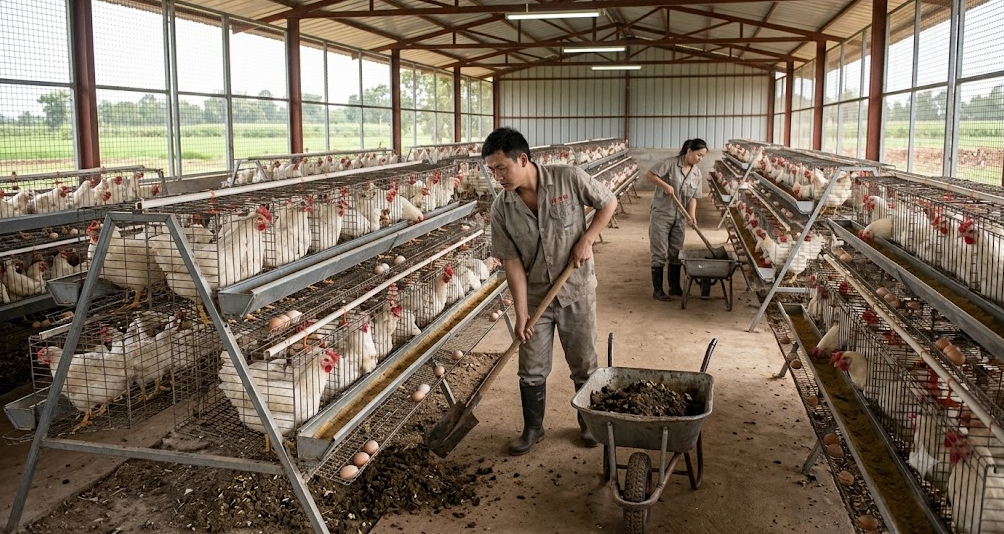
When Manual Cleaning May Still Be Enough
An automatic manure belt system is useful, but it is not necessary for every farm.
Manual cleaning may still be acceptable if:
- The farm is small
- Bird quantity is low
- Labor is easy to arrange
- The house is open and simple
- Manure can be removed regularly
- Budget is very limited
- The farm is not ready for automatic equipment
Some small and medium farms using A Type cages may choose manual cleaning or simpler manure cleaning methods at the beginning. This can help reduce first investment.
But if the farm plans to expand later, it is better to leave space for future manure cleaning upgrades.
Manure Belt System and Ventilation Should Work Together
A manure belt system removes manure, but ventilation controls air movement, heat, humidity, and gases.
If a farm uses a manure belt but the house has poor ventilation, ammonia and humidity may still be difficult to control.
If a farm has good ventilation but manure stays inside too long, odor and flies may still appear.
For a better result, plan these systems together:
- Cage layout
- Manure belt system
- Drinking water line
- Ventilation fans
- Cooling pads or air inlets
- Manure discharge direction
This is especially important for high-density H Type layer cage houses.
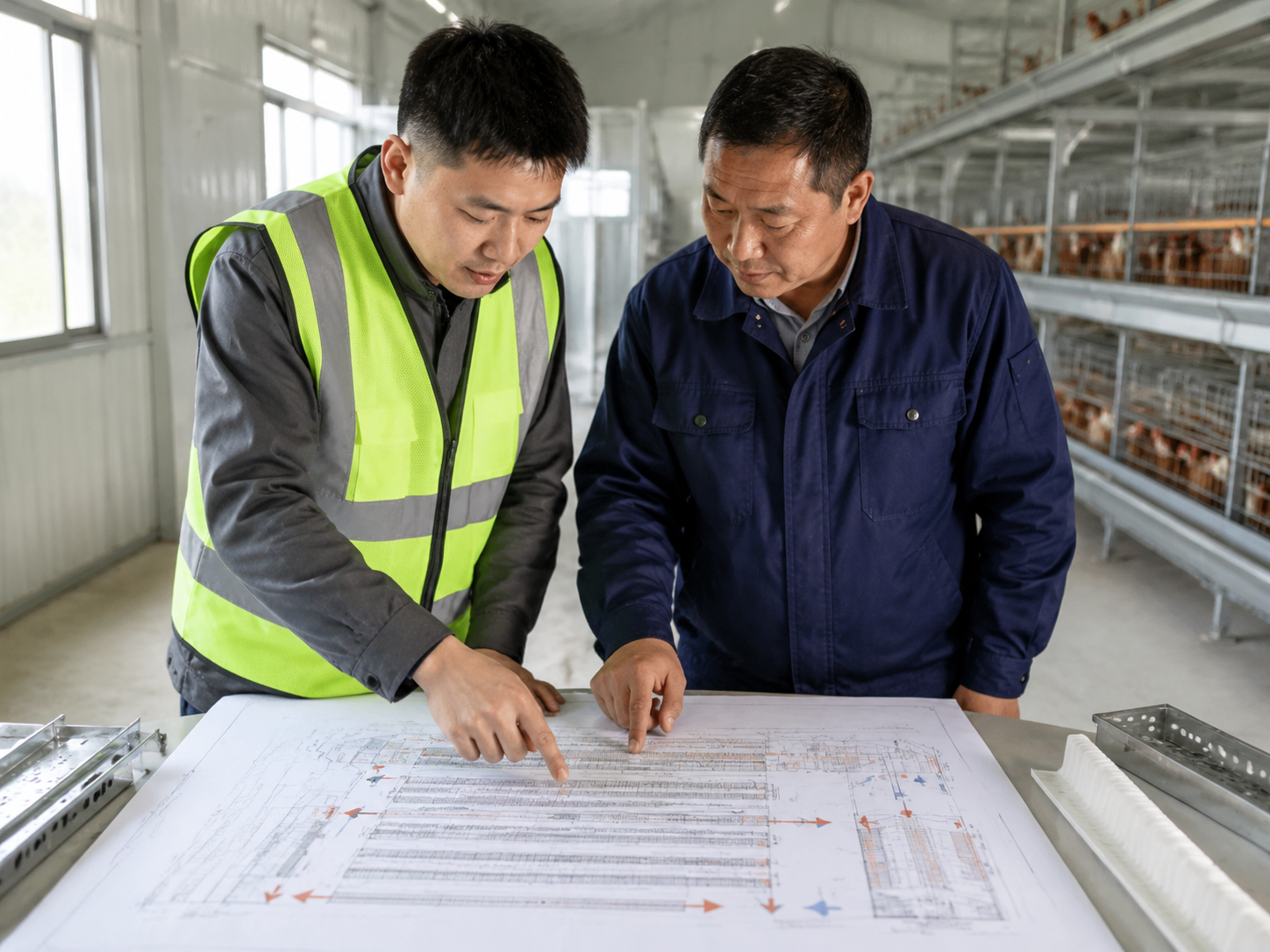
What to Check Before Buying a Manure Belt System
Before choosing an automatic manure belt system, buyers should check:
| Item | What to Confirm |
|---|---|
| Bird quantity | Current and future layer capacity |
| Cage type | A Type, H Type, or other cage layout |
| House size | Length, width, and height |
| Cage rows | Number of rows and tiers |
| Manure condition | Dry, wet, sticky, or mixed |
| Cleaning frequency | How often manure should be removed |
| Discharge direction | Front, rear, or side discharge |
| Outside handling | Pit, truck, storage area, or composting |
| Power supply | Voltage, phase, and stability |
| Ventilation | Natural or mechanical ventilation |
| Budget | Basic, standard, or full automatic system |
This information helps the supplier recommend the right manure belt layout and equipment configuration.
Sample Inquiry Message
You can send a message like this:
Hello, we are planning a manure cleaning system for our layer farm.
Bird quantity:
Cage type:
Poultry house size:
Number of cage rows:
Number of tiers:
Current manure cleaning method:
Main problem: ammonia / wet manure / flies / labor cost
Preferred discharge direction:
Manure handling outside the house:
Power supply:
Need cage system together or manure system only:
Please recommend a suitable automatic manure belt system.
This helps the supplier understand your real farm condition and avoid giving only a rough price.
Common Mistakes When Choosing a Manure Belt System
Avoid these common mistakes:
- Only comparing the price of the belt
The motor, roller, scraper, frame, conveyor, control parts, and layout all matter. - Not planning the manure discharge direction
Manure must have a clear path after leaving the cage rows. - Ignoring wet manure problems
If leaking drinkers or poor ventilation continue, the belt will be harder to maintain. - Choosing high-density cages without manure planning
H Type cages need proper manure removal from the beginning. - Leaving no maintenance space
Workers need access to check motors, rollers, belts, and discharge points. - Not checking power supply
Automatic systems need stable electricity.
Final Recommendation
A layer farm should consider using an automatic manure belt system when bird quantity increases, labor becomes difficult, ammonia smell is strong, manure is too wet, flies are common, or the farm uses high-density H Type layer cages.
For small farms, manual cleaning may still be enough if the house is simple and workers can remove manure regularly. But for medium and large commercial farms, automatic manure belt cleaning can make daily operation cleaner and more organized.
Before choosing a manure belt system, do not only ask for the belt price. Send your bird quantity, cage type, house size, cage rows, manure condition, discharge direction, and outside manure handling plan.
Want to know more?
Get in touch with us for more information about our services and products.