
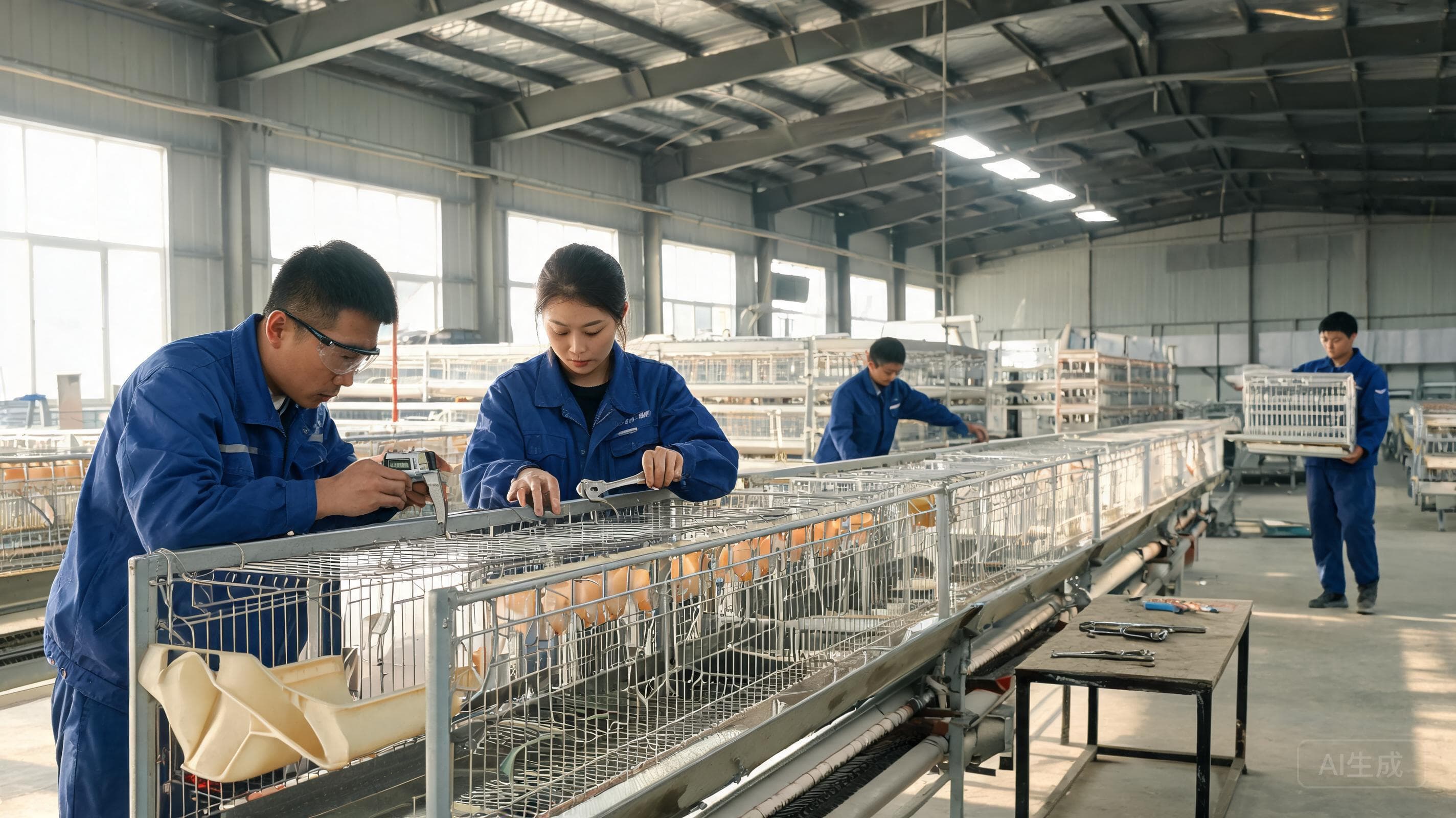
How to Specify an Automatic Chicken Cage Production Line for a More Efficient Poultry Farm
Start with the operational challenges your farm needs to solve
When feeding, egg handling, and manure removal depend on repeated manual work, even a well-managed poultry operation can struggle to keep daily routines consistent. Labor availability, feed waste, egg damage, and manure buildup all affect operating costs. Equipment that does not match the building can create new problems instead of resolving existing ones.
Housing decisions also reflect customer expectations and local requirements. The Frontiers study “The cage-free egg sector: perspectives of Indian poultry producers” provides context on producer perspectives and the challenges involved in housing transitions. For buyers, the practical question is more specific: which equipment configuration will address the farm’s bottlenecks while fitting its production goals, workforce, building, and target markets?
Before comparing poultry housing systems or requesting prices, document the tasks and constraints that matter most. Measure labor hours for feeding, egg collection, and manure handling. Note where routines vary between shifts, where eggs are most likely to break, and whether manure removal affects house cleanliness or workflow. This information helps identify equipment that addresses a real operating cost rather than adding unnecessary complexity.
Then define the operating context: target flock capacity, house dimensions, ventilation, labor availability, egg-handling requirements, budget, and applicable customer standards. Specify the chicken cage production line around these conditions—not from a product list in isolation.
Choose a poultry housing system around production goals
The right Poultry Cage System depends on the building and the operation’s production plans. An A Type Layer Chicken Cage System may suit naturally ventilated houses and buyers prioritizing straightforward installation and investment control. An H Type Galvanized Layer Chicken Cage System can provide greater vertical capacity and integrated automation for intensive operations where building height, ventilation, and service access support that configuration.
A Layer Cage System is designed specifically for egg-laying hens. Broiler chicken cages and broiler cage systems serve different production requirements and are not interchangeable with an egg layer cage system. Any battery cage system for poultry should be assessed against regulations, certification requirements, and customer standards in the markets where eggs will be sold.
Use the 2025 UEP Certified cage housing guidelines as one reference when evaluating cage production practices, then confirm which rules and standards apply to your operation. Housing expectations differ by destination market, and no single housing model suits every buyer. Specify commercial chicken cages or a custom Poultry Cage System to fit your production plan and market commitments. For a comparison of vertical capacity and layout considerations, see this overview of vertical poultry automation.
Map automation to measurable farm bottlenecks

Automatic poultry equipment can connect feeding, drinking, egg collection, and manure handling into an integrated poultry farm automation system. Its value depends on matching each component to a defined task and ensuring that the complete line operates at the required capacity.
- Feeding: An Overhead Travelling Feeding Machine for Poultry Cages travels on rails and distributes feed across multiple rows. Consistent delivery can reduce manual effort and help control feed waste. Specify travel coverage, delivery rate, feed bin capacity, and controls as part of the automatic feeding system.
- Egg collection: A Stacked Egg Collection System for Layer Cages – Vertical Elevator Egg Collector transfers eggs from cage tiers to a central table and cross conveyor. Specify the Egg Collection System around flock output, conveyor routing, and packing workflow so eggs move smoothly from the house.
- Manure handling: A Belt Manure Removal System for Poultry Cages – Automatic Manure Cleaning Machine conveys droppings out of the house for centralized handling. Confirm belt routing, discharge arrangements, cleaning access, and system capacity.
- Packing: An Automatic Egg Tray Packing Machine for Poultry Farms and Egg Processing Plants arranges and counts eggs into trays. This downstream option can reduce manual packing work and handling damage when its speed and tray format match the collection and grading process.
An Automatic Chicken Cage is a fully automated cage system with feeding, drinking, egg collection, and manure removal. Assess it as part of a coordinated line, not as a standalone cage product. Check that controls, conveyor speeds, and operating schedules align across components. If egg collection runs faster than the packing area can handle, the bottleneck may simply move downstream.
Evaluate the full cost and expected return
Build the business case from farm data: labor hours, feed use, egg breakage, throughput, maintenance, and manure handling costs. Avoid relying on universal return-on-investment promises; results depend on flock size, local wages, production levels, installation conditions, and operating practices.
Ask suppliers to estimate capacity and operating requirements for each feeding system, Egg Collection System, manure conveyor, and packing machine in the proposed layout. Request written assumptions covering power requirements, labor inputs, maintenance intervals, and expected downtime. Research such as NE1942, “Enhancing Poultry Production Systems through Emerging Technologies and Husbandry Practices,” and the review “Robotics for poultry farming: Challenges and opportunities” can help frame automation as an opportunity that also brings implementation and management considerations.
When published sources do not provide comparable farm-level payback figures, request project references or a tailored ROI model based on flock size, local labor costs, and production data. This poultry automation ROI guide can help you review direct and less visible cost assumptions.
Specify equipment for the house, climate, and service life
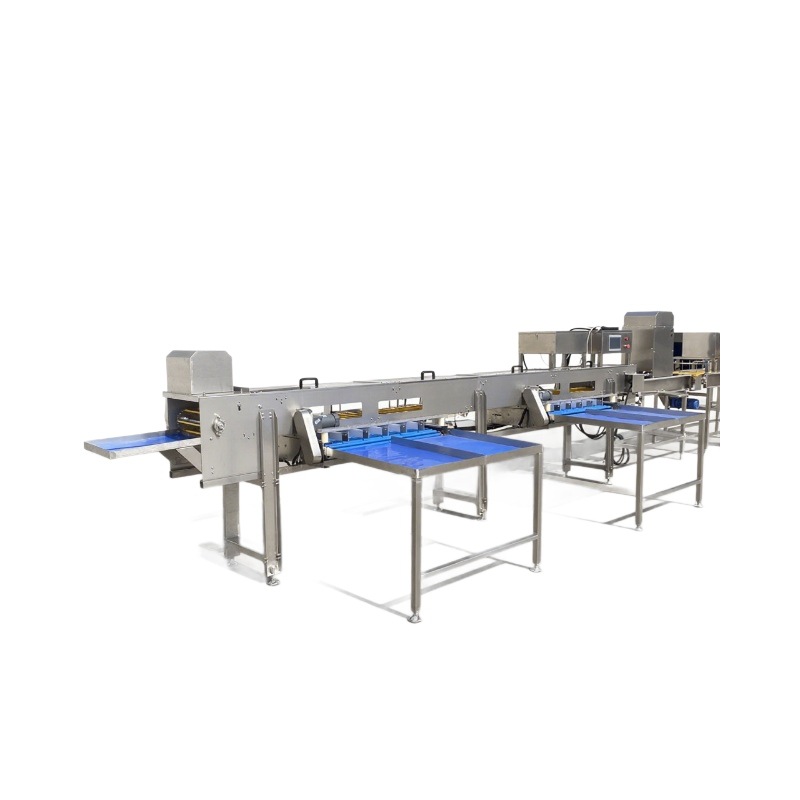
Before selecting industrial poultry cages or a large-scale poultry farm system, provide the supplier with house drawings. Confirm the layout, tier count, width and length, ventilation, water access, electrical supply, and manure discharge. A design that ignores airflow, service aisles, or discharge access can undermine performance and make routine work harder.
Compare construction details, not just headline material descriptions. Ask about galvanized or stainless-steel components, corrosion resistance, belt materials, cleanability, inspection access, and maintenance procedures. Confirm that feeding, egg collection, and manure removal can operate at compatible speeds and be controlled together within the proposed Automatic Chicken Cage configuration.
For export chicken cages, clarify shipping dimensions, installation scope, documentation, spare-parts availability, and after-sales support before finalizing the order. These details affect delivery planning and the time needed to bring the line into operation.
Select a manufacturer that can deliver beyond the equipment
Evaluate a chicken cage or poultry equipment manufacturer on production capability, engineering support, quality control, installation experience, and service responsiveness. Ask whether the factory can provide a complete chicken cage production line, site-specific design, and poultry cage installation—not only individual components.
A Turnkey Poultry Farm is a complete poultry farm delivered as a full package. If you are considering this option, define exactly what the package includes. Set responsibilities for equipment supply, system integration, commissioning, training, and ongoing support. Request comparable project references and documented operating outcomes, and distinguish verified performance data from promotional claims. A dependable supplier should explain how the proposed poultry farming equipment fits your site and production plan.
Plan the next step toward an integrated poultry farm
A clear specification starts with housing type and flock capacity, then defines automation scope, local compliance, installation requirements, and service support. Whether you need a layer cage system, a broiler system, or a broader poultry farming package, the equipment plan should reflect your building and the work your team needs to accomplish.
Share your house drawings, target capacity, preferred A Type or H Type layout, and production goals to receive a tailored equipment plan and quotation. A site-specific assessment can compare a standalone Layer Cage System with a fully integrated poultry housing system, including the right scope for an Automatic Chicken Cage and supporting equipment.
Want to know more?
Get in touch with us for more information about our services and products.