
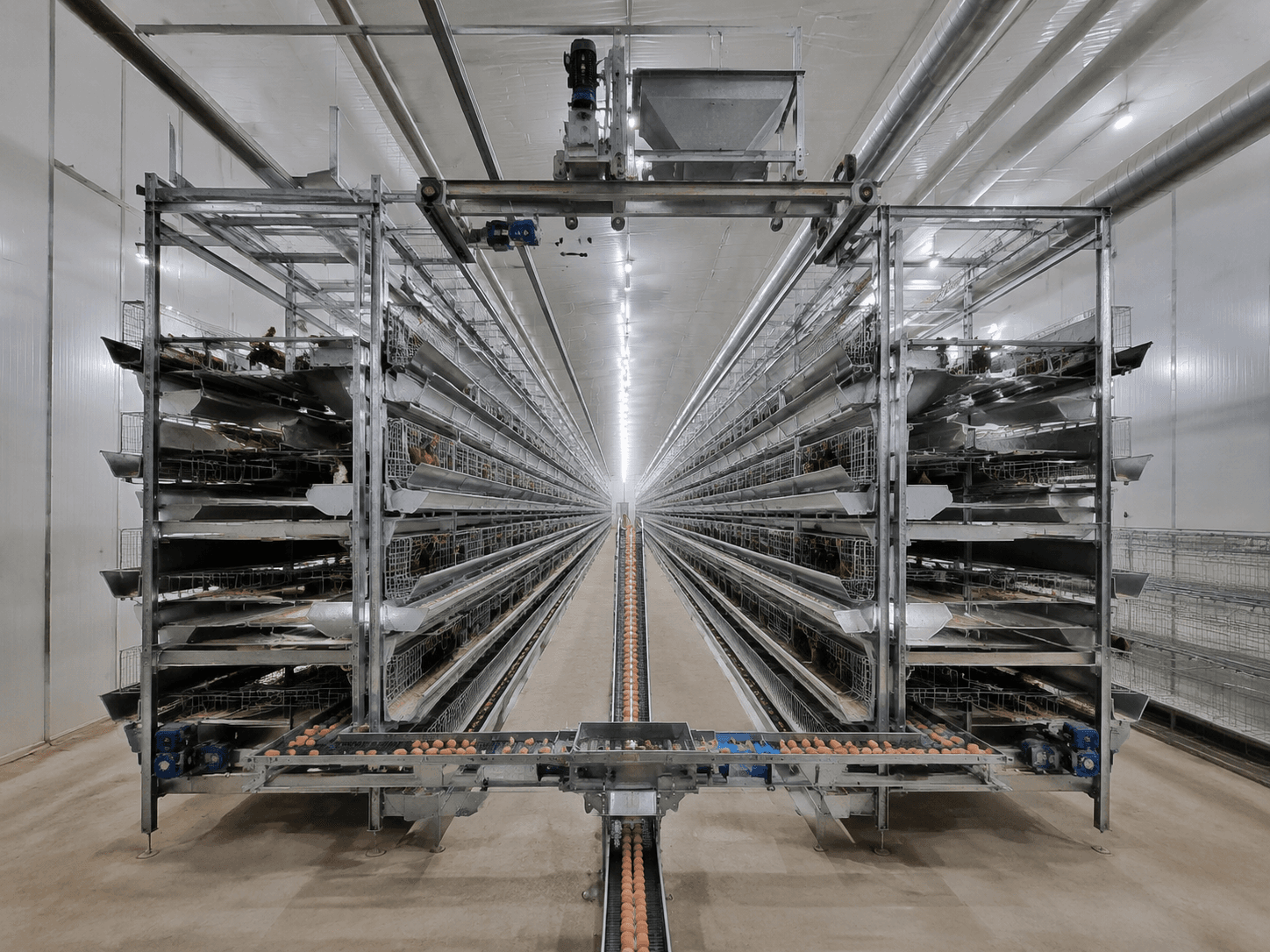
Commercial Layer Farm Equipment List: Complete Guide
A commercial layer farm equipment list should include more than layer chicken cages. A complete project normally needs equipment for housing, feeding, drinking, manure removal, egg collection, ventilation, cooling, electrical control and daily maintenance.
Preparing the equipment list before construction or ordering can help prevent layout conflicts, missing components and unexpected installation costs. It also allows a chicken cage manufacturer to prepare a more accurate poultry farm equipment quotation based on your actual project.
The final equipment list depends on the number of layers, poultry house dimensions, cage type, local climate, labor availability and required automation level.
1. Layer Chicken Cage System
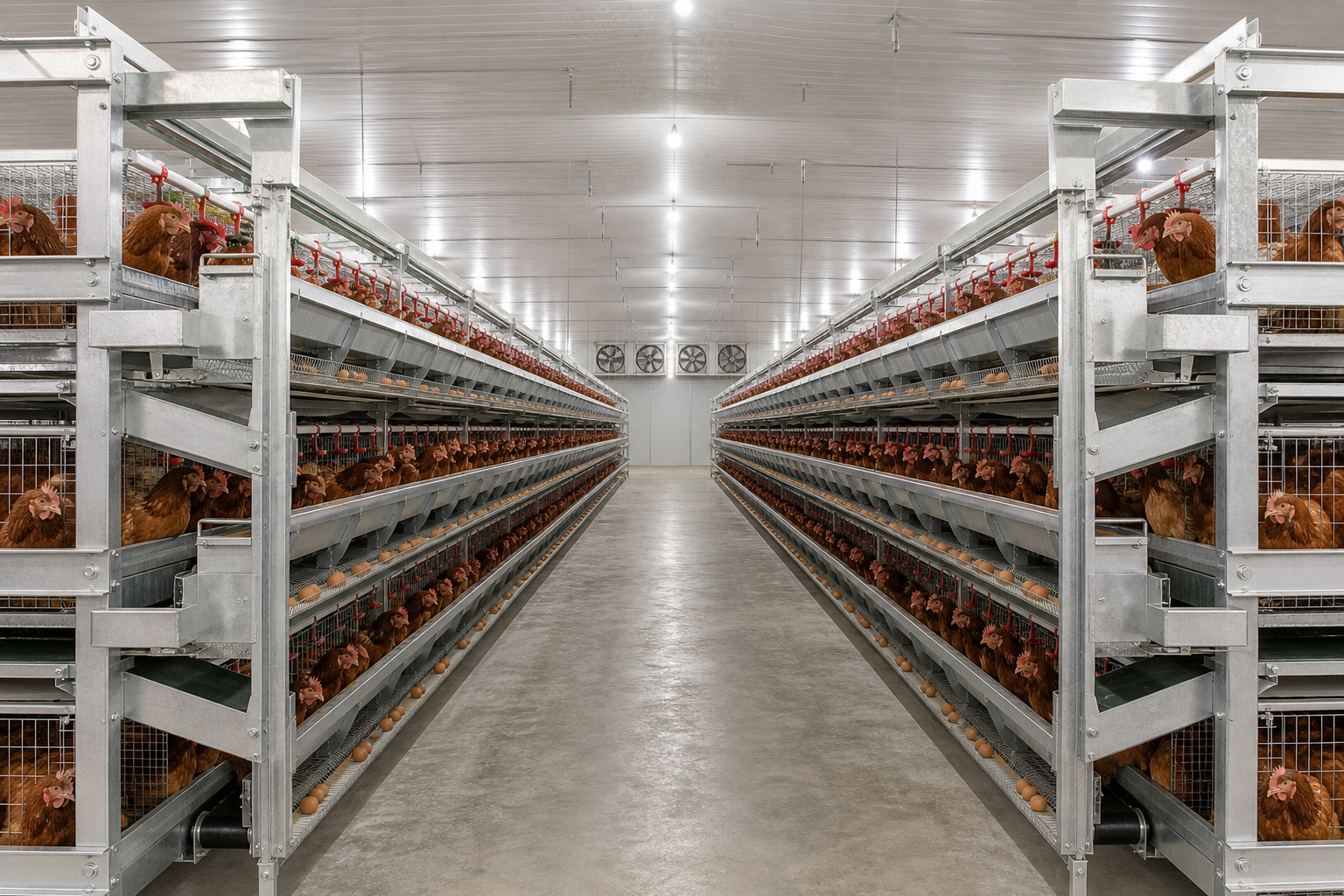
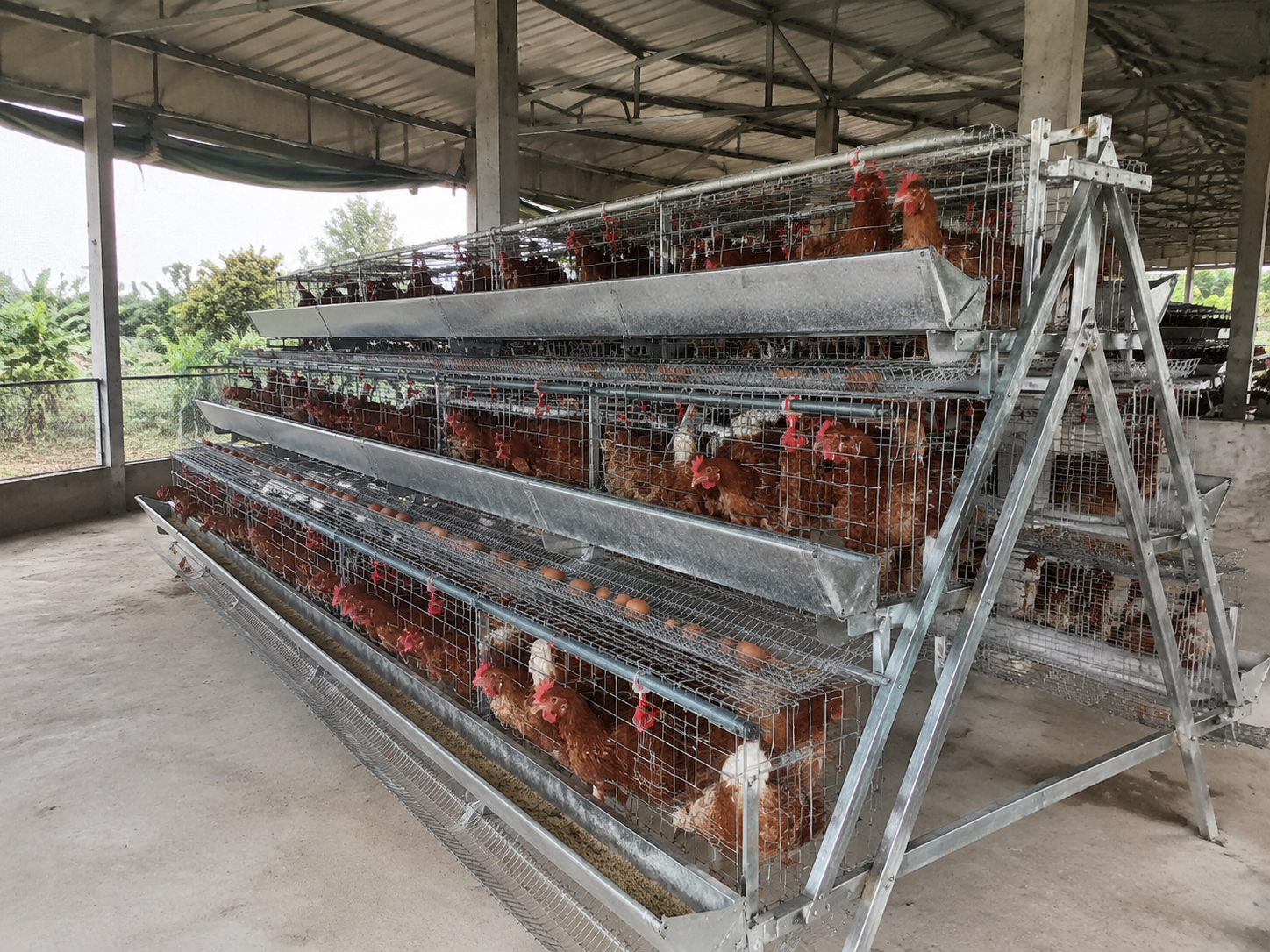
The chicken cage is the core equipment of a commercial layer farm.
Common options include:
- A‑type layer chicken cages;
- H‑type layer chicken cage systems;
- Three‑tier and four‑tier stacked cages;
- Galvanized layer cages;
- Layer cages with automatic feeding;
- Layer cages with manure belts;
- Layer cages with egg collection belts.
A‑type layer cages are often considered for small and medium‑sized farms, open‑sided poultry houses and projects that need a simpler configuration.
H‑type layer cages and stacked cage systems are commonly considered for medium and large commercial layer farms that need higher space utilization and better compatibility with automatic feeding, manure removal and egg collection equipment.
When preparing the list, confirm:
- Target bird capacity;
- Cage dimensions;
- Number of cage rows;
- Number of cage tiers;
- Number of birds per cage;
- Wire and frame material;
- Cage door design;
- Feed trough arrangement;
- Nipple drinking arrangement;
- Manure removal method.
2. Automatic Feeding System
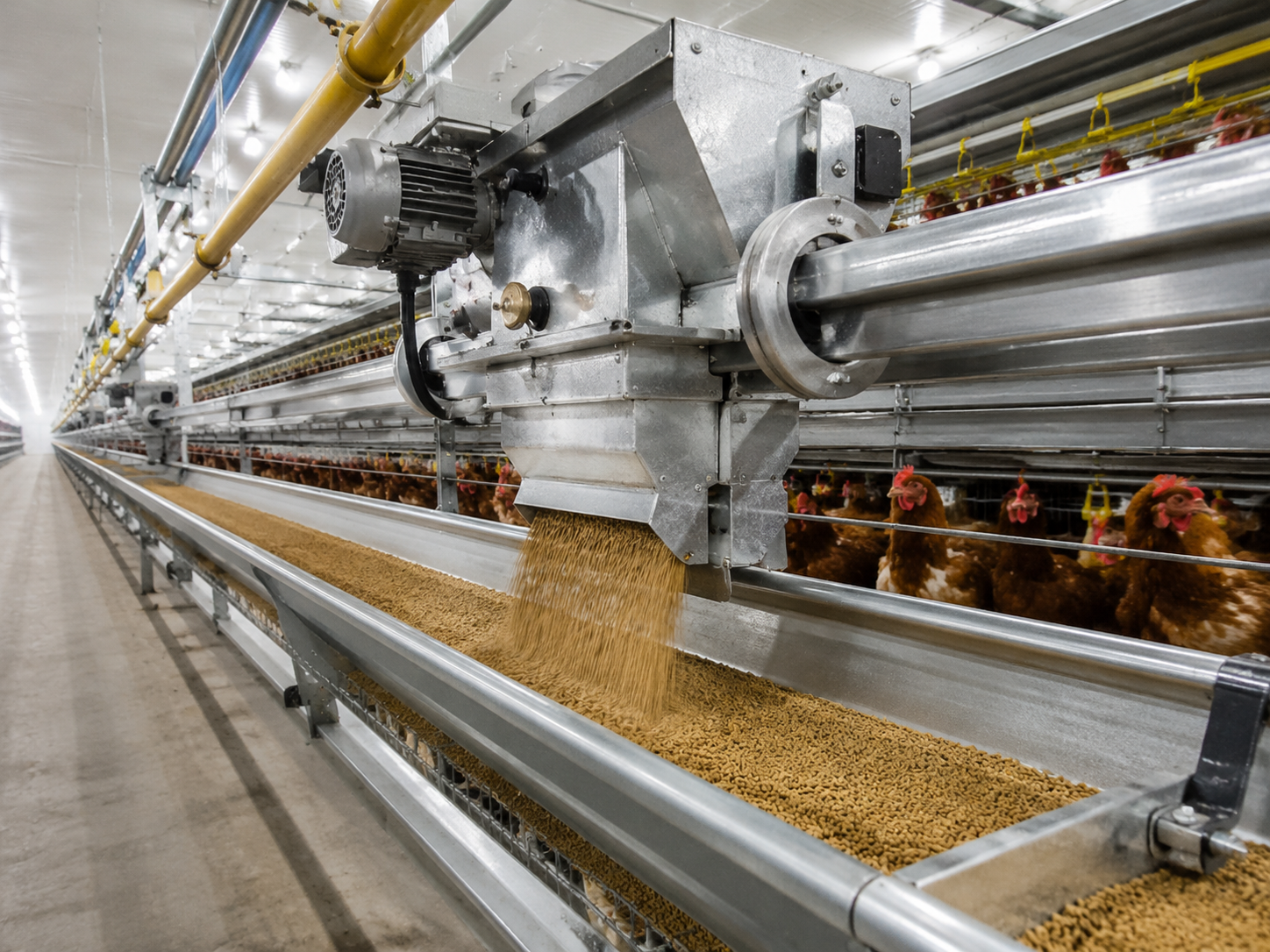
Feed distribution becomes more difficult as the number of birds and cage rows increases. A commercial layer farm equipment list may include an automatic feeding system to reduce manual feed transportation and distribute feed more consistently.
A complete feeding system may include:
- Feed silos or storage hoppers;
- Feed conveyors;
- Feed hoppers;
- Feed troughs;
- Overhead travelling feeding machines;
- Adjustable feed outlets;
- Drive motors;
- Control panels;
- Limit switches and safety devices.
Before selecting the feeding equipment, the supplier should know:
- Poultry house length;
- Number of cage rows;
- Number of cage tiers;
- Feed storage location;
- Local voltage and frequency;
- Required feeding schedule;
- Manual backup requirements.
Automatic feeding reduces repetitive manual work, but workers still need to check feed levels, motors, rails, switches and feed outlets every day.
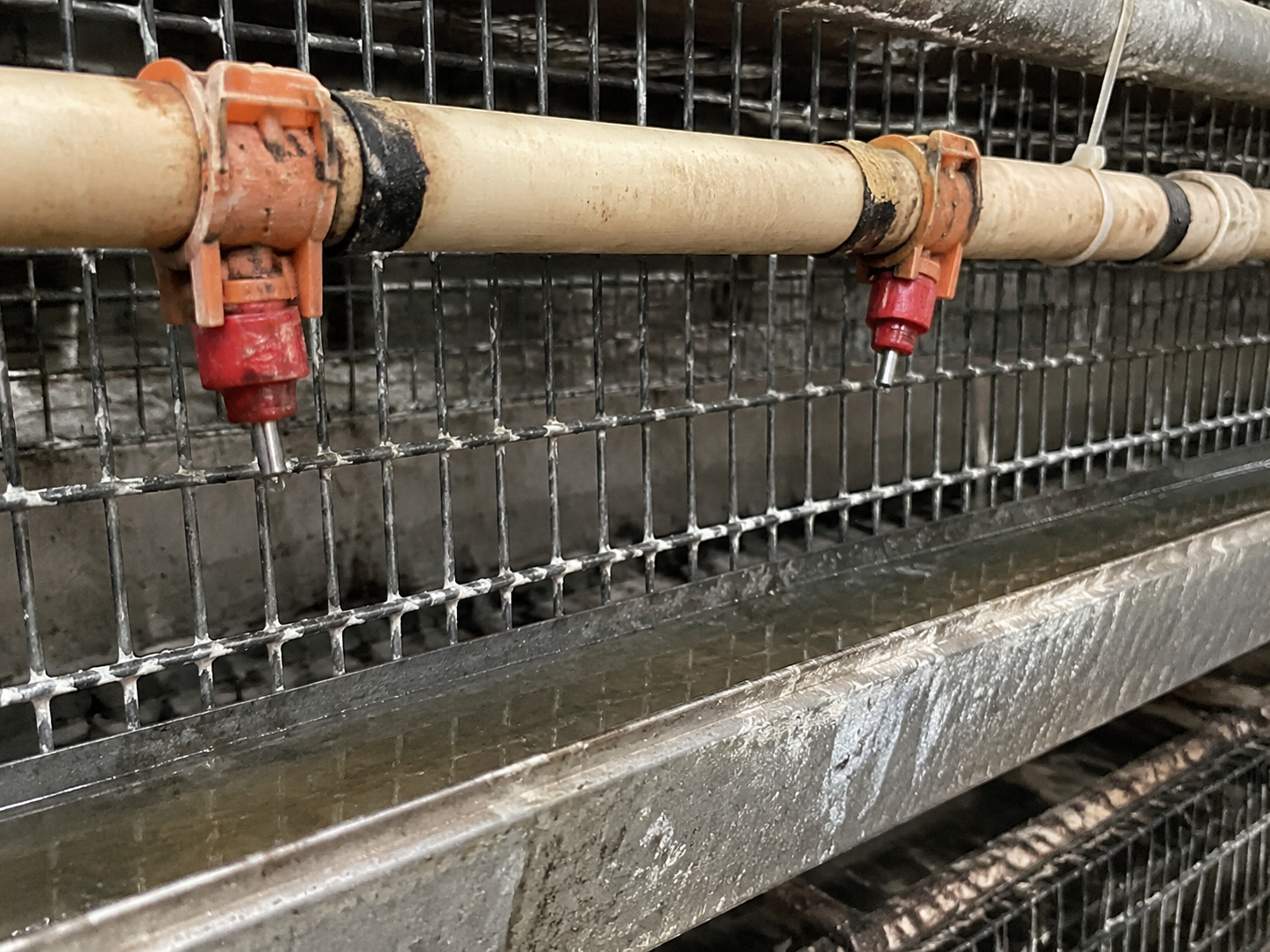
3. Nipple Drinking System
A reliable water system is essential for commercial layer production. The system should provide clean water with suitable pressure throughout the cage rows.
The drinking system may include:
- Nipple drinkers;
- Water pipes;
- Water tanks;
- Filters;
- Pressure regulators;
- Water meters;
- Drainage points;
- Water level controls.
The equipment list should include enough access points for inspection and cleaning. Workers should regularly check for blocked nipples, leaks, incorrect water pressure and wet areas below the cages.
A leaking drinking line can increase manure moisture and create additional cleaning and ventilation problems. For this reason, the drinking system should be planned together with manure removal and poultry house environmental control.
4. Manure Removal Equipment
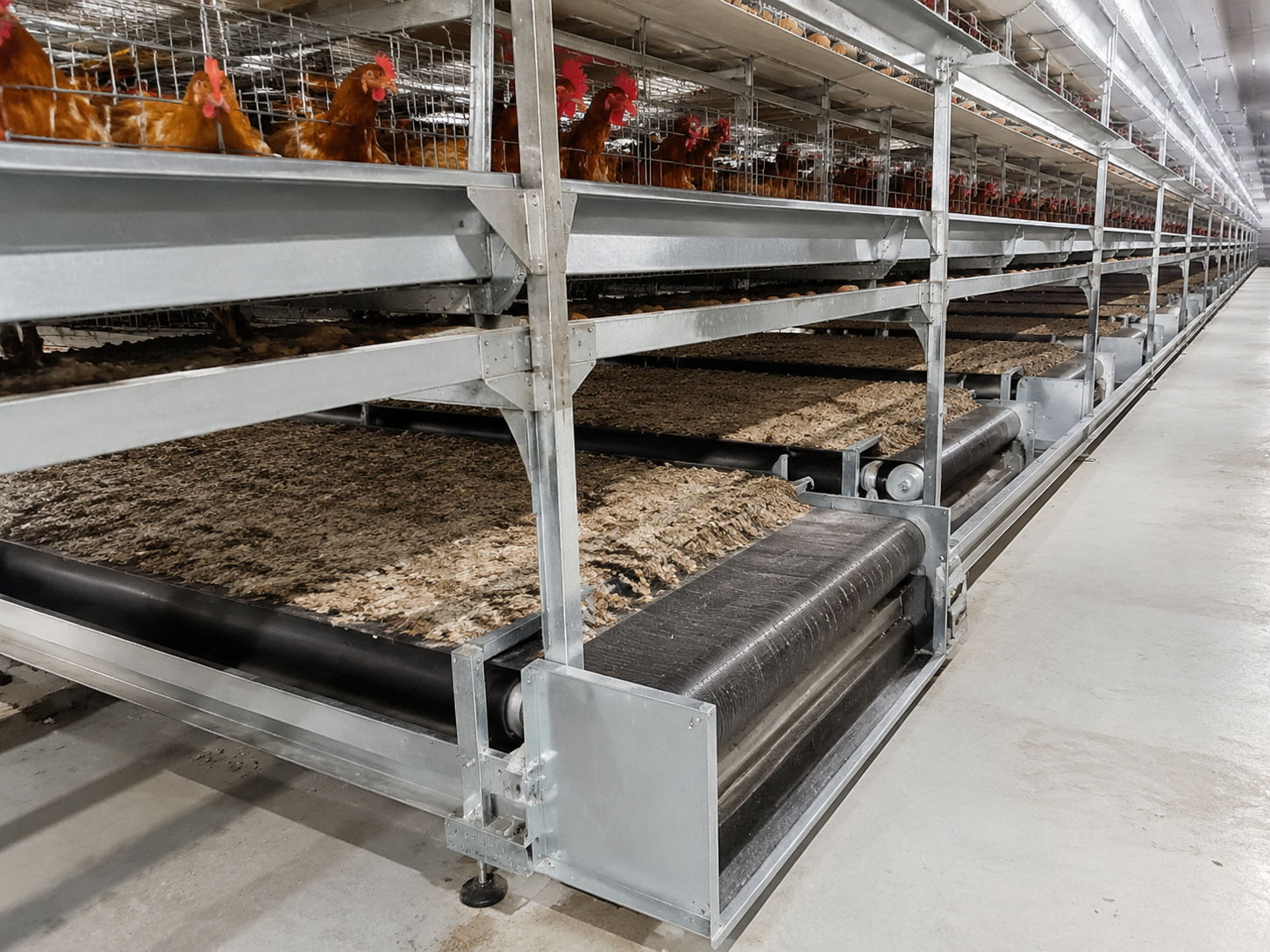
Manure removal is one of the most important parts of a layer farm equipment list, especially for H‑type and multi‑tier cage systems.
A belt manure removal system may include:
- Manure belts;
- Drive motors;
- Rollers;
- Scrapers;
- Cross conveyors;
- Inclined conveyors;
- Belt cleaning devices;
- Manure discharge areas.
Before ordering, confirm:
- Number of cage tiers;
- Belt direction;
- Belt discharge location;
- Cross conveyor position;
- Maintenance access;
- Manure storage or loading method;
- Required cleaning procedure.
Regular manure removal can make daily cleaning easier and help reduce the accumulation of moisture, odor and ammonia inside the poultry house. The system should be matched to the cage layout and the farm’s manure handling plan.
5. Egg Collection System
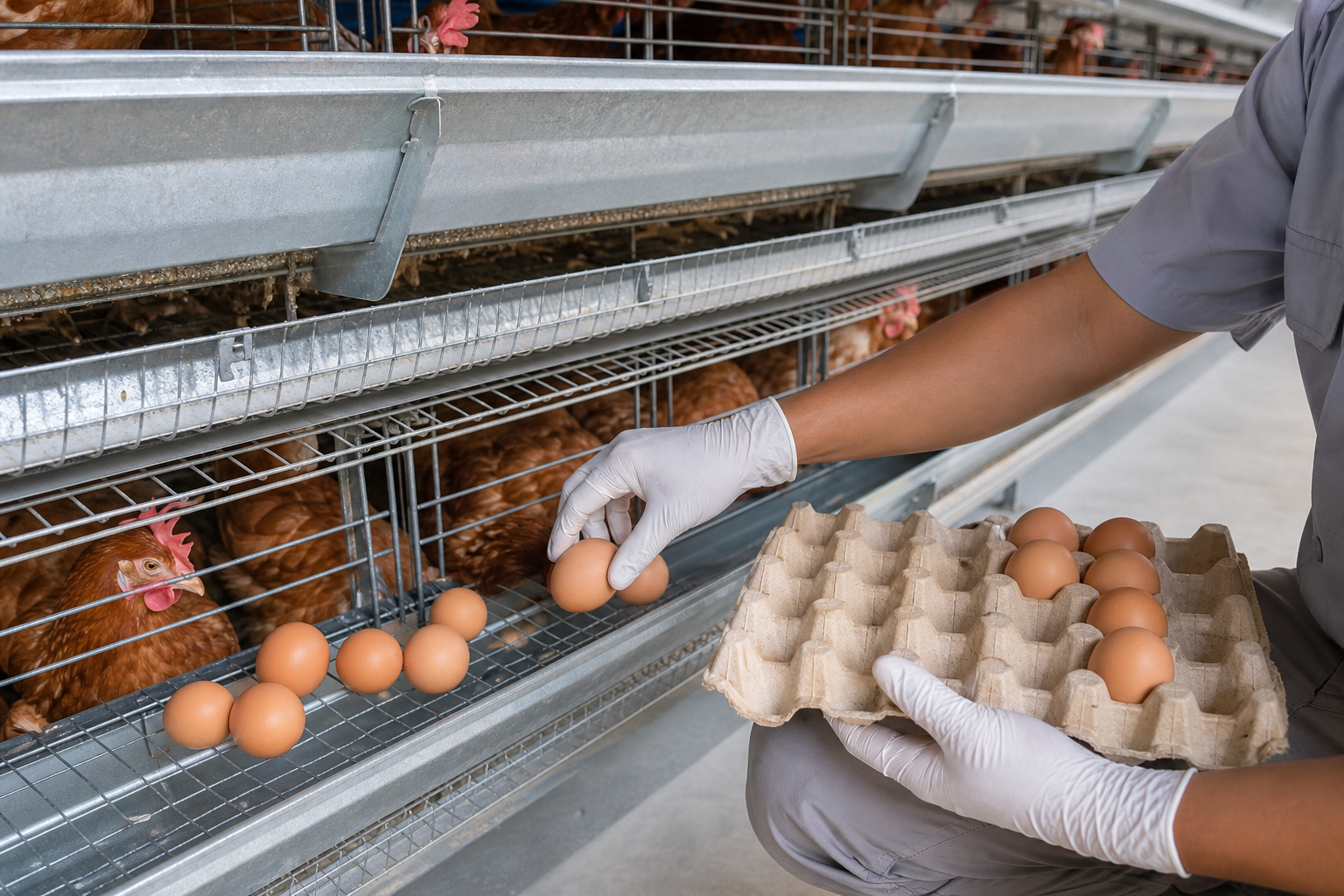
For medium and large layer farms, automatic egg collection can reduce manual egg handling and improve the connection between cage rows and the packing area.
The egg collection equipment may include:
- Egg belts;
- Cross conveyors;
- Vertical egg elevators;
- Central egg collection tables;
- Transfer conveyors;
- Control panels;
- Egg storage or packing tables.
The system must match:
- Cage type;
- Number of cage tiers;
- Egg belt position;
- Number of cage rows;
- Collection direction;
- Required production capacity;
- Available packing space.
For a project using stacked cages, a vertical egg elevator can transfer eggs from different levels to a central collection line. The final arrangement should be confirmed before the cage system is installed.
6. Poultry House Ventilation and Cooling
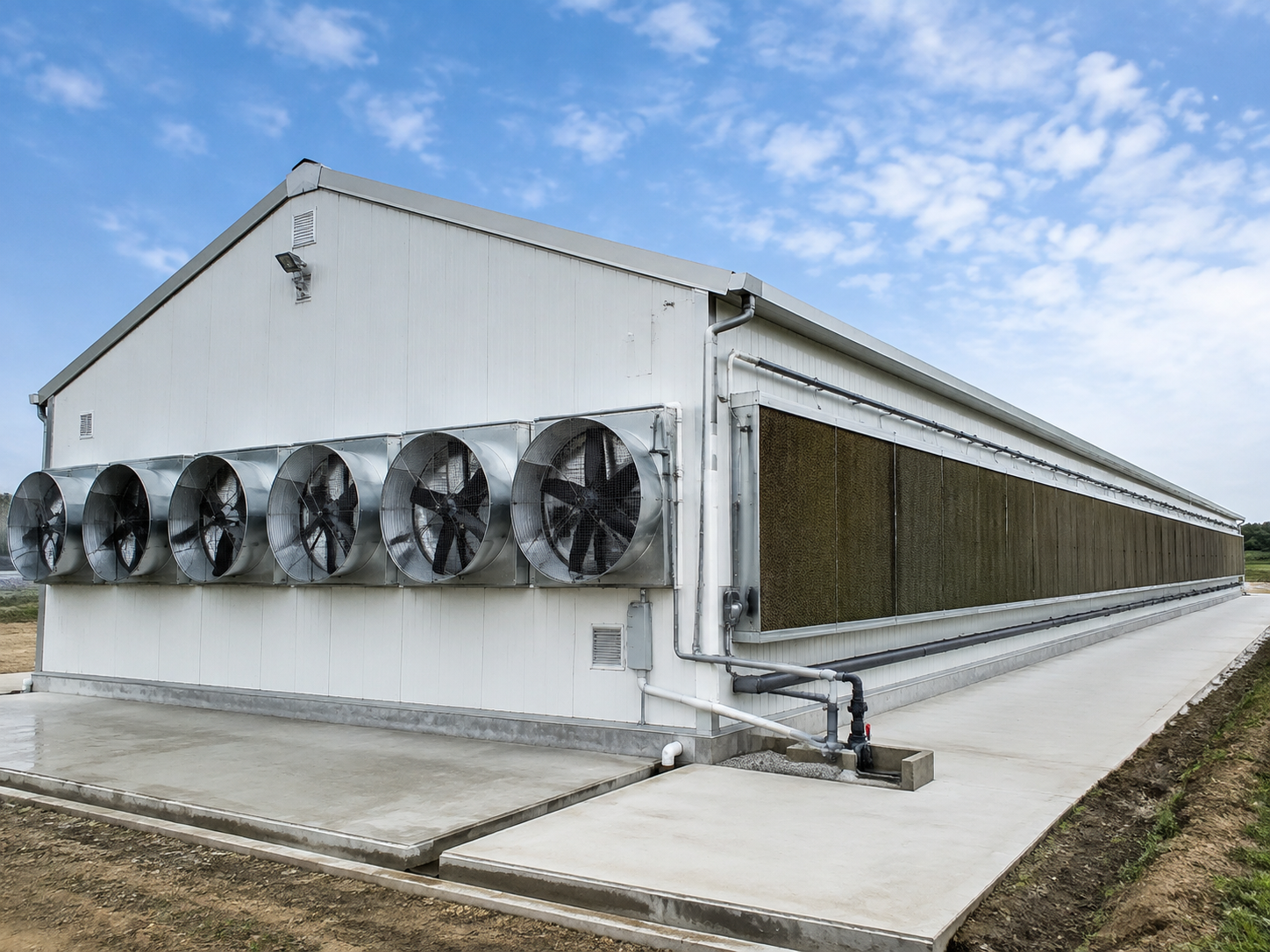
A commercial poultry house needs sufficient airflow to remove heat, moisture, dust and harmful gases.
Depending on the local climate and house design, the equipment list may include:
- Tunnel ventilation fans;
- Side wall fans;
- Evaporative cooling pads;
- Air inlet windows;
- Air deflectors;
- Temperature sensors;
- Humidity sensors;
- Environmental controllers;
- Water circulation equipment.
The ventilation system should be calculated according to:
- Poultry house dimensions;
- Bird capacity;
- Local temperature and humidity;
- Open‑sided or closed‑house design;
- Cage density;
- Fan capacity;
- Cooling requirements.
Ventilation and cooling equipment should be planned with the cage layout. Installing cages first and adding fans later may create problems with air inlets, electrical wiring and maintenance space.
7. Electrical and Control Equipment
Automatic poultry equipment requires a suitable electrical and control system.
The project list may include:
- Main control panels;
- Motor control units;
- Cables and cable trays;
- Sensors;
- Limit switches;
- Emergency stop switches;
- Distribution boxes;
- Voltage protection;
- Backup generator connection;
- Emergency lighting.
The buyer should provide the local power voltage and frequency before receiving a quotation. Power requirements may vary according to the number of feeding machines, manure motors, egg collection systems, fans and cooling pumps.
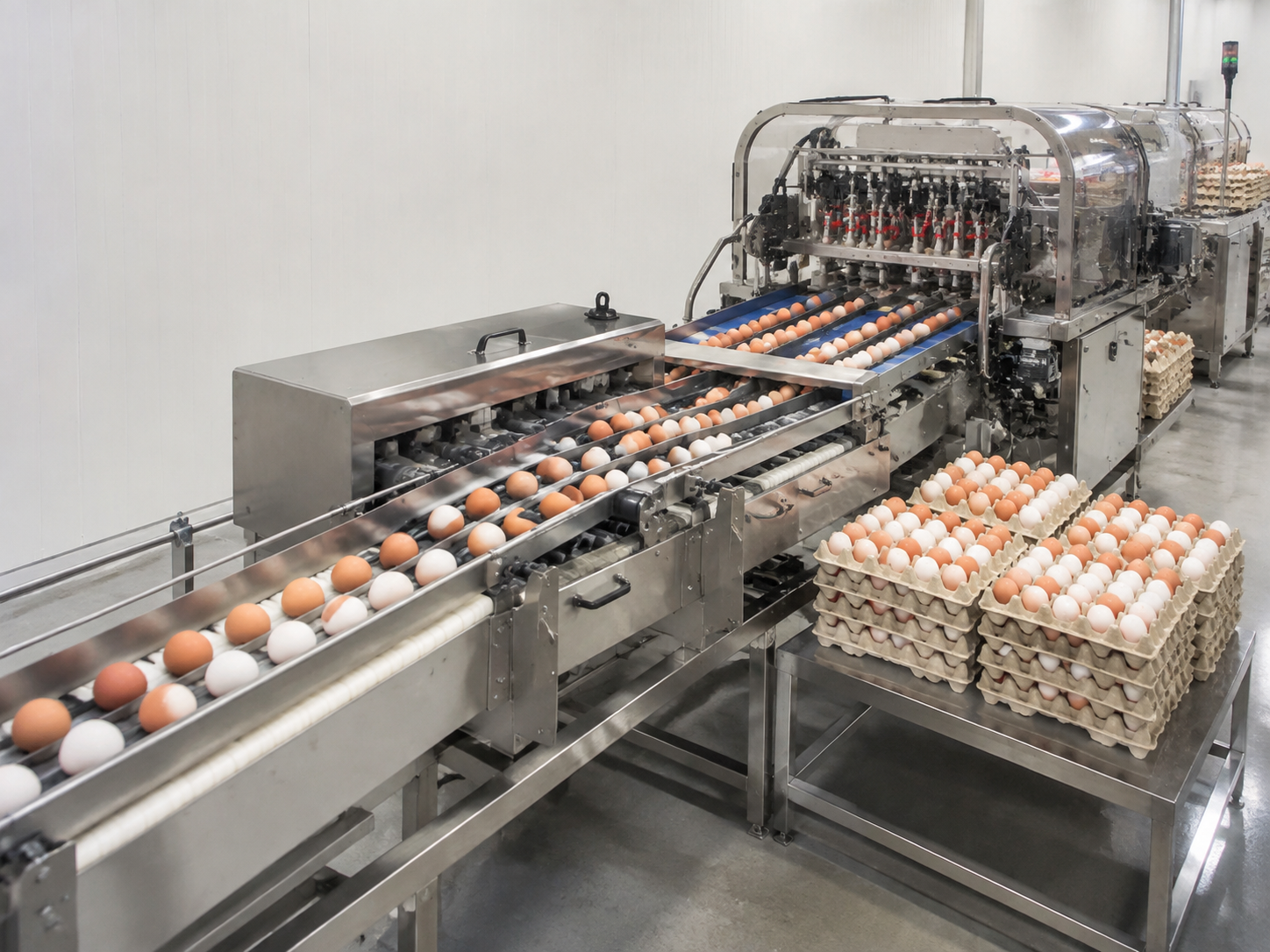
8. Egg Packing and Handling Equipment
Some layer farms sell eggs directly, while others need to connect the farm with a grading or packing operation.
Depending on the production process, the equipment list may include:
- Egg grading equipment;
- Egg conveyors;
- Egg washing equipment;
- Automatic egg tray packing machines;
- Paper or plastic egg trays;
- Packing tables;
- Storage racks;
- Loading equipment.
An automatic egg tray packing machine should be matched with the egg conveyor, egg size range, tray type, working speed and available installation space.
9. Spare Parts and Maintenance Items
A commercial farm should prepare common spare parts before the equipment is installed.
These may include:
- Motors;
- Bearings;
- Belts;
- Rollers;
- Switches;
- Sensors;
- Feed outlets;
- Nipple drinkers;
- Electrical components;
- Fasteners;
- Manure belt connectors.
The buyer should also confirm:
- Warranty terms;
- Installation guidance;
- Operation manuals;
- Remote technical support;
- Spare parts availability;
- Worker training;
- Maintenance recommendations.
The availability of spare parts is especially important for farms located far from major service centers.
Commercial Layer Farm Equipment Checklist
| Equipment category | Main items |
|---|---|
| Housing | A‑type, H‑type or stacked layer cages |
| Feeding | Feed hopper, feed conveyor, travelling feeding machine |
| Drinking | Nipple drinkers, pipes, filters, pressure regulators |
| Manure removal | Manure belts, motors, scrapers, conveyors |
| Egg collection | Egg belts, elevators, conveyors, collection tables |
| Environment | Fans, cooling pads, air inlets, controllers |
| Electrical | Control panels, cables, sensors, emergency stops |
| Egg handling | Grader, conveyor, egg tray packing machine |
| Maintenance | Motors, bearings, belts, switches and other spare parts |
The more complete the information, the easier it is to prepare a practical equipment list, layout plan and project‑based quotation.
---
A complete layer farm equipment list should connect the cage system with feeding, drinking, manure removal, egg collection, ventilation and maintenance requirements.
If one part is selected without considering the rest of the poultry house, the project may face installation problems, insufficient maintenance space or equipment incompatibility.
Send us your poultry house dimensions, target bird capacity and preferred automation level.
Want to know more?
Get in touch with us for more information about our services and products.