
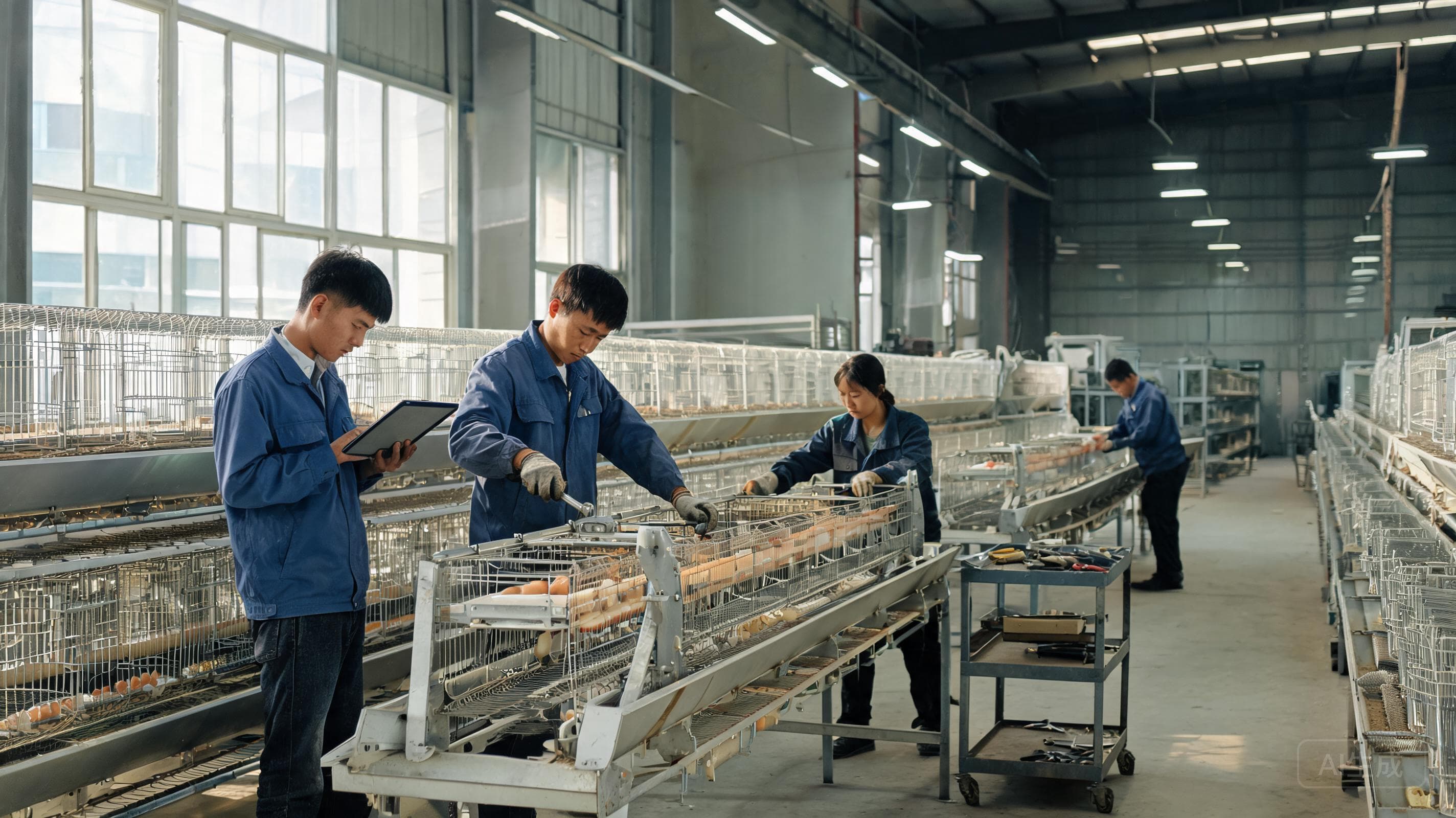
Build a More Productive Poultry Operation with the Right Automatic Chicken Cage System
Balance production needs with changing expectations
A housing upgrade requires balancing capital costs, labor availability, flock management, and market expectations—including interest in cage-free systems. Research into Indian producers’ perspectives shows these decisions are part of a broader industry discussion, not simply a matter of replacing equipment.
Automation can address everyday operating pressures, but the right equipment depends on your production model, customer and market requirements, facilities, and expansion plans. An Automatic Chicken Cage that suits one farm may not be the right fit for another.
Use this guide to assess equipment options and prepare focused questions for a poultry equipment manufacturer. Evaluate the project as a complete poultry housing system rather than a single purchase.
Start with the production model
Begin with bird type, target flock capacity, building dimensions, labor plan, and egg-handling requirements. These factors influence whether a Layer Cage System or broiler cage system is appropriate, how much automation to integrate, and whether the layout can accommodate future expansion.
For an operation targeting 5,000–6,000 birds, a stacked egg-layer cage configuration may make effective use of available building space. Assess its three- or four-tier layout in relation to flock capacity, access, and daily management needs.
For intensive layer production, an H-type galvanized Layer Cage System offers a vertical layout and corrosion-resistant construction. Integrated feed and water lines, along with compatibility for egg collection and manure removal, can support a coordinated operating plan. When comparing cage options, confirm that the proposed design aligns with destination-market requirements and your production commitments.
Broiler chicken cages are a distinct category. Assess them against broiler production needs rather than treating them as interchangeable with a layer system. The proposed configuration should suit the bird type, facility, operating practices, and required equipment.
Specify an integrated poultry cage system
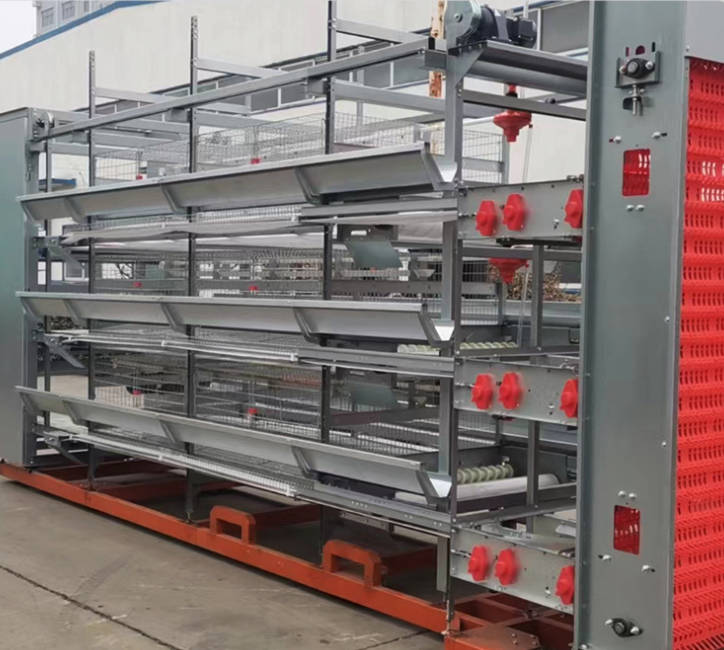
A Poultry Cage System is more than a housing structure. It integrates the cage, feeding, and management equipment required for a coordinated farm operation. A fully specified system can bring together housing, feeding, drinking, egg collection, and manure management to support daily routines and reduce reliance on disconnected equipment.
An Automatic Chicken Cage is a fully automated cage system with feeding, drinking, egg collection, and manure removal. For larger operations, stacked equipment may incorporate hot-dip galvanized construction and automated feeding, drinking, and manure cleaning. Ask suppliers to document materials, component specifications, and maintenance requirements for the proposed configuration.
A three-tier cage and automatic egg-collection system may support modular expansion. Product specifications state capacity of up to 50,000 birds per building and an egg breakage rate below 0.5%. Treat these as stated specifications and confirm the configuration, assumptions, and measurement method that apply to your project.
Automated feeding can make feed distribution more consistent, while automated manure removal can reduce repetitive handling. Practical results depend on layout, management, equipment reliability, and system integration. For a broader perspective, read this discussion of poultry automation ROI and the costs behind the calculation.
Plan climate, egg handling, and labor together
Cage selection alone does not determine flock or operating performance. Ventilation, cooling, bird comfort, and downstream egg handling all affect daily management. Include these requirements in the housing layout and equipment schedule.
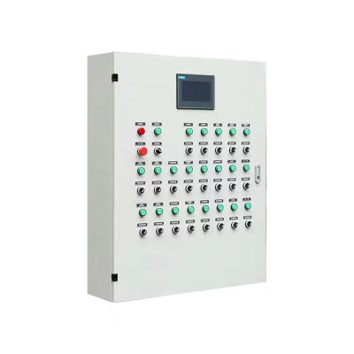
An Environmental Control System coordinates fans, cooling pads, air inlets, and controls to manage temperature, humidity, and fresh air across ventilation stages. Under suitable farm conditions, environmental controls can support reduced heat stress, lower mortality, improved feed conversion, and more uniform flock performance. These are potential outcomes, not guarantees; results depend on building design, climate, stocking decisions, equipment settings, and management.
Egg handling is another key element of a layer project. An automatic egg tray packing machine can automate egg arrangement, counting, and tray loading, with adjustable speed and tray settings. An Egg Collection System is a conveyor system that collects eggs automatically and can connect cage-level collection to packing equipment. Assess the full route from cage to packed tray, including transfer points and operator access.
Evaluate labor impact in the context of your operation rather than relying on headline figures. This overview of how automation changes poultry labor planning can help frame questions about staffing, training, and daily responsibilities.
Use market data carefully
Market coverage can help identify questions to investigate, but figures should not replace project-specific analysis. UGA Research News coverage of Lilong Chai’s cage-free poultry research reports a 70% figure. Before using it, verify what the percentage describes and review the study context.
Similarly, the Poultry Farming Equipment Market report to 2035 cites a 48.0% figure, while poultry cage market coverage cites 4.2%. Verify what each percentage measures, its geography, and its time period before publishing or relying on it in an investment case.
Treat these figures as prompts for market due diligence, not as guaranteed growth, savings, or returns for an individual farm. Robotics research also signals interest in automation, but buyers should examine integration, reliability, serviceability, and suitability for their operation.
Evaluate suppliers against the full project
Ask each chicken cage manufacturer or supplier to specify capacity, materials, automation components, fit with your buildings, installation scope, and after-sales support. Manufacturing capabilities matter when you need consistent production, customization, or export equipment that meets destination-market requirements.
For a custom Poultry Cage System, confirm compatibility among cages, feeding, drinking, egg collection, manure handling, and the Environmental Control System. If the project includes industrial poultry cages, assess inspection access, maintenance requirements, and fit with the planned production process.
Review installation, commissioning, operator training, spare parts, and service response before selecting a supplier. For a Turnkey Poultry Farm—a complete poultry farm delivered as a full package—clarify which buildings, equipment, controls, installation tasks, and services are included, and which remain your responsibility.
For more on assessing returns and operating trade-offs, review this guide to automation ROI beyond labor. Use published figures to frame questions, then validate assumptions against your farm’s design and costs.
Request a farm-specific proposal
Share bird type, target capacity, house dimensions, production goals, and desired automation level with your poultry equipment manufacturer. This information helps suppliers compare a Layer Cage System, egg-layer cage system, or commercial poultry cages against your site and operating plan.
Request a tailored layout and quotation that identifies the poultry farm automation system, installation scope, building fit, and expansion options. Whether you are planning a large-scale operation or a more compact facility, a project-specific review makes it easier to compare equipment and supplier support on the same basis.
Want to know more?
Get in touch with us for more information about our services and products.