
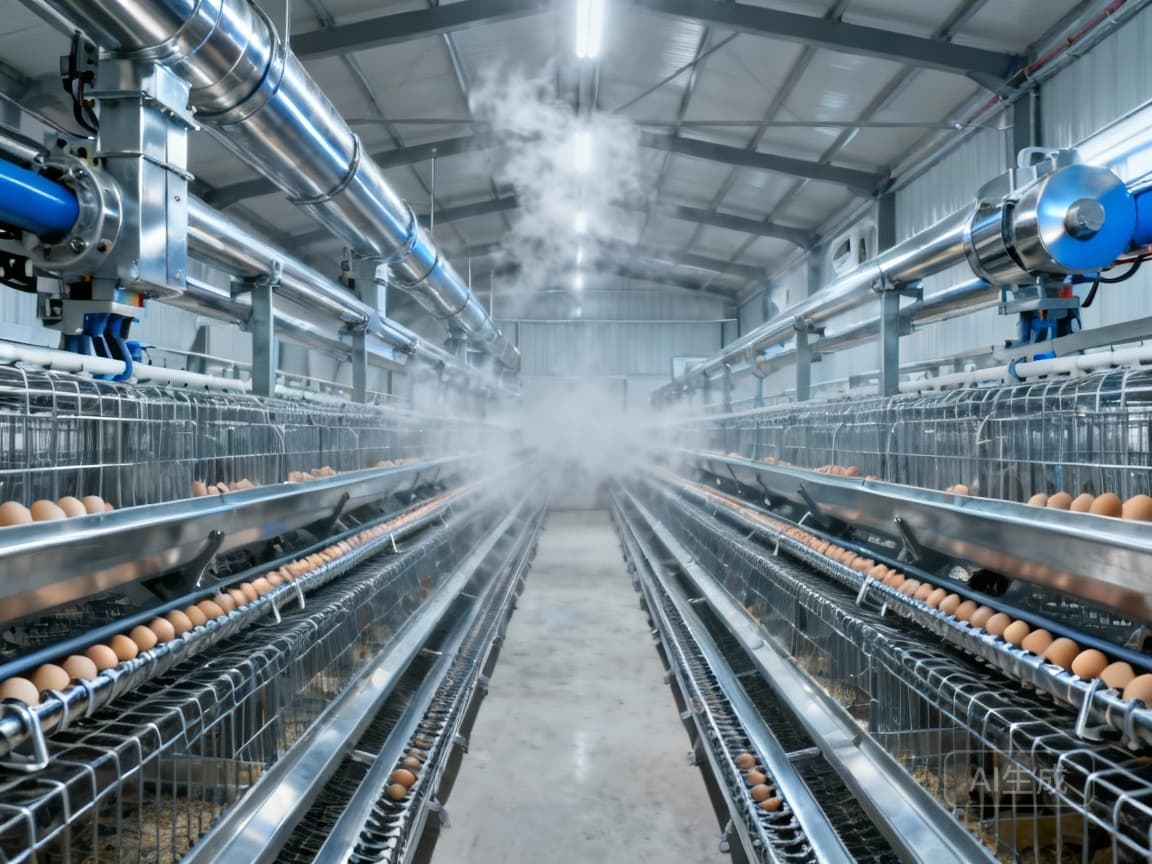
Hot-Dip Galvanized Cages Cut Long-Term Poultry Farm Costs by 20%: Data-Backed Guide #36
Why Durability Beats Short-Term ROI: The Unseen Value of Hot-Dip Galvanized Layer Cages
While the poultry automation equipment market continues its impressive growth trajectory – projected to reach $7.1 billion by 2034 with a 6.3% CAGR – most operators focus exclusively on short-term ROI calculations. This approach overlooks the critical factor that separates profitable long-term operations from those facing recurring maintenance nightmares: equipment durability through advanced surface treatments like hot-dip galvanizing. Industry data reveals that automated segment now contributes 48.0% of market revenue share, but 30% of farms report system compatibility and durability issues within the first three years of implementation.
The Hidden Cost of Conventional ROI Calculations
Traditional return on investment analysis fails to account for the total lifecycle costs of poultry automation systems. While initial equipment costs are easily quantified, the ongoing maintenance, replacement parts, and system downtime represent substantial hidden expenses. The case of Jiayu County Green Mountain Ecological Layer Farm demonstrates this perfectly: their ¥10 million investment in fully automated systems included hot-dip galvanized layer cages that extended maintenance intervals from 2 to 5 years, creating substantial long-term savings beyond the obvious labor reduction.
Hot-dip galvanizing provides corrosion resistance that extends equipment life by 30% or more, reducing long-term maintenance costs by 15-20% over a 10-year period compared to standard galvanized surfaces.
Lifecycle Cost Analysis: A More Complete Financial Picture
Professional poultry operations should employ Lifecycle Cost (LCC) analysis that accounts for:
- Initial investment costs
- Annual maintenance and repair expenses
- Energy consumption differences
- Equipment lifespan and replacement costs
- Residual value of equipment
The Hebei Best Machinery case study showed 40% labor cost reduction and 23%+ increased egg production, but their most significant achievement was implementing systems that maintained these benefits year after year without degradation. Their 28 years of professional experience demonstrated that durability directly impacts consistent performance.
Implementation Framework: From Medium to Large-Scale Operations
For operations considering automation upgrades, follow this phased approach:
Phase 1: Hot-Dip Galvanized Cage Investment
Prioritize cages with hot-dip galvanized surfaces, which typically add 15-20% to initial costs but provide 300% longer lifespan in corrosive poultry environments. The Jiayu County farm achieved 65,000-bird capacity with 3.8 tons daily egg production while reducing maintenance frequency.
Phase 2: Integrated Environmental and Feeding Systems
Connect environmental controls with feeding systems to address seasonal fluctuations. Search data shows automatic chicken feeder searches peak at 100 in August, indicating seasonal demand spikes. Integrated systems can reduce summer energy consumption by 10% through coordinated operation.
Phase 3: Centralized Egg Collection and Manure Management
Implement central egg collection systems like Jiayu County's setup that reduces breakage rates and improves efficiency. Automated manure handling further reduces labor requirements and maintains hygienic conditions.
Seasonal Management Through System Integration
The rising adoption of automatic chicken waterers – from 0 to 41 by May 2025 – indicates growing recognition of automated climate response systems. Integrated systems should:
- Coordinate ventilation with feeding schedules during peak summer months
- Adjust water flow based on temperature and humidity readings
- Modify lighting programs seasonally to maintain production consistency
- Implement predictive maintenance alerts before seasonal demand increases
Future Trends: Beyond Basic Automation
As the market grows from $4.5 billion in 2024 to $7.1 billion by 2034, the next innovation wave will focus on predictive maintenance and AI-driven optimization. Operations that invest in durable infrastructure today will be positioned to:
- Implement IoT sensors for real-time equipment monitoring
- Utilize data analytics for predictive maintenance scheduling
- Reduce downtime by 20% through proactive component replacement
- Integrate with broader farm management systems for complete operational visibility
The layer farming equipment market's steady growth – projected from $310 million in 2024 to $410 million by 2033 – demonstrates sustained demand for solutions that deliver both immediate efficiency gains and long-term reliability. Operations that prioritize durability through hot-dip galvanized systems and integrated automation will achieve superior financial performance throughout the equipment lifecycle, ultimately outperforming those focused solely on short-term ROI calculations.
Want to know more?
Get in touch with us for more information about our services and products.