Labor-intensive processes in poultry farming—from egg collection to manure management—have become increasingly unsustainable amid global labor shortages, threatening productivity and profitability. Poultry producers are under mounting pressure to do more with less: rising operational costs, stricter biosecurity standards, and growing demand for high-quality eggs and poultry products require innovative solutions to streamline workflows. The key to overcoming these challenges lies in automation—and specifically, in adopting advanced chicken cage systems designed to reduce manual labor, enhance flock health, and boost overall efficiency.
The global poultry cage system market is projected to reach $1.2 billion, driven by the urgent need for labor-saving technologies and the shift toward large-scale, industrial poultry farms. Robotics and automation in poultry farming are no longer optional: industry forecasts highlight a growing focus on systems that minimize human intervention while maximizing productivity. Modern poultry operations are increasingly prioritizing integrated solutions—combining cage systems, environmental control, and automated handling—to create seamless, efficient workflows that address both labor and performance goals. For insights on how automation is transforming labor dynamics, see how automation reshapes poultry labor.

Poultry House Environmental Control System: Ventilation and Cooling for Layer & Broiler Farms: This integrated system regulates temperature, humidity, and air quality using tunnel fans, evaporative cooling pads, and intelligent controllers, reducing heat stress, improving feed conversion, and lowering mortality rates. By maintaining optimal conditions, it ensures consistent flock performance and energy efficiency, even in extreme weather.
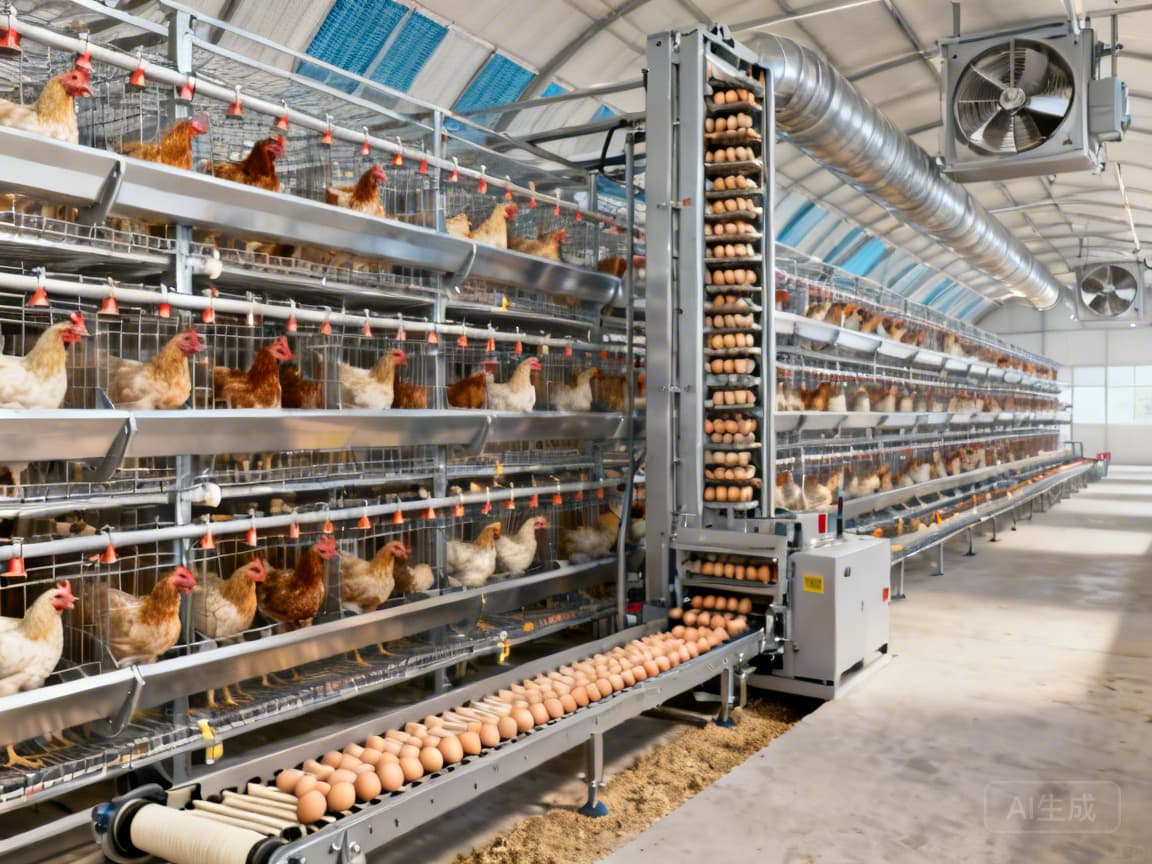
Stacked Egg Collection System for Layer Cages: Vertical Elevator Egg Collector: Designed for H-type and A-type cage systems, this automated solution replaces manual egg collection with gentle vertical transport, minimizing breakage and labor intensity. Its galvanized steel frame and smooth plastic carriers withstand harsh poultry house environments, while adjustable speed controls align with egg production rates, ensuring cleaner, more uniform eggs for grading.
A Type Layer Chicken Cage System for Poultry Farm: Galvanized Step Type Layer Battery Cage: Ideal for operations transitioning from floor rearing or with open ventilation, this stepped A-frame design maximizes space efficiency with galvanized wire cages, nipple drinking lines, and front feed troughs. Its open structure promotes ventilation and easy bird inspection, reducing initial investment while increasing stocking density and feed efficiency.
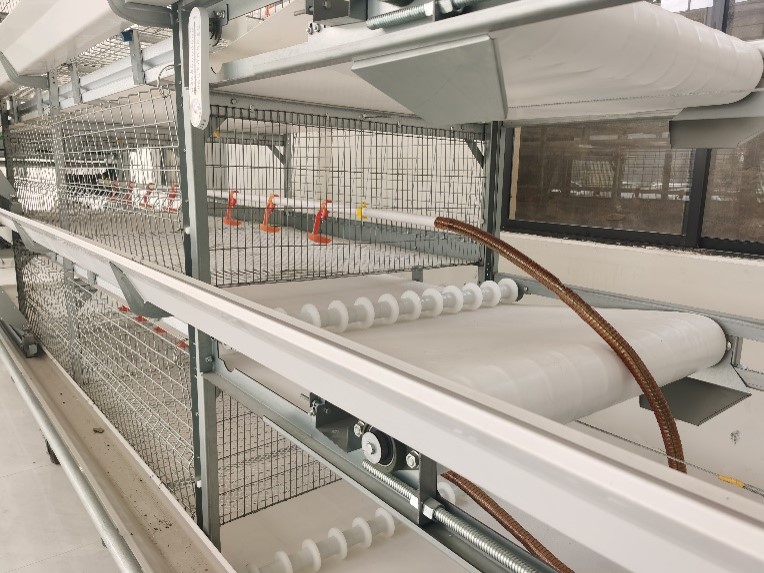
Belt Manure Removal System for Poultry Cages: Automatic Manure Cleaning Machine: Installed under cage tiers, this system uses durable PVC/PP belts to collect and transport manure to a central disposal point, eliminating manual cleaning and reducing ammonia levels. By automating waste management, it improves air quality, lowers disease risk, and simplifies composting or biogas production, supporting sustainable farming practices.
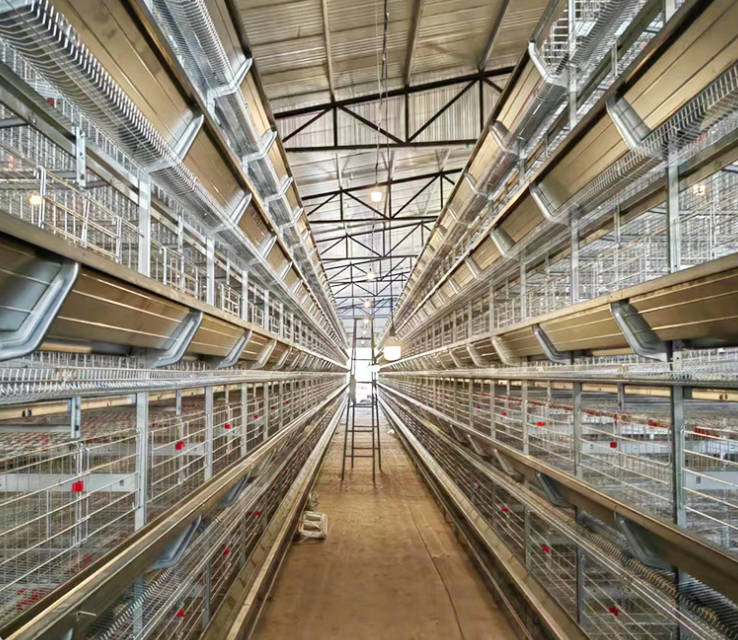
H Type Galvanized Layer Chicken Cage System for Poultry Farm: Engineered for large-scale, intensive production, this vertical stacked system optimizes space with hot-dip galvanized steel construction, ensuring corrosion resistance in humid environments. Compatible with automated feeding, egg collection, and manure removal systems, it boosts stocking density, reduces feed waste, and supports consistent flock performance for commercial operations. Learn more about vertical poultry automation for increased density and lower costs.
Industry data confirms that automated poultry cage systems deliver tangible returns: farms report up to 20% improvements in productivity, driven by reduced labor costs, minimized feed waste, and enhanced egg-laying consistency. Case example: A medium-scale layer farm upgraded to an H Type cage system with a belt manure removal system and stacked egg collector, reducing labor needs by 40% and achieving significant annual cost savings—results mirrored in wholesale chicken cage manufacturer case studies. Long-term benefits extend beyond cost savings: automated systems improve flock health (lower mortality rates, reduced heat stress) and egg quality (fewer broken or soiled eggs), increasing market competitiveness and customer trust. For a detailed analysis, refer to how to calculate true ROI in poultry automation.

Assess your scale: A Type systems are ideal for operations with open or naturally ventilated houses, while H Type systems suit large-scale, intensive operations aiming to maximize space and automation. Evaluate housing type: Open or naturally ventilated houses may benefit from A Type cages and basic environmental control, while controlled-environment houses require integrated solutions like H Type cages with advanced ventilation and cooling. Prioritize customization: Work with a chicken cage manufacturer that offers custom poultry cage systems—tailored to flock size, egg production goals, and existing infrastructure—to ensure seamless integration and optimal performance.
Our team of poultry equipment experts specializes in designing turnkey poultry farm solutions, from layer cage systems to full environmental control integration. We’ll assess your unique needs and recommend the right mix of automated systems to address labor challenges and drive growth. Explore our range of industrial poultry cages, automatic feeding systems, and manure removal equipment—all built for durability, efficiency, and long-term profitability. Contact us today to begin your journey toward automated poultry farming.
Get in touch with us for more information about our services and products.