
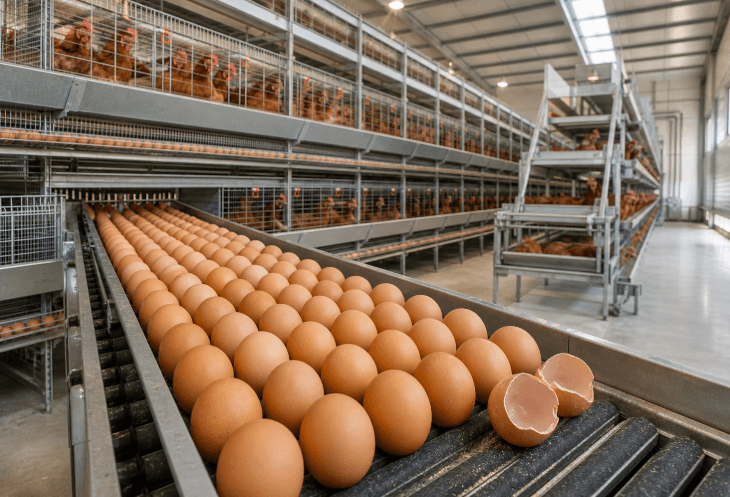
How to Reduce Broken Eggs During Collection and Packing
Broken eggs are a common problem in layer farms. A few broken eggs may look normal, but if the breakage rate becomes high, it can reduce income, increase cleaning work, and affect egg quality.
For commercial layer farms, egg breakage can happen at different stages:
- When eggs roll out from the cage
- During manual collection
- During automatic egg conveying
- At transfer points
- During grading or sorting
- During tray packing
- During storage and loading
To reduce broken eggs, the farm should not only look at one machine. Cage design, egg collection method, worker handling, packing equipment, and daily maintenance all affect the final result.
This article explains the common causes of broken eggs and what layer farms can do to reduce breakage during collection and packing.
1. Check the Cage Design and Egg Rolling Angle
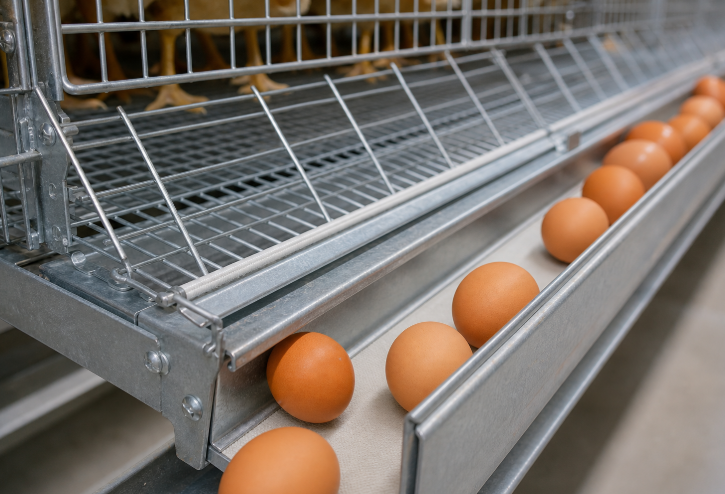
Broken eggs can start from the cage itself. In layer cage systems, eggs roll from the cage floor to the egg trough or egg belt. If the cage floor angle is not suitable, eggs may roll too fast, hit each other, or stop inside the cage.
Suggested product links:
- A Type Layer Chicken Cage System
- H Type Galvanized Layer Chicken Cage System
A good layer cage should allow eggs to roll out smoothly without strong impact. The cage bottom mesh should also support the hens properly while letting eggs move to the collection area.
When checking cage design, pay attention to: - Cage floor slope
- Smoothness of the egg rolling path
- Egg trough position
- Wire quality and cage bottom condition
- Whether eggs can stop safely after rolling out
- Whether birds can peck or step on eggs before collection
If many eggs are cracked before workers collect them, the problem may be related to cage floor angle, egg trough design, or delayed collection.
2. Collect Eggs More Frequently
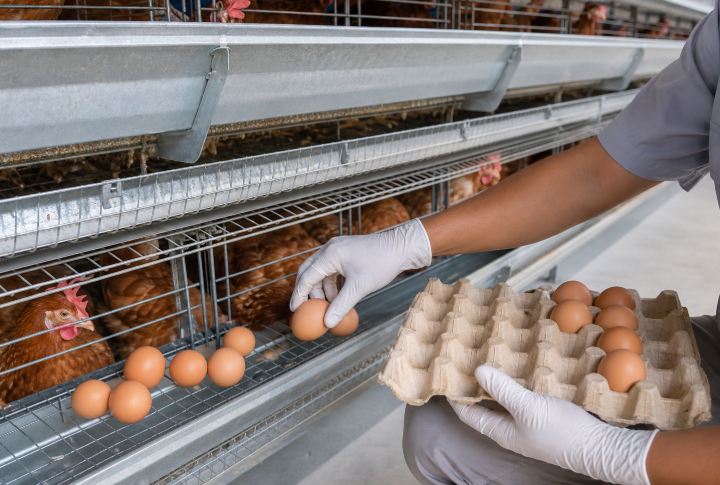
In small and medium layer farms, eggs are often collected manually. If eggs stay in the egg trough too long, they may pile up, touch each other, or be damaged by vibration and handling.
For manual collection, the farm should arrange collection time according to laying habits and daily egg quantity.
More frequent egg collection can help reduce:
- Eggs hitting each other in the trough
- Eggs staying too long in dirty areas
- Birds pecking eggs
- Workers collecting too many eggs at once
- Pressure during temporary storage
For farms with many birds, manual collection may become slow and tiring. In this case, an automatic egg collection system can be considered.
3. Use an Automatic Egg Collection System for Larger Farms
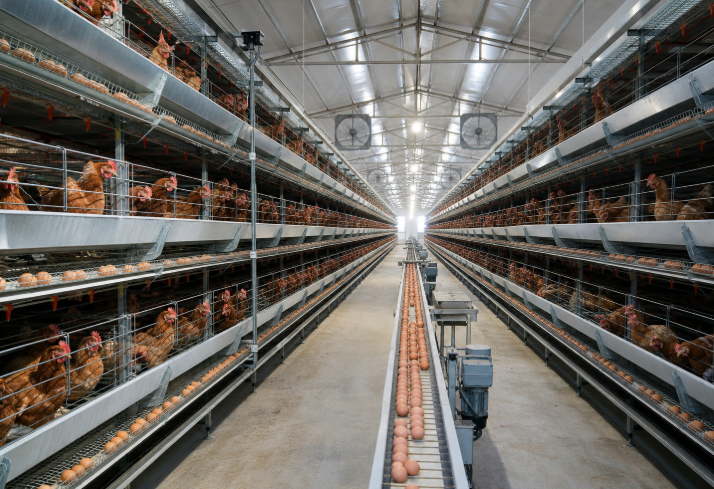
For medium and large layer farms, manual egg collection requires more labor and handling. The more times eggs are touched by workers, the higher the risk of dropping, squeezing, or cracking.
An automatic egg collection system can move eggs from cage rows to a collection area. It helps reduce manual handling and makes daily egg collection more organized.
Automatic egg collection is especially useful when:
- The farm has many cage rows
- Daily egg quantity is high
- Labor cost is increasing
- Manual collection takes too much time
- The farm wants more consistent egg handling
- The cage system is H Type or another high-density layout
However, automatic collection does not mean breakage will disappear completely. The system should be installed correctly, adjusted properly, and maintained regularly.
Important points include: - Egg belt speed
- Transfer point height
- Belt cleanliness
- Alignment of the collection system
- Smooth movement of eggs
- Regular checking of worn parts
A good egg collection system should move eggs gently, not only quickly.
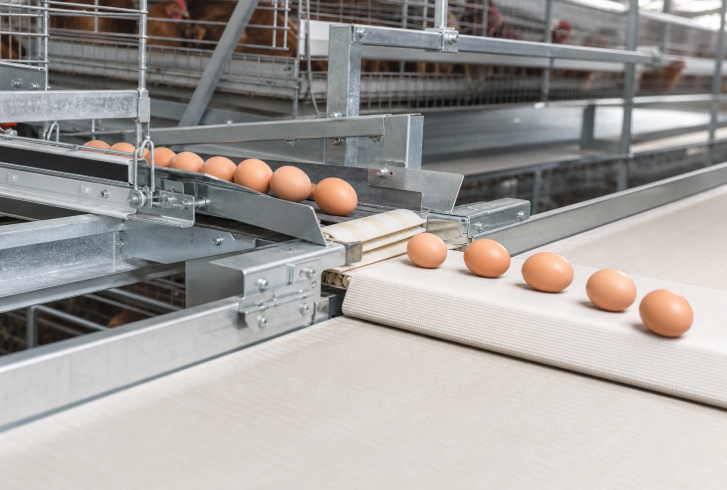
4. Pay Attention to Transfer Points
Many broken eggs happen at transfer points. This includes the place where eggs move from the cage egg belt to the main collection line, or from the collection line to packing equipment.
If the transfer height is too large, the belt is misaligned, or the speed difference is too high, eggs may crack during movement.
The farm should check:
- Whether eggs drop too far
- Whether eggs hit metal edges
- Whether the belt runs smoothly
- Whether transfer points are clean
- Whether egg flow is too crowded
- Whether damaged parts need replacement
For automatic systems, small adjustment problems can cause repeated breakage every day. Regular inspection is important.
5. Train Workers to Handle Eggs Correctly
Even with good cages and equipment, worker handling still matters.
Common handling problems include:
- Collecting too many eggs in one hand
- Dropping eggs into trays too quickly
- Stacking trays unevenly
- Using dirty or damaged trays
- Moving eggs roughly during loading
- Placing heavy items on egg trays
- Not separating cracked eggs in time
Workers should be trained to handle eggs gently and keep collection areas clean. The farm should also provide enough trays, baskets, or carts so workers do not need to overload eggs during collection.
For small farms, good manual handling can make a clear difference in reducing broken eggs.
6. Use Suitable Egg Trays and Packing Equipment
Eggs can also break during packing. If the trays are too soft, damaged, wet, or not the right size, eggs may move or press against each other.
For farms that pack a large number of eggs every day, automatic packing can help make the process more stable.
An egg tray packing machine can place eggs into trays more evenly and reduce repeated manual handling. It is useful for farms that want to improve packing speed and reduce labor during egg handling.
Before choosing packing equipment, consider:
- Daily egg quantity
- Egg tray size
- Manual or automatic feeding method
- Space in the packing area
- Connection with egg collection line
- Worker operation habits
- Maintenance and spare parts
For small farms, manual tray packing may still be enough. For larger farms, packing equipment can help improve consistency and reduce labor pressure.
7. Keep Egg Belts and Collection Areas Clean
Dirty belts and collection areas can increase egg damage. Dust, feathers, broken eggshells, manure, and wet spots can affect egg movement and hygiene.
Daily cleaning should include:
- Egg belts
- Egg troughs
- Collection tables
- Transfer points
- Egg trays
- Packing area
- Broken egg residue
If broken egg liquid stays on belts or trays, more eggs may become dirty, sticky, or damaged during movement.
Clean equipment also helps workers find cracked eggs early and remove them before they affect other eggs.
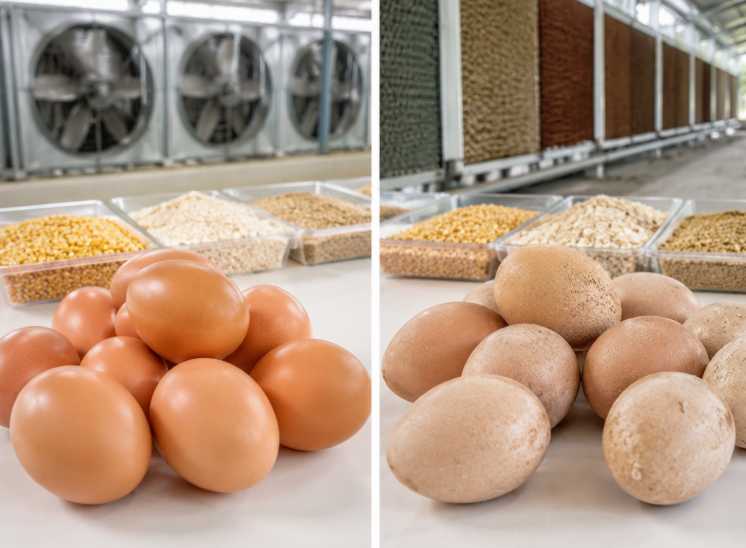
8. Check Bird Nutrition and Eggshell Quality
Not all broken eggs are caused by equipment. Some eggs break easily because the shell quality is poor.
Poor eggshell quality may be related to:
- Insufficient calcium
- Vitamin D3 deficiency
- Unbalanced feed formula
- Older laying hens
- Heat stress
- Disease problems
- Poor drinking water quality
If eggs are breaking even with gentle collection, the farm should also check bird health and nutrition.
In hot climates, heat stress can reduce feed intake and affect shell quality. Good ventilation and cooling can help support better production conditions.
9. Common Mistakes That Increase Broken Eggs
Layer farms should avoid these common mistakes:
| Mistake | Possible Result |
|---|---|
| Eggs are collected too late | Eggs pile up and hit each other |
| Egg belts run too fast | Eggs may collide or crack |
| Transfer points are not adjusted | Eggs break during movement |
| Workers handle eggs roughly | More cracks and drops |
| Trays are damaged or unsuitable | Eggs move and press together |
| Packing area is crowded | More handling mistakes |
| Broken eggs are not removed quickly | More dirty eggs and cleaning work |
| Eggshell quality is ignored | Eggs break even with good equipment |
| Reducing broken eggs usually requires both equipment improvement and better daily management. |
10. Information to Send Before Choosing an Egg Collection or Packing System
If you want to reduce broken eggs with equipment, prepare the following information before asking for a recommendation:
| Information | What to Provide |
|---|---|
| Bird quantity | Number of layers in your farm |
| Cage type | A Type, H Type, or other cage system |
| Collection method | Manual or automatic |
| Daily egg quantity | Approximate eggs per day |
| Current breakage problem | Where eggs usually break |
| Packing method | Manual tray packing or machine packing |
| Egg tray size | Tray type used in your market |
| House layout | Number of cage rows and house size |
| Automation plan | Whether you need collection, packing, or both |
| Budget | Basic, standard, or automatic solution |
Sample Inquiry Message
You can send a message like this:
Hello, we want to reduce broken eggs in our layer farm.
Bird quantity:
Cage type:
Current egg collection method:
Daily egg quantity:
Where eggs usually break:
Manual or automatic packing:
Egg tray size:
Poultry house layout:
Automation requirement:
Please recommend a suitable egg collection and packing solution.
Final Recommendation
Broken eggs during collection and packing can come from many reasons: cage floor angle, delayed collection, rough handling, poor transfer points, dirty belts, unsuitable trays, or weak eggshell quality.
For small farms, improving manual collection frequency, worker handling, tray quality, and cage maintenance may already reduce breakage.
For medium and large farms, an automatic egg collection system and egg tray packing machine can help reduce repeated manual handling and make the egg flow more organized.
If your farm has a high broken egg rate, do not only replace one machine immediately. First check where the breakage happens, then choose the right solution.
Send us your bird quantity, cage type, current collection method, daily egg quantity, and where eggs usually break.
Our team can help recommend a suitable egg collection or packing solution for your layer farm.
Want to know more?
Get in touch with us for more information about our services and products.