
How to Plan Lighting Layout in a Layer Poultry House
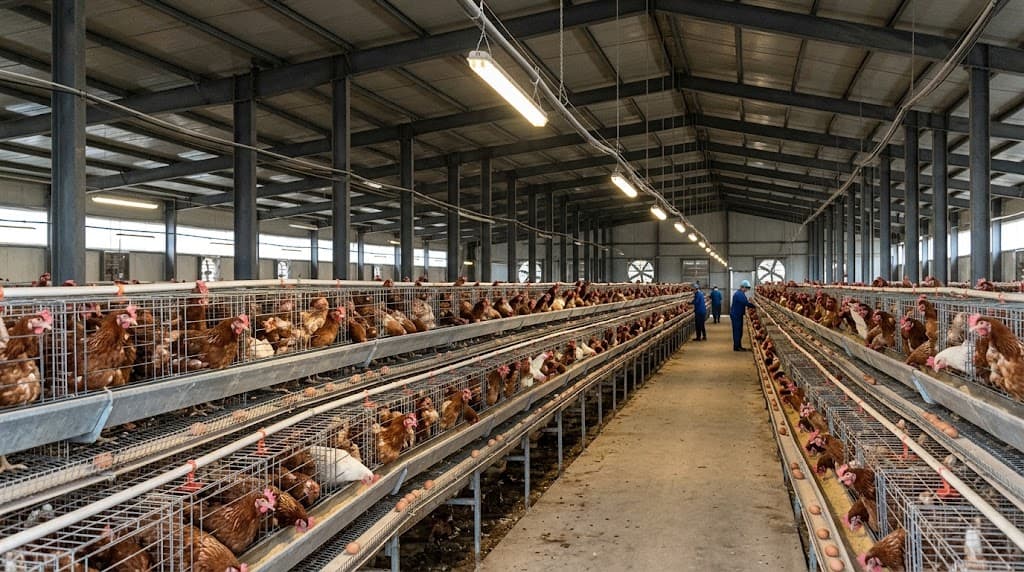
Lighting should be considered while planning a layer poultry house—not added as an afterthought after the cages and other equipment are installed. Cage rows, beams and equipment can affect how light is distributed, while poorly planned fixture positions may leave some areas difficult to inspect or maintain.
Start with the building and cage layout. If you are still planning the house, review the poultry house size and layout before finalizing equipment positions. The lighting layout should then be checked against the actual house structure and the farm’s management requirements.
Lighting schedules and intensity should be set with guidance from a qualified poultry specialist and in accordance with local requirements.
Why Plan Lighting Around the Cage Layout?
In a layer house, lighting supports routine observation and farm work, and it is also part of flock management. The appropriate lighting program depends on factors such as bird age, production stage, breed, management practice and local guidance.
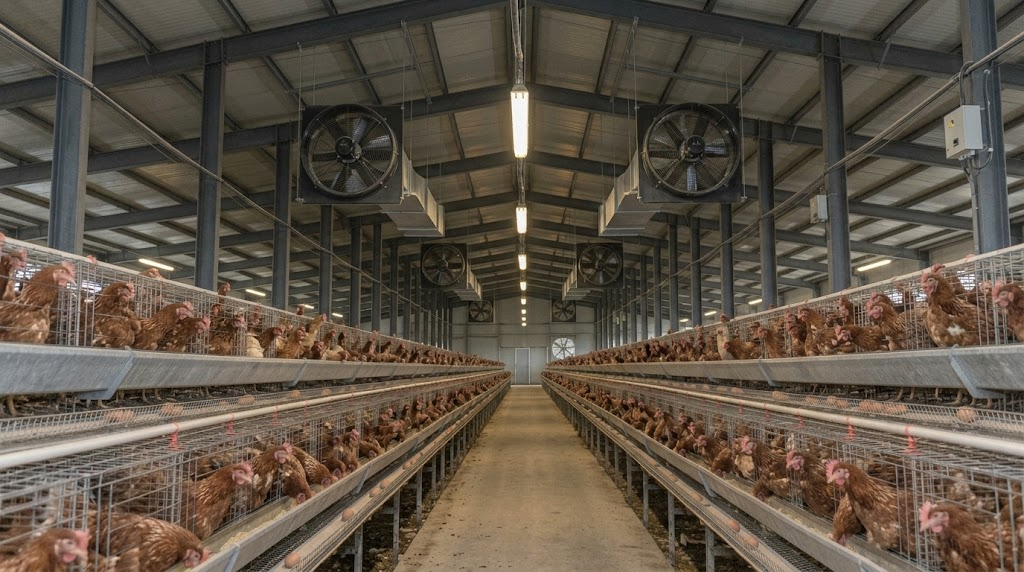
The equipment layout matters because cage tiers, beams and other structures can create shadows or make some areas harder to access. Planning fixture positions alongside the cage arrangement can help identify potential dark areas before installation.
1. Start With a Poultry House Layout
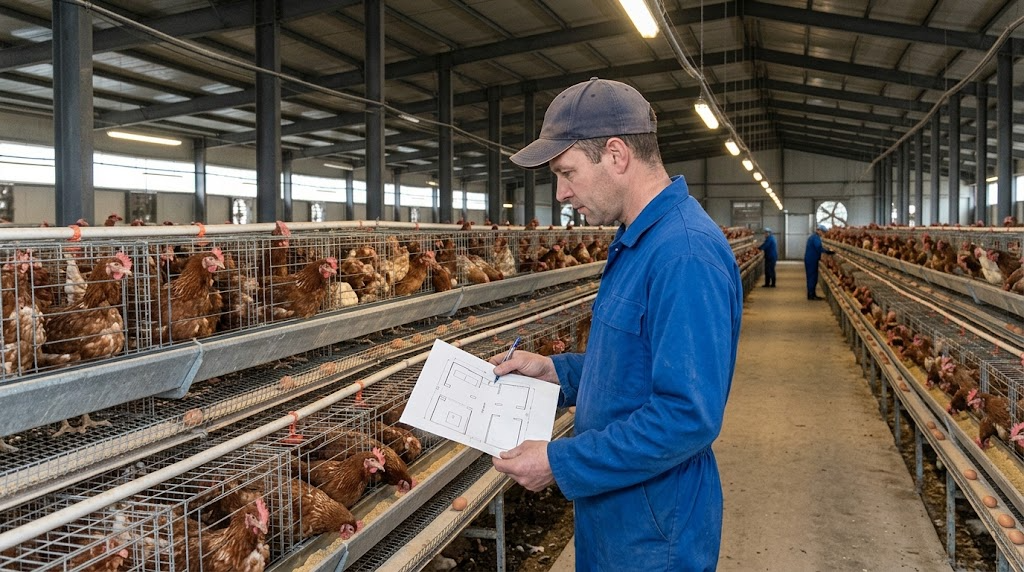
Before choosing fixture positions, prepare a basic plan showing:
- House length, width and ceiling height
- Cage rows and number of tiers
- Aisles and worker access routes
- Beams, columns, doors and other obstructions
- Feeding, drinking and egg collection equipment
- Electrical supply and control-panel location
This drawing helps the farm and supplier discuss fixture placement in relation to the actual building. If the cage layout changes, review the lighting plan again before installation.
2. Consider Light Distribution, Not Just Fixture Quantity
A large number of lamps does not necessarily produce even lighting. Fixture spacing, mounting height, beam direction and obstructions all affect how light is distributed.
Review whether the proposed layout may create obvious dark areas or overly bright spots. Pay particular attention to the ends of cage rows, corners, aisles and areas beneath beams or other structures.
After installation, check the lighting at several locations in the house. Ask a qualified specialist to advise which measurement method and target levels are appropriate for the farm’s management program..
3. Check for Shadows Around Cage Rows
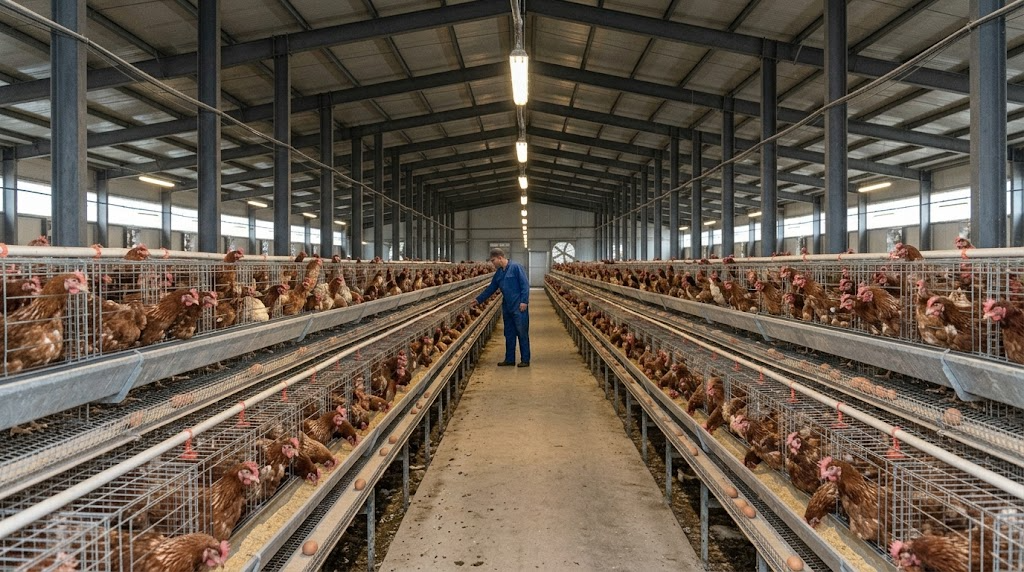
Multi-tier cages and building structures can block light from reaching some areas. Walk through the house and look for persistent shadows around:
- Lower cage tiers
- The center of long rows
- Corners and end walls
- Areas beneath beams or ducts
- Routine inspection points
The goal is not simply to eliminate every shadow, but to identify whether the layout leaves areas that are difficult to observe or work in. Adjusting fixture positions may be more effective than adding lamps without a plan.
4. Choose Fixtures for the Poultry House Environment
Poultry houses can be dusty and humid, and fixtures may be exposed to regular cleaning. When selecting lighting fixtures, confirm with the supplier that the proposed products are suitable for the house conditions and installation location.
Ask about:
- Protection against dust and moisture
- Cleaning and maintenance requirements
- Mounting method and fixture access
- Compatibility with the control system
- Replacement availability
- Electrical safety and local compliance
Confirm fixture specifications for the individual project rather than assuming one type is suitable for every poultry house.
5. Plan Controls and Inspection
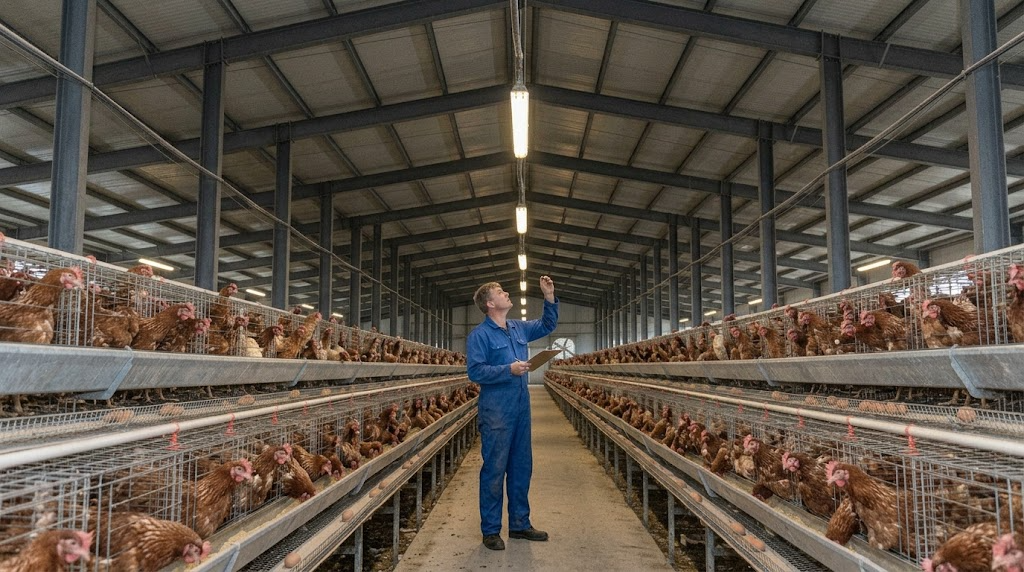
The lighting controls should be practical for the farm team to use. Confirm which areas or circuits can be controlled, where switches or control panels will be installed, and who is responsible for setting the operating program.
During routine inspections, staff can note:
- Lamps that have failed or become noticeably dimmer
- Loose or damaged fixtures
- Uneven lighting between house sections
- Dust buildup affecting light output
- Problems with switches, timers or control equipment
Any electrical inspection or repair should be completed by qualified personnel using the farm’s safety procedures.
6. Coordinate Lighting With Other Equipment
Lighting fixtures and wiring should not obstruct ventilation equipment, feed delivery, egg collection, maintenance access or cage installation.
For example, fixture and wiring positions should be reviewed alongside the poultry house ventilation and cooling system to help identify possible conflicts with equipment and access routes. The lighting, cage and ventilation plans should be checked together before installation begins.
Information to Prepare Before Requesting a Lighting Plan
| Information | What to provide |
|---|---|
| Poultry house dimensions | Length, width and clear height |
| Flock details | Bird type and production stage |
| Cage arrangement | Cage type, row count and number of tiers |
| Building structure | Beams, columns, doors and other obstructions |
| Existing lighting | Fixture positions and any known uneven areas |
| Operating requirements | Who controls the lights and how the program is managed |
| Local conditions | Electrical supply and applicable local requirements |
Photos of the house interior and a simple layout drawing can help the supplier understand the project. Confirm technical recommendations with qualified poultry and electrical professionals.
Final Recommendation
A layer poultry house lighting layout should be planned together with the cage arrangement, building structure, equipment routes and farm management program. Review fixture positions for light distribution, potential shadows, access, environmental suitability and maintenance before installation.
Want to know more?
Get in touch with us for more information about our services and products.