
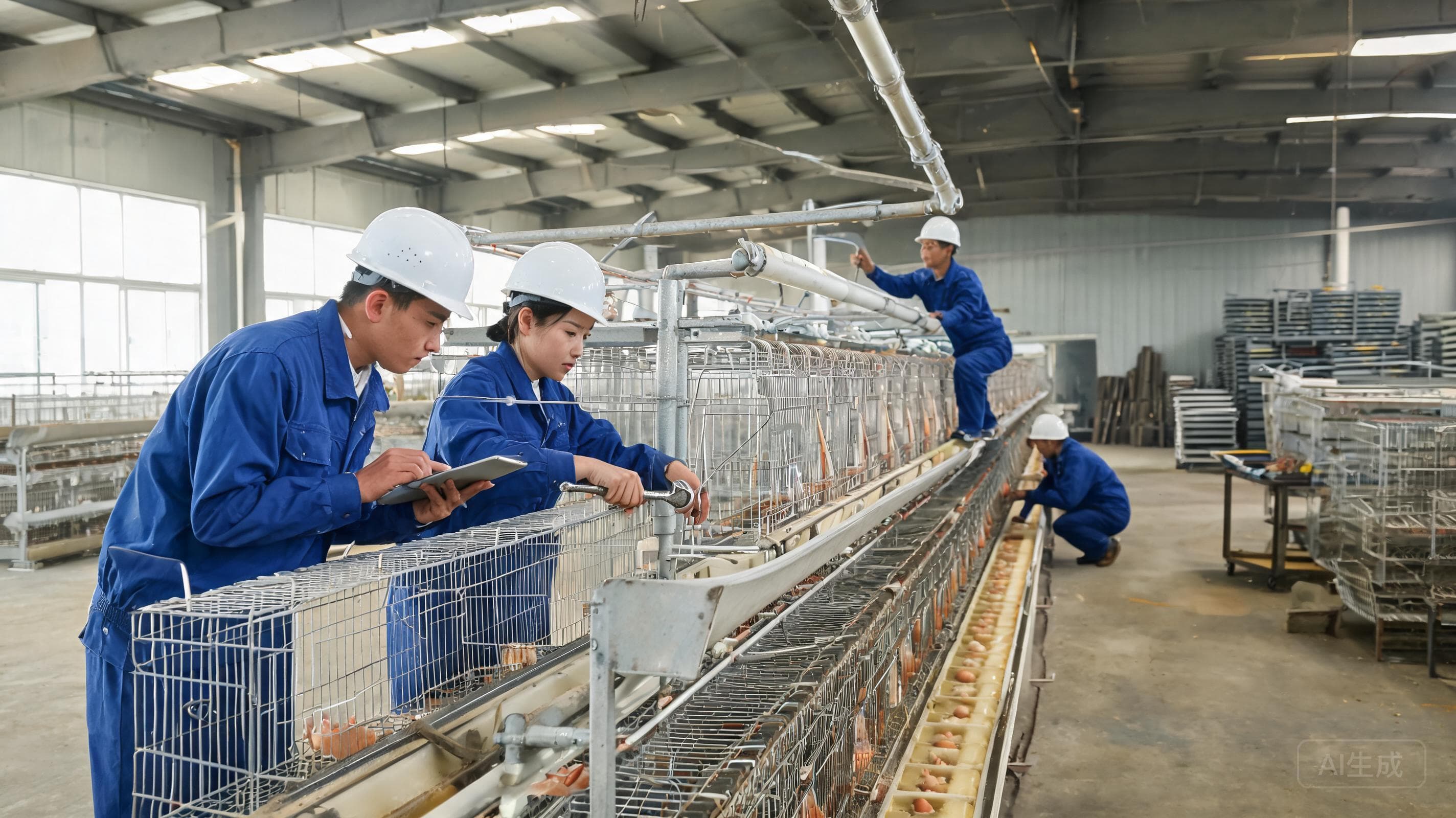
How to Choose an Automatic Chicken Cage Production Partner for a More Efficient Poultry Farm
Plan around your farm’s production needs
Labor availability, rising input costs, and pressure to improve productivity are changing how commercial poultry farms plan investments. A well-designed poultry housing system can coordinate daily work and support consistent flock management, but equipment delivers value only when it fits the production model, building, and operating capacity.
Choosing a partner for an automatic chicken cage project means looking beyond the cage. Assess the complete system, including feeding, drinking, egg collection, manure handling, environmental controls, installation, and ongoing support. Here’s what to evaluate before you commit.
Understand the demands of commercial poultry production
Farm operators are balancing staffing challenges with higher costs for feed, energy, and maintenance. They also need reliable workflows and consistent flock conditions. Automation can reduce repetitive tasks and make routine processes easier to coordinate, but it cannot replace sound farm management and is not right for every production model.
Housing choices depend on local regulations, customer expectations, and the farm’s ability to manage each system. Moving from conventional housing to cage-free production, for example, may change labor requirements, egg handling, floor management, and flock oversight. Compare these practical demands with your market commitments and operational capacity before selecting a housing approach.
Start by identifying where work accumulates, where losses occur, and which processes need greater consistency. Then assess whether automation can address those needs within your budget and management plan.
Define what the poultry cage system must deliver
A Poultry Cage System integrates housing with feeding, drinking, egg collection, manure handling, and environmental management according to the project design. An Automatic Chicken Cage is a fully automated cage system with feeding, drinking, egg collection, and manure removal—not simply a cage product sold on its own.
The right configuration depends on whether you need a Layer Cage System or a broiler cage system, as well as flock size, house dimensions, labor availability, production goals, and applicable standards. Broiler cages and layer systems serve different production requirements and should not be treated as interchangeable.
When assessing industrial poultry cages, review material specifications and corrosion resistance alongside day-to-day usability. Staff need practical access to inspect birds, service equipment, and clean the house. Ask how the system can accommodate expansion and whether components can be maintained or replaced without disrupting the entire operation.
Clarify exactly what the quotation includes. A battery cage arrangement describes a housing approach; it does not establish which automation, controls, or support are included. Request clear specifications for capacity, equipment, and interfaces with the house infrastructure.
Match the cage configuration to your building and operating model
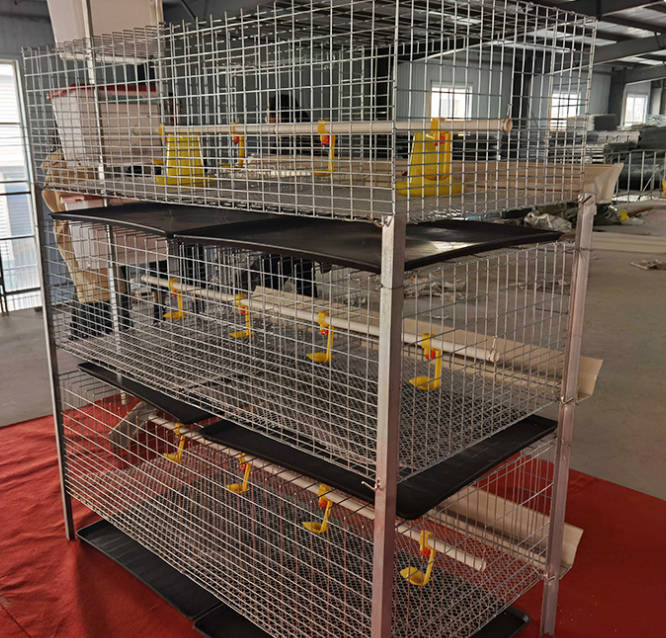
An A-type Layer Cage System may suit operations with straightforward house layouts and a practical automation plan. An H-type galvanized layer system is designed for intensive operations seeking to use vertical space and may be paired with integrated manure belts. The better choice depends on the building, working routines, local requirements, and investment priorities—not the configuration label alone.
Specify commercial cages around flock size, house dimensions, climate, and intended automation level. A custom poultry cage system may be appropriate when standard layouts do not suit building constraints or the planned workflow. For a large-scale farm, confirm that capacity assumptions allow for service access, equipment movement, and future operational changes.
Compare a layer cage system with broiler cages based on the birds and production goals they are designed to serve. A layer system must account for egg collection and movement through the house, while a broiler system must meet broiler management requirements. Ask the supplier to explain how the proposed design supports your production model.
Compare options beyond the initial investment. Include expected labor, maintenance access, operating costs, equipment life, and daily workflow. A lower purchase price may not represent better value if it creates extra handling work or makes routine servicing difficult.
Plan automation across feeding, climate, eggs, and manure
An overhead travelling feeding machine can form part of an automatic feeding system, distributing feed along cage rows and helping reduce manual work. Ask how feed delivery is adjusted, how the equipment moves through the house, and what routine checks are required to support reliable operation and limit feed waste.
An Environmental Control System regulates conditions such as temperature and ventilation. Depending on the configuration, controls may also manage cooling, humidity, and fresh-air exchange. Settings should reflect the house design, climate, flock, and management practices. Confirm which sensors and controls are included and how staff can monitor system status and respond to alerts.
Three-tier cage arrangements can be combined with automatic egg-picking equipment as an integrated Egg Collection System—a conveyor system that collects eggs automatically. Product information states an egg breakage rate below 0.5% and a single-building capacity of up to 50,000 birds. Treat these figures as claims to verify: ask the manufacturer to explain the test basis, operating conditions, egg specifications, and assumptions behind the capacity. You can also review the supplier’s discussion of precision automation and egg handling as part of your evaluation.
For farms or processing plants automating the next stage, an automatic egg tray packing machine can handle egg counting and tray loading. Confirm how it integrates with the collection line, which formats it supports, and whether its operating speed matches the rest of the workflow.
An automatic manure removal system can support cleaner house conditions and reduce routine handling. For systems with manure belts, ask about belt materials, removal intervals, inspection access, and maintenance requirements. Select connected equipment that works with the house rather than automating individual tasks without considering their interactions.
Evaluate return on investment with evidence
Build a farm-specific business case that accounts for labor, feed use, egg handling and breakage, energy, maintenance, flock performance, and equipment life. Include installation, staff training, spare parts, and house modifications. Make the assumptions visible so you can test how results change if production, labor costs, or operating conditions differ from expectations.
Claims in articles and product materials need context. A cited article on automated cage systems reports a 90% figure; establish exactly what it measures, its baseline and study conditions, and whether it applies to your farm before treating it as a performance or return-on-investment claim. A sustainability review of poultry farming in the Republic of Korea reports a 0.8% figure. Verify its meaning and relevance before using it to support a purchasing decision.
Request customer references and data from farms with comparable production models, house layouts, and operating conditions. Ask suppliers to show how projected savings are calculated and distinguish measured results from estimates. This guide to calculating poultry automation ROI can help frame your questions, but base the decision on transparent assumptions and evidence relevant to your operation.
Automation may improve profitability by reducing routine labor or supporting a more consistent workflow, but outcomes vary. Avoid promises of uniform savings or production gains. A credible supplier will help you evaluate the opportunity without presenting a headline figure as a guarantee.
Assess the supplier’s ability to deliver the project
Evaluate a chicken cage manufacturer or supplier on engineering capability, material specifications, production quality control, customization, spare-parts availability, and after-sales support. If possible, review the factory’s quality processes and ask how finished equipment is inspected before shipment.
The supplier should explain how the production line coordinates with automatic poultry equipment, controls, conveyors, and house infrastructure. Ask who is responsible for checking component compatibility, resolving interface issues, and supporting the system after commissioning.
For export projects, confirm shipping configuration, documentation, local compliance considerations, installation guidance, and access to technical support in your location. Make sure the proposal states what is included in the equipment supply and what requires local contractors or additional services.
If you are planning a Turnkey Poultry Farm, define the scope before signing. A Turnkey Poultry Farm is a complete poultry farm delivered as a full package. Specify whether the project includes design, equipment supply, installation, commissioning, staff training, and performance verification. Agree on responsibilities, milestones, acceptance criteria, and the process for managing project changes.
Request a project-specific configuration review
A useful preliminary recommendation starts with the details that shape the system: flock capacity, house dimensions, production type, location, target automation level, and budget range. Share these with a poultry equipment manufacturer so the review addresses your building and operating plan rather than relying on a generic package.
Ask for a configuration review comparing A-frame or H-frame layer systems, feeding and egg collection options, environmental controls, and manure handling. A qualified partner should explain the trade-offs, identify installation considerations, and show how the proposed poultry housing system fits your production goals.
Want to know more?
Get in touch with us for more information about our services and products.