
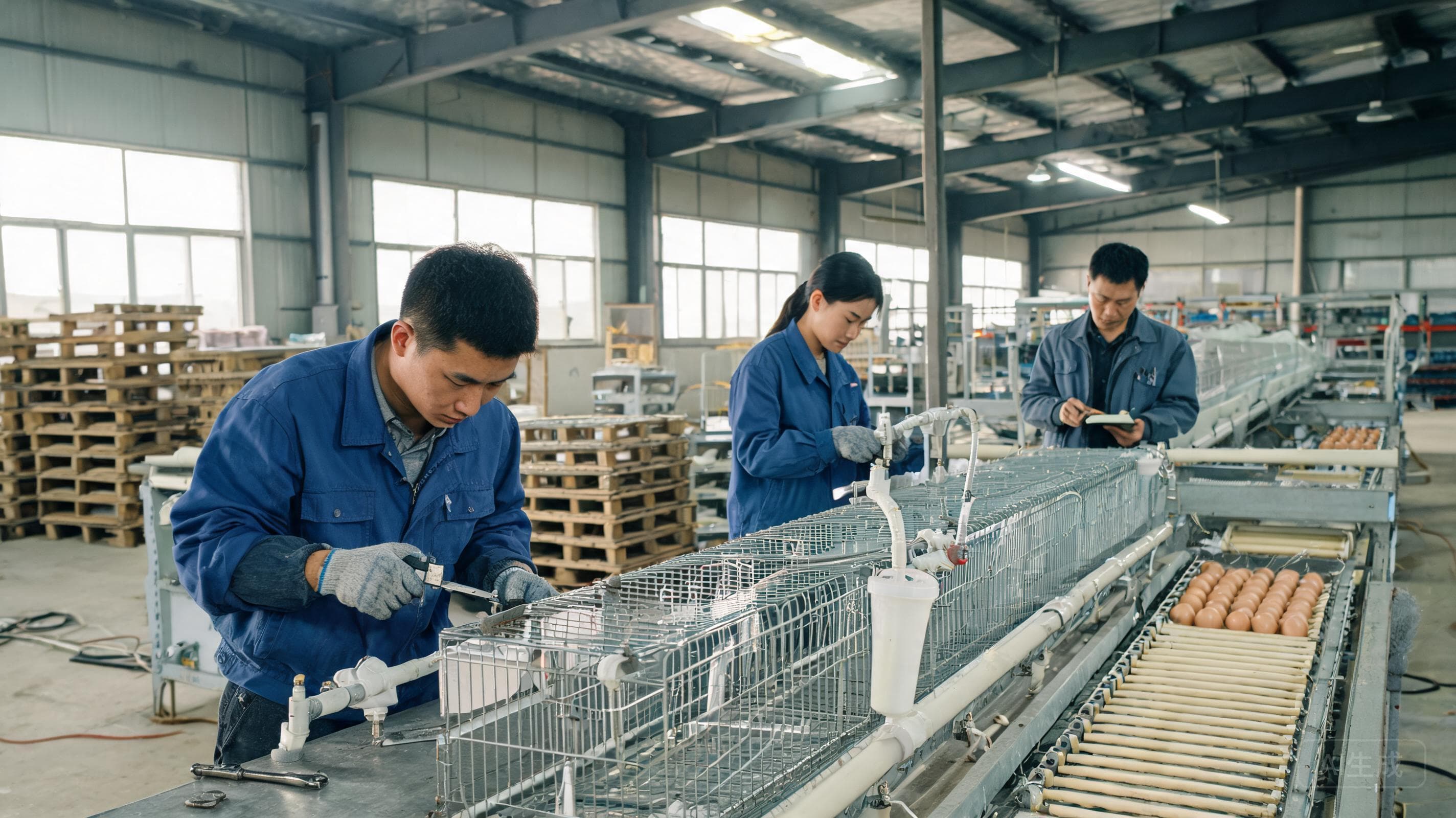
How to Choose an Automatic Chicken Cage Production Partner for a More Efficient Poultry Farm
Start with the pressures facing poultry producers
Poultry producers balance labor and operating costs, consistent production, and equipment that fits their buildings and flock plans. Because cage equipment shapes daily workflows, the right choice depends on more than purchase price.
Changing welfare expectations and interest in cage-free production can make long-term decisions more complex. Research on Indian producers, for example, highlights the challenges of evaluating a transition. Assess cage-based housing against local regulations, customer requirements, and your business goals; it is not a universal fit.
Automation can streamline routine feeding, drinking, egg handling, and manure removal. It delivers value when the system fits the housing, management capacity, regulations, and production model. Define these conditions before comparing suppliers.
Define production goals before specifying a Poultry Cage System
Before comparing commercial chicken cages or requesting a custom Poultry Cage System, document your target flock size, house dimensions, bird type, labor availability, and expansion plans. These factors shape cage configuration, equipment capacity, building layout, and the required level of automation.
Confirm that the equipment suits the intended birds and production purpose. A Layer Cage System supports egg production and typically integrates egg collection. A broiler cage system is designed for meat production and has different operating and equipment requirements. Check applicable welfare rules and market expectations before specifying a cage system.
Consider how your housing may need to adapt as regulations, customer requirements, or business plans change. Map the required integrations: automatic feeding, nipple drinking lines, an Egg Collection System, automatic manure removal, and an Environmental Control System. Planning these components together helps prevent equipment conflicts and costly changes.
Compare equipment configurations for different farm scales
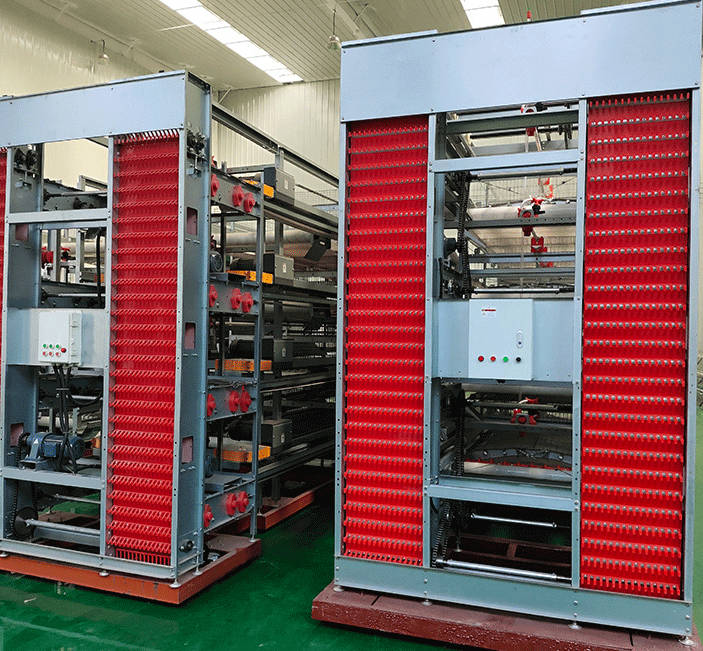
For a farm targeting around 5,000–6,000 birds, assess a stacked layer cage configuration with galvanized wire and a stepped, three- or four-tier design. Group or single-row installation may suit different house layouts. Confirm capacity and aisle access against your building drawings rather than relying on a product description alone.
For medium and large layer operations, an H-type galvanized Layer Cage System can offer vertical stacking with galvanized components, feed troughs, nipple drinkers, and manure belts. Ask how tier count, row spacing, and belt arrangement affect access, cleaning, ventilation, and maintenance.
Large-scale projects may call for stacked equipment with automated feeding, drinking, and manure removal. Check whether the layout fits the proposed house and whether rated capacity reflects the intended bird type, stocking plan, and operating conditions.
For integrated egg handling, review three-tier automatic egg collection equipment for modular expansion and stated capacity of up to 50,000 birds per building. Treat supplier claims, including an egg breakage rate below 0.5%, as specifications to verify under agreed operating conditions. Clarify the measurement method, egg type, belt speed, and acceptance criteria before purchase.
When feed must reach multiple rows and tiers, compare an overhead travelling feeding machine. For egg transfer, assess a stacked Egg Collection System with a vertical elevator that moves eggs to central and cross conveyors. The right configuration depends on house geometry, throughput, and downstream workflow.
Evaluate the complete production line—not just the cage
A chicken cage production line should be planned as an integrated Poultry Cage System. Cage rows, feeding, drinking, egg handling, manure removal, and environmental controls need to work together at the required capacity.
An Automatic Chicken Cage is a fully automated cage system with feeding, drinking, egg collection, and manure removal. Ask the manufacturer for layout drawings, equipment specifications, utility requirements, capacity assumptions, and a clear installation plan.
If you are seeking a Turnkey Poultry Farm, confirm which services are included: design, manufacturing, shipping, installation, commissioning, and staff training. Suppliers may define turnkey scope differently, so document inclusions, exclusions, and responsibilities. For an overview of how automation may affect operating costs and capacity, review automation ROI beyond labor alongside your project assumptions.
Use market signals as context, not as a substitute for project analysis

Market reports and research can frame industry changes, but they do not predict a specific farm’s results. UGA Research News coverage of Lilong Chai’s cage-free poultry research reports a 70% figure. Before citing it, confirm what the figure measures, the study context, and whether it applies to your production model. Do not present it as a farm-level outcome or investment return without verification.
Likewise, the 48.0% figure in the Poultry Farming Equipment Market report and the 4.2% figure in the Poultry Cages Market To 2035 report should only be cited with their original definitions, dates, and market segments. Neither represents a guaranteed equipment return.
Research on poultry robotics describes opportunities as well as implementation challenges. Assess reliability, integration with existing equipment, maintenance requirements, and staff capability. Automation is most valuable when the farm can support it operationally, not simply when a product offers advanced features.
Build a practical business case and supplier checklist
Compare total installed cost—not just purchase price—with expected labor requirements, feed management, egg handling, maintenance, service life, and planned capacity. This full-cost approach to poultry automation ROI can help identify expenses that are easy to overlook, including installation, utilities, spare parts, and downtime.
Ask for material specifications and corrosion-resistance details, especially for industrial cages in humid or corrosive environments. Verify references, spare-parts availability, service response times, commissioning support, and compatibility with existing equipment.
Request documented performance assumptions for capacity, egg handling, feed delivery, and manure removal. Agree in advance how installation and acceptance will be measured. For export orders, confirm destination-market standards, shipping requirements, and local installation conditions with the supplier.
A dependable poultry equipment manufacturer should explain how its proposed farm automation system fits your layout and operating plan—not simply provide a product list. Request drawings and specifications so your team can review the complete system before committing.
Turn the equipment shortlist into a farm-specific proposal
To move from comparison to a workable design, share your flock targets, house dimensions, location, bird type, and automation priorities with a manufacturer or supplier. These details help the supplier recommend a configuration tailored to your facility.
Depending on your production model, request a proposal for a Layer Cage System, an automatic egg layer system, or a broader large-scale poultry farm system. Confirm that it covers equipment scope, layout, capacity assumptions, installation, commissioning, training, and ongoing support.
Before making a commitment, request a layout, capacity plan, and itemized proposal. Review each against your regulations, operating requirements, and investment criteria.
Want to know more?
Get in touch with us for more information about our services and products.