
Transforming Poultry Production: How Automation Solves Your Biggest Efficiency and Labor Challenges
Introduction: The Poultry Producer’s Balancing Act
As a poultry producer, you’re stuck in a relentless balancing act: juggling inconsistent feed distribution that leads to uneven bird growth, grappling with labor shortages in high-intensity processing areas, and struggling to scale—whether you’re running a conventional operation or transitioning to cage-free. These aren’t just day-to-day headaches; they’re threats to your bottom line, flock health, and ability to keep up with a market that demands more, faster. Every variable in your process—from how much feed each bird gets to how many eggs survive manual collection—eats into profits and limits your growth. But here’s the good news: modern automatic poultry equipment isn’t just a “nice-to-have”—it’s a proven way to take back control, slash waste, and build an operation that grows with you.
The Hidden Costs of Stagnation: Why Status Quo is Holding You Back
Let’s talk numbers—because the cost of doing nothing is higher than you think. Labor alone devours 25% or more of your operational budget, according to industry trends. Manual egg collection? It’s costing you 15-20% of your yield in breakage. And that 20% variability in bird growth? It translates to inconsistent marketable output that buyers penalize you for. But the damage goes deeper: outdated systems are linked to higher mortality rates and worse feed conversion efficiency—whether you’re raising layers or broilers. And here’s the kicker: as competitors adopt automated poultry farming solutions, your margins will shrink faster than an overheated flock. Staying with manual processes isn’t “safe”—it’s a one-way ticket to falling behind.
From Chaos to Control: The Automation Revolution in Poultry Farming

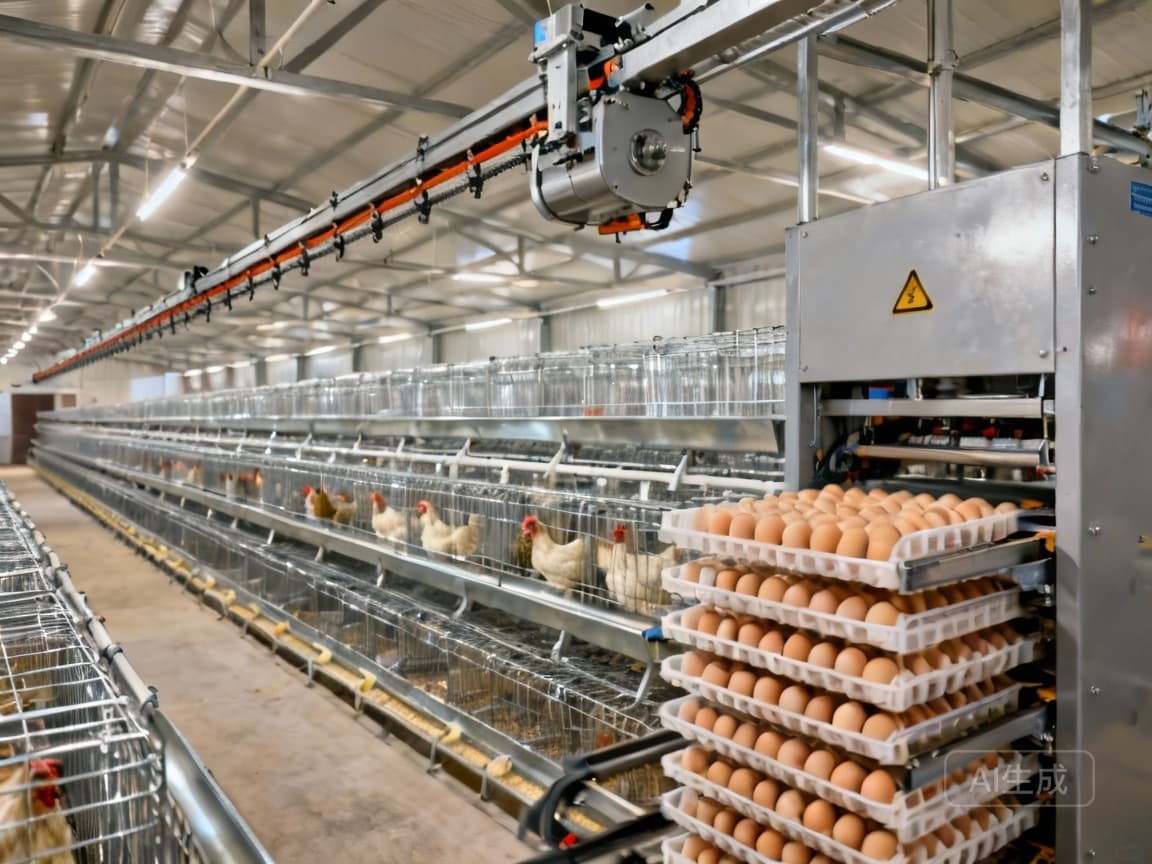
Automation isn’t just about replacing workers—it’s about reimagining your entire operation as a cohesive, data-driven system. Modern poultry farm automation systems integrate feeding, egg collection, environmental control, and cage design into a seamless workflow that eliminates variability, cuts costs, and boosts flock performance. It’s a shift from reacting to problems (like a sudden drop in egg production) to preventing them (with real-time feed adjustments and climate control). For example: an automatic feeding poultry system doesn’t just drop feed—it delivers the exact amount each bird needs, at the right time, synced to their growth stage. A stacked egg collection system doesn’t just pick up eggs—it moves them gently, reducing breakage by half. And when these systems work together? You get an operation that runs like clockwork—so you can focus on growth, not fire-fighting.
5 Critical Systems That Deliver Immediate ROI: From Feeding to Egg Collection
Let’s get specific—these five systems are the backbone of a profitable, scalable poultry operation, and they deliver results you can see in weeks, not years:
Overhead Travelling Feeding Machines
Inconsistent feed distribution is a profitability killer—one bird gets too much, another too little, and suddenly you’re dealing with uneven growth and wasted feed. Overhead Travelling Feeding Machines fix this with automated, uniform delivery: galvanized steel construction that lasts for years, adjustable outlets for precise portioning, and integration with central control panels to match flock growth stages. The results? A 40% reduction in labor (goodbye to manual feeding shifts), a 10% improvement in feed conversion (less feed, more growth), and zero variability in how much each bird eats. For commercial chicken cages—whether you’re raising layers or broilers—this system is a game-changer.
Stacked Egg Collection Systems for Layer Cages
Manual egg collection is slow, inefficient, and costly—up to 20% of eggs break before they even reach the packing line. Stacked Egg Collection Systems replace this chaos with vertical elevator technology: plastic egg carriers with anti-collision spacing to prevent cracks, galvanized steel frames for durability, and motorized speed control synced to egg belts. The payoff? 95%+ collection efficiency, 50% less breakage (that’s thousands of extra eggs per month), and 30% lower labor intensity—perfect for medium to large commercial chicken cages. If you’re tired of throwing away profitable eggs, this system is non-negotiable.
Scalable Cage Systems for Every Operation
One-size-fits-all cages don’t work—your operation is unique, and your equipment should be too. That’s why scalable cage systems are a must: Compact stacked egg chicken cages (5000-6000 bird capacity) for growing farms, with a stepped design for easy access and quick installation; H Type Galvanized Layer Chicken Cage Systems for medium to large operations, featuring hot-dip galvanized construction (rust-proof for decades), integrated manure belts, and compatibility with full automation; and Large stacked egg chicken equipment for industrial poultry cages—fully automated feeding, drinking, and manure removal that handles high-volume production without skipping a beat. No matter your size, these systems grow with you.
Poultry House Environmental Control Systems
Heat stress, humidity swings, and poor air quality are silent killers—they reduce feed conversion, lower egg production, and increase mortality. Poultry House Environmental Control Systems stabilize your barn’s climate with tunnel fans, evaporative cooling pads, and intelligent controllers that adjust in real time. For layers, this means consistent egg production even in summer; for broilers, it means faster growth with less feed. The numbers speak for themselves: 10-15% better feed conversion, fewer heat-related deaths, and a flock that’s uniform from day one. This isn’t just “comfort”—it’s profit.
Integrated Poultry Cage Systems
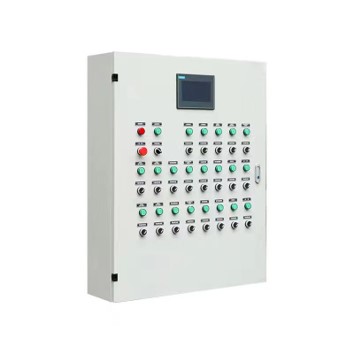
The biggest mistake producers make is buying siloed systems that don’t work together. Integrated poultry cage systems combine H Type cages, overhead feeding machines, stacked egg collectors, and environmental control into a single, turnkey solution. The benefits? Less installation complexity (no more hiring three different contractors), seamless operation (one control panel for everything), and maximum efficiency (every system works toward the same goal). For custom poultry cage system designs—whether you’re building a new barn or upgrading an old one—this is the only way to get the most out of your investment.
Success Stories: Producers Who Transformed Their Operations
You don’t have to take our word for it—these producers turned automation into profits:
Case Study 1: Medium-Scale Layer Farm, China
A medium-scale layer farm was drowning in labor costs and inconsistent egg production. They upgraded to an H Type Galvanized Layer Chicken Cage System with an Overhead Travelling Feeding Machine. The result? 30% less labor (they cut two full-time positions), 25% higher egg output (from 12,000 to 15,000 eggs per day), and 18% lower mortality (thanks to better feed and climate control). For a farm of their size, that’s an extra $50,000 in annual profits—just from fixing variability and labor.
Case Study 2: Large Broiler Operation
A large broiler farm was losing 15% of their flock to heat stress every summer. They installed a Poultry House Environmental Control System with tunnel fans and evaporative cooling. The payoff? 40% fewer heat-related losses and a 12% improvement in feed conversion (they now need 1.6 lbs of feed per pound of bird, down from 1.8). For an operation processing 100,000 birds per year, that’s $30,000 in savings—every year.
Case Study 3: Cage-Free Transition Farm
A farm transitioning to cage-free was worried about losing efficiency while meeting welfare standards. They integrated compact stacked egg chicken cages with automated feeding and gentle egg collection. The result? 25% less manual labor (they didn’t have to hire extra staff for egg pickup) and zero compliance issues—all while maintaining their cage-free certification. For them, automation wasn’t just about profit—it was about staying competitive in a market that demands both efficiency and ethics.
Your Farm, Optimized: How to Get Started with Automation
Ready to stop struggling and start growing? Here’s how to build an automation plan that fits your operation:
Assess Your Unique Needs
First, map out your pain points: Do you spend too much on labor? Is inconsistent growth killing your margins? Are heat waves destroying your flock? Then, evaluate your farm size (compact vs. large scale) and flock type (layers vs. broilers). For example: a compact layer farm might prioritize a stacked egg collection system and automatic feeding, while a large broiler operation needs environmental control and integrated cages. The key is to focus on the systems that solve your biggest problems first—don’t try to automate everything at once.
Choose a Trusted Partner
Not all chicken cage manufacturers are created equal. Look for a partner with expertise in custom poultry cage systems—from design to poultry cage installation. They should understand your long-term goals, whether that’s expanding to export chicken cages or transitioning to cage-free. Avoid suppliers that push “one-size-fits-all” solutions—your farm is unique, and your equipment should be too.
Prioritize Integration
The worst mistake you can make is buying siloed systems that don’t work together. Always choose systems that work in tandem—like H Type cages with automatic manure removal systems and environmental control. Integration means fewer headaches, less maintenance, and maximum ROI. Remember: automation is about working smarter, not harder.
Conclusion: The Future of Poultry is Automated – Start Today
Automation isn’t a trend—it’s the only way to survive and thrive in a market that demands more, faster. It cuts labor dependency, eliminates production variability, and gives you the scalability to grow—whether you’re a compact farm looking to expand or a large operation wanting to boost efficiency. The worst part? Every day you wait, your costs go up and your competitors pull ahead. Don’t let stagnation kill your business.
Ready to build a poultry operation that works for you? Contact our team for a farm assessment to design a custom automatic poultry cage system tailored to your needs—because the future of poultry is automated, and the time to start is now.
Want to know more?
Get in touch with us for more information about our services and products.