
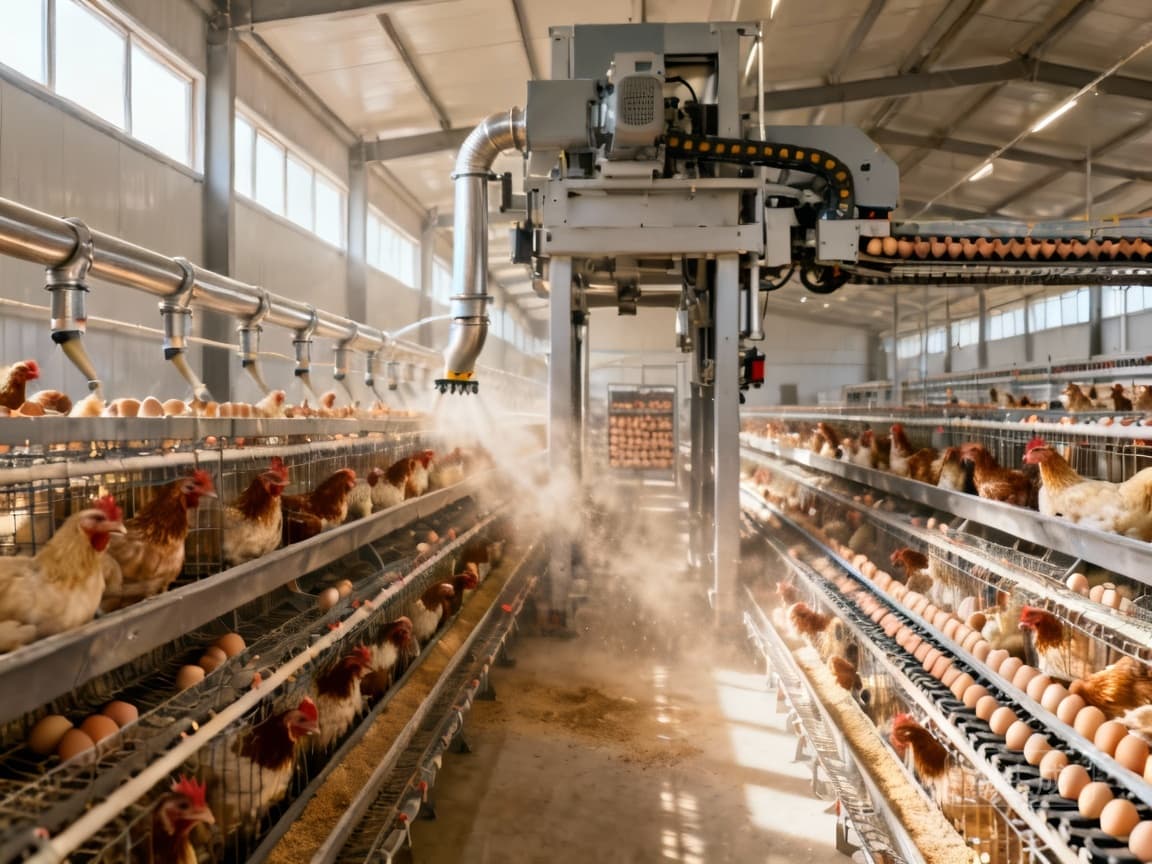
Automation ROI: 60% Lower Maintenance & 10X Capacity in Poultry Farming #58
Redefining Automation Investment Assessment in Poultry Farming
Traditional ROI calculations for poultry farming automation equipment consistently underestimate the true financial benefits by focusing solely on upfront costs and basic efficiency gains. Based on comprehensive industry analysis and real-world implementation data, we've identified three critical blind spots in conventional assessment methods that significantly impact long-term profitability.
The Three Critical Blind Spots in Traditional ROI Calculations
Most poultry farmers evaluate automation investments based on immediate cost savings and basic efficiency improvements. However, this approach misses three crucial dimensions that substantially impact long-term financial returns:
- Maintenance cost time value: Hot-dip galvanized coatings reduce maintenance costs by 60%, but traditional calculations fail to account for the compound effect over a 15-20 year equipment lifecycle
- Capacity elasticity premium: H-Type smart cages increase capacity from 3,000 to 30,000 birds per unit, but market analyses don't quantify the insurance value this flexibility provides during demand fluctuations
- Technical obsolescence risk mitigation: Modular designs allow gradual upgrades, significantly reducing complete system replacement risks
Market projections indicate the automated poultry farm sector will reach USD 384.10 million in 2025, growing at a CAGR of 12.20% to reach USD 682.98 million, highlighting the accelerating adoption of advanced automation solutions.
Data-Driven Decision Framework for Modern Poultry Operations
Implementing a comprehensive assessment framework requires understanding both immediate operational benefits and long-term strategic advantages. The poultry farming equipment market, valued at USD 4.5 billion in 2024, is projected to grow at 4.7% CAGR through 2034, reaching USD 7.1 billion, indicating sustained investment in technological improvements.
Lifecycle Cost Analysis Model
Effective investment decisions require evaluating three cost categories that impact total ownership expenses:
- Initial investment: Equipment procurement, installation, and training costs
- Operational expenses: Energy consumption, maintenance requirements, and labor expenditures
- Risk mitigation costs: Technology obsolescence protection and capacity mismatch prevention
The automatic equipment segment is forecasted to contribute 48.0% of market revenue share in 2025, with a projected CAGR of 6.3%, driven by the growing need to reduce manual intervention and maintain consistent environmental controls.
Technical Selection Framework
Equipment selection should balance immediate operational needs with long-term scalability requirements:
- Material specifications: Hot-dip galvanized Q235 steel demonstrates 60% maintenance reduction with 15-20 year lifespan versus 5-8 years for traditional materials
- Layout efficiency: Stacked configurations versus stepped designs for optimal space utilization
- Automation integration: Balancing automation levels with operational complexity management
Real-World Implementation: Case Studies and Best Practices
Examining successful implementations provides practical insights into achievable results and implementation methodologies.
Jiayu County Ecological Layer Farm Success Story
This medium-scale operation achieved remarkable results through comprehensive automation implementation:
- Stocking capacity: 65,000 birds with fully automated systems including wet curtain fans, automatic feeders, egg collectors, and belt manure cleaners
- Production output: 3.8 tons of eggs daily with 2.4 million RMB in daily sales revenue
- Investment scale: 10 million RMB total investment with integrated ecological farming approach
The operation demonstrated conversion efficiency of 0.058kg/bird/day, highlighting the productivity improvements possible through integrated automation systems.
Qingdao Damu Man Machinery Financial Performance Insights
Analysis of leading equipment providers reveals important financial stability indicators:
- Cash flow performance: 134.616 million RMB operating cash flow first half 2021 versus 601.928 million RMB full-year 2020
- Seasonal patterns: Clear cyclical patterns requiring strategic cash flow management
- Service capability: Financial health directly impacts long-term customer support and service delivery capabilities
Equipment providers' financial stability directly impacts customers' long-term operational reliability and access to ongoing technical support and maintenance services.
Implementation Roadmap and Risk Management Strategy
Successful automation implementation requires structured planning and comprehensive risk mitigation approaches.
Phased Implementation Approach
Based on successful case studies, we recommend a modular implementation strategy:
- Assessment phase: Comprehensive operational analysis and requirement definition
- Pilot implementation: Limited-scale deployment to validate technology and processes
- Full-scale deployment: Systematic rollout with continuous performance monitoring
- Optimization phase: Continuous improvement based on operational data analysis
Comprehensive Risk Mitigation Measures
Proactive risk management ensures sustainable operational performance:
- Supplier viability assessment: Financial health evaluation using standardized checklists
- Technology upgrade pathways: Clear roadmap for future capability enhancements
- Local support infrastructure: Established maintenance and support networks
- Training programs: Comprehensive operator and maintenance staff development
Future Outlook and Strategic Considerations
The poultry cages market, valued at USD 1.5 billion in 2024, is forecasted to grow at 7.5% CAGR from 2026-2033, reaching USD 2.8 billion by 2033. This growth is driven by increasing productivity requirements, enhanced animal welfare standards, and ongoing labor shortages across the industry.
Asia-Pacific represents the fastest-growing region, particularly China and India, where increasing poultry consumption and technological adoption are driving equipment modernization. The development of IoT-enabled cage monitoring systems represents the next frontier in operational optimization, providing real-time data analytics for improved decision-making.
Successful automation investment requires moving beyond traditional ROI calculations to embrace comprehensive lifecycle analysis, strategic capacity planning, and proactive risk management. By implementing the frameworks and methodologies outlined here, poultry operations can achieve sustainable competitive advantages through technological excellence and operational efficiency.
Want to know more?
Get in touch with us for more information about our services and products.