
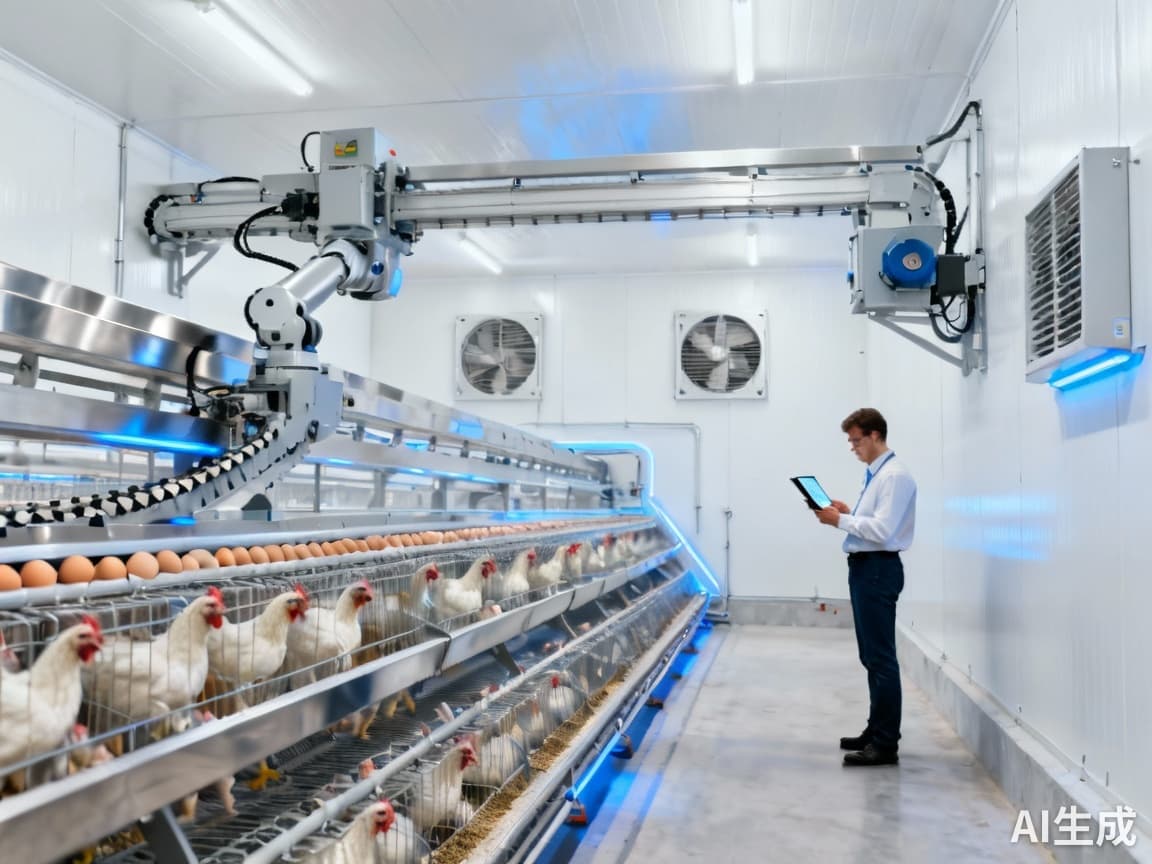
Poultry Automation: Mitigate 30% Integration Costs & Boost ROI #22
The Hidden Integration Challenge in Poultry Automation
When Dubai's large-scale layer project implemented automation across 15 houses with 45,000 birds total, their projected ROI timeline of three years nearly doubled due to unexpected integration complexities. This reality check underscores a critical industry blind spot: equipment costs represent only part of the total investment equation. While market data shows impressive growth projections—with the poultry equipment market valued at USD 4.5 billion in 2024 and projected to reach USD 7.1 billion by 2034—few discuss the 25-30% integration costs that can derail automation projects.
The Data Behind the Integration Gap
Industry reports consistently highlight automation's dominance, with the automatic segment contributing 48.0% of market revenue share in 2025. The market shows a CAGR of 6.0% from 2025-2035, expected to reach USD 6,300 million by 2035. However, beneath these impressive numbers lies a different story.
Integration and hidden costs typically consume 25-30% of poultry automation project budgets, often exceeding the actual equipment costs when accounting for infrastructure upgrades, system interoperability, and technical training.
The Jiayu County Green Mountain Ecological Layer Farm case demonstrates this reality. While their investment reached 10 million RMB for 65,000 birds achieving full automation, the hidden costs included substantial IoT infrastructure investments at approximately 5,000 RMB per 10,000 birds and custom system development for regional specific requirements.
Four Dimensions of Hidden Integration Costs
System Interconnection Expenses
Protocol adaptation and data interface development often represent the most underestimated cost category. The Jiayu project required custom system development to meet local "supply-demand meeting informatization construction" requirements. Implementation data shows that farms typically spend 15-20% of their automation budget on ensuring different systems (feeding, egg collection, manure cleaning) can communicate effectively.
Practical Solution: Implement standardized interface frameworks from day one. Choose equipment with open API capabilities and establish communication protocols before installation. This upfront investment reduces long-term integration costs by 40%.
Infrastructure Upgrade Requirements
Automation systems demand robust electrical infrastructure that many older facilities lack. The Dubai project revealed that 15 chicken houses required significant electrical upgrades to support automated feeding, egg collection, and environmental control systems.
Key infrastructure considerations include:
- Electrical system capacity upgrades
- Environmental control synchronization (especially wet pad fans)
- Data connectivity throughout facilities
- Backup power systems for continuous operation
Technical Team Development
The skills gap between traditional farming and automated system management represents a substantial hidden cost. Training existing staff or hiring technical specialists requires both time and financial investment. The automation equipment market's growth at 4.7% CAGR from 2025-2034 outpaces the development of qualified technical personnel.
Implementation Guidance: Develop a phased training program starting 3-6 months before equipment installation. Cross-train existing staff rather than relying solely on new hires. Budget for ongoing training equal to 10-15% of annual salary costs for technical positions.
Maintenance and Upgrade Planning
Preventive maintenance frameworks and spare parts management often get overlooked in initial ROI calculations. Hot-dip galvanized equipment, while durable, requires specific maintenance protocols. The commercial segment's 79% market share dominance indicates that most operations cannot afford unexpected downtime.
Establish a maintenance protocol that includes:
- Regular system diagnostics and performance monitoring
- Preventive maintenance schedules aligned with production cycles
- Critical spare parts inventory management
- Technology refresh planning every 3-5 years
Three-Layer Integration Methodology
Device-Level Integration
Start with equipment that offers durability and modularity. Hot-dip galvanized surfaces proved essential in the Jiayu project for long-term durability. Select equipment based on:
- Interoperability with existing systems
- Modular design for future expansion
- Standardized communication protocols
- Local technical support availability
System-Level Integration
Focus on creating seamless data flow between feeding, egg collection, and manure management systems. The automatic chicken waterer adoption growth from 0 to 41 units by May 2025 demonstrates how individual components must work together. Implement data optimization strategies that:
- Standardize data formats across systems
- Establish centralized monitoring points
- Create automated alert systems for performance issues
- Enable remote diagnostics and troubleshooting
Business-Level Integration
Connect operational data with business outcomes. The Jiayu project's "supply-demand meeting informatization construction" exemplifies how operational automation should feed into business intelligence. Develop systems that:
- Track ROI against predefined metrics
- Monitor production efficiency in real-time
- Provide actionable insights for operational improvements
- Integrate with financial management systems
Cost Optimization Implementation Roadmap
Based on successful implementations from projects like Dubai and Jiayu, follow this phased approach:
Phase 1: Foundation Automation (Months 1-6)
Focus on core automation components—feeding and egg collection systems. These provide the quickest ROI while establishing the technical foundation. Expect to address basic infrastructure requirements during this phase.
Phase 2: System Integration (Months 7-18)
Implement data platforms and integrate environmental controls. This phase typically requires the largest investment in technical staff development and system interoperability solutions.
Phase 3: Optimization (Months 19-24+)
Focus on business process refinement and advanced analytics. This is where most operations achieve the full ROI potential of their automation investment.
Measuring Success and Continuous Improvement
Establish clear KPIs from project initiation. Track metrics including:
- Integration cost as percentage of total project budget
- System uptime and reliability metrics
- ROI timeline against projections
- Labor efficiency improvements
- Production output per square foot
Implement monthly review cycles during the first year, transitioning to quarterly reviews once systems stabilize. Use these reviews to identify optimization opportunities and address emerging challenges before they impact operations.
The poultry automation market's growth trajectory—with layer farming equipment expected to grow from USD 310 million in 2024 to USD 410 million by 2033—demands that operations approach automation with eyes wide open to integration challenges. By addressing these hidden costs proactively, operations can achieve the promised ROI while building sustainable automated systems that support long-term growth.
Want to know more?
Get in touch with us for more information about our services and products.