
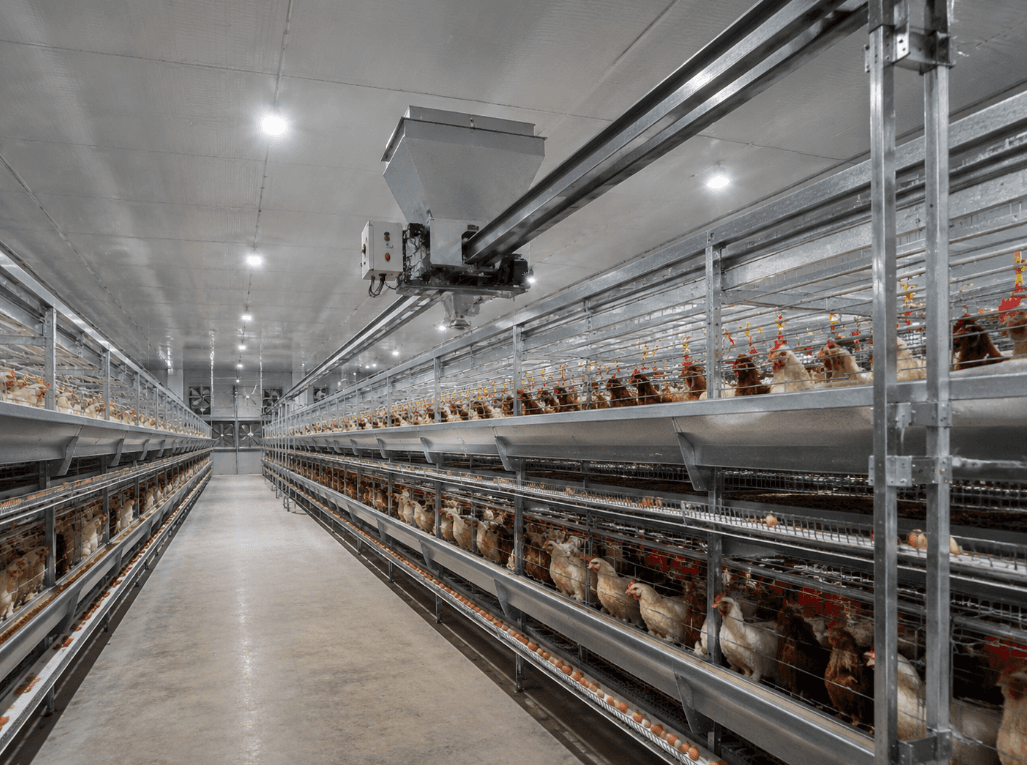
How Many Poultry House Workers Are Needed After Automatic Feeding?
Installing an automatic feeding system can reduce the manual work required in a poultry house, but it does not completely eliminate the need for workers.
The actual number of workers depends on the number of birds, poultry house layout, cage system, automation level and whether workers also handle egg collection, manure removal, cleaning and flock management.
Automatic feeding mainly replaces the work of carrying feed, pushing feed carts and manually distributing feed along the cage rows. Workers are still needed to monitor the equipment and manage the birds.
Typical Labor Requirements
The following figures are general planning references. They are not fixed staffing standards because every poultry farm has a different layout and management system.
| Farm size | Feeding‑related labor after automation |
|---|---|
| 1,000–5,000 birds | Part‑time or shared labor may be sufficient |
| 5,000–10,000 birds | One worker can usually monitor feeding while handling other tasks |
| 10,000–30,000 birds | One worker may supervise the feeding system, with additional workers for flock care and cleaning |
| 30,000–50,000 birds | Staffing depends on the number of houses and the automation level |
| More than 50,000 birds | A farm team is normally required for maintenance, flock management and daily operations |
These figures refer only to feeding‑related work. They do not represent the total number of workers required for the entire poultry farm.
What Work Can Automatic Feeding Reduce?
An automatic feeding system can reduce:
- Carrying feed bags through the poultry house;
- Pushing feed carts along long cage rows;
- Manually filling each feed trough;
- Repeated walking between cage rows;
- Uneven feed distribution caused by manual operation;
- The physical workload of feeding workers.
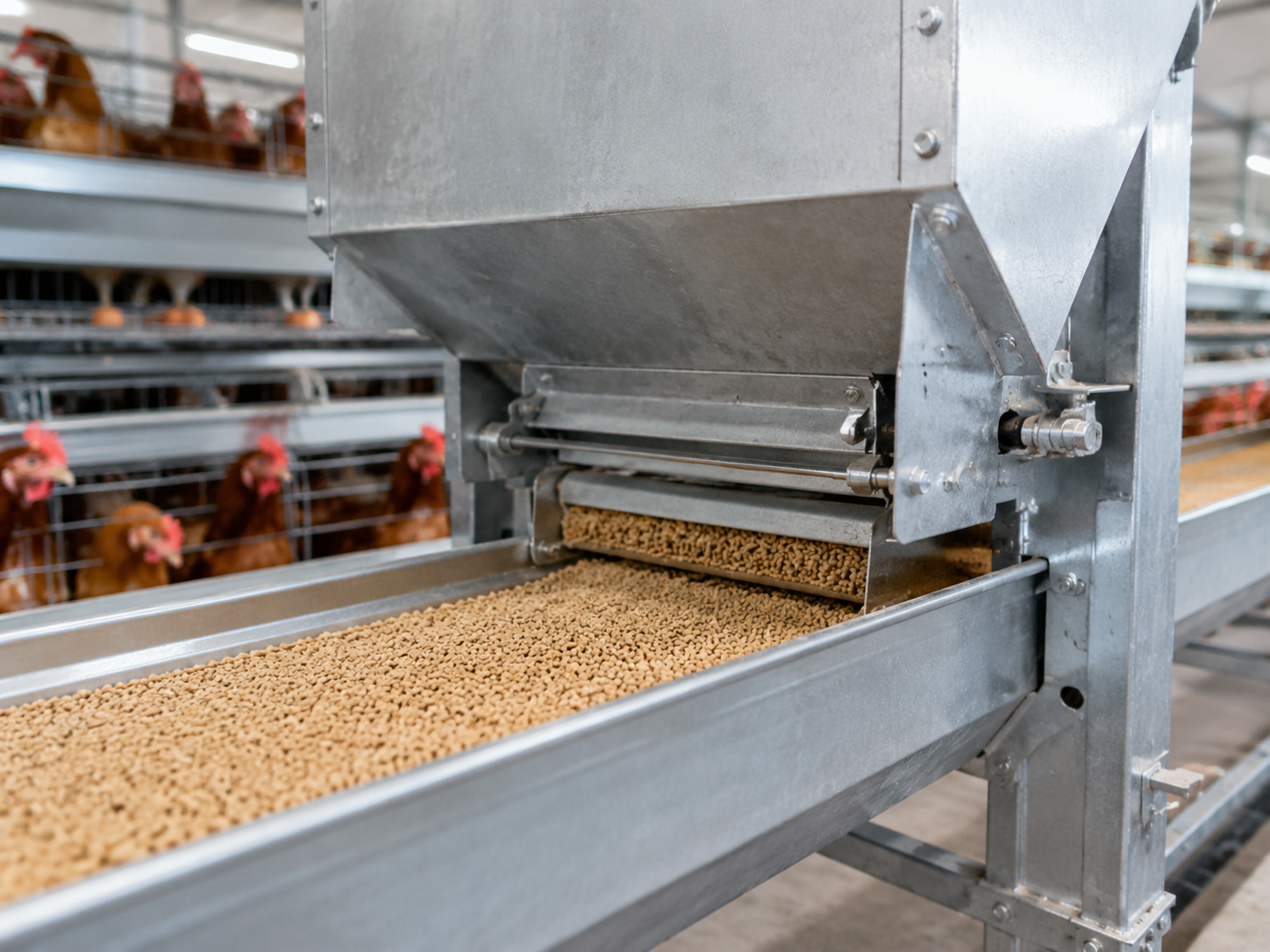
An overhead travelling feeding machine can move along the cage rows and distribute feed at a controlled speed. This is especially useful for medium and large layer farms.
What Tasks Still Require Workers?
Workers are still important after automatic feeding is installed. Their main responsibilities include:
- Checking whether feed reaches every cage row;
- Monitoring feed levels and feed quality;
- Inspecting motors, rails, cables and switches;
- Removing feed blockages;
- Checking feed troughs and outlets;
- Observing bird behavior and feed consumption;
- Cleaning spilled feed and dust;
- Performing basic maintenance;
- Handling equipment problems and emergency feeding.
Automatic equipment reduces repetitive labor, but it also makes regular inspection important. If a motor stops or a feed outlet becomes blocked, some birds may not receive enough feed.
Farm Layout Affects Staffing
The number of workers is influenced not only by the number of birds but also by the farm layout.
A single poultry house with straight cage rows is generally easier to manage than several separate houses. Farms with multiple buildings may need additional workers for inspection and movement, even when all houses use automatic feeding.
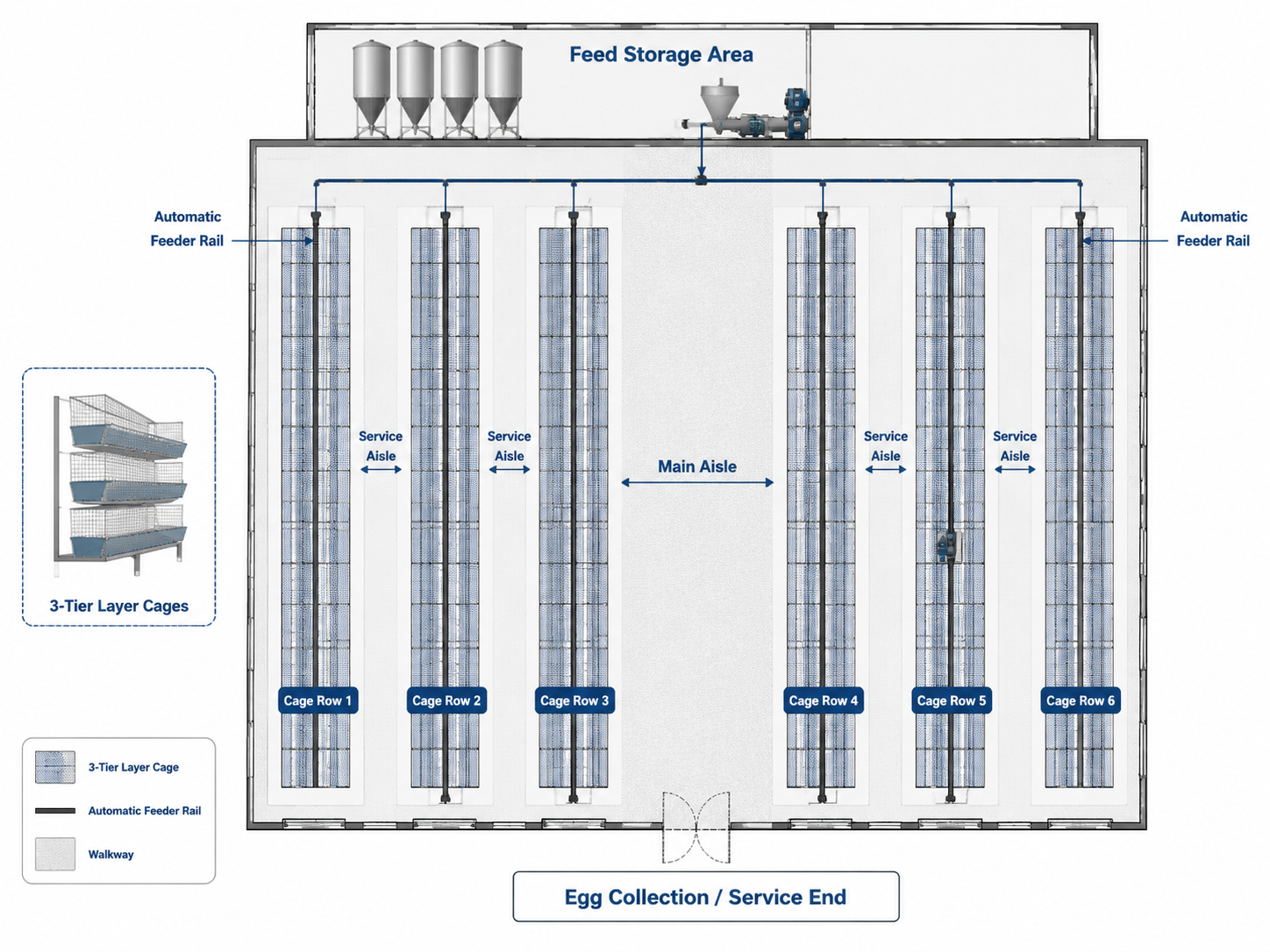
Before choosing a system, buyers should consider:
- Number of poultry houses;
- House length and width;
- Number of cage rows and tiers;
- Distance between feed storage and the houses;
- Number of feeding machines;
- Available power supply;
- Whether workers also manage egg collection and manure removal.
How to Plan the Right Feeding System
Before requesting a quotation, send the manufacturer:
- Target bird capacity;
- Chicken type;
- Poultry house dimensions;
- Cage layout;
- Number of rows and tiers;
- Local power supply;
- Desired feeding schedule;
- Required level of automation.
The manufacturer can then recommend a suitable feeding machine and explain the operating and maintenance requirements.
Frequently Asked Questions
1.Can one worker operate an automatic feeding system?
One worker may be able to monitor the feeding process in a small or medium‑sized poultry house while also performing other duties. The final arrangement depends on the farm layout and daily workload.
2.Does automatic feeding eliminate poultry farm labor?
No. It reduces manual feeding work, but workers are still required for flock observation, cleaning, maintenance, egg collection, manure removal and emergency response.
3.How often should the feeding system be checked?
Workers should inspect the system during or after each feeding cycle. They should check feed distribution, motors, switches, rails and feed outlets.
---
Automatic feeding can reduce the time and physical labor required to distribute feed, but the farm still needs trained workers to monitor the equipment and manage the birds.
Send us your bird capacity, poultry house dimensions and cage layout.
Want to know more?
Get in touch with us for more information about our services and products.