
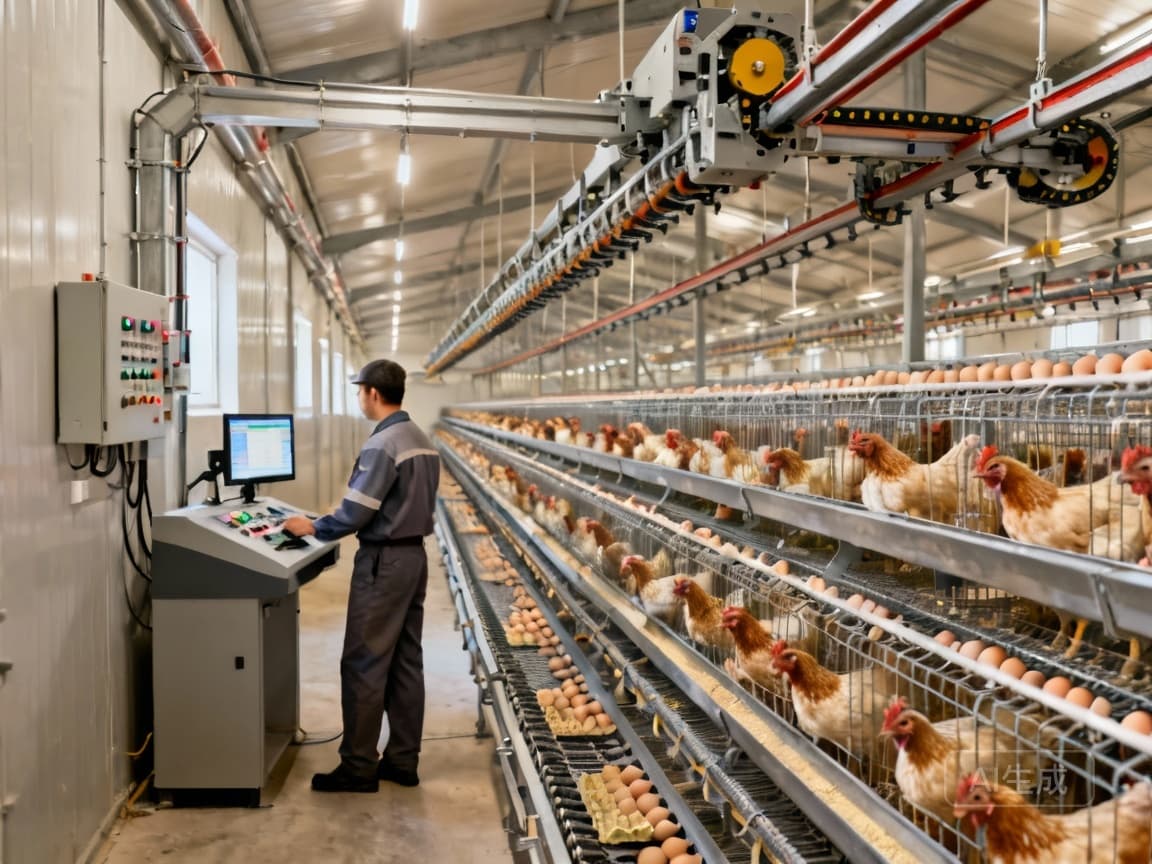
Automated Poultry Cage Systems
Poultry Farm Automation
Poultry Production ROI
Automatic Chicken Cages
Layer Cage Systems
How Automated Poultry Cage Systems Address Key Production Pain Points and Drive Commercial ROI
2026-01-19
1511 views
0 likes
How Automated Poultry Cage Systems Address Key Production Pain Points and Drive Commercial ROI
The Frustration of Inconsistent Poultry Production—And Why Automation Is the Answer
- Poultry farmers face a silent crisis: variability in feed distribution, uneven bird growth, high egg breakage, and rising labor costs that eat into profits—pain points highlighted in industry research (Özentürk, 2024) and echoed by producers like Run Chicken Inc.
- Manual and outdated systems aren’t just inefficient—they’re a barrier to scaling: inconsistent conditions lead to lower egg quality, higher mortality, and wasted resources that hit your bottom line hard.
- The good news? Automated poultry cage systems aren’t just ‘technology’—they’re a strategic solution designed to eliminate these pain points and turn variability into predictability. This shift is core to modern poultry farm automation systems that streamline operations.
The Hidden Costs of Staying Manual: Why Outdated Systems Are Costing You More Than You Think
- Labor inefficiency: Manual feeding, egg collection, and manure removal can consume 30–50% of a farm’s labor budget—with human error leading to inconsistent feed portions or broken eggs. Transitioning to an automatic poultry equipment setup directly tackles this, as detailed in our analysis on how automated layer cages cut labor costs.
- Feed waste: Traditional barrow feeding wastes up to 15% of feed due to spillage or over-distribution, while automatic feeding poultry systems (like overhead travelling feeding machines) cut waste by 80% via precise, uniform delivery.
- Health and quality risks: Poor manure management (a top challenge cited in robotics research) leads to ammonia buildup, which stresses birds and reduces laying performance—costing farms thousands in lost production annually. An automatic manure removal system integrated into your poultry housing system is essential for mitigation.
How Automated Cage Systems Fix Pain Points—One Component at a Time
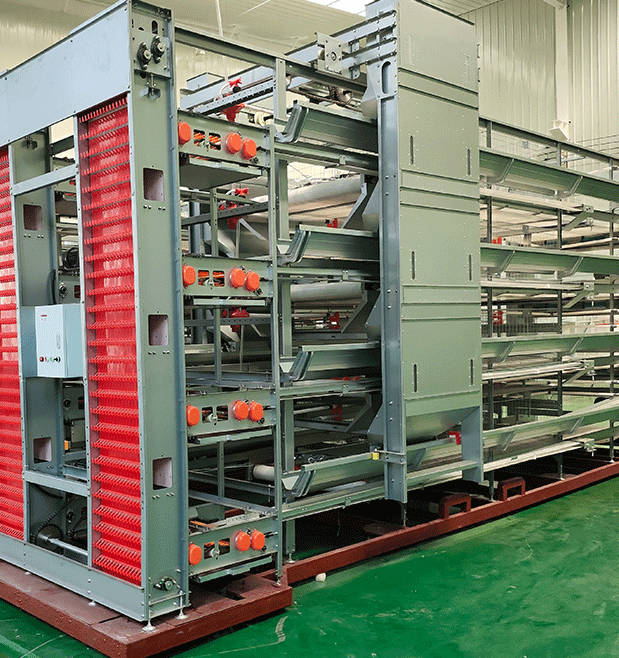
- Feeding: Overhead Travelling Feeding Machines eliminate waste by delivering precise feed volumes to every tier—critical for controlling feed conversion and ensuring uniform bird growth in any layer chicken cage system.
- Egg Collection: Stacked Egg Collection Systems (paired with Automatic Egg Tray Packing Machines) reduce breakage to <0.5%—a game-changer for farms losing revenue to damaged eggs. This precision automation boosts poultry efficiency significantly.
- Manure Management: Belt Manure Removal Systems cut labor and ammonia levels by automatically transporting waste to compost or biogas systems—improving bird health and farm sustainability.
- Environmental Control: Poultry House Environmental Control Systems maintain consistent temperature/humidity—key for reducing heat stress, mortality, and production variability.
- Cage Design: From H-type galvanized layer systems (for large-scale farms) to stacked stepped cages (for 5,000–6,000 birds), automatic poultry cages maximize space utilization while integrating all core functions—feeding, drinking, egg collection, and waste removal—in one system. Explore how vertical poultry automation boosts density for greater returns.
Real-World ROI: How Commercial Farms Are Doubling Down on Automation
- Industry data confirms the impact: farms using automated systems see a 48% share of the market and a 6.3% CAGR—with one top chicken cage manufacturer reporting $4.5 billion in revenue from turnkey and modular solutions. For a detailed breakdown, refer to our guide on poultry automation ROI with 48% market data.
- Case in Point: A large-scale farm using our three-layer vertical egg layer cage system (with automatic egg picking) increased capacity to 50,000 birds, cut egg breakage by 90%, and reduced labor costs by 40% in 12 months.
- Moderate-Scale Success: A medium-sized operation switched to our A-type chicken cage for layers (stepped tiers, simplified manure management) and lowered feed waste by 12% while increasing egg production by 15%—all with 2 fewer full-time workers.
Choosing the Right Automated System: Matching Your Farm’s Size, Goals, and Budget
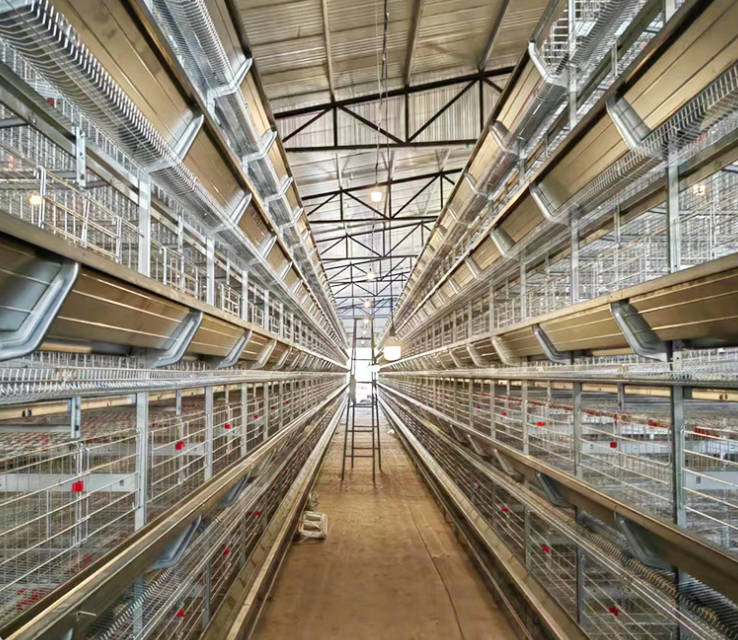
- Moderate-Scale Farms: Opt for A-type or stacked systems (5,000–6,000 birds)—cost-effective, easy to install, and ideal for upgrading from floor rearing with reliable chicken cage equipment.
- Large-Scale Operations: H-type galvanized or large stacked systems (up to 50,000 birds) offer modular expansion, turnkey poultry farm integration, and full automation—perfect for maximizing ROI at scale. These industrial poultry cages are designed for high-density output.
- Custom Needs: Our custom poultry cage systems let you tailor components (feeding, egg collection, environmental control) to your farm’s unique layout and production goals—no “one-size-fits-all” limitations.
- Installation: We handle end-to-end poultry cage installation, from design to setup—ensuring your battery cage system for poultry works seamlessly from day one.
Ready to Stop Losing Money to Inefficiency? Here’s Your Next Step
- Automation isn’t a distant dream—it’s a proven way to fix your biggest production headaches and grow your bottom line. But you don’t have to do it alone.
- Our Promise: We’ll work with you to audit your current processes, recommend the right system (from stacked cages to turnkey poultry farms), and deliver a ROI projection tailored to your farm.
- Take Action Today: Schedule a consultation with our team—we’ll provide a production efficiency audit to show you exactly how much you could save with automated poultry farming.
- Why Wait? The farms winning in 2024 are the ones investing in systems that eliminate variability, reduce labor, and boost consistency. Don’t get left behind.
Transform your poultry production with precision-engineered solutions—contact our team to discuss your automated cage system needs.
Want to know more?
Get in touch with us for more information about our services and products.