
Transforming Poultry Farming: How Automated Cage Systems Solve Labor, Efficiency, and Profitability Challenges
Introduction: The Pressing Challenges Facing Modern Poultry Producers
Today’s poultry farmers grapple with a trifecta of challenges: labor shortages plaguing labor-intensive tasks, rising feed costs squeezing margins, and biosecurity risks threatening flock health and productivity. According to the State of the Chicken Industry Report 2024, 90% of producers identify automation as a critical solution to these pain points, yet many struggle to navigate the complex landscape of poultry farming equipment.
As a leading chicken cage manufacturer with over [relevant experience] in designing custom poultry cage systems, we understand the unique pressures of scaling operations while maintaining profitability. This article explores how purpose-built automatic poultry equipment—from layer cage systems to fully integrated automation—can transform your poultry farm into a more efficient, resilient, and profitable enterprise.
The Case for Automation: Why Modern Poultry Farms Can’t Afford to Ignore It
Labor-intensive processes, from egg collection to manure removal, have long been a bottleneck for poultry producers. Industry insights highlight that automation is no longer optional but essential to address workforce gaps and rising labor costs, particularly in large-scale poultry farm systems.
Disease outbreaks and biosecurity risks, ranked among the top challenges in poultry farming, are mitigated by advanced poultry housing systems that reduce overcrowding and improve hygiene. Automated chicken cages with integrated environmental control systems create optimal conditions, lowering the risk of pathogen spread.
Feed cost fluctuations, another critical pain point, are managed through precision feeding systems in automated poultry cage setups. By minimizing waste and ensuring targeted nutrition, systems like the A Type Layer Chicken Cage System help farmers maintain consistent costs even amid market volatility—findings that align with automation’s ROI beyond labor, which includes density and energy savings.
Tailored Automated Cage Solutions for Every Farm Size and Goal
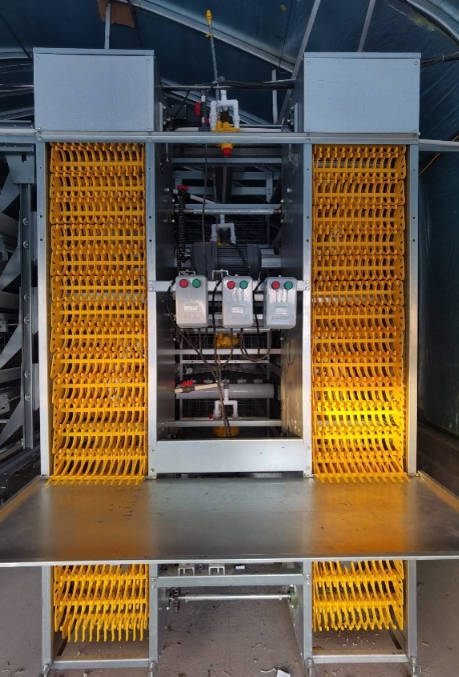
For medium-scale layer farms seeking an accessible path to automation, the A Type Layer Chicken Cage System delivers an economical solution. Its galvanized step-type battery cage design, with pyramid-shaped A-frame structure, simplifies manure management and maximizes ventilation—ideal for open or naturally ventilated poultry houses. Easy to install and inspect, it balances stocking density with affordability, making it perfect for farmers upgrading from floor rearing.
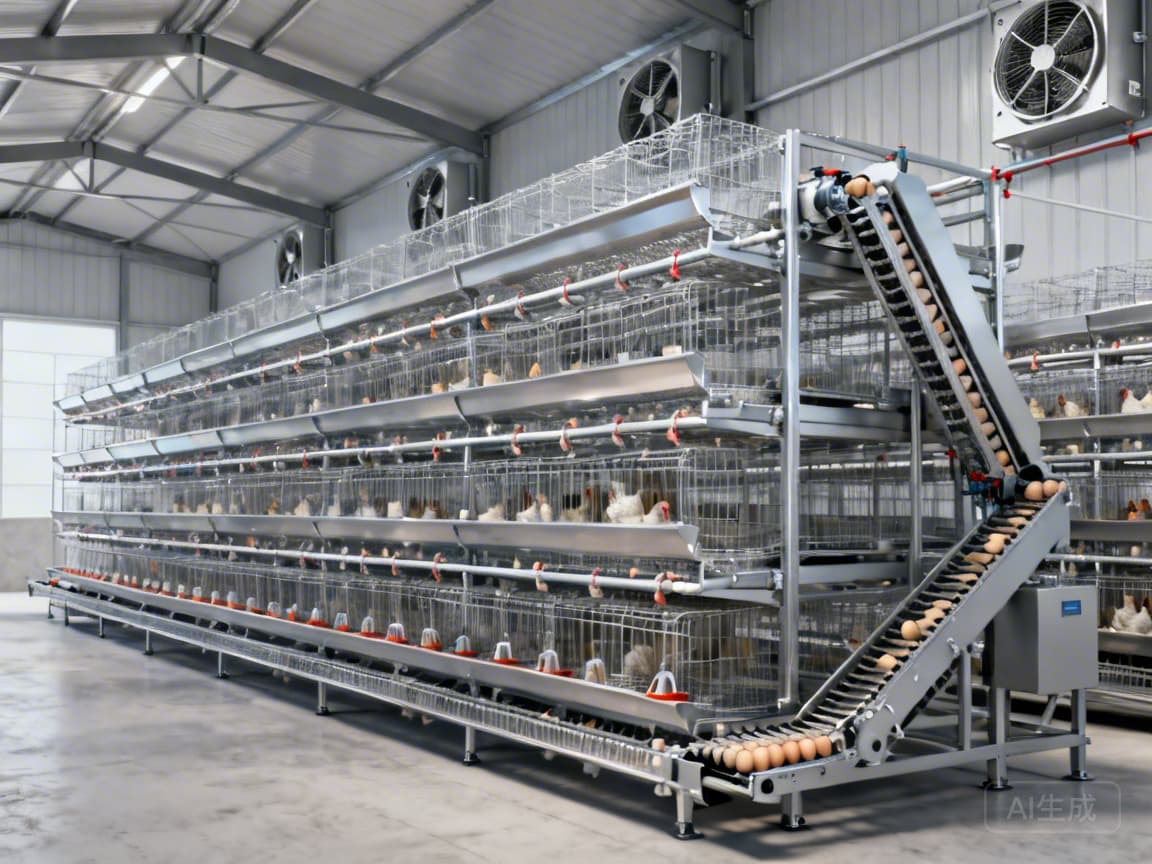
Large-scale operations demand next-level efficiency, which is where systems like the three-layer vertical automated chicken cage and large stacked egg chicken equipment deliver. These modular, multi tier systems integrate automatic feeding, drinking, and manure removal, supporting single-building capacities of up to 50,000 birds—performance metrics that mirror the 10x density and 60% lower operating costs achieved with vertical automation. The high-strength galvanized steel construction ensures durability, while modular expansion allows farms to scale as production grows.
Beyond Cages: Integrating Automation for End-to-End Farm Efficiency
Egg collection, a labor-heavy task, is revolutionized by the Chicken Farm Automatic Egg Picking Machine. With a breakage rate under 0.5%, this system smoothly collects eggs via conveyor belts, compatible with breeds like Hailan Brown and Roman Flour, and integrates seamlessly with vertical cage setups for large-scale poultry farm systems—results that validate precision automation’s 50% reduction in egg loss.
The Stacked Egg Collection System further enhances efficiency by automating egg transfer from tiered cages to central grading areas. Its galvanized steel frame and adjustable speed control reduce labor intensity while ensuring cleaner, more uniform eggs—critical for maintaining quality in commercial operations.
Completing the automation loop, the Automatic Egg Tray Packing Machine eliminates manual packaging bottlenecks. Made from stainless steel for food safety, it handles egg counting, arrangement, and tray loading with precision, reducing cracks and preparing eggs for retail-ready transport.
From Investment to ROI: Real-World Results with Automated Poultry Systems
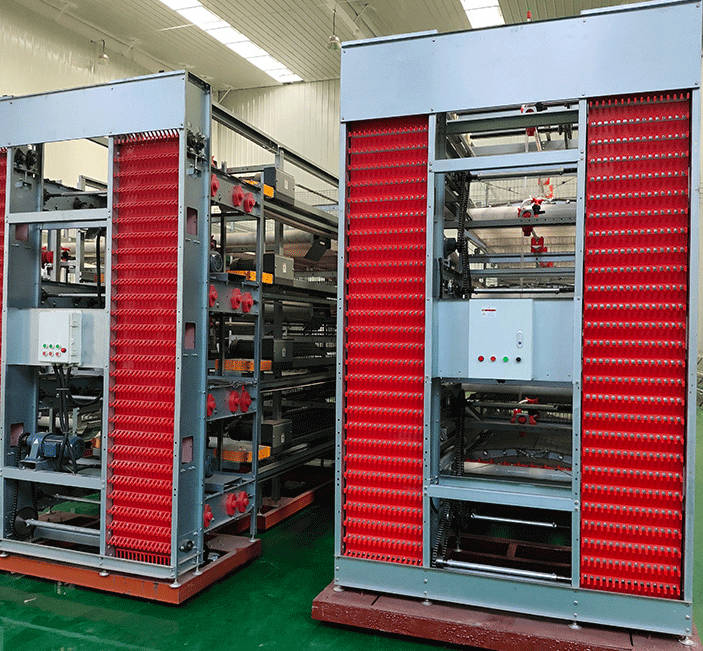
Leading poultry producers report transformative results with automated systems: a 48% increase in operational efficiency, reduced feed waste by up to 30%, and improved egg quality—key drivers of profitability cited in the State of the Chicken Industry Report 2024.
Turnkey poultry farm solutions, which bundle cage systems, automation, and environmental control, offer predictable ROI by minimizing setup delays and ensuring seamless integration—key factors in calculating poultry automation’s true ROI. For example, farms using the three-layer vertical automated cage system have seen payback periods as short as 18–24 months, driven by labor savings and higher egg output.
Custom poultry cage systems, tailored to specific farm layouts and breeds, further optimize results. Whether exporting chicken cages for international markets or designing battery cage systems for local conditions, personalized solutions ensure maximum productivity and adaptability.
Choosing the Right Partner: Why Your Chicken Cage Manufacturer Matters
Selecting a reputable chicken cage manufacturer with expertise in both equipment and poultry farm automation systems is critical. Look for suppliers with a track record in delivering turnkey solutions, from design to installation—such as those offering custom poultry cage systems that align with your farm’s scale and goals.
Quality matters: galvanized steel construction, corrosion resistance, and compliance with industry standards (e.g., for battery cage systems) ensure longevity and performance. A reliable manufacturer will also provide ongoing support, from installation guidance to maintenance, to keep your automated systems running smoothly.
Take the Next Step: Transform Your Poultry Farm with Automated Solutions
Whether you’re a medium-scale farmer upgrading to your first automated system or a large producer scaling operations, the right automated poultry equipment can solve labor challenges, boost efficiency, and increase profitability. From A Type layer cages to fully integrated vertical systems, the path to transformation starts with a conversation.
Contact us today to discuss your farm’s unique needs. As a trusted chicken cage supplier and poultry equipment manufacturer, we’ll design a custom solution that turns your challenges into opportunities—one automated cage system at a time. To get started, visit our contact page.
Want to know more?
Get in touch with us for more information about our services and products.