
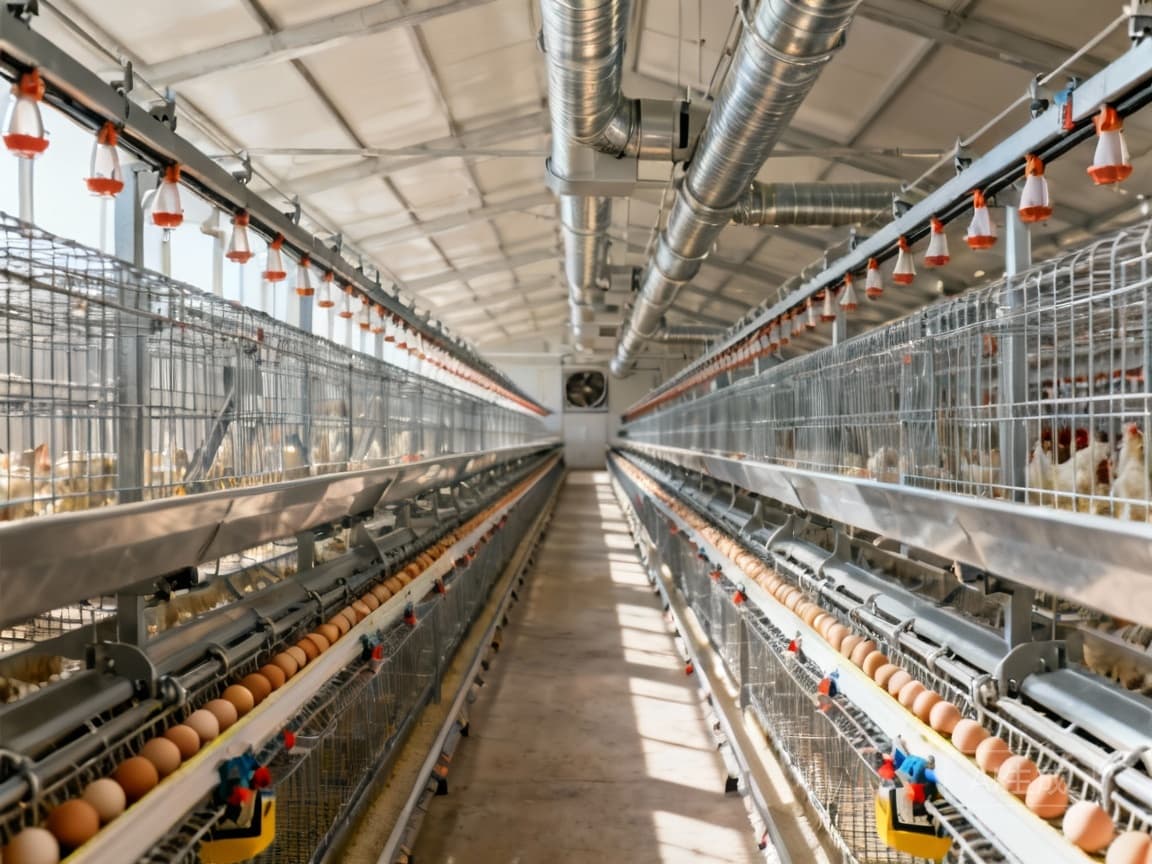
Transforming Poultry Production: How Automated Cage Systems Eliminate Inefficiencies and Boost Bottom Lines
The Frustration of Stagnant Poultry Production: You’re Not Alone
If you’re a poultry producer, you know the drill: days spent troubleshooting inconsistent feed distribution, watching uneven bird growth eat into profits, or picking up broken eggs that should have gone to market. You’re not alone—and those frustrations aren’t just “part of the job.” Industry research identifies these exact issues—plus labor-intensive manual tasks—as the top four barriers to profitability for poultry farms of all scales.
Every pound of wasted feed, every hour spent hand-collecting eggs, every bird lost to poor ventilation chips away at your margins. For operations with growth ambitions, it limits expansion; for large farms, it risks market share. But here’s the good news: automated poultry cage systems are engineered to fix these pain points—proven by innovators like Run Chicken Inc. and leading manufacturers who’ve turned chaos into control.
The Hidden Costs of Outdated Poultry Housing: Why ‘Good Enough’ Is Costing You
Let’s talk numbers: manual feed distribution wastes up to 10% of your feed budget. Labor for egg collection and manure removal? It eats 30% of operational costs. And inconsistent egg quality or breakage? That’s 0.5–2% of total production lost—money you’ll never get back.
But the hidden costs hurt even more. Outdated housing leads to slower bird growth and lower market share: studies show automated farms outperform manual operations by 15–20% in feed conversion ratios. Then there’s the “silent cost” of poor ventilation: heat stress or ammonia buildup drives up mortality rates and slashes laying performance. For a 10,000-bird farm, that’s hundreds of lost eggs and birds every month. To truly understand how much outdated systems are costing you, calculate your true ROI with market data that reveals the three biggest hidden expenses.
Why Automated Cage Systems Are Non-Negotiable for Modern Poultry Producers
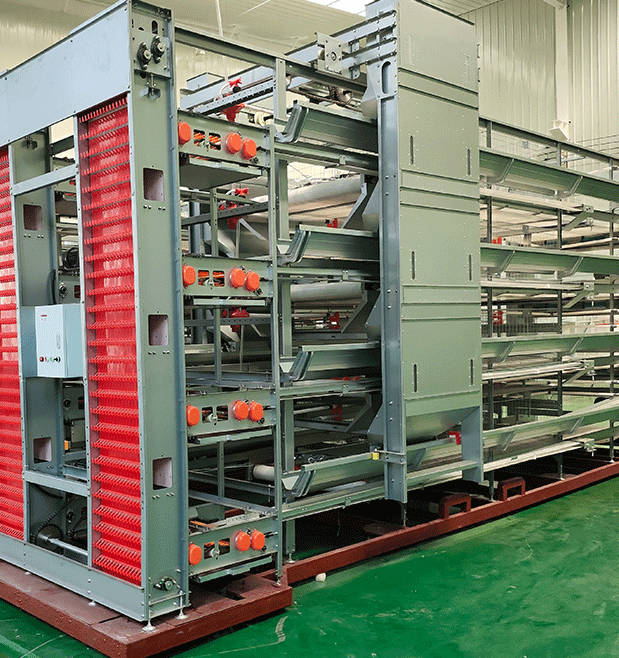
Automated cage systems aren’t just “cages with bells and whistles”—they’re integrated solutions that tackle every core pain point at once. Overhead travelling feeders reduce waste by 8–10% by delivering precise portions to every bird. Belt manure removal systems cut ammonia levels by 50%, improving air quality and bird health. Vertical elevator egg collectors lower breakage to under 0.5%—because eggs move gently, not by hand. And environmental control systems? They keep temperature, humidity, and ventilation consistent, so your birds thrive.
These systems aren’t trends—they’re necessities. A 2024 review by U Özentürk highlights robotics as the future of poultry farming, while the shift to large-scale, intensive production means automation is no longer optional. Let’s define the terms to set the record straight: an automatic chicken cage is a cage with built-in automation for feeding, egg collection, or manure removal. A layer cage system is designed specifically for egg-laying hens. And a turnkey poultry farm? That’s a complete, ready-to-run setup—cages, equipment, and support included. For farms aiming to maximize space, vertical poultry automation can boost density by 10x while cutting operating costs by 60%—a game-changer for large-scale producers.
Proven Results: How Farms Are Achieving 48% Market Share and 6.3% CAGR with Automation
The proof is in the profits. A leading Chinese automatic chicken cage manufacturer hit $4.5 billion in revenue and 48% market share—all by focusing on large stacked systems and turnkey solutions. For farms, the ROI is even clearer: those using H-type galvanized layer cages and stacked egg collection systems report 25% higher egg production and 18% lower labor costs within 12 months.
Take overhead travelling feeding machines: they cut feed waste so effectively that one farm saved $12,000 in feed costs in six months. Environmental control systems? They reduced mortality rates by 10% for a 50,000-bird operation—adding $25,000 in annual revenue. And automatic egg tray packing machines? They get eggs retail-ready 3x faster, so farms can capitalize on peak market demand—critical for reducing egg loss, which precision automation can cut by 50%. These aren’t “nice-to-haves”—they’re revenue drivers.
Choosing the Right Automated Cage System for Your Farm Size and Goals
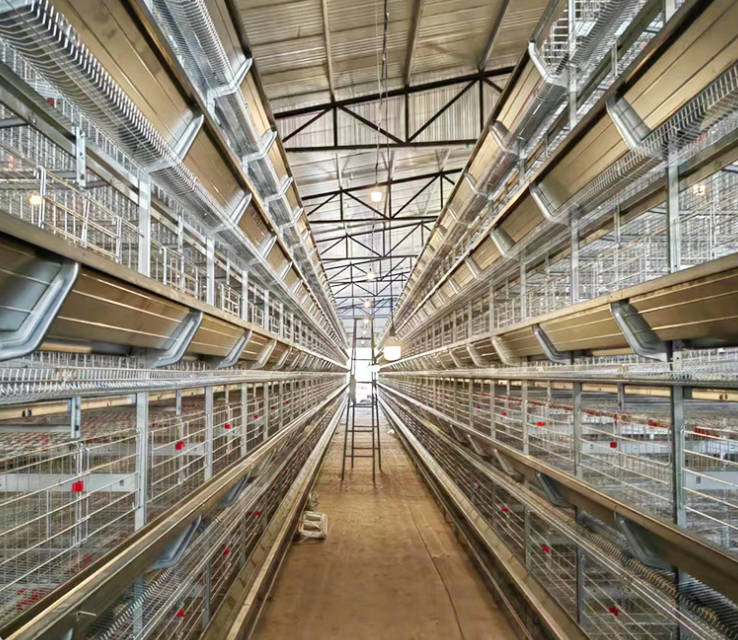
Automation isn’t one-size-fits-all. For medium operations (5,000–6,000 birds), space-efficient stacked egg chicken cages balance density with manageability. Growing farms? A-type layer systems are cost-effective, well-ventilated, and easy to scale. For large-scale producers aiming for high density, H-type galvanized systems are the gold standard—they’re automated, durable, and designed for 100,000+ birds.
But customization matters most. Manufacturers tailor cage systems to your breed: Hailan Brown hens need different spacing than Roman Flour, and your system should reflect that. And if you’re scaling quickly? A turnkey poultry farm takes the guesswork out—you get a system built for your goals, installed by experts, and ready to produce. No more piecing together equipment or troubleshooting on your own.
From Planning to Profit: How to Implement an Automated Cage System
Switching to automation doesn’t have to be overwhelming. The process starts with a consultation: a chicken cage supplier or poultry equipment manufacturer will assess your farm’s layout, breed, and goals. Next, customization: you pick the cage type (A-type? H-type?), automation features (overhead feeding? automatic egg collection?), and add-ons (environmental control?). Then installation: professional poultry cage installation minimizes downtime—most farms are up and running in 2–3 weeks. Finally, training: your team learns to manage the systems, from adjusting the overhead feeding machine to troubleshooting the egg collector.
Worried about cost? Many manufacturers offer financing for large-scale systems. Don’t want to go all-in at once? Phase upgrades—start with manure removal automation, then add feeding, then egg collection. And post-install support? It’s non-negotiable—look for suppliers who offer 24/7 help to keep your farm running smoothly. Worried about training your team? Automation doesn’t replace workers—it retools them. The future of poultry labor is about skill, not slog—and manufacturers provide the training to get your staff up to speed.
The Future of Poultry Farming Is Automated—Are You Ready?
The future of poultry farming is automated—and it’s here. The global market for automated poultry equipment is growing at a 6.3% CAGR, and even producers using non-cage systems are adopting automation to scale sustainably (Indian farms with alternative housing are already using automated feeding systems to boost efficiency). Seasonal automation strategies can help you capitalize on that growth even faster.
Delaying automation isn’t just a missed opportunity—it’s a risk. Competitors are already using automated systems to capture more market share, produce more eggs, and cut costs. Every day you wait is a day they pull ahead. But you don’t have to play catch-up. The right automated cage system can turn your frustrations into profits—and your farm into a leader.
Ready to transform your poultry production? Contact a trusted chicken cage manufacturer today to explore custom automated solutions tailored to your farm size and goals.
Want to know more?
Get in touch with us for more information about our services and products.