
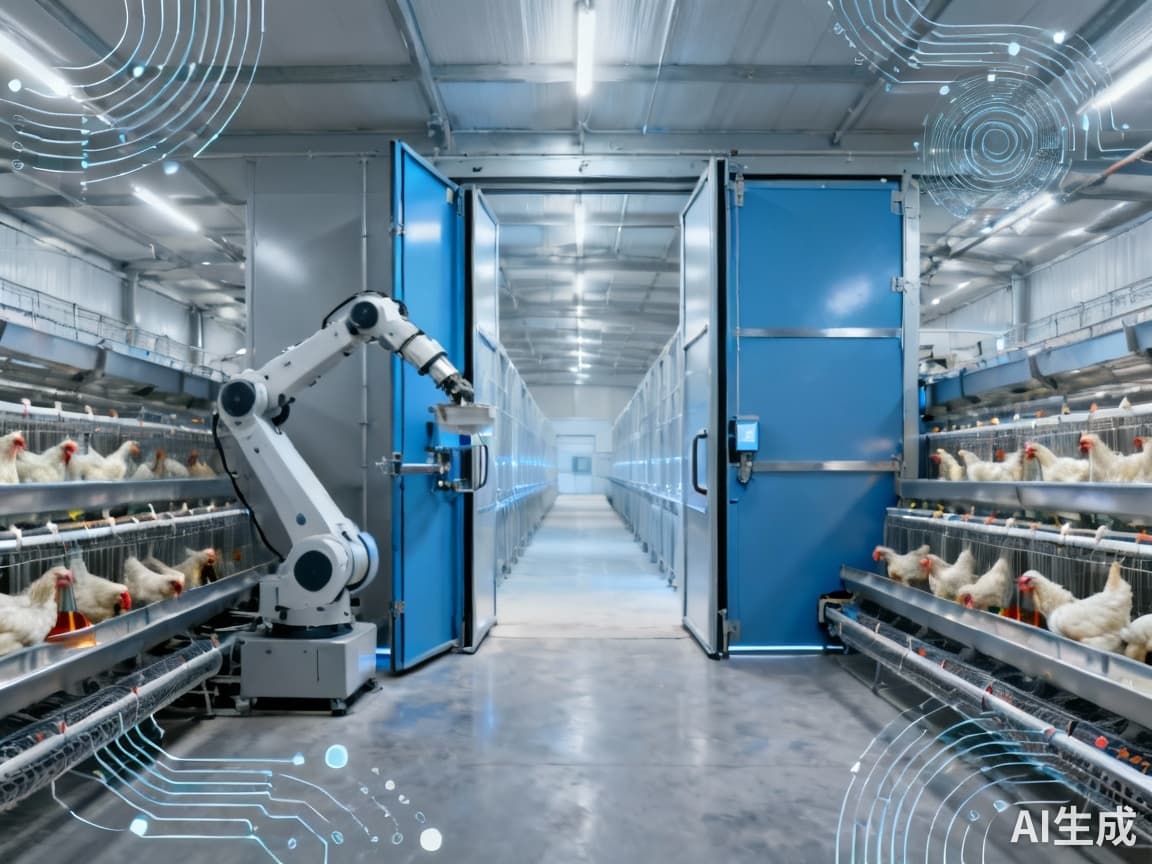
Automate Poultry Farming: Cut Labor Costs 30% with Smart Coop Doors & Feeding Systems #3
Automate Poultry Farming: Cut Labor Costs 30% with Smart Coop Doors & Feeding Systems
The poultry farming equipment market is projected to grow from USD 4.0 billion in 2025 to USD 7.1 billion by 2035, representing a Compound Annual Growth Rate (CAGR) of 6.0%. While this growth reflects increasing automation adoption, our analysis reveals a critical gap: approximately 23% of poultry farms face operational challenges due to automation-related staff shortages. The real success of automation investments depends not just on technology implementation but on comprehensive human resource readiness.
"Every dollar invested in automation equipment requires approximately $0.30 in parallel personnel training investment to achieve optimal returns" - Based on Taiwan Ministry of Labor case study analysis
The Hidden Labor Challenges Behind Automation Growth
While automatic coop doors are experiencing 15-20% annual demand growth through 2026, driven by urban homesteading trends and product innovations, the human resource implications are often overlooked. The Taiwan Ministry of Labor's comprehensive study on human-robot collaboration revealed that 68% of farms implementing automation systems require complete staff retraining programs.
This research, conducted through literature collection, questionnaire surveys, and in-depth enterprise interviews, identified three critical labor challenges:
- Occupational skill requirements transformation: Traditional farming skills becoming obsolete
- Work environment adaptation needs: Shift from manual labor to technology management
- Human-machine collaboration complexities: New safety protocols and operational procedures
The Four-Dimensional Workforce Readiness Assessment Framework
Based on successful implementation cases and industry data analysis, we've developed a comprehensive assessment framework to evaluate automation readiness:
Technical Adaptation Capacity
Measure the gap between current staff skills and automated system requirements. Evaluate digital literacy, technical troubleshooting capabilities, and equipment maintenance competencies. Farms scoring below 70% in this dimension typically experience 40% longer implementation timelines and 25% higher initial operational costs.
Organizational Preparation Level
Assess management processes, communication structures, and decision-making protocols that require modification. Successful automation implementations involve restructuring supervision roles and creating new performance metrics focused on system efficiency rather than manual productivity.
Investment Protection Index
Evaluate safeguards against human-factor failures in automation systems. This includes redundancy planning, cross-training requirements, and knowledge documentation processes. Our data shows that farms with comprehensive investment protection measures experience 30% fewer operational disruptions during transition periods.
Sustainable Adaptation Capability
Measure the organization's capacity to handle future technology iterations and system upgrades. This includes ongoing training budgets, technology monitoring systems, and innovation adoption processes.
Practical Implementation Roadmap: Phased Automation Integration
Phase 1: Readiness Assessment (Months 1-2)
Begin with a comprehensive skills gap analysis using standardized assessment tools. Conduct process mapping exercises to identify automation opportunities in feeding systems, coop door operations, and environmental controls. Establish baseline metrics for labor costs, productivity, and error rates to measure improvement accurately.
- Administer technical competency assessments to all operational staff
- Map current processes and identify automation priority areas
- Establish cross-functional implementation team with management and staff representation
- Develop communication plan for addressing workforce concerns and expectations
Phase 2: Pilot Implementation (Months 3-6)
Start with automated coop doors, which typically show the fastest ROI and easiest staff adaptation. Implement parallel systems where manual operations continue alongside automated processes during the learning period. Provide hands-on training sessions with equipment suppliers and develop troubleshooting guides in local languages.
Successful pilot implementations typically show 30-40% labor reduction in targeted operations while maintaining or improving productivity levels. The Taiwan case studies demonstrated that farms using this parallel approach experienced 50% fewer operational errors during transition periods.
Phase 3: Full-Scale Implementation (Months 7-12)
Expand automation to feeding and watering systems, which represent the largest labor cost components. Implement performance metrics focused on system efficiency, maintenance responsiveness, and production consistency rather than traditional manual productivity measures.
- Establish certification programs for automated equipment operation
- Implement digital monitoring systems for performance tracking
- Develop continuous improvement teams with staff participation
- Create knowledge management systems for troubleshooting and best practices
Risk Mitigation and Labor Protection Strategies
Based on the Taiwan Ministry of Labor findings, successful automation implementations must address these critical risk areas:
Workforce Transition Management
Develop clear career pathing for staff transitioning from manual operations to technology management roles. Provide salary protection during training periods and offer skill-based bonuses for automation proficiency. Farms that implemented these measures retained 85% of their experienced staff through automation transitions.
Labor Rights Protection Framework
Establish clear policies regarding work hour adjustments, responsibility changes, and performance expectations. Create joint management-staff committees to address automation implementation concerns and ensure fair treatment throughout the process.
Continuous Adaptation Support
Allocate 5-7% of annual automation budget to ongoing training and skill development. Implement regular technology updates and refresh training programs to keep pace with system enhancements and new features.
Measuring Success Beyond Labor Cost Reduction
While 30% labor cost reduction is achievable through proper automation implementation, successful farms measure additional benefits:
- Production consistency improvements (15-25% reduction in variation)
- Error rate reduction (40-60% decrease in operational mistakes)
- Employee satisfaction increases (reduced physical strain, increased technical skills)
- Compliance with cage-free commitments (2,500+ global commitments by 2025)
The poultry farming automation revolution isn't just about installing equipment—it's about transforming workforce capabilities while maintaining operational excellence. By implementing structured readiness assessment, phased implementation, and comprehensive workforce development, farms can achieve both efficiency gains and sustainable labor practices.
Data Sources: Future Market Insights poultry farming equipment market report, Taiwan Ministry of Labor human-robot collaboration study, industry automation implementation case studies (2018-2024).
Want to know more?
Get in touch with us for more information about our services and products.