
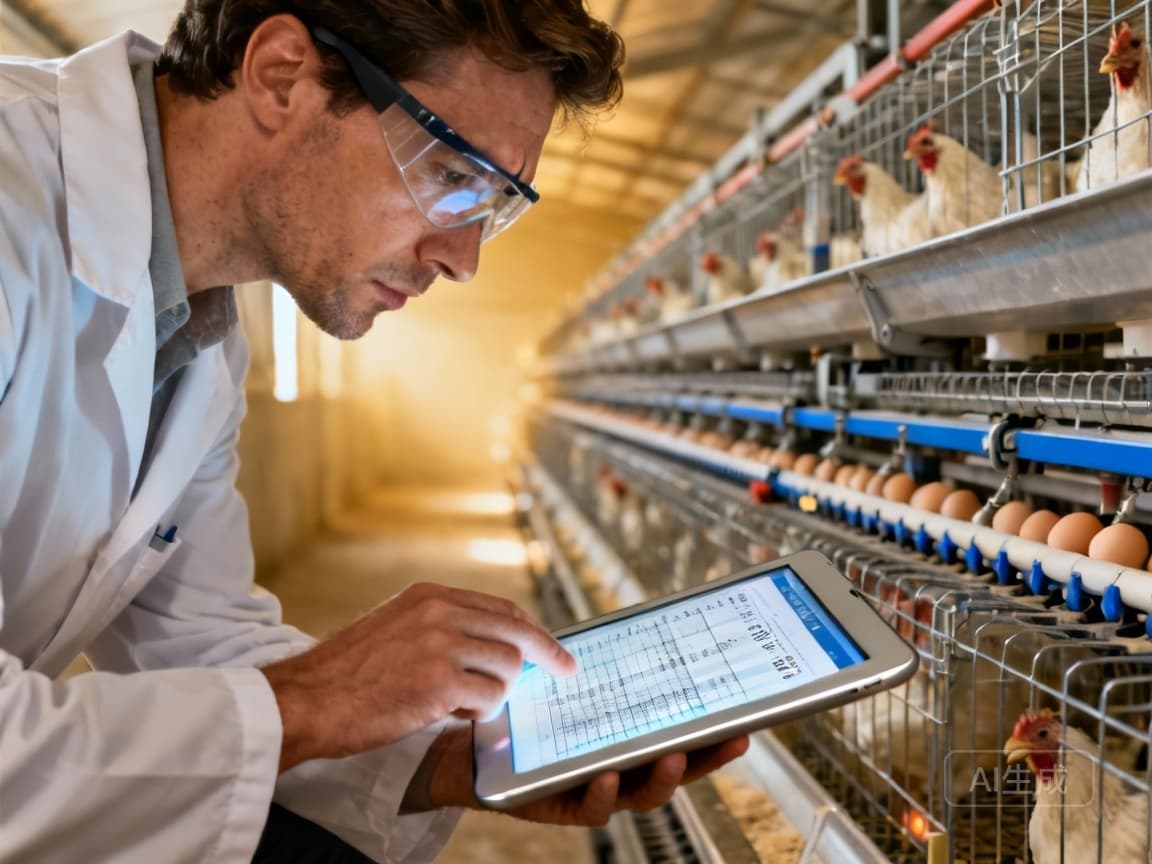
Poultry Automation ROI: Build Your Financial Model to Unlock 11% CAGR #71
Poultry Automation ROI: Build Your Financial Model to Unlock 11% CAGR
The global automated layer cage market is projected to surge from approximately $8 billion in 2024 to $21 billion by 2033, representing a compelling 11% Compound Annual Growth Rate (CAGR). For any poultry business operator, this statistic is more than just a market forecast; it's a siren call to modernize or risk being left behind. Yet, a critical gap exists between recognizing this macro-opportunity and executing a successful, profitable investment. As revealed in a case study by Shangpu Consulting, while a project's financials indicated good profitability, the specific Internal Rate of Return (IRR) and ROI figures were conspicuously absent from the public summary. This opacity is the rule, not the exception. The real question for decision-makers is not "Is automation growing?" but rather, "How do I ensure my specific project's returns meet or exceed that enticing 11% industry benchmark?" This article shifts the conversation from generic value propositions to a disciplined financial framework, guiding you to build a robust model that quantifies true ROI and manages risk.
From Cost Center to Value Asset: Reframing the Investment
Traditionally, poultry equipment is viewed as a capital expenditure (CapEx)—a line item to be depreciated. To achieve superior returns, you must reframe this thinking. An automated housing system is not merely an expense; it is a value-generating asset that should produce a reliable stream of cash flow over its entire lifecycle. This perspective is crucial because the market's growth is not evenly distributed. Future Market Insights notes that the broader automation category in poultry equipment is growing at a 6.3% CAGR, already outpacing the overall equipment market growth of 4.7%. Your goal is to structure an investment that performs significantly better than these averages. This requires moving beyond vendor promises of "23% efficiency gains" and building your own evidence-based financial model.
"The automation category is expected to account for 48.0% of the revenue share in the poultry farming equipment market by 2025, driven by the need to reduce human intervention, improve precision, and meet stringent hygiene standards." – Future Market Insights
Deconstructing the "True" Internal Rate of Return
The Shangpu Consulting case, involving imported layer cages and self-raised capital, highlights a common scenario: the core financial metrics are often calculated but rarely transparent. To take control, you must learn to deconstruct and build these models yourself. The 11% automated cage market CAGR provides a useful hurdle rate or discount rate benchmark. Your project's IRR should ideally surpass this to justify the specific risks undertaken.
Building Your Project's Financial Model: Key Variables
A credible model extends far beyond the equipment invoice. It must incorporate dynamic operational and market factors. Here are the critical variables to quantify:
- Revenue Drivers: Projected increase in egg production (%) and improved feed conversion ratio (FCR). Factor in regional egg price volatility based on historical data.
- Cost Reductions: Quantified savings on labor (the primary driver for automation, per industry trends), reduced feed waste, and lower mortality rates.
- Operational Costs: Increased energy consumption for automated systems, specialized maintenance contracts, and potential costs related to more complex cleaning for hygiene compliance.
- Capital Costs: Total equipment cost (cages, feeding, ventilation, climate control, manure belts), installation, and infrastructure upgrades. The Shangpu case wisely included "preparatory costs" and "working capital" in its planning.
By creating a spreadsheet model that integrates these elements, you can calculate your project-specific Net Present Value (NPV), IRR, and payback period. A sensitivity analysis is then essential: test how your IRR fluctuates with a 10% drop in egg prices or a 5% increase in feed costs. This reveals the true robustness of your investment.
Designing a Robust Capital Structure and Payment Milestones
The Shangpu case emphasized that "reasonable fund arrangement" and "accurate capital implementation plans" were critical to timely completion. This is where financial strategy meets operational execution. While they used 100% self-raised capital, other structures may better optimize returns and preserve liquidity, especially in high-growth regions like Asia-Pacific.
Capital Options and Milestone Planning
Consider structuring payments to align with project progress and equipment performance, mitigating risk.
- Vendor Financing/Leasing: Preserves working capital for flock and feed. Payments can be structured as operational expenses (OpEx).
- Debt Financing: Traditional loans; compare interest rates against your project's IRR.
- Performance-Linked Milestones: Structure payments in phases: deposit upon order, major payment upon delivery and installation, and a final retention payment upon successful system commissioning and achieving agreed-upon performance metrics (e.g., specified water/feed consumption levels).
Quantifying the Five Hidden Costs: Your Risk Management Framework
Superior ROI modeling accounts for risks by quantifying them. Beyond the upfront price tag, consider these often-overlooked costs that can erode returns:
- Advanced Maintenance & Downtime Costs: Automated systems have higher technical complexity. Model the cost of annual service contracts and the financial impact (lost production) of potential system downtime.
- Compliance & Environmental Costs: As Coherent Market Insights notes, demand is rising for eco-friendly coop systems. New regulations around manure handling, emissions, or water usage may require additional investment in waste control systems, impacting your model.
- Energy Consumption: Automated ventilation, cooling, and feeding systems increase power usage. Factor in local energy cost projections.
- Training & Knowledge Transition: Staff require training to operate and troubleshoot advanced systems. Budget for this transition.
- Technology Obsolescence Risk: With automation tech evolving at 6.3% CAGR, equipment may become outdated. Mitigate this by selecting modular systems from vendors with clear upgrade paths and evaluating the impact of a shorter effective "technology life" on your depreciation schedule.
Create a simple "Risk Register" for your project, listing each potential cost, its estimated financial impact, and your mitigation plan. This transforms uncertainty into a managed budget line.
Implementation Roadmap: From Model to Reality
Turning this financial strategy into action requires a disciplined, phased approach.
- Internal Assessment & Baselineing: Gather 2-3 years of your own operational data (production, costs, labor). This is the foundation of your model.
- Build Your Preliminary Financial Model: Use the variables outlined above. The 11% market CAGR should be your minimum target IRR.
- Vendor Evaluation & Partnership: Engage vendors not just on price, but on their ability to provide detailed performance data for your model, offer flexible financing, and guarantee system uptime. Inquire about materials like hot-dip galvanizing which impact asset lifespan and residual value.
- Refine Model & Finalize Funding: Input vendor-specific data into your model. Run sensitivity analyses. Secure your chosen capital structure, ensuring it aligns with your cash flow projections.
- Execute with Milestone Controls: Implement the project with payments tied to clear, verifiable milestones. Maintain your risk register and update the financial model with actuals versus projections.
Conclusion: Securing Your Share of Growth
The 11% CAGR in automated layer cages represents a significant value pool. However, capturing that value for your business is not automatic. It requires moving from a procurement mindset to an asset management and financial engineering mindset. By building your own transparent financial model, designing a capital structure that protects liquidity, proactively quantifying hidden risks, and partnering with vendors aligned with your long-term value goals, you transform automation from a hopeful expense into a calculated, high-return asset. Start by modeling your current state, then stress-test the future. The data shows the opportunity is real; your financial discipline will determine if it becomes profitable.
Want to know more?
Get in touch with us for more information about our services and products.