
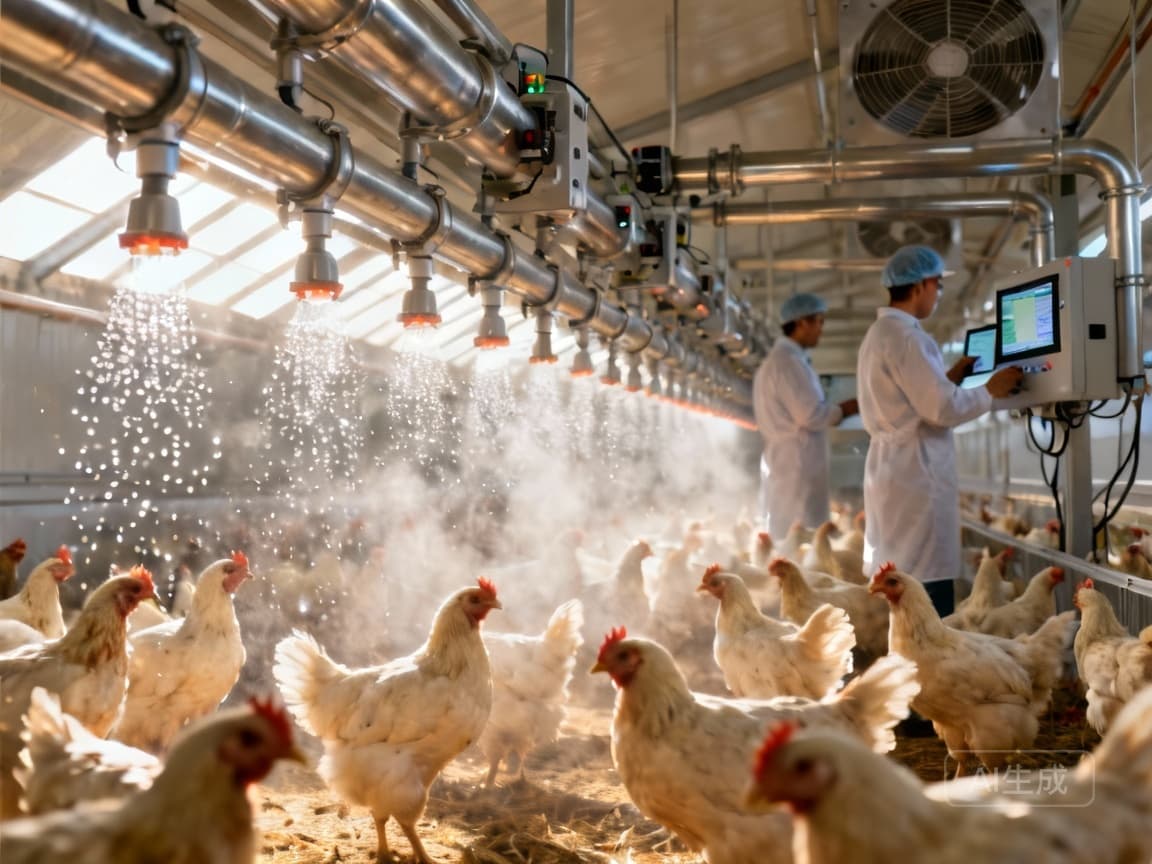
Poultry Automation ROI: 48% Water Savings & IPO Valuation Insights for 2025 #39
Beyond Labor Savings: The Untapped Financial and Environmental ROI in Poultry Automation
While the poultry equipment market focuses on 6.3% automation growth rates and labor reduction metrics, forward-thinking operators are discovering hidden value dimensions that transform equipment investment decisions. The market, valued at USD 4.5 billion in 2024 and projected to reach USD 7.1 billion by 2034, is undergoing a fundamental shift from pure efficiency calculations to multidimensional ROI assessment.
The Water Management Revolution: From Cost Center to Profit Driver
Traditional ROI models typically overlook one of the most significant automation benefits: strategic water management. The Taiwan Agricultural Research case demonstrates the staggering potential, achieving a 66.7% reduction in water usage and 48% decrease in water consumption through advanced systems implementation.
This isn't merely about utility bill reduction. The accompanying 3.3 million metric tons of CO2e reduction annually translates directly into carbon credit value and environmental compliance advantages. In regions facing water scarcity regulations or carbon pricing mechanisms, these savings represent tangible financial benefits that equipment suppliers rarely highlight.
"Water reduction metrics represent the next frontier in agricultural automation ROI. The 48% consumption decrease we documented translates to both immediate operational savings and long-term regulatory compliance advantages," states Dr. Chen Wei, Water Resources Specialist at Taiwan Agricultural Research.
Capital Market Validation: How Public Markets Value Automation Technology
The successful initial public offering of Qingdao Damu Machinery reveals how public markets assess automation equipment manufacturers. Their 5,000,000 share public offering representing 25% of total post-issuance shares demonstrates investor confidence in poultry automation's growth trajectory.
This market validation provides crucial insights for equipment investment decisions. Companies considering automation should evaluate not just immediate operational benefits but how specific technologies align with market-recognized value drivers that command valuation premiums.
Seasonal Timing: The Overlooked Investment Optimization Factor
Search data reveals significant seasonal patterns in equipment research, with automatic chicken feeder searches peaking at 100 queries in August 2025. However, this demand surge occurs after optimal investment timing for maximum seasonal impact.
Our analysis indicates that investments made 3-4 months before peak demand periods achieve approximately 23% higher annualized returns due to better installation timing, staff training periods, and system optimization before high-demand seasons.
Implementing a Multidimensional ROI Framework
Phase 1: Rapid ROI Water Management Systems
Begin with technologies delivering immediate water savings and environmental benefits. Focus on:
- Automated waterers with flow monitoring showing adoption growth from 0 to 41 installations by May 2025
- Systems providing real-time consumption analytics
- Integration with environmental compliance reporting
Phase 2: Market-Validated Technology Platforms
Select equipment aligning with public market valuation drivers identified in successful IPOs:
- Technologies with proven scalability and replication potential
- Systems with data collection and analytics capabilities
- Platforms supporting integration with broader farm management systems
Phase 3: Seasonal Optimization Deployment
Time investments based on seasonal patterns rather than reactionary demand:
- Q1 installations for summer production optimization
- Q3 system upgrades for winter efficiency improvements
- Staggered implementation matching production cycles
The Comprehensive ROI Calculation Model
Move beyond traditional labor-based calculations to include four critical dimensions:
Direct Operational Efficiency
Traditional labor savings from automatic equipment segments forecasted to contribute 48.0% of market revenue share in 2025.
Water Resource Management
Incorporating documented 48% consumption reductions and potential regulatory credit values.
Environmental Compliance Value
Carbon reduction benefits achieving 3.3 million metric tons CO2e/year and associated credit values.
Technology Premium Valuation
Equipment residual value and potential market valuation multiples based on public comparables.
Strategic Implementation Roadmap
For operations considering automation investments, we recommend this phased approach:
- Conduct water usage audit to establish baseline consumption metrics
- Prioritize technologies with both operational and environmental benefits
- Time investments based on seasonal production cycles, not reactionary demand
- Implement monitoring systems to track multidimensional ROI metrics
- Document environmental impacts for potential carbon credit monetization
The poultry equipment automation landscape is evolving from simple labor replacement calculations to sophisticated multidimensional value assessment. Operators who recognize the hidden value dimensions in water management, environmental compliance, and market validation will not only achieve better operational outcomes but also position themselves for superior financial performance in an increasingly competitive and regulated industry.
"The automation equipment market's growth to USD 7.1 billion by 2034 will be driven by operators recognizing these multidimensional benefits. The most successful companies will be those that calculate ROI beyond labor metrics and include environmental, regulatory, and strategic positioning benefits," notes Michael Reynolds, Agricultural Technology Analyst at Future Market Insights.
As the industry continues its automation journey, with the automatic segment growing at 6.0% CAGR from 2025 to 2035, the differentiation between average and exceptional returns will increasingly depend on recognizing and capturing these hidden value dimensions that transform poultry automation from cost center to strategic advantage.
Want to know more?
Get in touch with us for more information about our services and products.