
Beyond ROI: Quantify Risk & Lock Long-Term Value in Poultry Automation #70
Beyond ROI: Quantify Risk & Lock Long-Term Value in Poultry Automation
The narrative surrounding poultry automation investment is ripe for a fundamental shift. Industry content overwhelmingly focuses on impressive growth statistics—the Asia-Pacific market's 11% CAGR, automation's 48% revenue share dominance—and the promise of rapid return on investment (ROI). While these metrics are compelling, they paint an incomplete picture. A deeper analysis of real-world project data and technical specifications reveals that the most critical decisions in equipment procurement are not solely about maximizing gains, but about systematically mitigating losses. This article moves beyond the "efficiency narrative" to provide a strategic framework for quantifying risk, ensuring compliance, and securing long-term operational value in poultry automation investments.
The Hidden Costs Behind the Performance Metrics
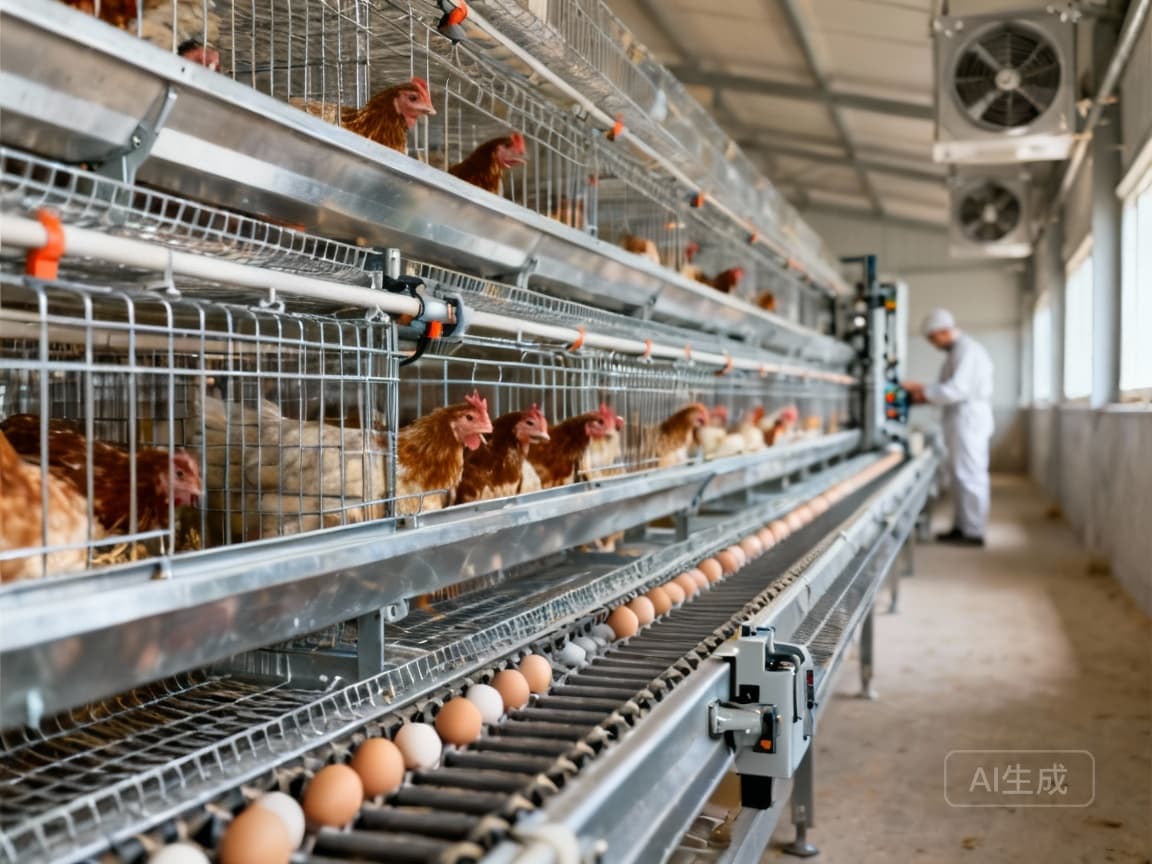
Conventional sales pitches highlight efficiency gains, but true cost lies in performance failure. Consider the technical standards set forth by authorities like the Hubei Provincial Department of Agriculture, which mandate a broken egg rate of ≤2% and a central egg collection efficiency of ≥10,000 eggs per hour. These are not mere performance benchmarks; they are direct levers on profitability and operational continuity.
A 3% broken egg rate, just one percentage point above the standard, translates to significant revenue leakage. Furthermore, an underperforming collection system that causes bottlenecks can halt downstream processing, incurring labor costs for manual sorting and creating food safety concerns. The drive for automation, as noted by Future Market Insights, is fueled by the need to meet strict hygiene and production standards. Therefore, equipment performance is intrinsically linked to regulatory compliance and brand protection risk.
“Automation demand growth is driven by... the need to maintain consistent environmental control and adhere to strict hygiene production standards.” – Future Market Insights, Poultry Farming Equipment Market Report
Implementation Guidance: Building Your Operational Risk Model
- Translate Technical Specs into Financial Impact: Use the Hubei standards as a baseline. Calculate the potential loss from a sub-2% broken egg rate. Formula: (Actual Broken Egg Rate - 2%) x Total Eggs Collected per Hour x Egg Value x Operating Hours.
- Assess System Interdependence: Evaluate how a failure in one automated component (e.g., ventilation) impacts others (feed consumption, bird health, egg quality). Model the cost of system-wide downtime.
- Demand Performance Guarantees: Insist that supplier quotes and contracts include guaranteed performance metrics for key operations like egg collection, feed conversion, and mortality rates, with clear remediation clauses.
Total Cost of Ownership: The True Measure of an Asset
The initial purchase price is a fraction of an automation system's lifetime cost. Strategic procurement requires a Total Cost of Ownership (TCO) analysis. This is vividly illustrated by project details from S&P Consulting and the Hubei technical specifications.
The Hubei规范 meticulously specifies material thickness (e.g., cage upright beams ≥2mm) and mandates anti-corrosion processes like hot-dip galvanizing. This isn't arbitrary; it's a direct prescription for asset longevity, reducing maintenance frequency and preventing premature failure in corrosive ammonia-rich environments. A cheaper, thinly coated cage may offer a better short-term ROI but will incur massive replacement costs long before a premium system reaches its end of life.
Similarly, the S&P Consulting case highlights a critical, often overlooked financial dimension: funding strategy. The project was financed entirely through self-raised capital, with no bank loans. This choice, as noted, ensured "independence and controllability" of the capital plan. It eliminates interest rate risk and debt covenants but requires significant internal liquidity. A TCO analysis must therefore model different financing scenarios, weighing the cost of capital against the risk profile of the business.
Implementation Guidance: Calculating 20-Year Total Holding Cost
- Capital Costs: Purchase price, import duties, installation, and commissioning.
- Operational Costs: Energy consumption (ventilation, lighting, feeding systems), routine maintenance parts and labor, software licensing fees.
- Risk Mitigation Costs: Cost of higher-grade materials (e.g., hot-dip galvanizing vs. paint), investment in redundant systems for critical components, premium service contracts.
- Compliance & Adaptation Costs: Future retrofit costs to meet new animal welfare laws or environmental regulations.
- Residual Value: Estimated salvage or resale value of durable equipment at end-of-planning horizon.
Future-Proofing Against the Regulatory Tide
Market growth drivers are evolving. While the Asia-Pacific region is propelled by productivity demands, North America and Europe are being shaped decisively by the cage-free movement. DataHorizzon Research explicitly links automation growth to "improving animal welfare" and "increasing focus on sustainable and environmental regulations." This is not a regional anomaly but a global trend. An investment in layer cages today must be evaluated for its adaptability to potential future policy shifts.
This creates a critical compliance risk. A highly efficient, densely stacked cage system that cannot be economically modified to provide more space or different perching arrangements may become a stranded asset if regulations change. The strategic question shifts from "What is the ROI?" to "What is the risk of obsolescence?"
Implementation Guidance: Design Evaluation Checklist for Future Compliance
- Modularity: Can cage modules be reconfigured to increase bird space per square foot of floor area?
- Environmental System Capacity: Are ventilation, heating, and cooling systems oversized to handle the potentially wider temperature and humidity ranges of a less densely stocked or cage-free barn?
- Manure Management: Is the manure belt system capable of handling the different manure consistency and volume from alternative rearing systems?
- Data Collection: Does the system collect verifiable data on bird behavior, welfare indicators, and environmental conditions that can be used for compliance reporting?
A Strategic Framework for Decision-Making
Synthesizing these pillars—operational risk, TCO, and compliance foresight—requires a disciplined procurement framework. Move away from comparing supplier brochures and toward a structured evaluation.
Step 1: Assemble a Cross-Functional Team. Include operations, finance, maintenance, and compliance/quality assurance personnel. The decision is too strategic for procurement alone.
Step 2: Develop a Weighted Decision Matrix. Criteria should include:
- Quantified Performance Risk (e.g., guaranteed broken egg rate).
- 20-year TCO Projection (using the guidance above).
- Design Adaptability Score (from the future-proofing checklist).
- Supplier Financial Health & Local Service Capability (mitigates long-term parts and support risk).
Step 3: Conduct Scenario Planning. Model financial outcomes under different scenarios: a 15% increase in energy costs, a new animal welfare law in 5 years, a 1% increase in mortality due to system stress. The S&P Consulting case utilized both static and dynamic payback periods; apply similar rigor to risk scenarios.
Step 4: Negotiate for Lifecycle Value, Not Just Price. Use your TCO model and risk assessment as negotiation tools. A higher upfront cost for superior durability and adaptability is justifiable when the total lifetime cost and risk are lower.
Conclusion: From Transaction to Strategic Partnership
The poultry industry's automation journey, marked by strong growth and undeniable efficiency benefits, is entering a more mature phase. The low-hanging fruit of basic labor replacement has been picked. The next frontier of value is secured by executives who view automation not as a capital expense, but as a long-term strategic asset.
By shifting the narrative from short-term ROI to long-term risk-managed value, you transform the procurement process. You cease to be a buyer of equipment and become an investor in operational resilience. You stop evaluating vendors and start selecting strategic partners capable of supporting a 15-year asset through evolving technical and regulatory landscapes. In a market projected to reach $2.1 billion for automated layer cages alone by 2033, the winners will be those who make the safest, smartest, and most sustainable bets. The framework outlined here provides the toolset to do exactly that.
Want to know more?
Get in touch with us for more information about our services and products.