
Avoid 68% Failure: Build a Profitable Poultry Automation System #64
Avoid the 68% Failure Rate: Your Blueprint for a Profitable Poultry Automation System
The poultry industry stands at a critical automation crossroads. On one hand, the data is compelling: the automated poultry farm market is projected to surge from $384.1 million in 2025 to $682.98 million by 2030, growing at a remarkable 12.20% CAGR. By 2025, automated equipment is expected to contribute 48.0% of the revenue share in the poultry farming equipment market. The drivers—labor shortages, precision demands, and stringent standards—are undeniable.
Yet, beneath this wave of technological promise lies a sobering reality. Real-world implementation data reveals a staggering failure point: 68% of poultry automation investments fail to achieve their ROI targets due to interoperability gaps. Furthermore, unplanned integration costs can balloon to 25-30% of the total budget, doubling the expected payback period. This is the core contradiction facing B2B decision-makers today. The market sells a vision of seamless efficiency, but the path is littered with costly, underperforming "islands of automation." This article moves beyond generic promises to provide a physiological blueprint for building an automation "organism" that thrives, ensuring your investment becomes a profit center, not a statistic.
Diagnosis: Is Your Farm's "Nervous System" Healthy?
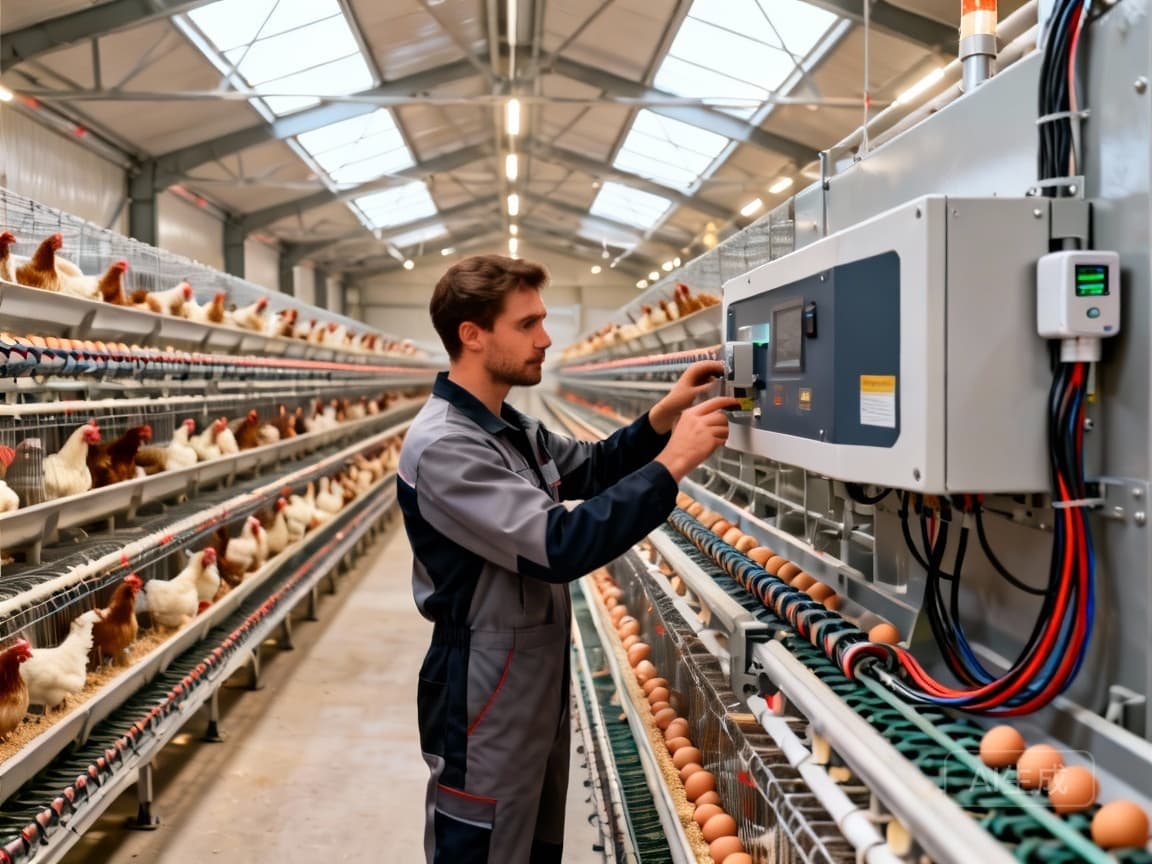
Before selecting a single piece of hardware, a successful automation strategy begins with a diagnostic. View your poultry house not as a collection of machines, but as a living entity. The hardware—the robust H-type cages with 15-20 year lifespans, the feeders, the manure belts—are the skeleton and muscles. The control systems, sensors, and data flows constitute the central nervous system. It is the health of this nervous system that determines success or failure.
Ask these critical diagnostic questions, informed by common failure points:
- Do your environmental controllers (temperature, humidity, ventilation) communicate seamlessly with your energy management system, or do they operate in isolation, creating inefficiency?
- Is egg collection data automatically reconciled with your inventory and sales systems, or does it require manual transcription, creating errors and delay?
- Can a spike in ammonia levels detected by sensors automatically trigger adjustments in ventilation and manure belt cycles?
"The primary challenge is not the technology itself, but the operational friction created by data silos. Identifying these disconnects is the first step toward building a cohesive system." – Auto ChickenCage Implementation Experience
This diagnostic phase shifts the conversation from product features to system efficacy, aligning your project with the core goal: not just automation, but profitable automation that leverages data for decision-making.
Architecture: Building an "Anti-Aging" System with the Three-Layer Blueprint
To avoid the integration cost overruns and performance gaps, you need an architectural plan designed for longevity and scalability. We advocate for a Three-Layer Integration Methodology, a framework proven to control costs and ensure system coherence.
Layer 1: The Device Layer (The Physiological Reflex)
This is the foundation. Every piece of equipment, from the high-capacity H-type cages that reduce manual cleaning time by over 50% to the automated feeding lines, must be selected with integration in mind. Prioritize devices that support open, standardized communication protocols like OPC UA. This acts as a universal language for your farm's nervous system, ensuring future compatibility and preventing vendor lock-in. Durability is key here; equipment with a 20-year lifespan must be able to communicate effectively for its entire lifecycle.
Layer 2: The System Layer (The Autonomous Nervous System)
Here, you create seamless data flow between core operational subsystems: feeding, climate control, egg collection, and manure management. The goal is closed-loop automation within the poultry house. For example:
- Weight sensors on feeding lines detect consumption rates.
- This data is automatically analyzed by the central management software.
- The software adjusts feed delivery in real-time, optimizing for growth targets and minimizing the 8-12% waste commonly seen in disjointed systems.
- Simultaneously, consumption data can signal the manure system to prepare for increased output.
This layer is where you achieve the 15-25% improvement in equipment utilization and significant labor savings, but only if the data flows without friction.
Layer 3: The Operational Layer (The Cerebral Cortex)
This is where true business intelligence emerges. In this layer, production data from Layer 2 is integrated with enterprise systems—finance, supply chain, and sales. Imagine:
- Daily egg production figures automatically updating inventory and triggering replenishment orders to major retailers meeting their 100% cage-free commitments.
- Feed conversion ratios directly informing procurement models and financial forecasting.
- Predictive maintenance alerts from equipment being factored into operational budgets and cash flow projections.
This integration transforms raw data into strategic insight, directly linking farm-floor automation to boardroom profitability and market responsiveness, such as capitalizing on the 5.3% CAGR growth in the global broiler chick market.
Implementation: The Phased Path to Proven ROI
Avoid the peril of a monolithic, "big bang" launch. Adopt a phased, iterative implementation framework that builds confidence and demonstrates value at each step.
- Phase 1: Foundation & Quick Wins (Months 1-6): Begin with unifying data formats and integrating two or three critical systems (e.g., feeding and environmental control). The goal is a tangible, rapid result, such as a documented reduction in feed waste or energy use. This builds organizational buy-in and funds future phases.
- Phase 2: Analysis & Expansion (Months 7-18): Expand integrations based on the initial blueprint. Establish cross-system alerts and reporting. Begin integrating operational data with business software. This phase should deliver the core 20-30% reduction in manual data handling.
- Phase 3: Optimization & Mastery (Months 19-36+): Implement advanced predictive analytics and closed-loop controls. Conduct regular ROI reviews. The system is now a mature, learning asset driving continuous improvement and locking in long-term returns.
This approach mirrors successful case studies where "prioritizing incremental victories builds organizational confidence" and manages financial risk, a lesson echoed in project financing strategies that emphasize prudent capital allocation.
Sustaining Success: The Lifecycle Engine of People and Process
The final, most often neglected, pillar is sustaining ROI over the system's entire lifespan. Technology alone fails; it requires a parallel investment in people and processes.
Start Training Early: Initiate a staged training program 3-6 months before equipment installation. Cross-train existing staff, transforming poultry handlers into system operators and basic data analysts. This human "software update" is as critical as the hardware.
Institute Proactive Health Management: Move from reactive repairs to preventive maintenance. Establish a clear protocol including regular diagnostics, scheduled part replacements (leveraging the long-life components), and software updates. This maximizes the promised 60% lower maintenance costs of advanced materials and ensures consistent uptime.
Monitor the Vital Signs: Implement a simple "ROI Health Dashboard" tracking the key metrics from your initial goals: equipment utilization rates, input waste percentages, labor efficiency, and production output per square meter. Review these metrics monthly initially, then quarterly, to ensure your automation organism remains in peak condition.
Conclusion: From Cost Center to Value Engine
The journey to profitable poultry automation is not about buying the most advanced single component. It is about architecting and nurturing an intelligent, interconnected system. By first diagnosing your interoperability health, then building according to a resilient three-layer blueprint, implementing in controlled phases, and investing in continuous human and process development, you directly address the root causes of the 68% failure rate.
In an era where automation is transitioning from a competitive advantage to an industry standard—propelled by a total poultry farming equipment market moving from $4.5 billion in 2024 to $7.1 billion by 2034—the winners will be those who master the integration of bone, nerve, and brain. They will not just automate their farms; they will build self-optimizing assets that reliably turn capital investment into sustained profitability.
Want to know more?
Get in touch with us for more information about our services and products.