
Automated Poultry ROI: 12-18 Month Payback & 60% Ammonia Reduction #74
The Asia-Pacific Automation Puzzle: A Buyer's Framework for Navigating the Fragmented Poultry Cage Market
The Asia-Pacific region presents a compelling yet complex opportunity for poultry producers. According to market research, it is the fastest-growing market for automated layer cages, driven by rapid industry expansion in countries like China and India and a focus on productivity, animal welfare, and labor shortages. With a projected CAGR of 12.20% from 2025 to 2030, the momentum is undeniable. However, a critical challenge accompanies this growth: low market concentration. For farm owners and operations managers, this means navigating a crowded field of suppliers without a clear market leader, making long-term capital investment decisions fraught with risk. This article provides a strategic framework to cut through the noise, helping you align your specific operational reality with the right automated system to secure a rapid return on investment.
Part 1: Deconstructing Your "Automation Needs Profile"
Before comparing technical specifications, you must first define your unique operational parameters. A one-size-fits-all approach is a recipe for underperformance. Your investment decision should be built on four foundational pillars.
1. Land and Spatial Constraints: Land is often a fixed and costly asset. The success of large-scale operations like TAIYU Industrial Group demonstrates the power of vertical density. Their implementation of H-type stacked cage systems allowed for higher bird capacity without expanding their physical footprint, directly contributing to a 15% increase in egg yield. Your analysis should start with a clear calculation of your current space utilization and future density goals.
2. Labor Economics: The global poultry farming equipment market is being reshaped by automation, which is projected to contribute 48.0% of the market's revenue share by 2025. This shift is fundamentally driven by the need to reduce reliance on manual labor. Quantify your current labor costs, including recruitment, training, and management challenges. The 30% labor reduction seen in the TAIYU case translates directly to a predictable, recurring cost saving that forms a core part of the ROI calculation.
3. Environmental and Regulatory Pressure: This is where modern automation delivers unexpected financial value. Beyond productivity, systems with integrated manure management and climate control drastically improve environmental conditions. For instance, the TAIYU project achieved a 60% reduction in ammonia levels. This isn't just about animal welfare; it's a balance sheet asset. Lower ammonia means reduced ventilation energy costs, lower incidence of respiratory diseases (saving on veterinary bills), and proactive compliance with increasingly stringent environmental regulations, avoiding potential fines.
4. Expansion Ambition: Is your goal to optimize an existing mid-scale operation, like the farm in Sri Lanka supported by Zhengzhou Livi Machinery, or to build a new large-scale facility? Your 3-5 year stockmanship targets will dictate the required scalability of the system. Investing in a closed, non-expandable system today can cripple growth tomorrow.
Part 2: Matching Technology Solutions to Your Profile
With a clear needs profile, you can effectively evaluate the two primary automated cage system architectures. The choice is not about which technology is "better," but which is optimal for your specific context.
H-Type Stacked Cage Systems
This architecture is engineered for maximum efficiency and control in a compact footprint.
- Best For: Operations with severe land constraints, those targeting the highest yield per square meter, and farms in regions with strict environmental compliance needs or extreme climates.
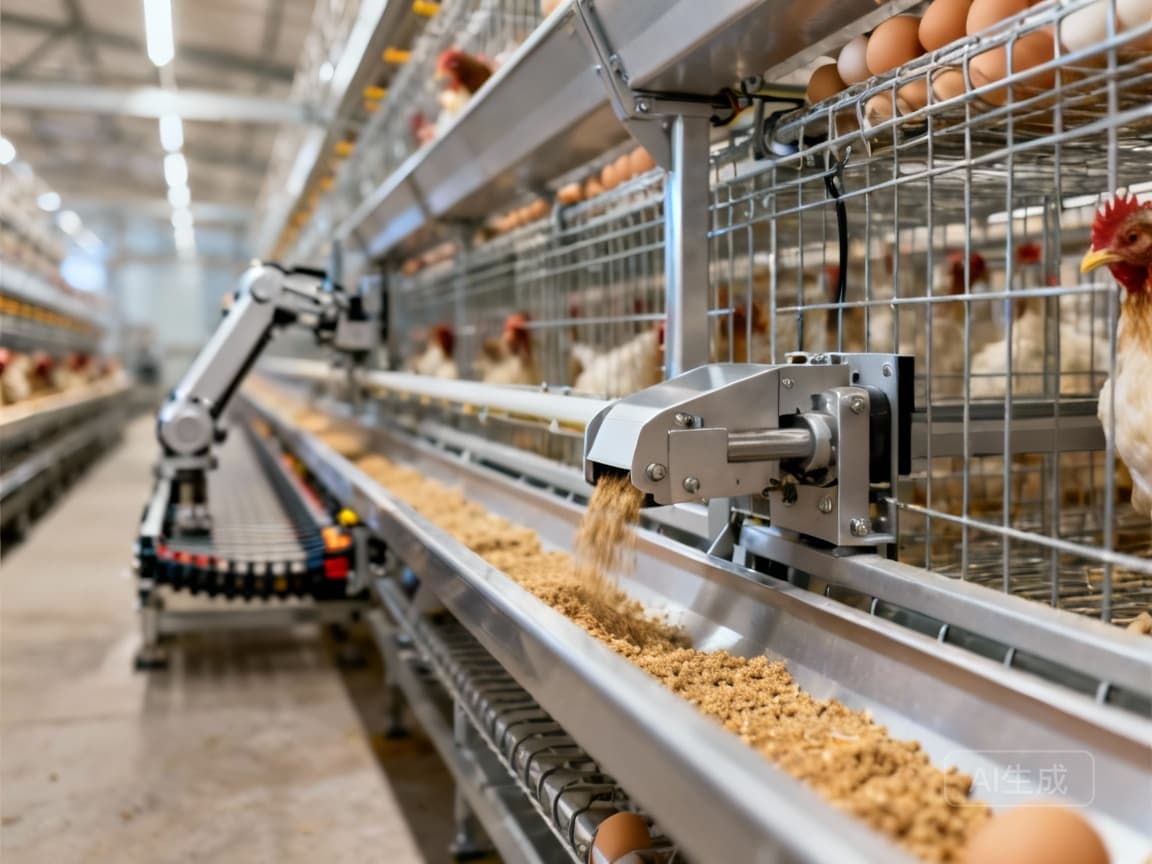
- Key Advantages: The enclosed, multi-tiered design enables highly precise automated feeding, egg collection, and manure removal. The integrated manure belts, as evidenced in the TAIYU case, are key to achieving dramatic ammonia reduction and maintaining superior air quality. This system offers the highest degree of environmental control.
- Considerations: Typically requires a higher initial capital investment and a reliable power supply. Effective operation depends on robust technical support and training.
A-Frame or Stair-Step Cage Systems
This design offers a different balance of automation and traditional farming principles.
- Best For: Operations with more available land, those with limited initial capital budgets, farms prioritizing natural ventilation and light, and owners planning a phased, modular approach to automation.
- Key Advantages: Often has a lower entry cost and can be easier to install and maintain. The open design facilitates natural airflow. It allows for a stepwise automation strategy—perhaps starting with automated feeding and watering before later adding manure belts.
- Considerations: May have a lower bird density per building square footage compared to H-type systems. Manure management is often less immediate than with belt systems, which can impact environmental control metrics.
"The decision between H-type and A-frame systems ultimately hinges on the farm's core constraints—whether it's land, capital, or labor. The 60% ammonia reduction from integrated manure systems isn't just an ESG metric; it's a direct input into financial models for energy savings and stock health," summarizes an industry analyst reviewing global automation trends.
Part 3: Beyond the Hardware: Evaluating Supplier "System Capability"
In a fragmented market, hardware specifications can converge. The true differentiator lies in the supplier's ability to deliver a complete, supported system that ensures long-term success. Look beyond the cage structure and assess these critical capabilities:
- Localized Support and Training Capacity: Can the supplier provide installation supervision, on-site training in your local language, and a clear protocol for maintenance? Prompt spare parts availability within your region is non-negotiable for minimizing downtime.
- Data Integration Potential: Does the system collect data on feed consumption, egg counts, or environmental conditions? Even if you don't use it immediately, choosing a system with this potential lays the groundwork for future precision management and data-driven decisions.
- Proof of Sustainability and Durability: Request verifiable evidence for material claims. For example, what is the expected lifespan of the hot-dip galvanized coating against corrosion in your specific climate? Certifications for materials or system efficiency add tangible credibility.
Part 4: Your Actionable Investment Roadmap
Turning insight into action requires a disciplined process. Follow this three-phase roadmap to structure your evaluation and decision-making.
Phase 1: Internal Discovery (Weeks 1-2)
Gather your baseline data. Create a simple internal document detailing:
- Current housing dimensions and usable space.
- Detailed labor costs and headcount.
- Current production metrics (yield, feed conversion ratio).
- Specific operational pain points (e.g., manure handling time, egg breakage rate).
- 3-year and 5-year stockmanship targets.
Phase 2: Supplier Evaluation & Interrogation (Weeks 3-6)
Develop a standardized request for proposal (RFP) and a list of key questions for all shortlisted suppliers. Move beyond price to ask:
- Can you provide a detailed case study from a farm with a similar profile to mine?
- What is the complete installation timeline, from delivery to full operational handover?
- What is the projected energy consumption of the automated systems (fans, feeders, belts)?
- What is your guaranteed response time for technical support and spare parts delivery?
- Can you provide a transparent cost-benefit analysis model based on my data?
Phase 3: Financial Modeling & Decision (Weeks 7-8)
Build your ROI model using the data from suppliers and your internal discovery. A robust model must include:
- Capital Expenditure: Total system cost, installation, and any infrastructure upgrades.
- Recurring Cost Savings: Labor reduction (30% as a benchmark), estimated feed savings from precise delivery, and energy cost changes.
- Revenue Enhancements: Projected yield increase (15% as a benchmark).
- Risk Mitigation & Compliance Value: Quantify the value of ammonia reduction: lower energy for ventilation, estimated savings on respiratory treatments, and value of regulatory compliance. This creates the comprehensive "Environmental ROI."
Using the industry-proven benchmark of a 12-18 month payback period as a guiding star, you can now make a confident, data-driven investment that aligns with your farm's unique profile and growth trajectory. In the dynamic Asia-Pacific market, the winning strategy is not to seek a generic supplier, but to become an informed buyer equipped with a clear framework for success.
Want to know more?
Get in touch with us for more information about our services and products.