
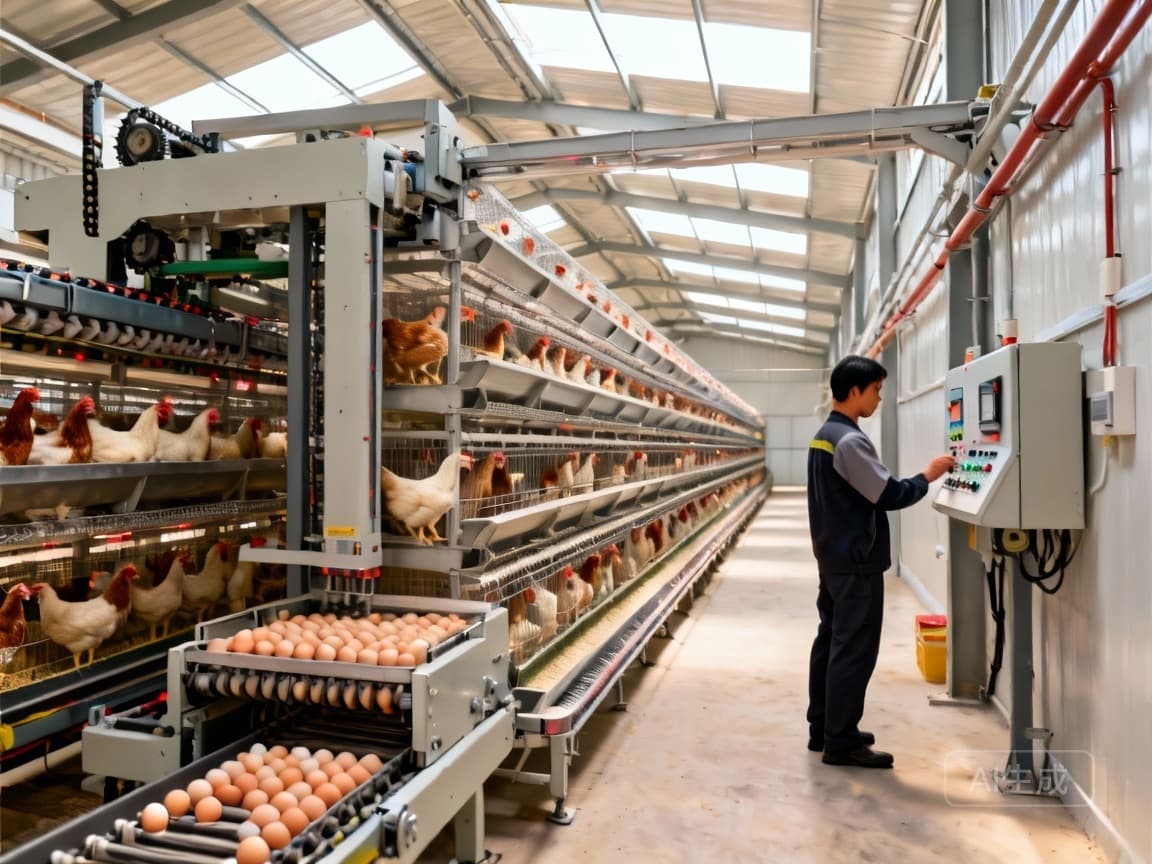
Automate Poultry Farms: Achieve 11% CAGR & Full-Cycle ROI in Asia-Pacific #67
The Asia-Pacific Automation Paradox: Achieving Full-Cycle ROI in a High-Growth Market
The Asia-Pacific region presents a compelling yet complex opportunity for poultry farm automation. While market data projects a stellar 11% CAGR for the automatic layer cage market from 2025-2033, a significant implementation gap persists. Many projects underperform on their financial promises because the investment decision is often reduced to a simple equipment price comparison. This article moves beyond product specs to provide a comprehensive financial feasibility framework, addressing the unique challenges and opportunities for achieving a full-cycle return on investment (ROI) in the APAC region.
The Regional Driver Disconnect: Efficiency vs. Regulation
A critical first step is understanding the fundamental drivers of automation adoption, which differ markedly between the West and APAC. In North America and Europe, a powerful driver is consumer and regulatory pressure for animal welfare, specifically the shift to cage-free systems. This creates a market for specific equipment upgrades. In contrast, the APAC growth engine, particularly in China and India, is fueled by rapid industry expansion, rising labor costs, and the imperative for scale. As noted by Datahorizzonresearch.com, the need to improve productivity and manage labor shortages is paramount. This distinction means that an automation solution successful in Europe may not be financially optimal for a scaling operation in Vietnam. The investment calculus must be regionally attuned from the outset.
"Automation mode is projected to contribute a dominant 48.0% revenue share of the poultry farming equipment market by 2025, driven by the need to reduce manual intervention and improve precision." – Future Market Insights
Beyond the Cage Price: The 5-Layer Financial Feasibility Framework
To navigate the APAC automation paradox, investors must build a financial model that looks beyond the invoice from equipment suppliers like Big Dutchman or Chore-Time. A holistic view encompasses five critical layers.
Layer 1: The Hidden Capital Expenditure (CapEx)
Case studies, such as the one from S&P Consulting, reveal a common pitfall: the automation equipment itself often constitutes only 45-60% of the total initial investment. A complete CapEx model must include:
- Ancillary Facilities: Electrical substations, water treatment systems, feed silos, and upgraded access roads.
- Preparation & Contingency: Site preparation costs and a rigorous project preparatory fee.
- Working Capital: Funds to cover operational costs like chick procurement, feed, and labor during the ramp-up phase before consistent revenue flows.
Underestimating these elements is a primary reason projected ROIs fail to materialize.
Layer 2: The Operational Cash Flow Model
Automation's promise of labor savings is real, but it is not free. A robust operational model must contrast the reduced manual labor costs with the increases in:
- Energy consumption for advanced ventilation, lighting, and automated systems.
- Preventive and corrective maintenance for sophisticated equipment.
- Potential need for higher-skilled (and higher-paid) technical staff.
Furthermore, revenue projections should be stress-tested against realistic capacity utilization rates, even within an 11% CAGR growth market.
Layer 3: Risk-Adjusted Return Metrics
Industry case studies frequently lack specific, transparent financial metrics like Internal Rate of Return (IRR) or detailed ROI breakdowns. This opacity makes benchmarking difficult. To establish authority and trustworthiness, investors should demand and build models that generate:
- Net Present Value (NPV): To understand the project's absolute value.
- Internal Rate of Return (IRR): To compare the efficiency of this investment against other capital uses.
- Payback Period: To understand liquidity risk and capital recovery timing.
Layer 4: The Cost of Technical Debt & Integration
Automation is not a single machine; it's a system. The "technical debt" of poor integration is a silent ROI killer. This layer accounts for the costs of ensuring that the cage system, environmental controls, feeding lines (from suppliers like Roxell or Facco), manure belts, and egg collection systems communicate seamlessly. Incompatibility can lead to a 68% underperformance rate in achieving targeted efficiency gains, as subsystems work against each other. Investment must be allocated for system architecture planning, controls engineering, and integration testing.
Layer 5: Regional Adaptation Investment
The APAC region encompasses diverse climates, from tropical humidity to seasonal extremes. An automation system designed for temperate climates may fail or require excessive energy to maintain optimal conditions in Southeast Asia. This layer includes:
- Climate-Specific Engineering: Investing in higher-capacity ventilation, cooling pads, or specialized insulation.
- Local Service Network: The value of a local technical support and spare parts network cannot be overstated. This reduces downtime (a critical ROI variable) and should be a key factor in supplier selection, even at a premium.
From Manual to Automated: A 3-Phase Transition Model for Mid-Scale Farms
For the numerous mid-scale farms in APAC, a "big bang" full automation investment is often financially prohibitive and operationally risky. A phased, data-driven approach is more sustainable and financially sound.
Phase 1: Data-Driven Manual Operations (Months 0-12)
Before automating, you must measure. This phase involves minimal hardware automation but critical investment in monitoring.
- Goal: Establish baseline Key Performance Indicators (KPIs) for feed conversion ratio (FCR), mortality rates, lay rate, and labor hours per task.
- Investment Focus: Environmental sensors (temperature, humidity, ammonia), manual data logging systems, and basic flock performance software. This data identifies the most significant bottlenecks and opportunities.
Phase 2: Modular, High-ROI Automation (Months 12-24)
Using Phase 1 data, prioritize automation modules with the fastest and highest return.
- Decision Framework: Does the data show egg breakage and labor for collection is the biggest cost? An automated egg collection system may be the first module. Is feed waste and distribution time the issue? Start with a precision feeding system.
- Financial Discipline: Each module should be justified with its own mini-feasibility study, ensuring it delivers a positive return before proceeding to the next.
Phase 3: Integrated Smart System (Months 24-36+)
With several automated modules running successfully, the final phase is integration and optimization.
- Investment Focus: A central Farm Management System (FMS) that integrates data from all modules (feeding, environment, egg collection) to enable predictive analytics and centralized control.
- Vendor Strategy: Ensure earlier modular purchases are compatible with this integration goal. This may involve strategic partnerships with major international suppliers who offer open-architecture systems.
The path to successful poultry farm automation in the high-growth APAC market requires a shift from being a equipment purchaser to becoming a strategic investor. By adopting a framework that rigorously analyzes the five financial layers and implementing a disciplined, phased transition, farm operators can confidently navigate the complexities of the market. This approach transforms the compelling 11% CAGR market forecast into a tangible and robust full-cycle ROI, securing a competitive advantage in the world's most dynamic poultry region.
Want to know more?
Get in touch with us for more information about our services and products.