
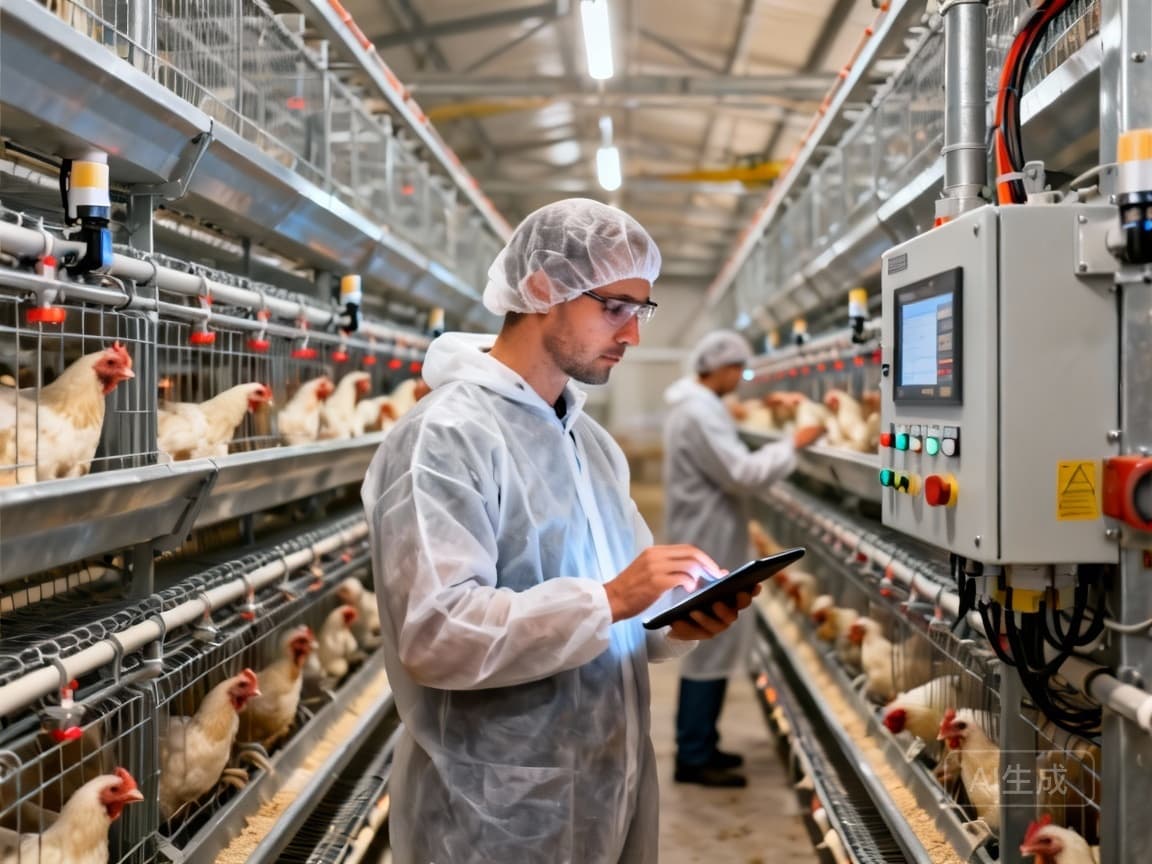
24 month poultry automation blueprint: reduce costs by 60% and avoid 68% investment failures
The 24-Month Automation Blueprint: How Top Poultry Producers Achieve 60% Maintenance Reduction While 68% of Investments Fail
The poultry automation market presents a paradox of tremendous growth alongside alarming failure rates. While the automated poultry farm market is expected to reach USD 384.10 million in 2025 and grow at a 12.20% CAGR to USD 682.98 million by 2030, industry data reveals that 68% of automation investments fail to meet ROI targets due to interoperability gaps. This disconnect between market potential and implementation success demands a strategic approach that goes beyond simply purchasing equipment.
According to Mordor Intelligence, the Asia Pacific region is estimated to grow at the highest CAGR during the 2025-2030 forecast period, indicating where the greatest automation adoption—and potential failures—may occur.
The Implementation Gap: Why Most Automation Investments Fail
The core issue isn't the technology itself but the implementation framework. Most producers focus on technical specifications rather than creating an integrated system that addresses interoperability challenges. The automatic segment is forecasted to contribute 48.0% of market revenue share in 2025 according to Future Market Insights, but without proper integration, this investment delivers suboptimal returns.
Case studies from failed implementations reveal consistent patterns: integration costs reaching 25-30% of budget with doubled ROI timelines, equipment compatibility issues creating data silos, and inadequate training programs leading to underutilized systems. The Jiayu Project experience demonstrated that proper planning could reduce integration costs by 30% through strategic implementation.
The Three-Phase Implementation Framework
Phase 1: Data Foundation (Months 1-3)
Successful automation begins with establishing robust data infrastructure. Auto ChickenCage's approach focused on pain points rather than technology, prioritizing incremental wins to build organizational confidence. During this phase:
- Install sensors and monitoring equipment compatible with existing systems
- Establish baseline metrics for equipment performance and operational efficiency
- Implement standardized data collection protocols across departments
- Train key personnel on data interpretation and basic system operation
This phase typically delivers 20-30% reduction in manual data collection time while creating the foundation for more advanced automation.
Phase 2: Analysis Integration (Months 4-12)
The integration phase focuses on connecting disparate systems and leveraging data for operational improvements. The Jiayu Project demonstrated that cross-platform data integration could increase equipment utilization by 15-25% through better coordination and maintenance scheduling.
Key implementation steps include:
- Integrate feeding, watering, and environmental control systems
- Implement data analytics platforms to identify efficiency opportunities
- Establish cross-functional teams to address integration challenges
- Develop customized reporting for different operational roles
This phase requires careful attention to equipment compatibility, particularly when integrating new automation with existing infrastructure.
Phase 3: Optimization Closed-Loop (Months 13-24)
The final phase focuses on creating self-optimizing systems that continuously improve efficiency. Successful implementations like Auto ChickenCage achieved 8-12% reduction in feed and energy waste through automated adjustments based on real-time data.
Critical elements include:
- Implementing preventive maintenance frameworks synchronized with production cycles
- Establishing monthly review cycles for continuous improvement
- Developing predictive analytics for equipment failure and performance degradation
- Creating feedback loops between automation systems and operational teams
Technical Standards and Equipment Selection
Equipment selection plays a crucial role in long-term success. Smart High-Capacity Chicken Cages demonstrate the potential efficiency improvements, increasing bird capacity from approximately 3,000 to 5,000-30,000 per unit while reducing manual cleaning from daily to every 3-5 days. More importantly, their estimated lifespan increases from 5-8 years to 15-20 years with proper maintenance.
When selecting automation equipment, prioritize:
- Hot-dip galvanized equipment with specific maintenance protocols
- Compatibility with existing and future systems
- Scalability to accommodate operational growth
- Vendor support and training capabilities
Human Factor: Training and Organizational Integration
Technology alone cannot drive success—the human element remains critical. The Jiayu Project experience showed that initiating phased training programs 3-6 months before equipment installation significantly improved adoption rates and system utilization.
Effective training strategies include:
- Cross-training existing staff rather than relying solely on new hires
- Developing role-specific training programs for different operational functions
- Creating continuous learning opportunities as systems evolve
- Establishing internal champions to drive adoption and best practices
This approach resulted in automatic drinker adoption growing from 0 to 41 units by May 2025 in the Jiayu Project, demonstrating how proper training accelerates ROI.
Measuring Success and ROI Calculation
Successful automation implementations should track both operational and financial metrics. Key performance indicators include:
- Equipment utilization rates (target 15-25% improvement)
- Maintenance cost reduction (target 60% compared to standard equipment)
- Labor efficiency gains
- Reduction in waste (feed, energy, water)
- System uptime and reliability
Based on successful implementations, properly executed automation projects can achieve 60% maintenance cost reduction compared to standard galvanized steel equipment while avoiding the 68% failure rate that plagues poorly planned investments.
The global chicken market projection of USD 429.11 billion by 2028 indicates significant growth opportunities for producers who can implement automation effectively. With over 40% of US hens now cage-free as of March 2024 and retail giants committing to 100% cage-free eggs by 2025, automation becomes increasingly essential for meeting animal welfare standards efficiently.
By following this 24-month implementation framework, poultry producers can navigate the complexities of automation adoption, avoid common pitfalls, and achieve the substantial efficiency gains that modern technology enables. The key lies in strategic implementation rather than technological acquisition—a lesson that separates the successful 32% from the failing majority.
Want to know more?
Get in touch with us for more information about our services and products.