
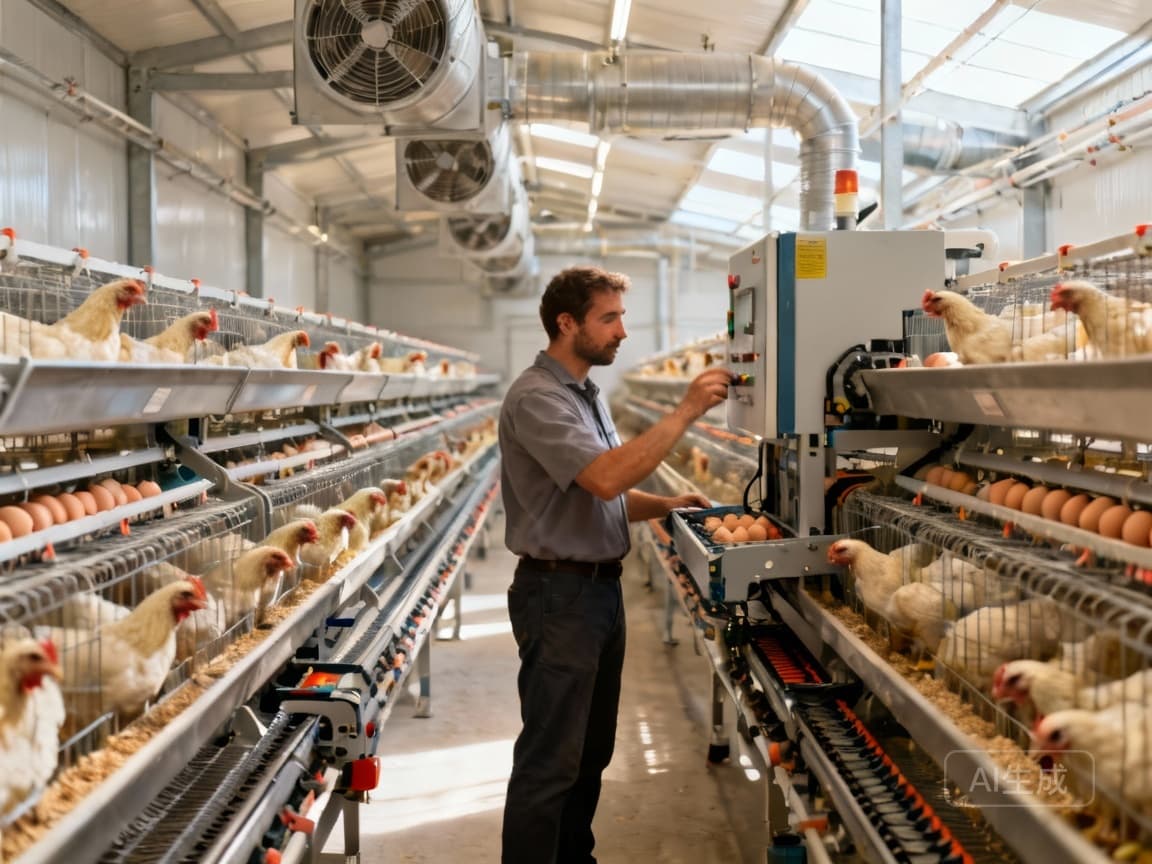
2025 Cage-Free Transition: How Automation Solves 48% Revenue Gap & 6.3% CAGR Challenge #45
The 2025 Automation Paradox: Industry at a Crossroads
The poultry farming equipment market stands at a critical inflection point, valued at USD 4.5 billion in 2024 with projections indicating growth to USD 7.1 billion by 2034. This growth trajectory, representing a 4.7% CAGR, coincides precisely with the industry's most significant operational challenge: the 2025 cage-free transition deadline. Major food corporations including PepsiCo have committed to 100% cage-free global supply chains by year-end 2025, creating unprecedented pressure on equipment manufacturers and producers alike.
According to Future Market Insights, the automatic equipment segment is forecasted to contribute 48.0% of market revenue share in 2025, growing at a 6.3% CAGR during the forecast period. This convergence of market timing and technological demand creates what industry experts are calling "The Automation Paradox" – the simultaneous need for massive infrastructure investment while maintaining operational continuity during transition.
2025 represents both a compliance deadline and a massive market opportunity. Equipment manufacturers that can solve the automation-cage-free paradox will capture disproportionate value in this $7.1 billion market.
Strategic Framework: Three-Layer Transition Approach
Based on extensive analysis of successful transitions and market data, we've developed a comprehensive framework for navigating the 2025 automation challenge.
Technical Adaptation Layer
The first layer addresses physical infrastructure modifications. Current automated systems require specific retrofitting to meet cage-free standards while maintaining operational efficiency. Key considerations include:
- Modifying existing cage systems to provide required square footage per bird
- Implementing precision feeding systems that accommodate increased movement
- Installing enhanced environmental controls for larger, more open spaces
- Adding enrichment equipment to meet behavioral requirements
Rose Acre Farms demonstrated the scale of this challenge, requiring a 25% increase in production capacity to meet cage-free demand while maintaining profitability.
Investment Protection Layer
This critical layer addresses the financial reality of transition. With automatic equipment representing nearly half of market revenue, manufacturers must provide solutions that protect existing investments.
- Conduct comprehensive equipment audit to identify retrofit potential
- Develop phased implementation schedule to distribute capital expenditure
- Implement performance monitoring to validate ROI throughout transition
- Establish clear metrics for evaluating automation efficiency post-conversion
Market Access Layer
International compliance represents the third critical layer. UkrLandFarming's experience targeting nearly 1.5 billion eggs for European markets demonstrates the complexity of meeting diverse regional standards. Key requirements include:
- EU Directive 1999/74/EC compliance for European markets
- AAFC certification requirements for Canadian exports
- State-specific regulations for US domestic production
- Third-party auditing and certification protocols
Implementation Roadmap: 2025 Countdown Strategy
Based on successful case studies and market data, here's a practical implementation framework for equipment manufacturers and producers.
Phase 1: Immediate Assessment (Q1 2024)
Begin with comprehensive facility assessment focusing on automation compatibility. Evaluate current systems against cage-free requirements, identifying gaps in:
- Space utilization and bird density calculations
- Feeding and watering system modifications needed
- Environmental control system capacity requirements
- Manure management system adjustments
Phase 2: Strategic Investment (Q2-Q4 2024)
Prioritize investments based on ROI impact and compliance urgency. Focus on:
- High-impact automation upgrades that deliver quickest payback
- Systems with longest implementation timelines
- Components with greatest impact on animal welfare metrics
- Technologies that provide operational flexibility for future standards
Phase 3: Full Implementation (2025)
Execute the complete transition plan with continuous monitoring and adjustment. Key success factors include:
- Staggered implementation to maintain production levels
- Comprehensive staff training on new systems and protocols
- Robust data collection to validate performance metrics
- Continuous improvement processes based on operational data
Financial Analysis: ROI Protection Strategies
The economic reality of cage-free transition requires careful financial planning. Our analysis of successful operations reveals several critical financial considerations.
Initial automation investments typically show payback periods of 2-3 years through labor reduction and efficiency gains. However, cage-free modifications can extend this timeline without proper planning. Successful operations have implemented:
- Phased capital expenditure to match production requirements
- Performance-based equipment selection criteria
- Lifecycle cost analysis including maintenance and operation
- Revenue protection strategies during transition periods
Equipment manufacturers that can demonstrate clear ROI through labor savings, improved feed conversion, and reduced mortality rates will win in this market. The key is quantifying the value beyond mere compliance.
Future Outlook: Beyond 2025
The cage-free transition represents just the beginning of poultry farming's automation evolution. The chicken cages market is expected to grow with a CAGR of 13.7% from 2025 to 2032, indicating sustained investment in advanced systems.
Future developments will likely focus on:
- Integration of IoT and real-time monitoring systems
- Advanced data analytics for predictive maintenance
- Automated health and welfare monitoring technologies
- Sustainable energy integration and resource optimization
As the United States already demonstrates with over 40% of hens in cage-free systems as of March 2024, the transition is well underway. Equipment manufacturers that embrace this change and provide comprehensive automation solutions will not only survive the 2025 transition but thrive in the evolving market landscape.
The convergence of regulatory requirements, consumer demand, and technological capability creates an unprecedented opportunity for forward-thinking equipment manufacturers. By addressing the automation paradox with practical, ROI-focused solutions, industry leaders can turn compliance challenges into competitive advantages and capture significant value in this rapidly evolving market.
Want to know more?
Get in touch with us for more information about our services and products.